
VW Golf R (Mk8.5) | PH Used Buying Guide
The R-rated Golf is the gift that keeps on giving for Volkswagen - how does it rate as a secondhand purchase?
Key considerations
- Available for £36,000
- 2.0-litre inline four petrol turbo, all-wheel drive
- Great mix of speed and security
- Usefully improved over the Mk8 in a few important areas
- Questionable quality for a £45k hatch, but used values are holding up well…
- …which is interesting considering the issues it’s had
In this guide we’ll be looking at the Mk 8.5 facelift model of Volkswagen’s high-performance all-wheel drive Golf R, launched in late June 2024. There was a whiff of ‘difficult second album’ about this latest facelift of the overall Golf range. The well-judged Mk 7 and 7.5 R had been warmly received, but the Mk 8 Golf had somewhat underwhelmed fans of VW’s once ageless hatch with its apparently backward steps in perceived quality and user-friendliness.
Outside, the plan for the 8.5 Golf range revision took in redesigned lights front and rear, new wheel and paint options, some new driver assist systems and a lit-up logo. Inside, there was new MIB4 infotainment software. The HVAC controls were still the generally unpopular touch-sliders, although they were now illuminated. The R also had new driving mode settings.
There was an 8.5 Golf R Estate on sale in the UK, but not for long so it’s a rare bird on the used market. Estates only constitute 5 per cent of all Golf sales, and of that number only 5 per cent have been Golf Rs. The R wagon no longer appears on the UK configurator and we couldn’t find any for sale.
At launch a couple of years ago, prices for a gen 8.5 Golf R hatch started at £44,500. In May 2026 a new one will be just under £47,000 before you start adding options, some of which are worth having. More on that later. Today, used 8.5 Rs start at just under £36,000, which represents a strong showing on the depreciation front. That kind of cash will get you a 2024 hatch with 10,000 miles on it.
SPECIFICATION | VOLKSWAGEN GOLF TSI 333 R 4Motion Mk 8.5 (2024-on)
Engine: 1,984cc inline four 16v turbo petrol
Transmission: 7-speed auto,all-wheel drive
Power (hp): 328@5,600-6,500rpm
Torque (lb ft): 310@2,100-5,500rpm
0-62mph (secs): 4.6 (hatch), 4.8 (estate)
Top speed (mph): 155 (limited) or 168mph (R-Performance)
Weight (kg): 1,548 (1,621 estate)
MPG (official combined): 34.9
CO2 (g/km): 183
Wheels (in): 18 (19 optional)
Tyres: 225/40
On sale: 2024 - on
Price new (2024): £44,535 (£45,970 estate)
Price now: from £36,000
Note for reference: car weight and power data is hard to pin down with absolute certainty. For consistency, we use the same source for all our guides. We hope the data we use is right more often than it’s wrong. Our advice is to treat it as relative rather than definitive.
ENGINE & GEARBOX
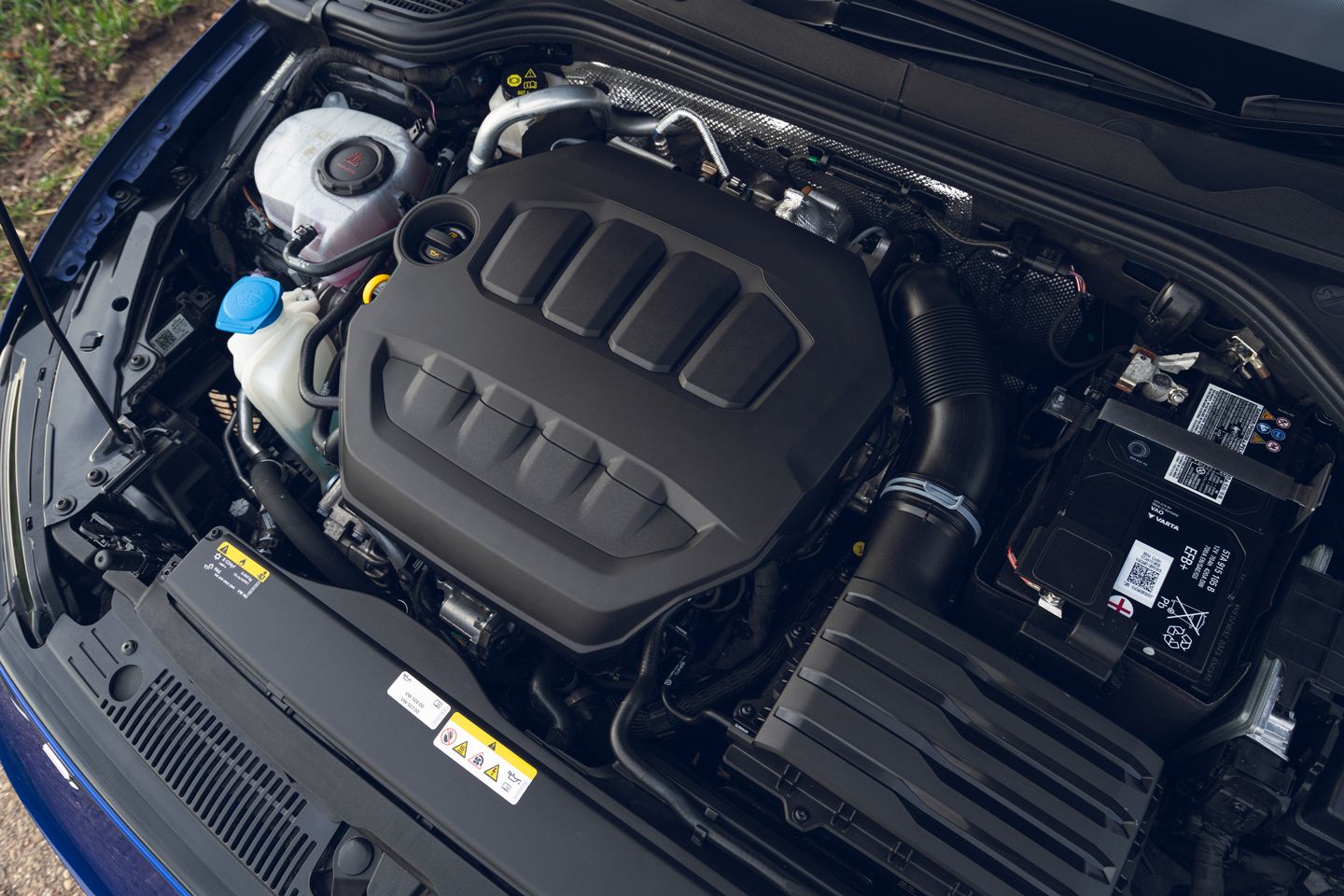
Compared to the regular GTI engine, the Mk 8 R’s EA888 unit had a modified head, new exhaust valves, seats and springs, new pistons, new injector valves and a bigger turbocharger and intercooler. There were some useful changes built onto that for the 8.5 R, including new mapping, a new coolant regulator to reduce warmup times and a new wastegate that held boost pressure for a bit longer when you lifted off the throttle. In partnership with a throttle valve that stayed more open on the overrun the result was a greater readiness to pick up and go the next time you asked it for power.
8.5 R power rose by 14hp to a new figure of 328hp, which was the same as the German market-only 8 R Performance-based 333 Limited Edition that had been touted just one year earlier (by VW anyway) as a potential collector’s item. Dangling that carrot seemed to work as all 333 of those Lime Yellow/black roofed 333s sold out in the space of eight minutes, despite the eyebrow-raising equivalent price of £65k in the UK. We don’t know if any of these LHD 333s managed to find their way over to the UK, but we do know that we couldn’t find any for sale here at the time of writing.
It didn’t matter in the end because a year later UK buyers were being offered the new 8.5 R with the same power as the 333, albeit without that car’s Akrapovic exhaust unless you were prepared to pay over £3,300 extra for it. The torque output of the 8.5 R was unchanged at 310lb ft, giving it the same power and torque numbers as the newly revised Audi S3, but its torque was developed across a slightly wider rev range than before.
With the 7-speed DSG twin-clutch now being the only transmission package for the R the result was a 0-62mph time of 4.6 seconds for the hatch, which was the same time as the 333 and a full second quicker than the 260hp GTI. The estate wasn’t far behind at 4.8 seconds. Both variants felt reassuringly quick for fast road work and effortless overtaking. Auto change-ups could be inhibited in manual mode, giving the driver full access to the 6,800rpm limiter – but there were problems there which we’ll get into in the Interior section a bit later on. The 4Motion all-wheel drive system was modified for the 8.5 and the electronic torque splitter was revised too.
Unsurprisingly, an R-Performance version of the new 8.5 R was made available with a larger roof spoiler, lap timer, G-meter and various other twiddles. The top speed on that, as it had been with the Mk 8 version, was up from 155mph to 168mph, making the Golf R the joint fastest production VW alongside the Arteon R. 8.5 R Black Edition cars had the Performance pack included, otherwise it was a near-£2,000 option.
The combined fuel consumption of around 35mpg gave a notional range of just over 400 miles from the 55-litre (12.1 gallon) tank. It was very easy to top 40mpg on a tour however. VW was offering a 2-year (two service) maintenance plan on the R for around £420.
CHASSIS
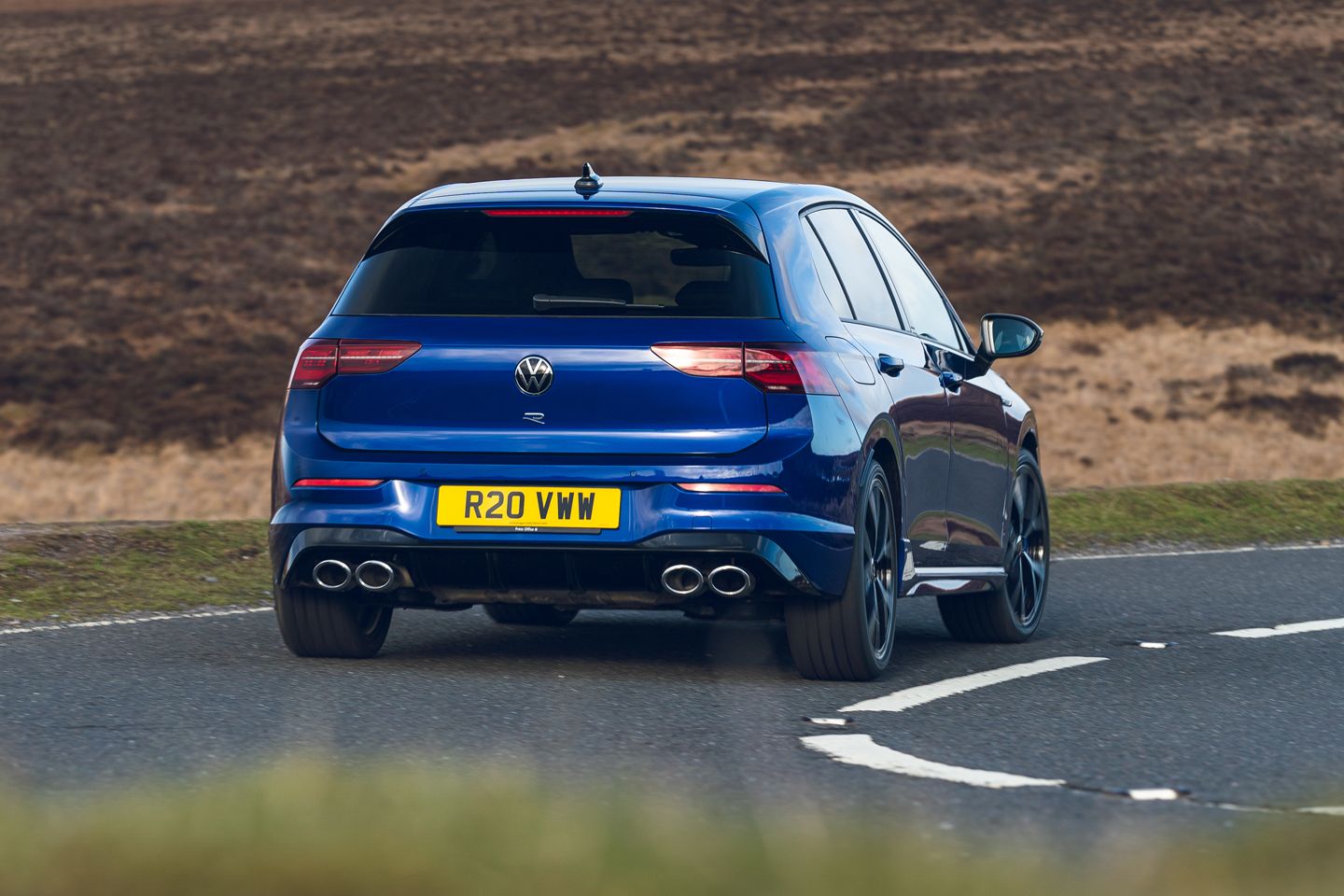
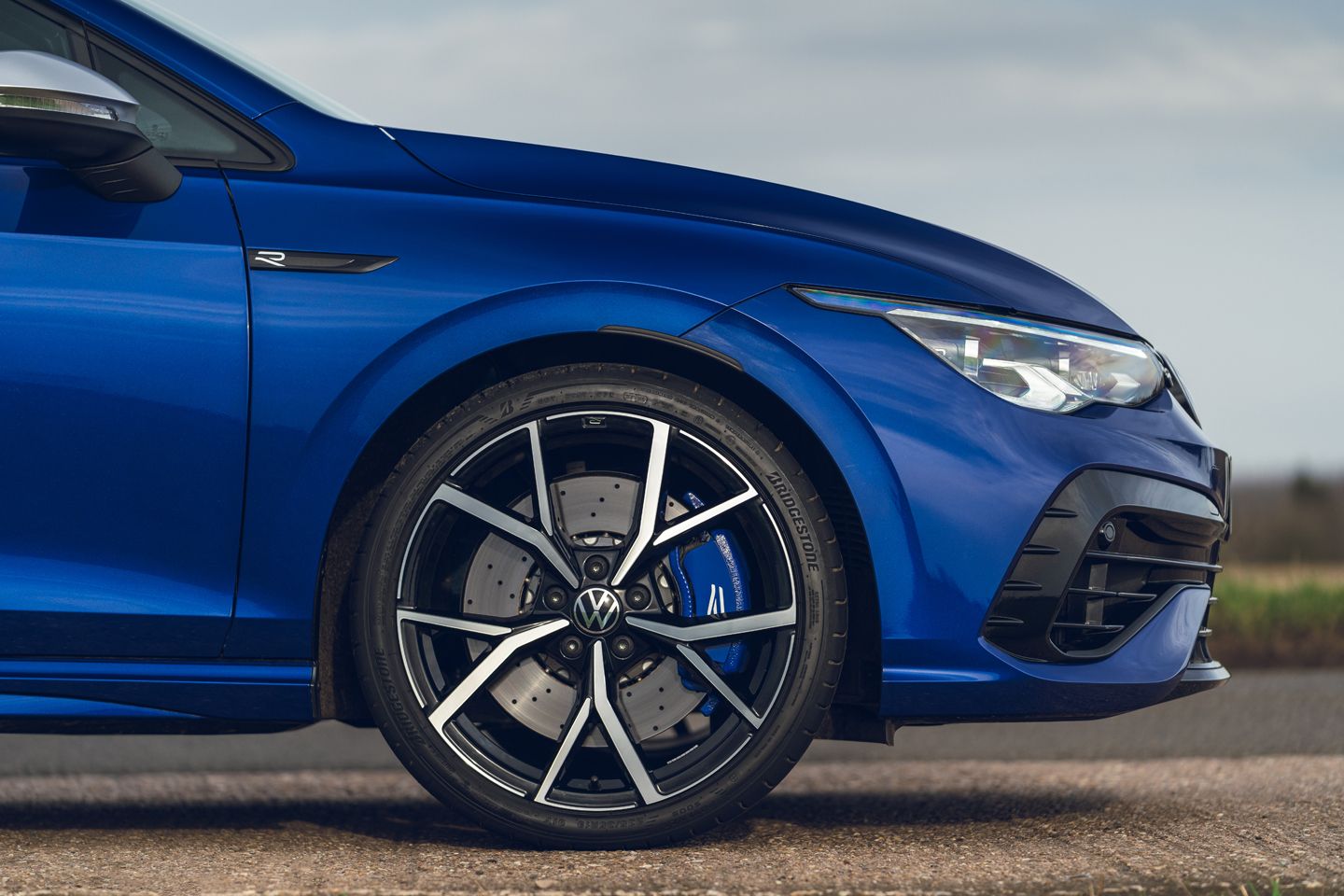
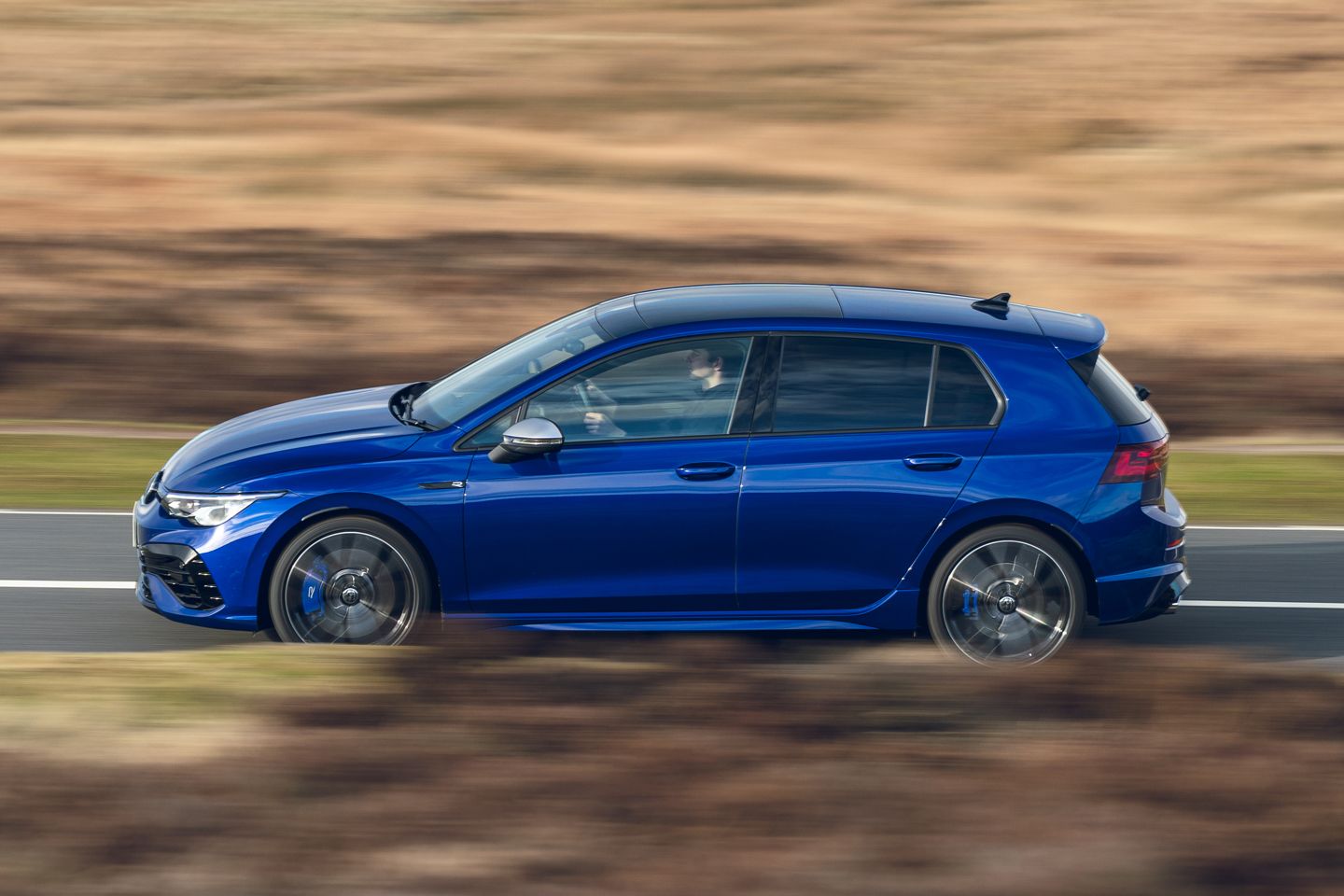
The R sat 20mm lower on its MQB platform than regular Golfs. Standard wheels were Jerez 18 inchers with two 19-imch designs on the options list. Lightweight (8kg each) forged aluminium ‘Warmenau’ 10-spoke wheels in silver or black were also available, but the R didn’t need them to deliver the kind of sweet-spot combination of security and fun, wet or dry, that most of us would love to have in any car. It was arguably the best Golf R to drive, albeit not necessarily the most exciting as the chassis was easily able to handle the power coming through it.
The Performance pack included a more in-your-face spoiler/wing affair plus two extra driving modes: ‘Drift’, which was self-explanatory, and ‘Special’, a sort of Nürburgring setup that was tailored towards roads with plenty of elevation and camber changes. Apparently that mode was only meant to be used on private roads with the top speed electronically limited.
The main fly in the ointment on the standard passive dampers was a nobbly low-speed ride. There were two cures for that: drive a bit faster, or grit your teeth and pay the £700-odd for the DCC adaptive dampers. These worked with Vehicle Dynamics Manager to continuously adjust the damping rates, torque vectoring and electronic diff lock depending on what driving mode you were in.
Some thought, with reasonable justification, that this active setup should have been standard on the R. In truth, even with DCC in place the ride on British roads with the default Bridgestone rubber was still on the firm side, but in typical British weather it was hard to dispute the precision or sureness of the R’s handling. Braking through the 357mm front, 310mm rear ventilated discs was more than up to the job irrespective of where and how you were driving it.
BODYWORK
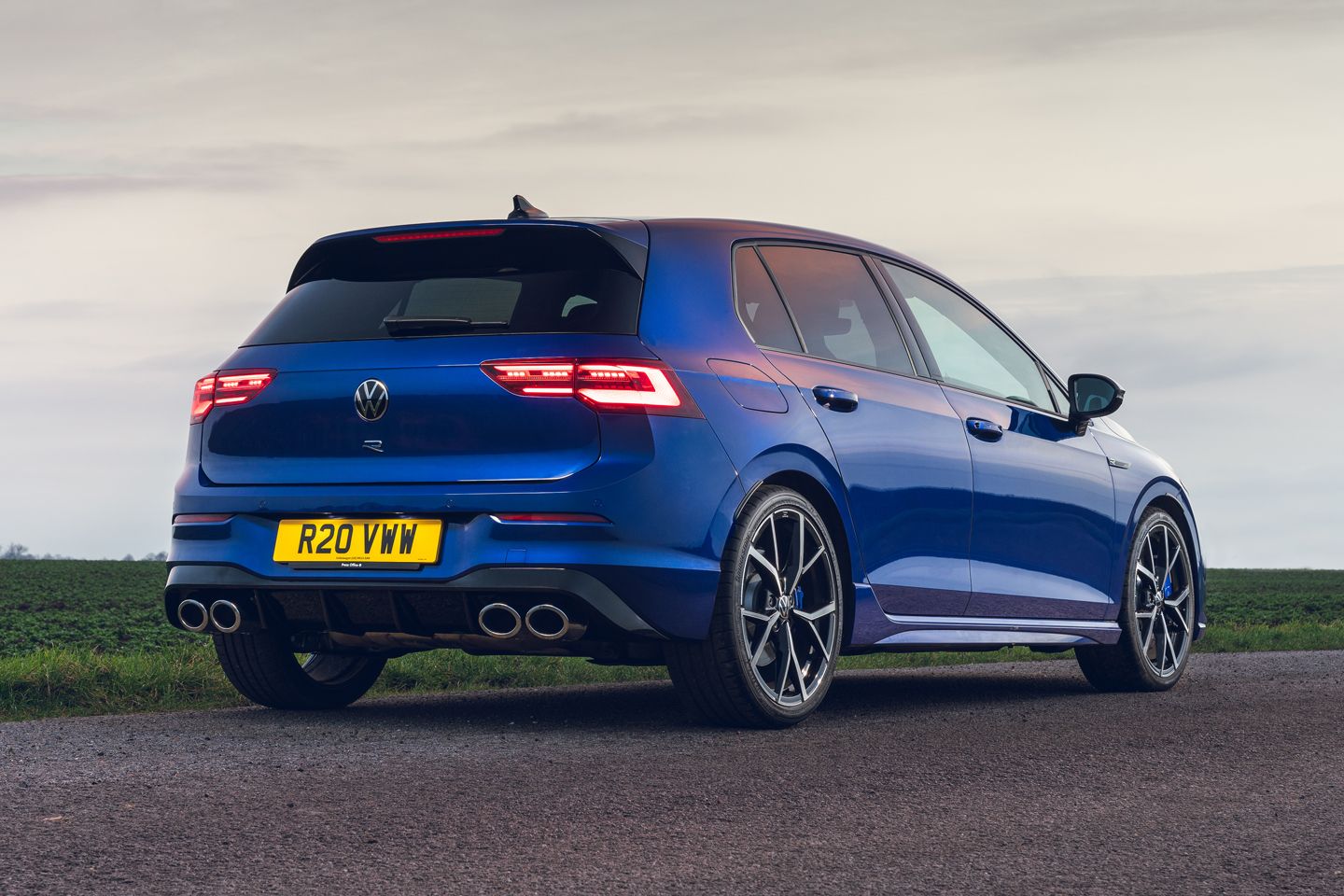
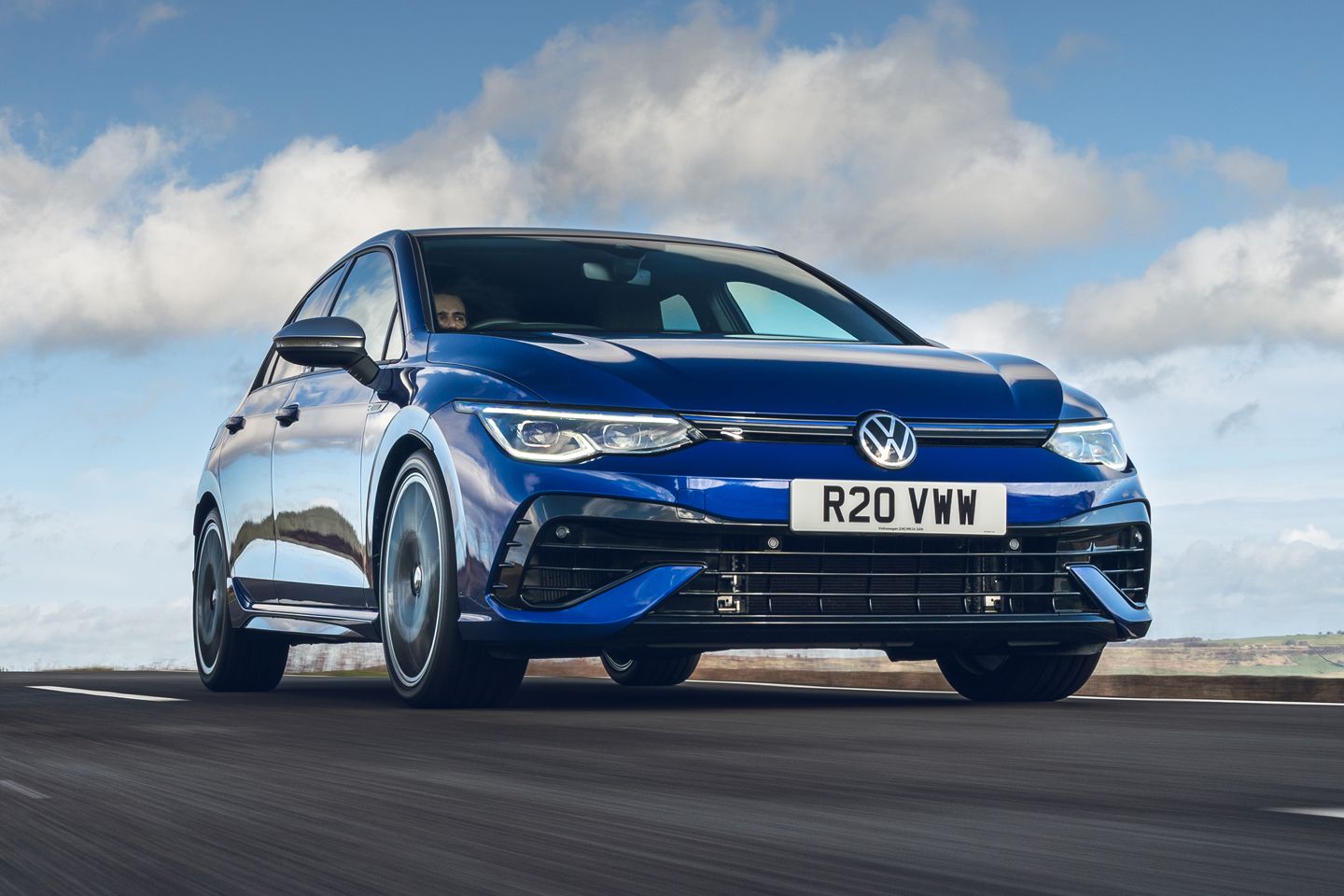
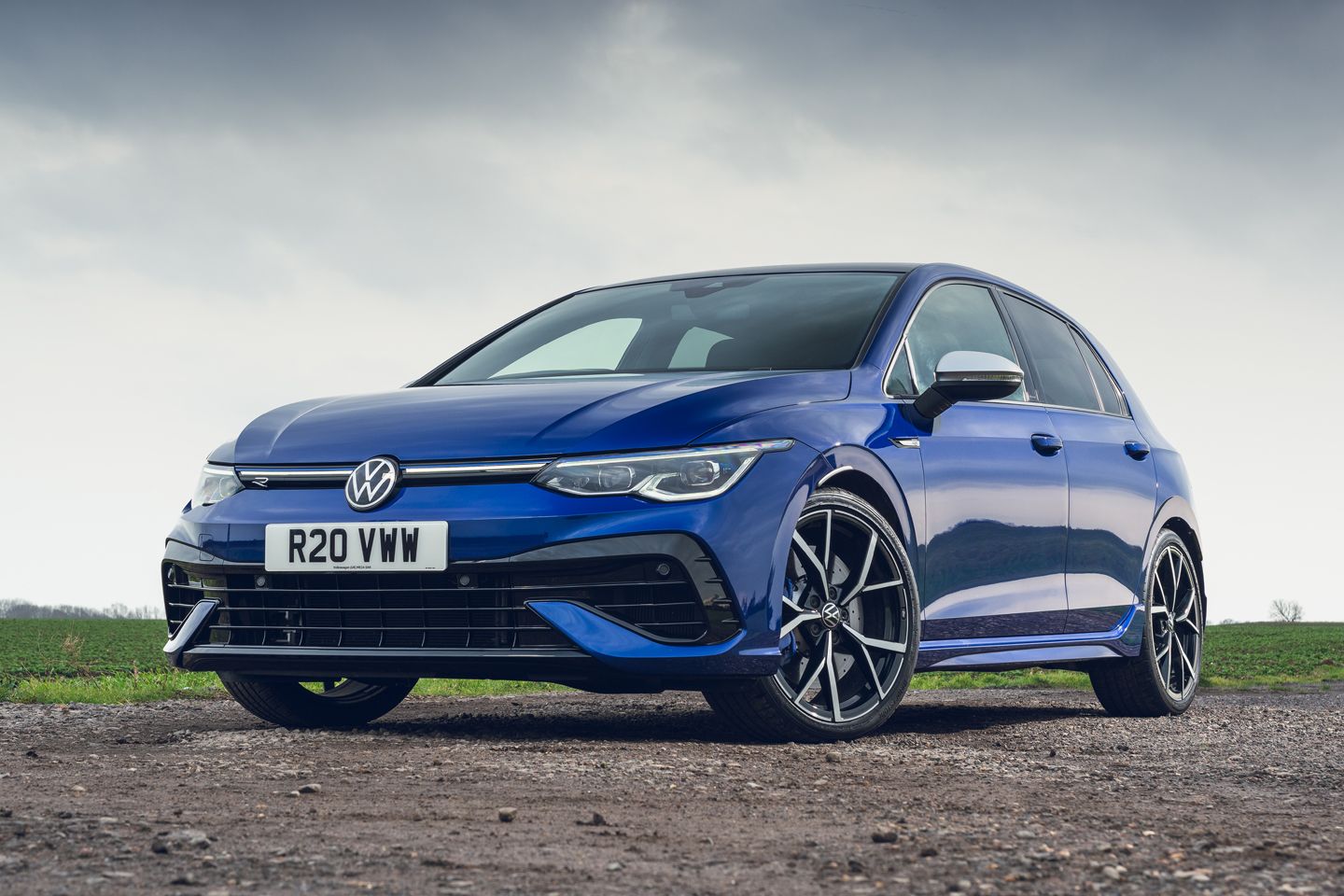
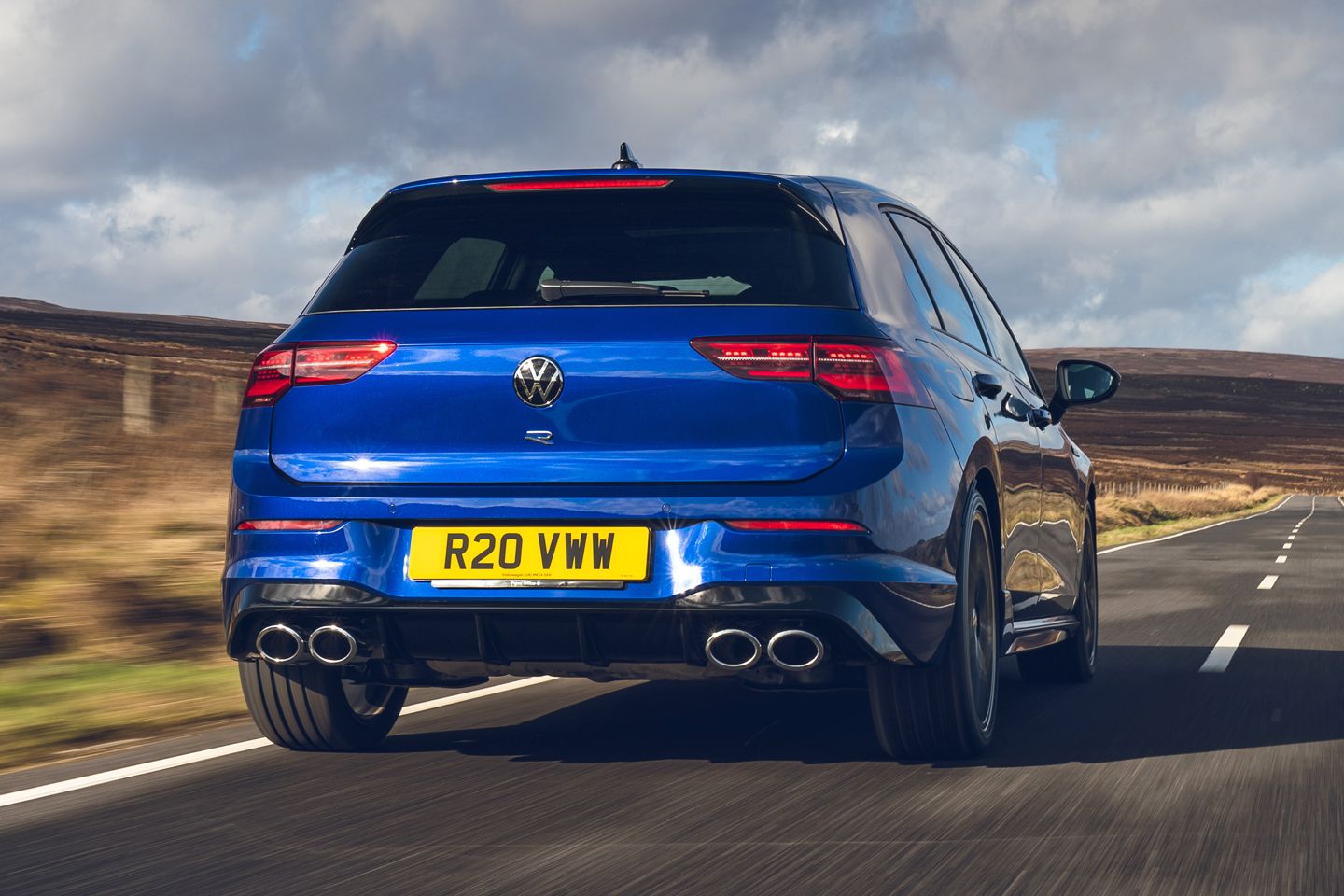
A near full-width grille, matrix lights and ‘air blade’ bumper at the front combined with a small, neatly integrated tailgate spoiler and twin exhaust tips on either side of a three-section diffuser to set the visual tone for the 8.5 R. ‘3D’ rear lights could be put into one of three strobe/flash displays to welcome you to the car or bid you farewell to it. Overall it was a well-judged restyling job that enhanced the basic Golf look without overplaying the R part of it too much.
There have been a fair few issues reported with the 8.5 R, most of them electrical. Some cars’ rear windows went up and down and the central locking came on and off without being asked. The VW app has come in for some criticism, warning of unlocked cars when they were locked or incorrectly telling the owners that they had the wrong password, forcing a reboot which lost all the settings.
Main headlights, rear lights and puddle lights have all gone squiffy, some grille light bars have been brighter on one side than the other, and windscreen washers have been reluctant to operate immediately, causing the wiper blades to smear a dry screen before any liquid arrives. In fairness we think that last one might be a historic non-return valve Golf design that’s intended to prevent freezing of residual fluid in the pipes.
Door fit could be a problem on gen 8 Rs. Although it was improved on the 8.5, the effort to shut the doors seemed higher and some owners have noticed squeaking from the seals in the first few weeks of their tenure. At least one car has had a poorly finished tailpipe with a sharp edge showing.
INTERIOR
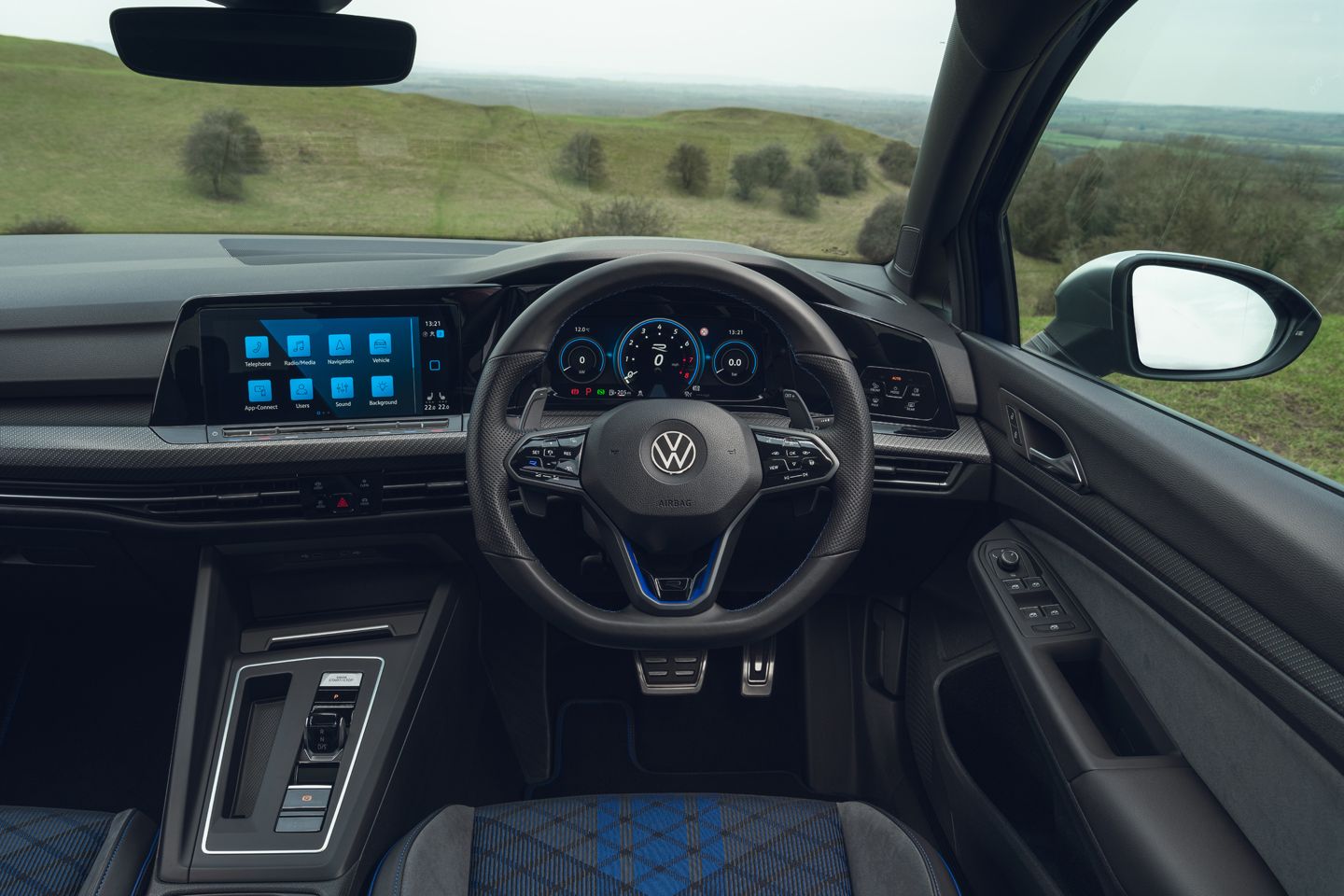
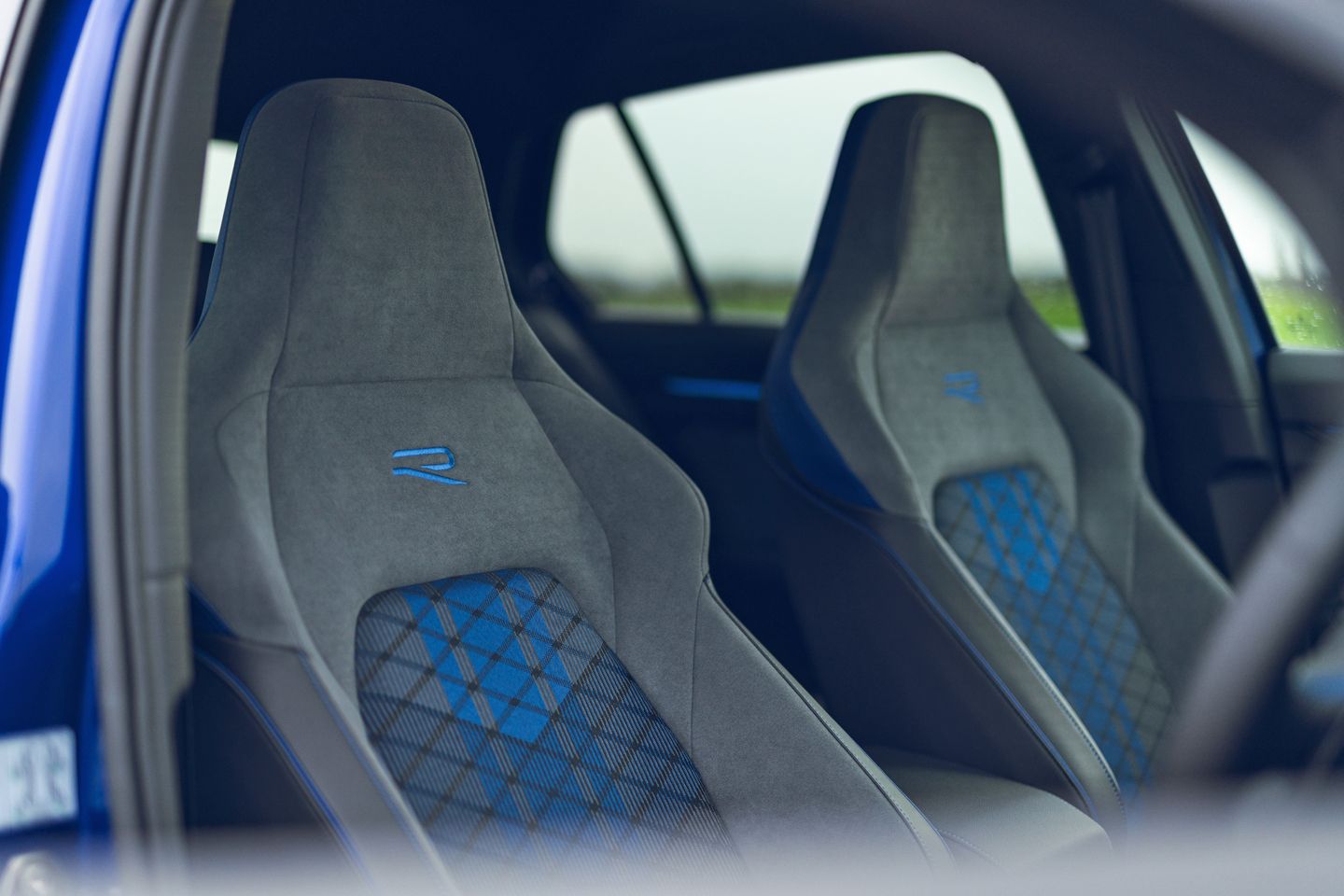
Although the 8.5’s cockpit with its blue highlights and ambient lights and excellent part-microsuede sports seats was a clear improvement on the 8’s in most peoples’ eyes, not everyone was convinced by the overall quality of the interior for a £45k car and it still couldn’t be hailed as a paragon of accessibility or ease of use. Thankfully there was a new 12.9-inch touchscreen (VW’s biggest) in Golf 8.5s that was definitely a step forward, at least in part because it could hardly have been any worse than the 10.2in one you got in the gen 8 car.
Whether the 8.5 dash was an advance on the more analoguey gen-7 arrangement was another matter. The 8.5’s system did make it easier to disable driving aids and get useful info than it had been on the 8, but there were still no physical buttons to press for the HVAC, volume control or ChatGPT-powered IDA voice assistant. VW did at least add backlighting to the screen slider functions so you weren’t just stabbing away in the dark at night.
Apparently it was too much of a faff to rework the steering wheel for the ‘R’ driving mode, so the R became the only model in the Golf range to retain capacitive (touch-sensitive) steering wheel buttons, a feature that most users found annoying. VW claimed to have the ‘optimised’ their responsiveness for the 8.5. What they meant by that was that you needed to press them harder than before, which was good if you thought the old ones were oversensitive, or bad if you felt that hard presses were out of keeping with the lithe feel of the car.
New, larger shift paddles were nicer to operate than the gen-8 R’s shorter ones. Unfortunately there was a problem with them sometimes ‘failing to proceed’, the gearbox randomly coming out of manual mode and reverting to an auto mode until you stopped and restarted the car.
Quite a few cars seemed to have this issue, and not just UK ones either. It was initially traced to a fault in the steering wheel button modules which controlled the paddles. Dealers were reporting that a related software patch was scheduled for release in June 2025, with affected cars having to be taken into the dealership for that rather than an OTA fix. However the June date passed with no action taken. The next thing was VW UK (and for all we know other national VW networks) saying that they couldn’t find any fault codes during their diagnoses. Independent engineers couldn’t find any either. Connected to this, some heated steering wheels haven’t worked in the way that they were supposed to.
Some cars received new wheel button units but that didn’t solve the problem in every case, with dealers having trouble pairing them to the car. A big PV4 baseline software update was meant to be released in September but the fixes didn’t seem to start working in earnest until the end of 2025, some going on well into this year (and still happening as we speak in May), some still without resolution.
More than one owner has been told that they can’t have the update because when the dealer opens the car’s ‘file’ it comes up blank. Miraculously, one dealer admitted to having recreated the loss of paddle function on their own test run and agreed there was a fault. Then they said they didn’t know what to do about it. You can see why there’s been quite a bit of anger about all this on R forums with owners trying to reject their cars on the back of it, at least one of them successfully.
Android Auto and Apple CarPlay were both wireless and there was a wireless charging pad too, but infotainment operation and connectivity has been troublesome. Climate control ‘sync’ has failed to work on at least one gen 8 R, leading to (eventual) warranty replacement of the CC unit. We don’t know if 8.5 Rs have been similarly affected though. Crinkling to the rear part of the bolsters on some 8.5 R driver’s seat bases has resulted in new seats being supplied under warranty. The fake noise pumped into the cabin by the sound actuator was a bit beefier than previously. If you didn’t like it, you could turn it off completely.
PH VERDICT
The 8.5 R was well received by the press, and justifiably so. It was a practical, secure and engaging performance hatch, and a ‘pure’ one too if you weren’t into the idea of hybrid assistance. The overall R experience could be seen as more efficient than emotive, but that low-profile approach to high-speed motoring was very much an R thing, and one that suited many owners.
You could inject more emotion into it by bringing the torque vectoring into play, but the type of driving required for that to work might be seen as overly aggressive for public roads. Availability of a manual gearbox would certainly have appealed to some. That didn’t happen, but given the performance on tap it was maybe just as well that you had one less thing (i.e. physical gearchanging) to think about.
In terms of ‘specialness’ you might think that the straight GTI has the edge over the R because there weren’t anywhere near as many tempting purchase deals on the GTI as there were for the R so it’s a much less common sight on the roads.
The 8.5 R’s driver interface was an improvement on the 8’s, which had admittedly set a low bar, but it was still far from perfect and there was some grumbling about the perceived quality for the money. The Cupra Leon with the same mechanicals as the R was very similarly priced but it came with a five-year warranty rather than the VW’s three.
As we think you might have noticed from this story there have been a fair few issues associated with both the 8 and the 8.5 R and owners have understandably been getting rather annoyed by the tardiness of the network’s response and their apparent reluctance to issue recalls. If you’re thinking of buying an 8.5 R we’d recommend you take a look at an owner’s forum like vwroc.com. The thread entitled ‘8.5 R Gremlins’ is 91 pages long.
The most affordable 8.5 R on PH Classifieds at the time of writing in May 2026 was this ’25 car in black with 5,700 miles on the clock at £37,490. Black Editions on PH started at under £38,000 in the shape of this higher mileage (13,700) ’25 car in black at £37,776. For a little more (£40,989) you could have this Approved Used ’24 car in white with 2,500 miles, adaptive suspension and the Akrapovic exhaust.


The 8.5 has grown on me, I really didn't like the styling at first but see a few now that I like.
Just couldn't get on with the screens inside though.
7 & 7.5 is still peak Golf.
 . Love these detailed reviews too.
I feel I should like these but don't; the usual demographic of ownership completely ruins them for me. Perhaps I just live too close to Birmingham. It's a shame because I'm probably pretty much the market VW is aiming them at.

So far so good.
Struggling to think of a future replacement.
Anyone else actually bought one?
Maybe even less than 5% of 5%.
Brilliant car. I’ve no idea why the estate is apparently not popular in Europe (I’m in Oz).
Personally I’d never buy a hot hatch, but a fast wagon (what we call them here) has plenty of appeal.
Indeed, that is what I did. And 2 years later no regrets.
Never seen another one either - at least not being driven. I passed one on the way back from a road trip to Scotland on the back of a car transporter. Probably being taken from one collection to another. As most are. Sadly.
As for the interior, those seats are nice to sit in but evil to look at. Black or black leather please. And the touch screen and the menus.
Bought a new A35 with £7k off instead.
Gassing Station | General Gassing | Top of Page | What's New | My Stuff