
New VW Mission Efficiency a little on the nose
In 2002, the VW 1-litre concept was a Piëch-era moonshot. This ain't that
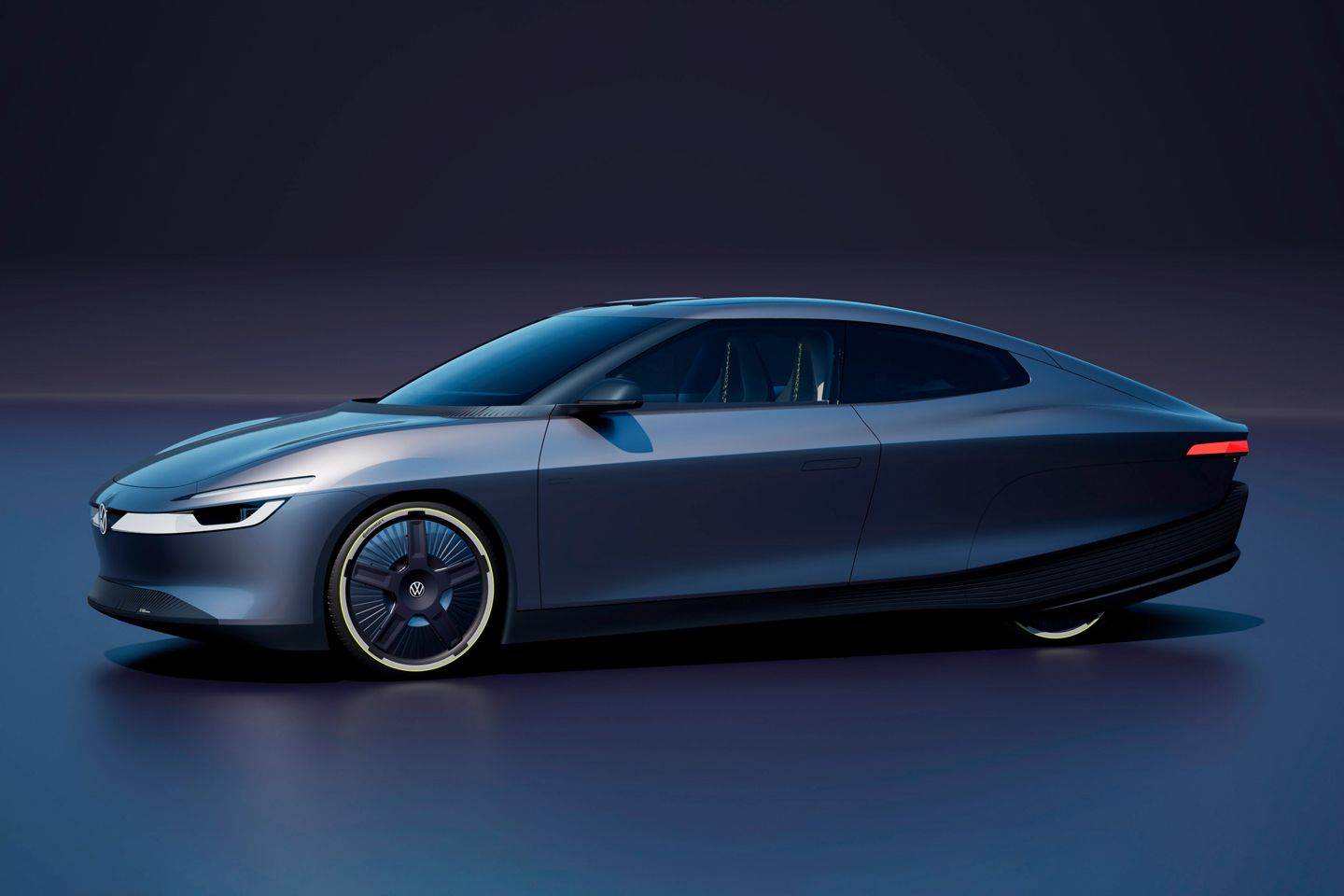
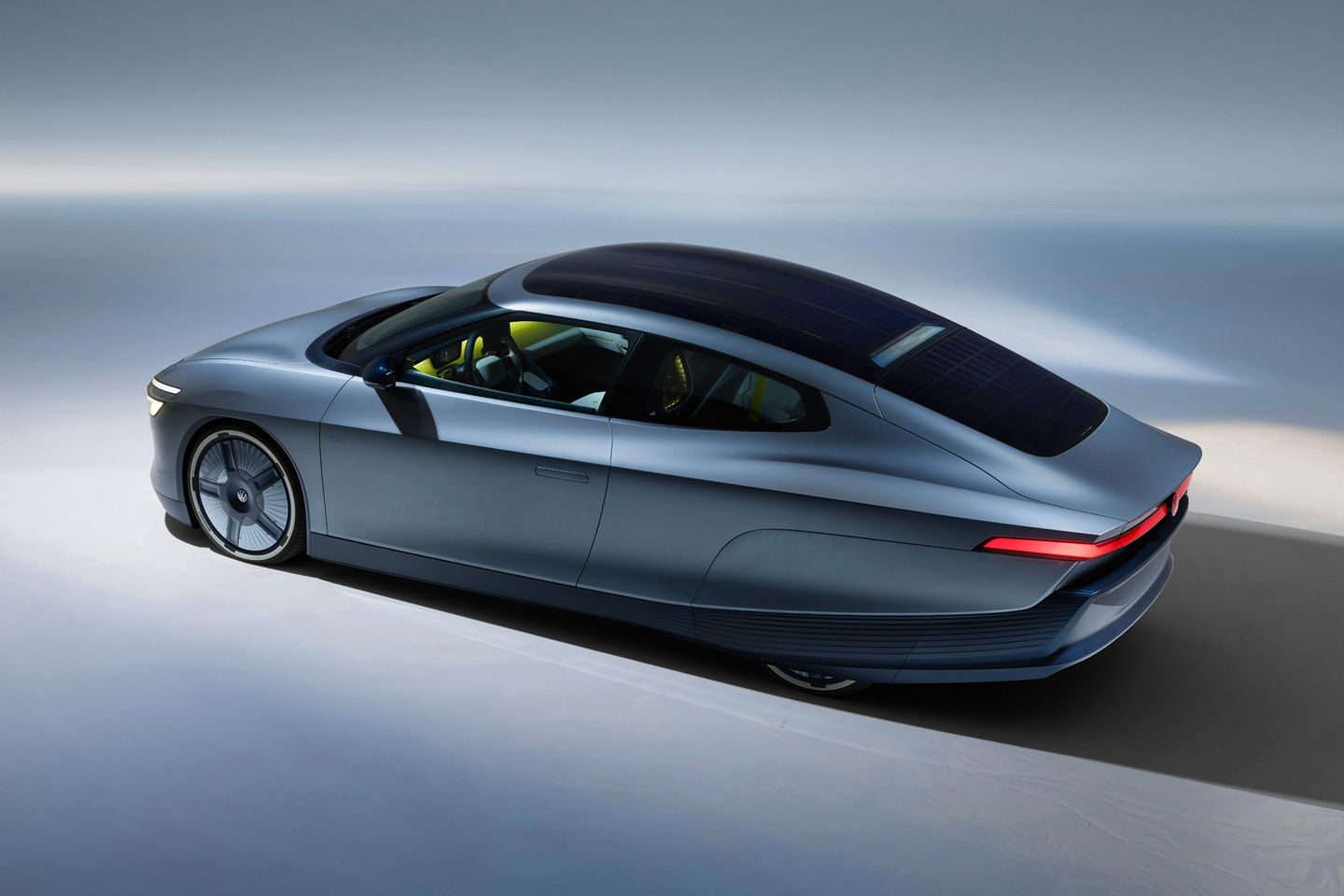
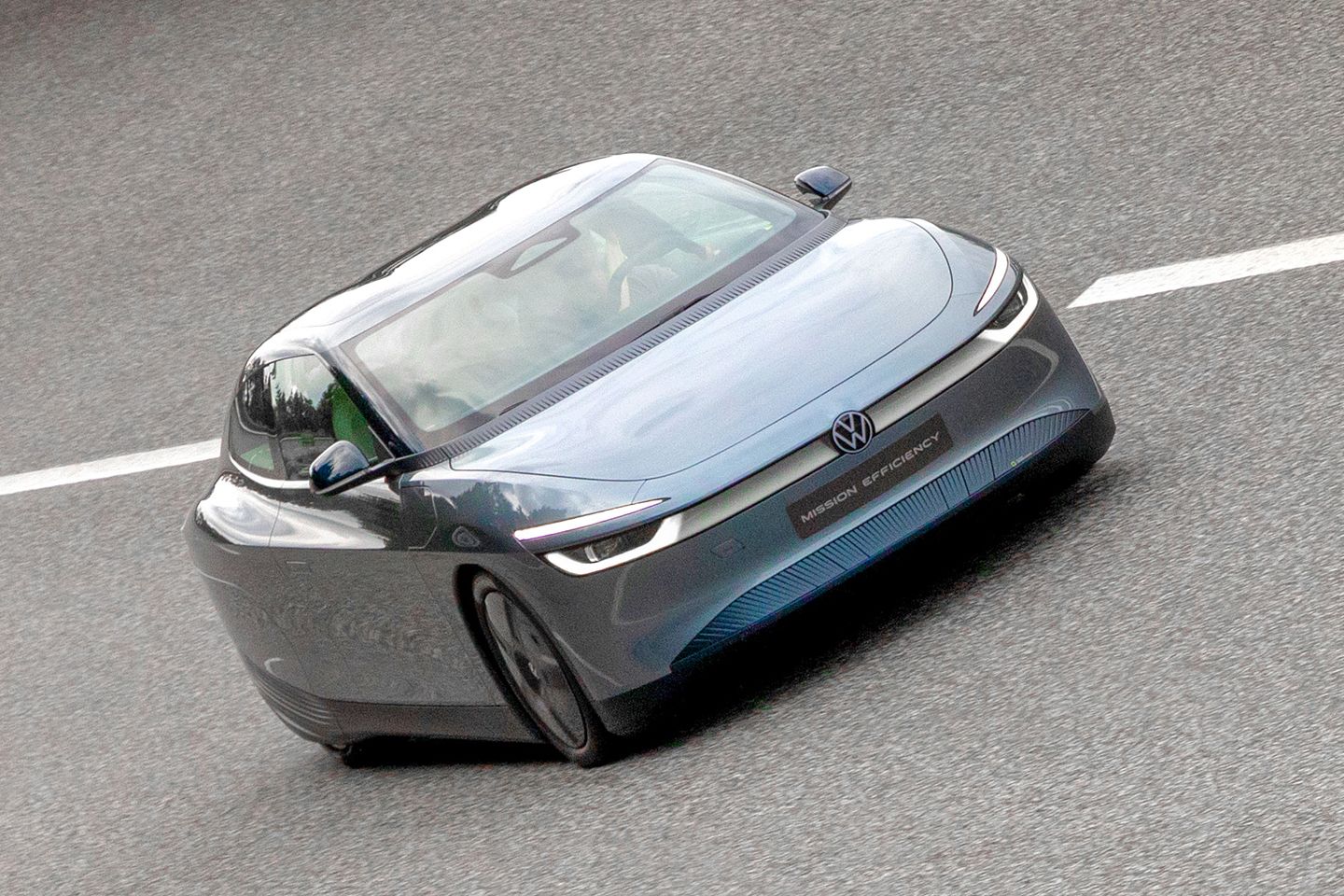
When times are tight and the water choppy, you tend to go with what you know. VW is on the cusp of retiring a 75-year-old brand name and dispensing with 50,000 employees. Now probably isn’t the time to be innovating like Xerox PARC. Much easier to repeat an earlier feat of engineering excellence, using existing technology - cue ‘Mission Efficiency’, a car that looks very much like an XL1 on top, but manages to be wholly less interesting underneath.
The XL1, launched for real in 2012 after a decade of development, was very cool. It didn’t just look futuristic, it contained an actual vision of the future: a natty 800cc two-cylinder diesel engine mated to a 27hp electric motor. Fast, it was not. But it took parsimony to unheralded levels for a production car. Together with its absurdly slippery shape and a kerbweight of just 795kg, VW reckoned more than 300mpg was achievable. Beyond the lab, you could reliably get more than 100mpg.
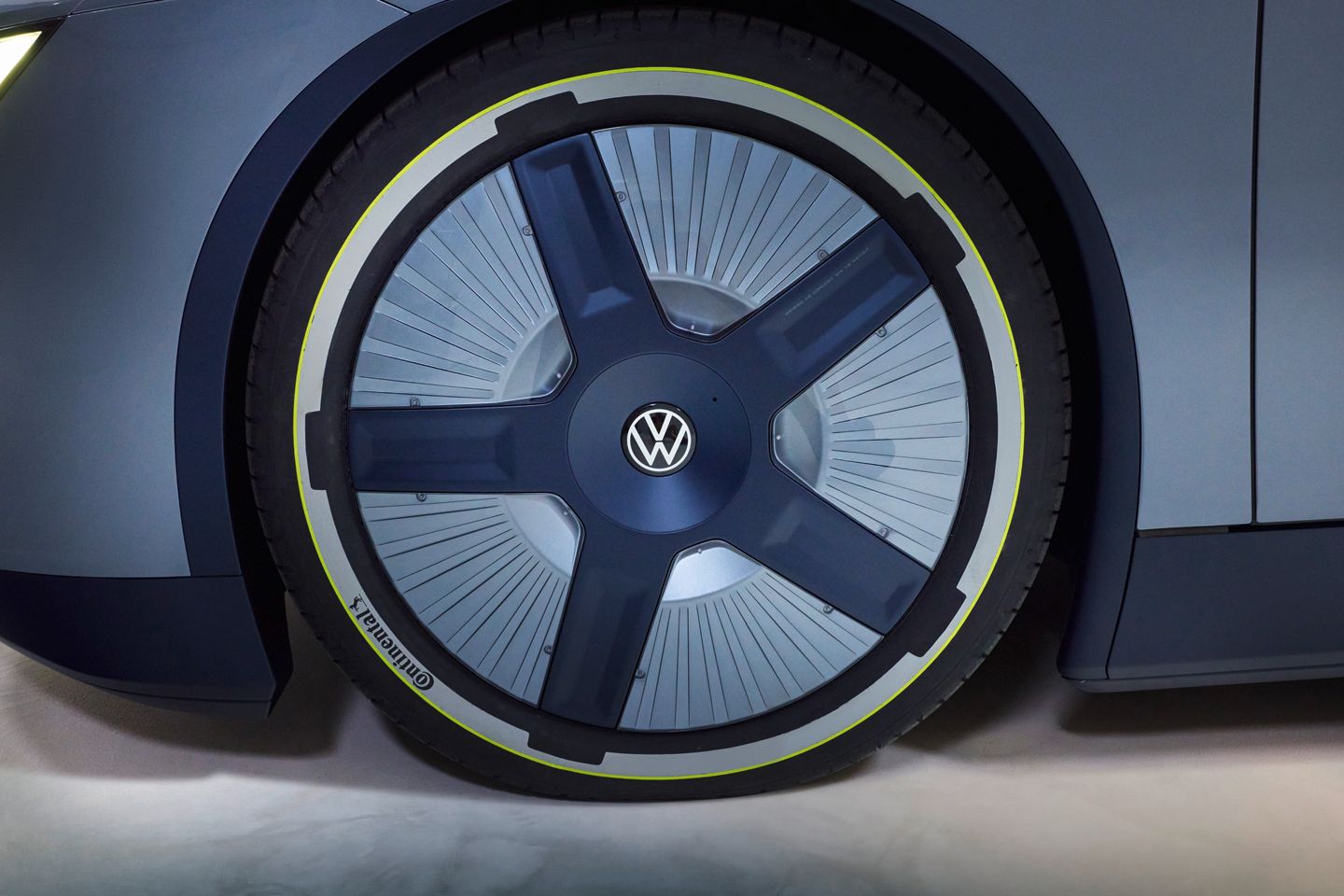
That car had a drag coefficient of 0.186. The spiritual follow-up sets ‘a new record for road-approved cars’ with a value of 0.158. That is undeniably impressive, though it uses much the same teardrop shape as before, along with active cooling air flaps and a fully clad underbody. But the platform and chassis are mostly standard MEB+, modified to allow for the longer body, and to accommodate a rear axle made 170mm skinnier. VW says the body features CFRP and aramid composite components.
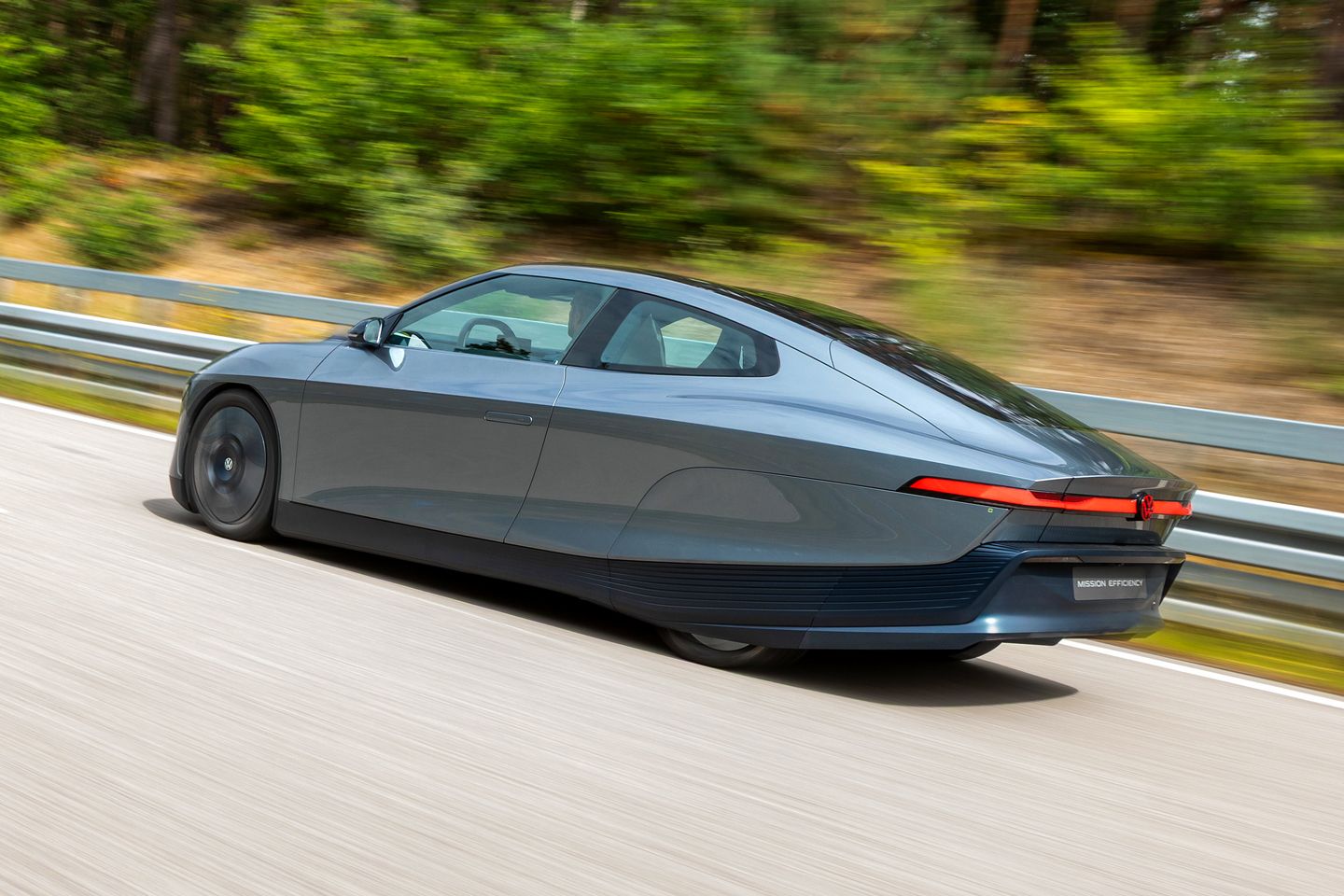
Nevertheless, because it shares the running gear of the ID. Polo (albeit adapted for the Mission Efficiency in various subtle ways), the concept is not a flyweight in the manner of its predecessor. VW hasn’t officially announced a figure, though reports elsewhere suggest it tips the scales at 1.6 tonnes - slightly more than the production hatchback that gets the same 135hp front-drive motor and 54.9 kWh battery. And effectively twice the weight of the XL1.
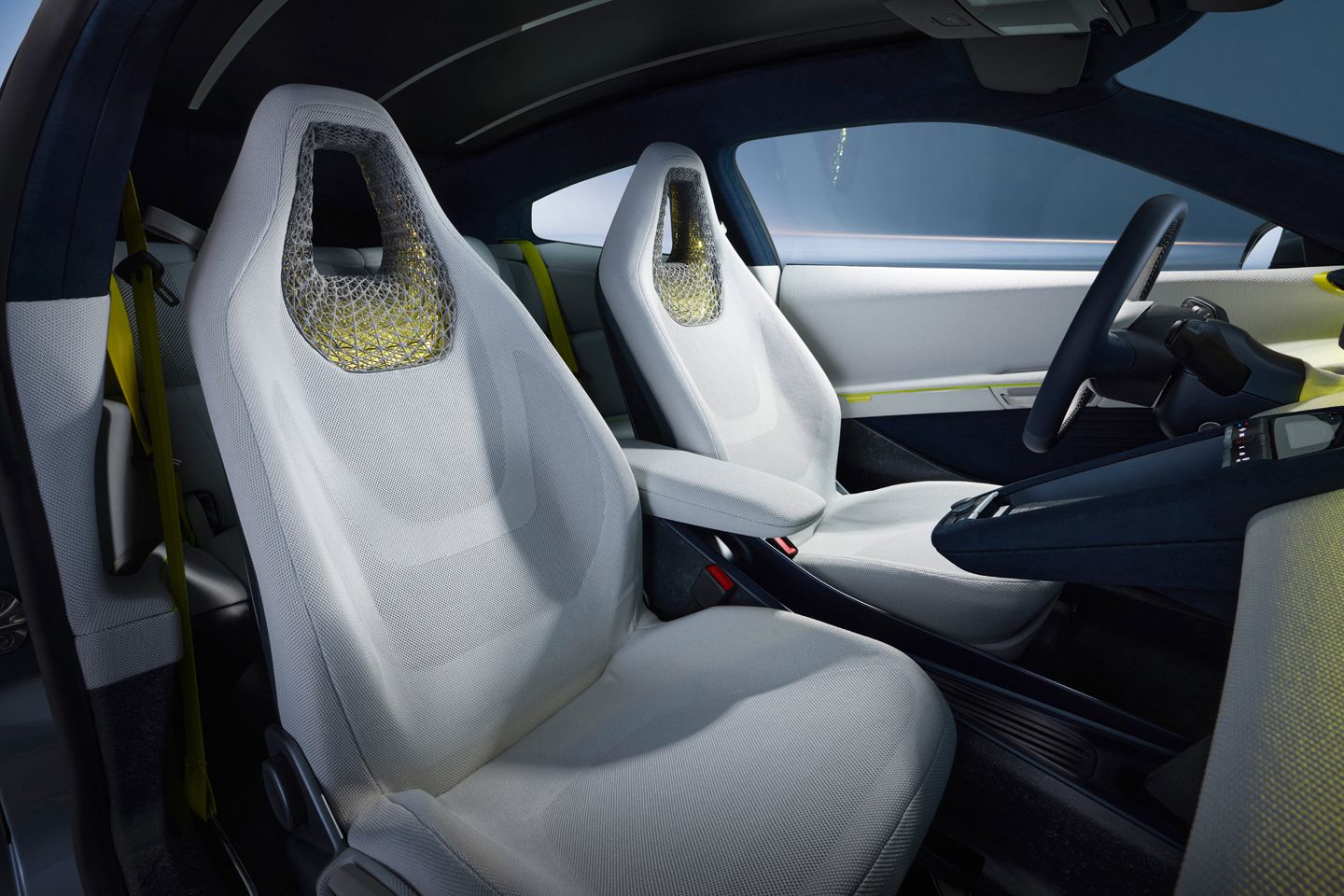
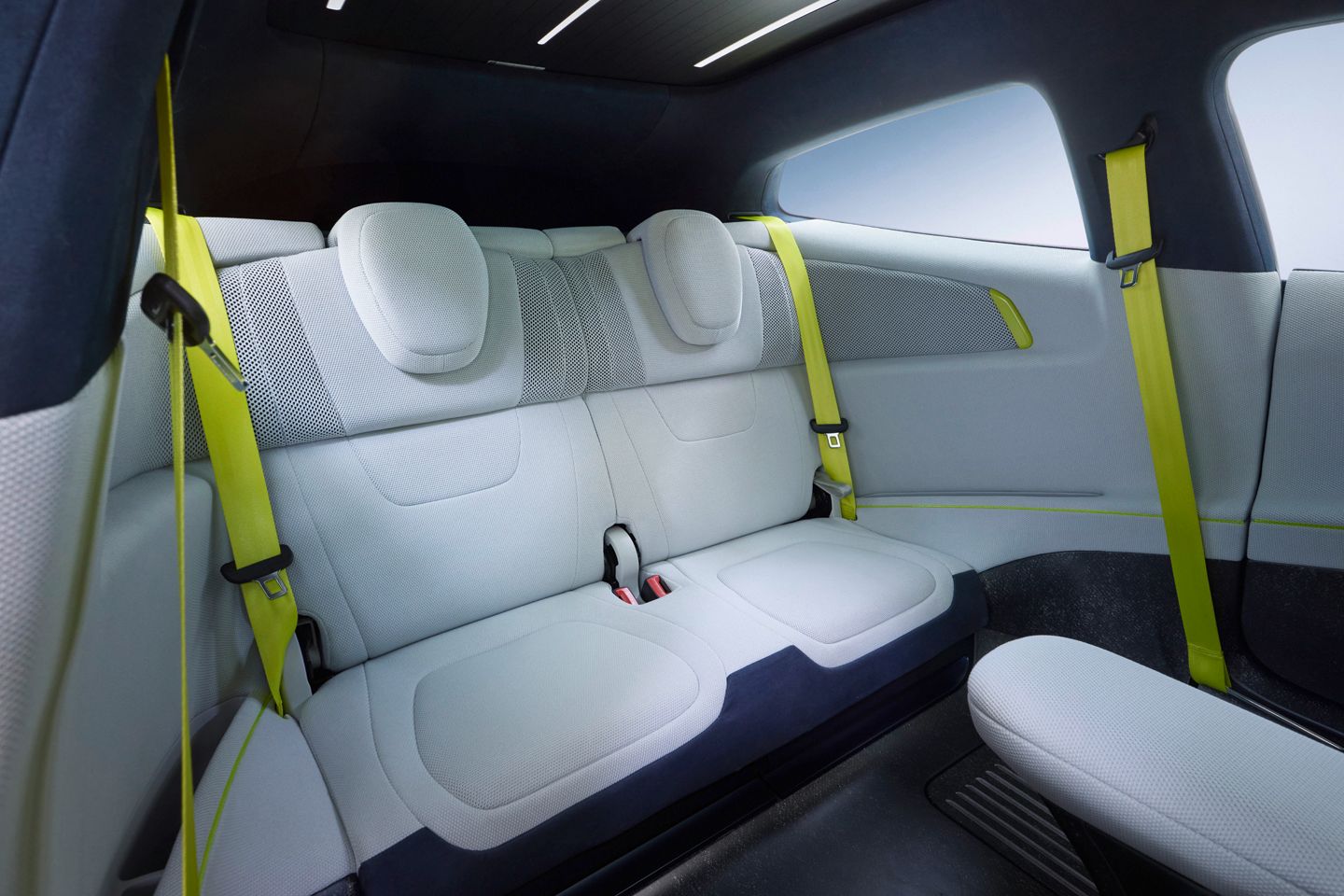
Granted, the Mission Efficiency is intended to be much more practical than the diesel-hybrid two-seater. It was conceived as a 2+2 with 481 litres of boot space, and while there is a height restriction on those in the back (anyone over 5 ft 3in is encouraged to seek alternative accommodation), VW says it could ‘theoretically’ be used by a young family of four. Although they’ll need to bring their own entertainment - despite the presence of 370W solar panels on the roof and boot lid, VW has opted to jettison an infotainment display and speaker system.
In exchange, you do get a striking amount of range for such a (comparatively) small battery: more than 500 miles in ideal, constant speed conditions and VW suggests that the accompanying 6.89 kWh/100km efficiency is also record-setting. In the real-world, during a 794-mile test run - which included a single recharge along the way - it is said to have achieved 8.2 mi/kWh which is dramatically more than ID. Polo’s 4.5 mi/kWh. Mission Efficiency achieved, then, based on its maker’s targeted metrics - although Mission Make The Best Of It might be more appropriate. VW says it might build a production version. It probably has bigger fish to fry.
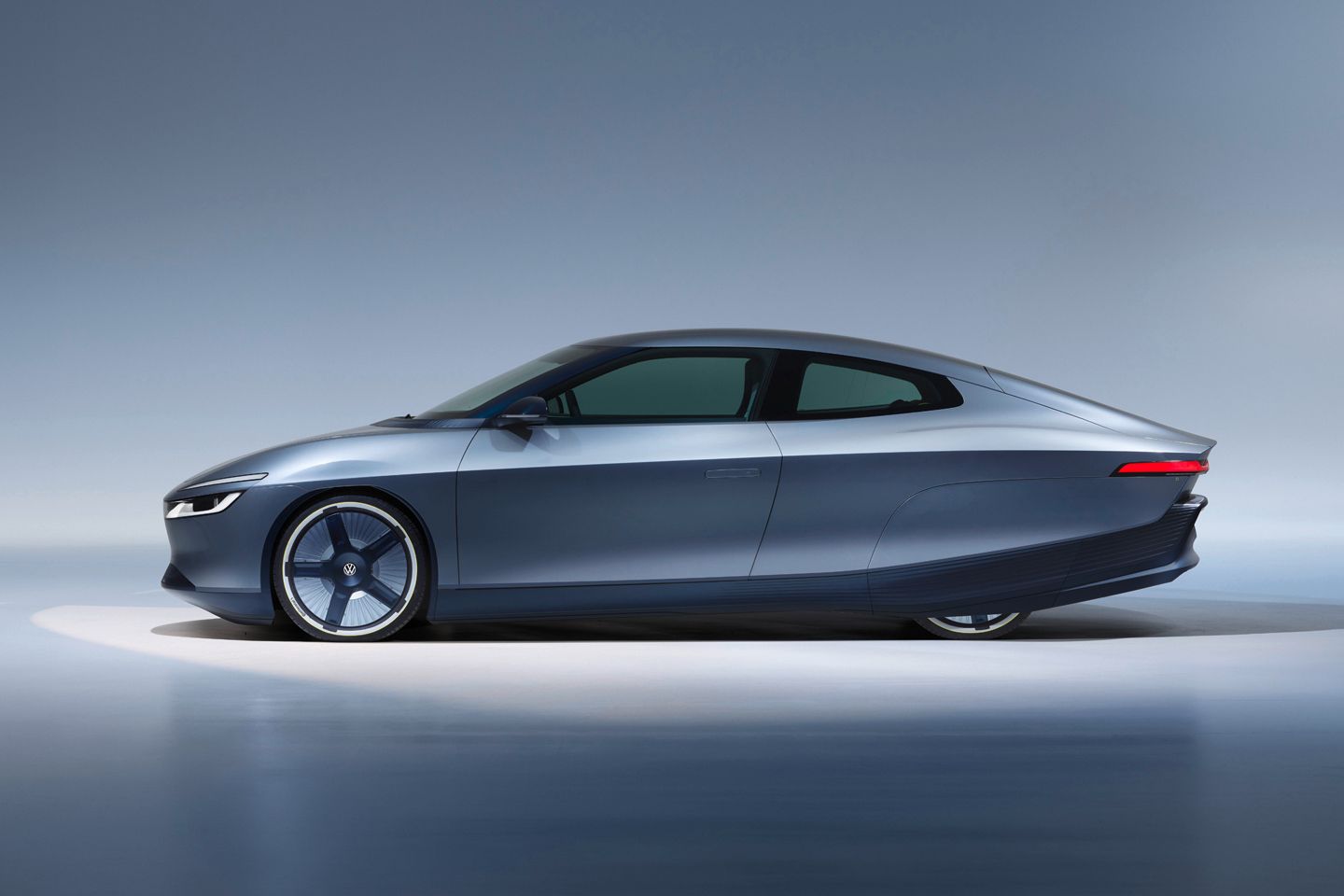


If you can marry a really low Cd to car that's still fairly practical, that could be dynamite for EVs. It gives you really significant extra range for free.
It also gives you an excuse to make your car look significantly different and more modern compared to other cars. Form will clearly be following from function, which I'd suggest is almost always more compelling than screwing around with design details purely for the sake of change.
I also like how the interior controls are based of a Polo and done in a way the screen is your tablet/phone and not permanently on display - shown at 4min mark here: www.youtube.com/watch?v=4B_ANA_upG0
Are the electronic ones a fancy waste of time?


With thin, low rolling resistance tyres, and steady cruising, the weight shouldn't be so much of an issue. Drag is the main cause of losses especially as speed increases (square law).
You would think that the most basic phone mirroring display wouldn't use that much energy to warrant omission.
"0.158 Cd" ok but what about the number that really matters, the CdA. If they don't communicate about it, there's probably a reason...
Gassing Station | General Gassing | Top of Page | What's New | My Stuff