
Seeing things in a different Luce | PH Footnote
Now the dust has settled, were we too quick to judge Maranello's debut EV?
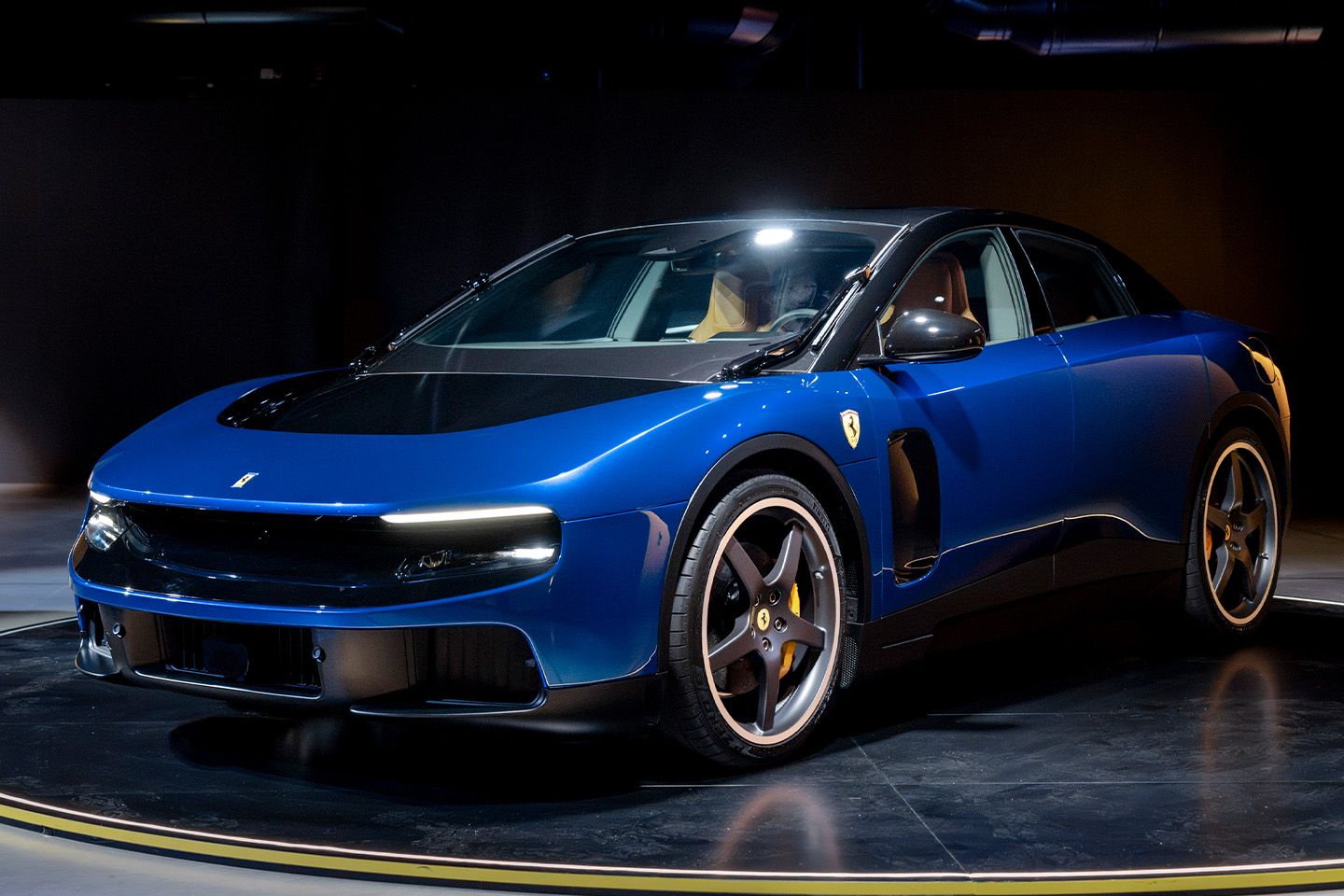
Even a cursory look at the immediate aftermath of the launch of the Ferrari Luce would suggest its first-ever all-electric car was a total disaster. Some seven billion euros were wiped off the firm’s market cap in the blink of an eye, while members of the Italian elite, from former company president Luca di Montezemolo to the deputy prime minister, expressed their disdain for the new EV. Not to mention the thousands of comments left on our original news story, ranging from fierce outrage to total bewilderment. It gave Jaguar’s Type-01 a run for its money for the most controversial car reveal in history, and for a few days at least, it looked as though Ferrari had made a rare and massively expensive miscalculation.
However, it didn’t take long for the dust to settle and the full picture to emerge. Ferrari’s shares rebounded in a matter of days before company boss Benedetto Vigna announced that its order books were full for 2027. Then, at last month’s Monterey Car Week, chassis zero sold for a record-breaking $40 million (or £30.3 million) at auction, with the proceeds going towards the Ferrari Foundation charity. And while the social media backlash was hardly the reaction Ferrari would have wanted, it ultimately generated an unprecedented level of interest online. All publicity is good publicity, etcetera.
That being said, Ferrari’s message to the Luce’s detractors has been along the lines of ‘don’t knock it until you try it’ - or at the very least until you see it in the metal. The same was said about the 849 Testarossa, which faced a fair bit of initial criticism for its awkward press shots but looks sensational in person. Given that the Luce has faced just as much flak for its styling as it has for its lack of combustion power, we agreed to head to Maranello and revisit one of the most significant cars of the 21st century.
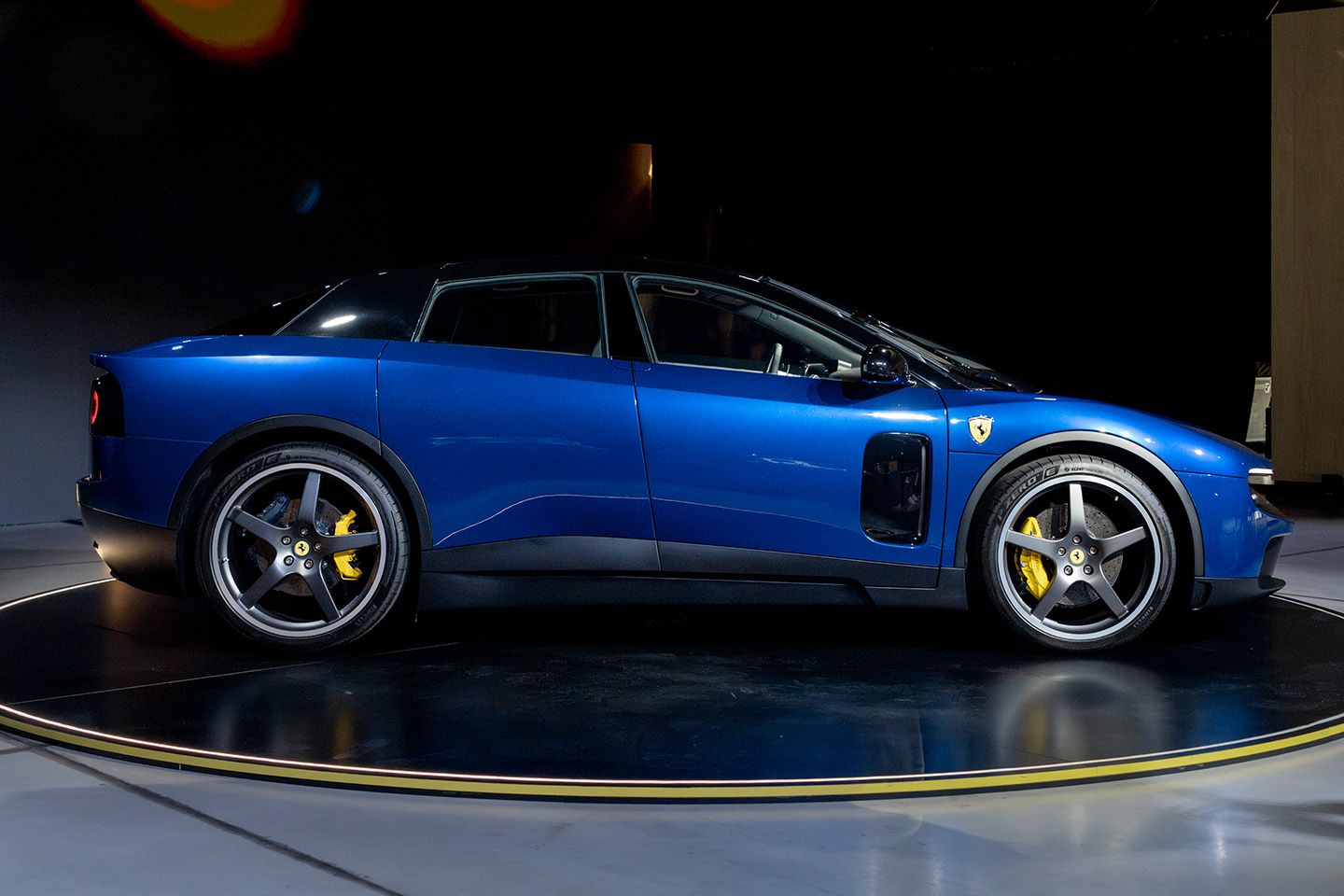
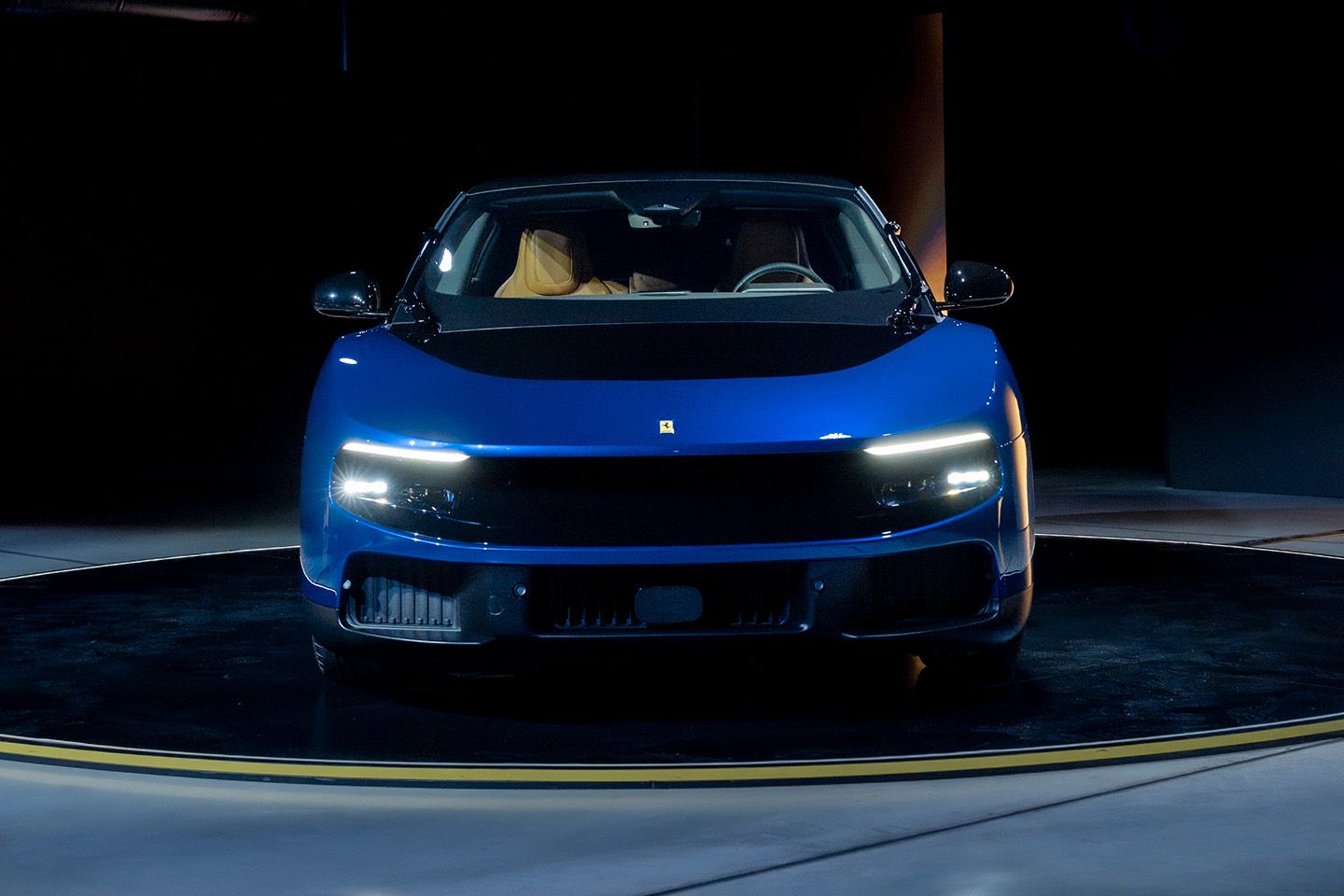
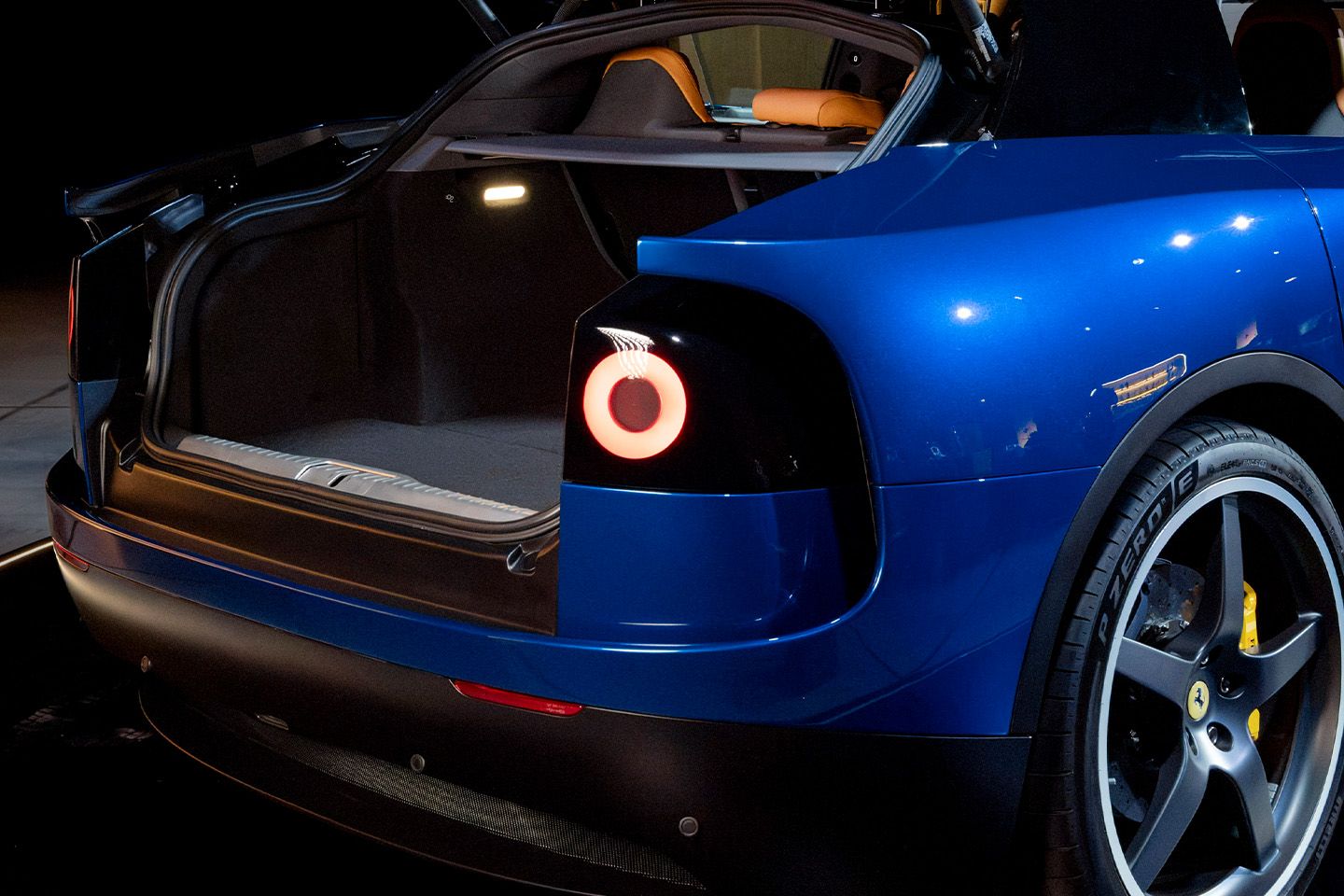
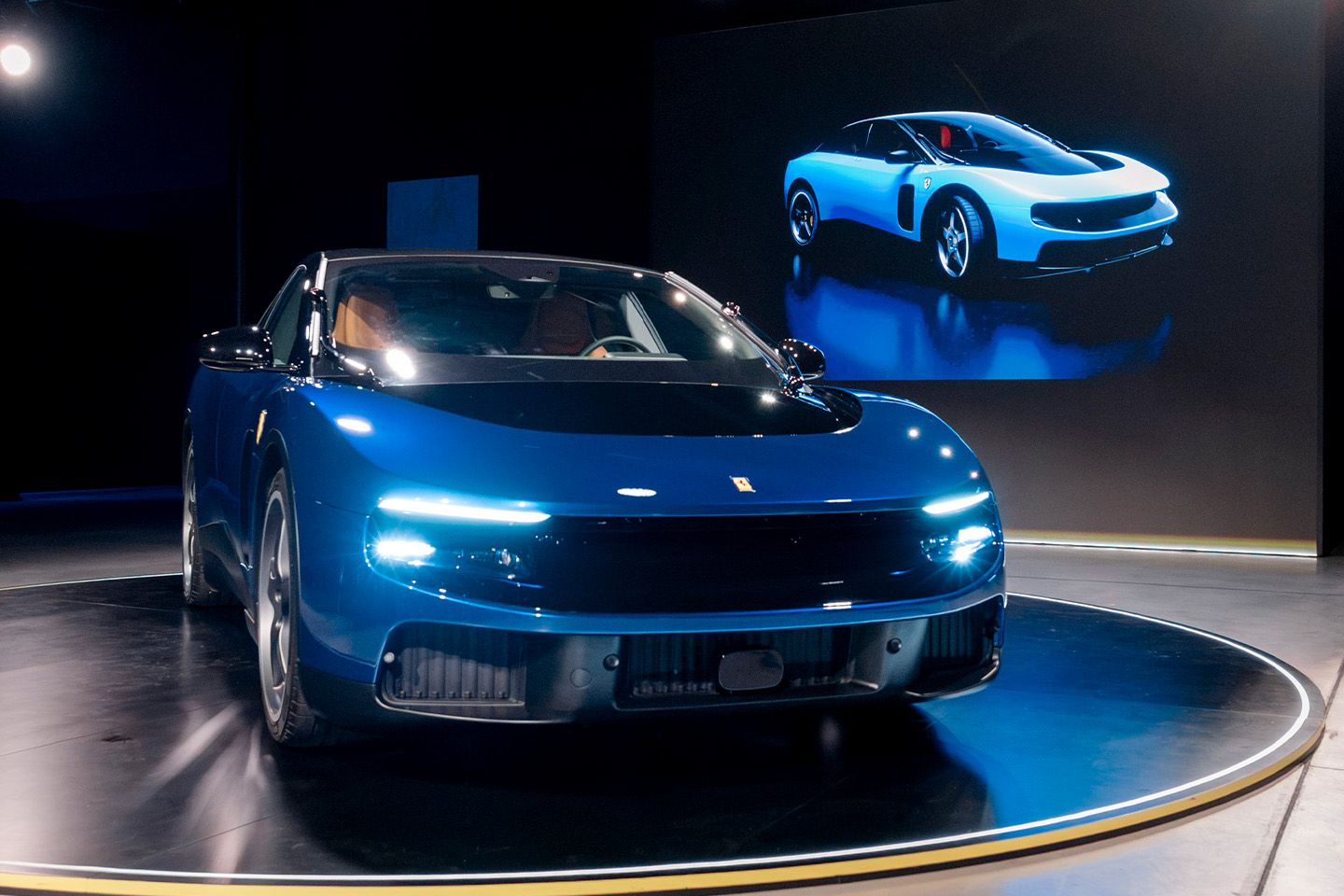
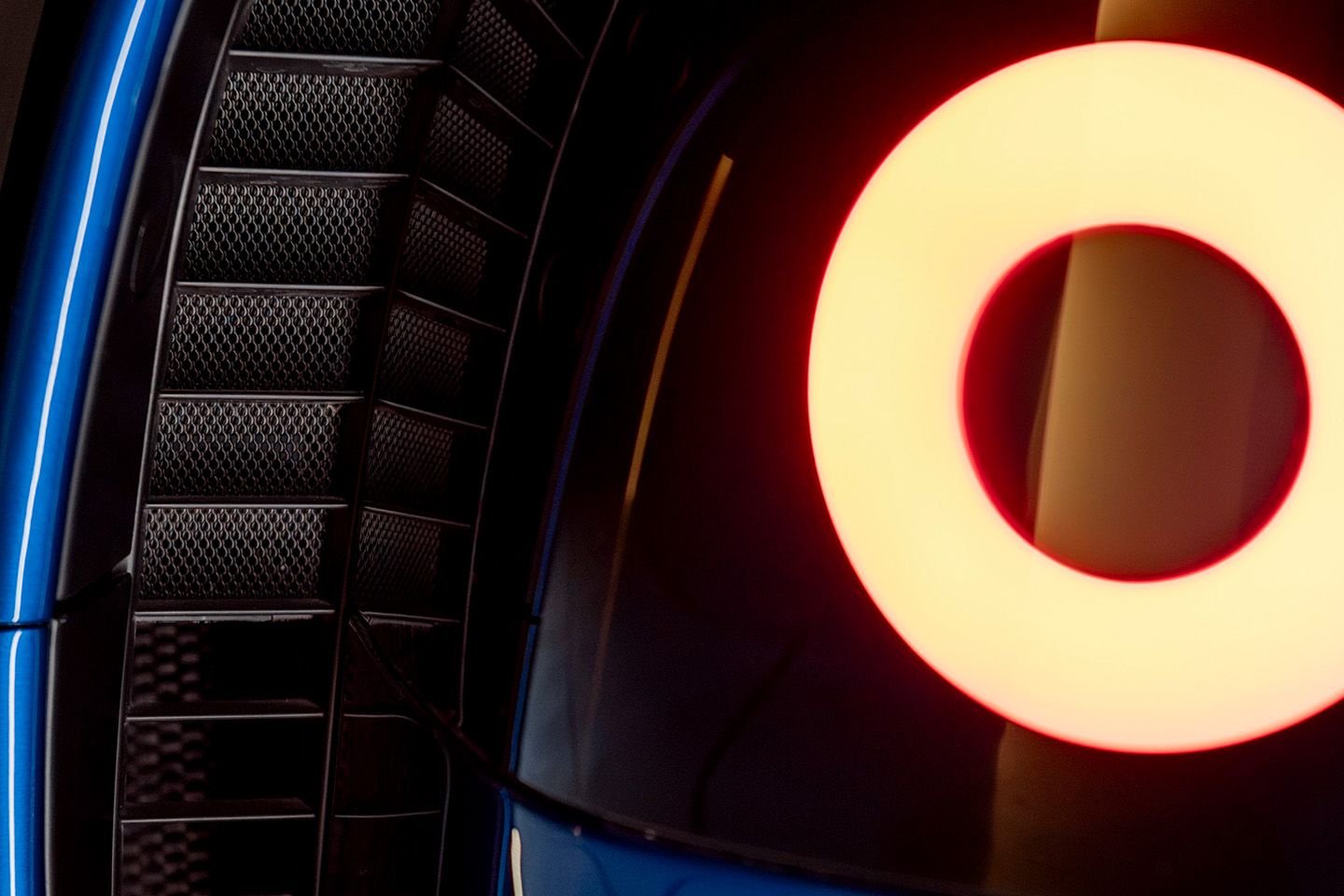
Right from the off, it’s clear that the choice of colours and spec didn’t do the Luce any favours on its debut. The pale blue launch colour certainly wasn’t flattering, nor were the Turbofan-style wheels seen in various press images. But the car we’ve seen, finished in a more subtle Blu Scozia with the standard five-spoke wheels, is at least more in keeping with Ferraris of old. And while the body is relatively clean and simple, there are some interesting elements for the aero geeks. The giant floating front wing, for instance, sits high above the lower bodywork, leaving a huge opening for air to pass through. Then there are the side vents that help relieve pressure from the front arches, and even larger exits on either side of the boot lid to improve airflow at the rear. It’s nothing we haven’t seen from Ferrari before, but the company says the Luce has the lowest drag coefficient of any road car in its history. Somewhat ironic, given that Enzo Ferrari once said that aerodynamics were for those who couldn’t build engines.
As mildly interesting as the aero is, there's no escaping the fact that the Luce doesn’t spark the childhood wonder that a Ferrari should. Even the Purosangue, which was mostly met with hostility on PH, still makes the hairs on the back of your neck stand on end. Take the badges off the Luce, however, and you’d be hard-pressed to identify it as a Ferrari. The overall shape, designed in close collaboration with Sir Jony Ive’s LoveFrom agency, is essentially one swooping line from the tip of the nose to the rear window, picked out in gloss black or glass, with a second skin in the main body colour adding definition via the floating nose and chiselled shoulder lines. It’s not a bad-looking car per se, but it isn’t what you’d call pretty or striking. Instead, it resembles a mobility pod designed to transport humans from A to B as comfortably and efficiently as possible.
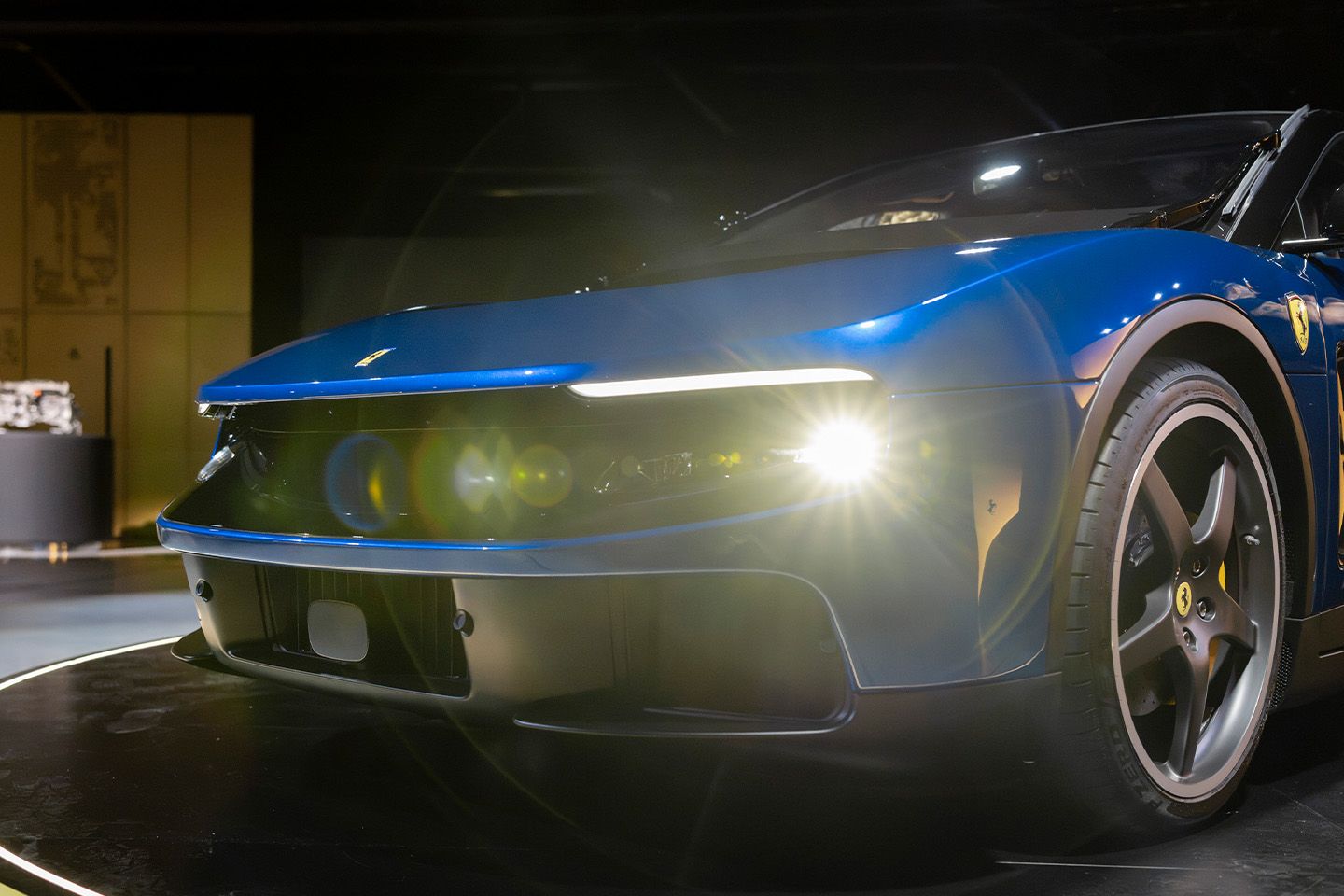
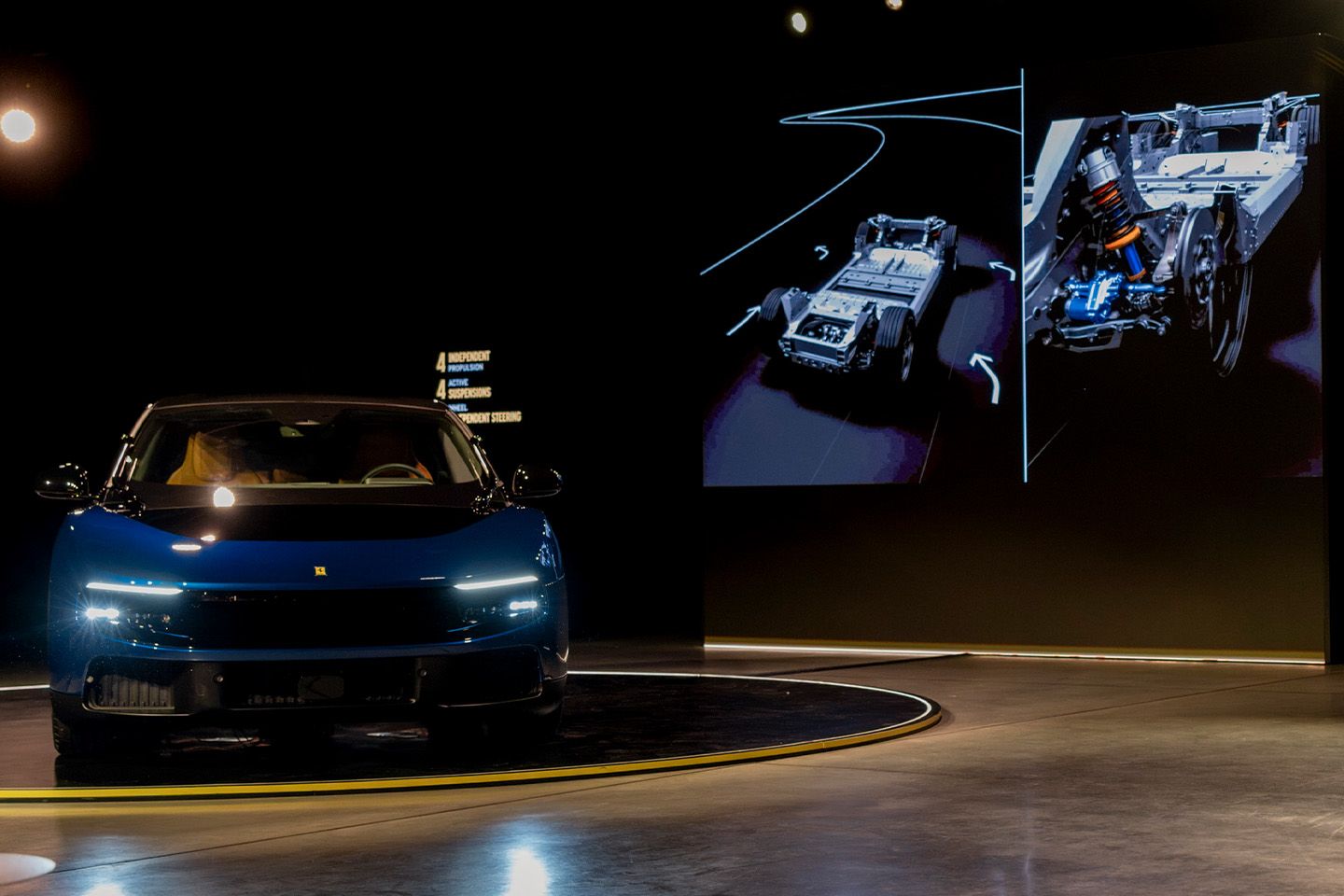
The thing is, that was the brief from the very beginning. Ferrari claims it set about building a true five-seater family car first, before landing on an electric platform for its packaging advantages. “It's impossible to make [a five-seater] also with the Purosangue”, says head of marketing Pietro Virgolin, because the transaxle layout would have eaten into rear legroom. “When people think about Ferraris, that has a specific shape because of the technology that is behind it”, he says. “Our 12-cylinder car has a very long bonnet with a very compact rear cabin, […] this is also why the 296 has a completely different shape, because the technology is different.” That’s why Ferrari landed on the Luce’s boxy shape rather than, say, a four-door grand tourer.
Of course, an EV powertrain also has the potential for ridiculous amounts of power, and the Luce is no exception. There are four electric motors: two larger 421hp units at the rear and smaller 143hp motors at the front. The motors themselves are evolutionary versions of those used in the F80, which can in turn be traced back to those used in the firm’s hybrid Formula 1 cars. The total system output comes in at 1,049hp and 730lb ft, making the Luce the third most powerful production car to come out of Maranello. Not only that, but it’ll match an SF90 from 0-62mph in 2.5 seconds, and fall just a tenth behind it by the time it hits 124mph some 4.3 seconds later.
Now, those sorts of numbers are part and parcel of the EV package, and Ferrari was always going to go big on power, but you wouldn’t expect that sort of performance from a car that looks the way the Luce does. “Extracting a lot of performance from EV, it's not so complicated”, says Virgolin. “We decided to use the amount of power we need for the performance we thought was correct [to] target with this kind of concept.” He adds that the centre of gravity is incredibly low, so while it tips the scales at just over 2.2 tonnes, “all the mass are the same distribution of a typical Berlinetta.” So it doesn’t look especially exciting, but it should go like stink.
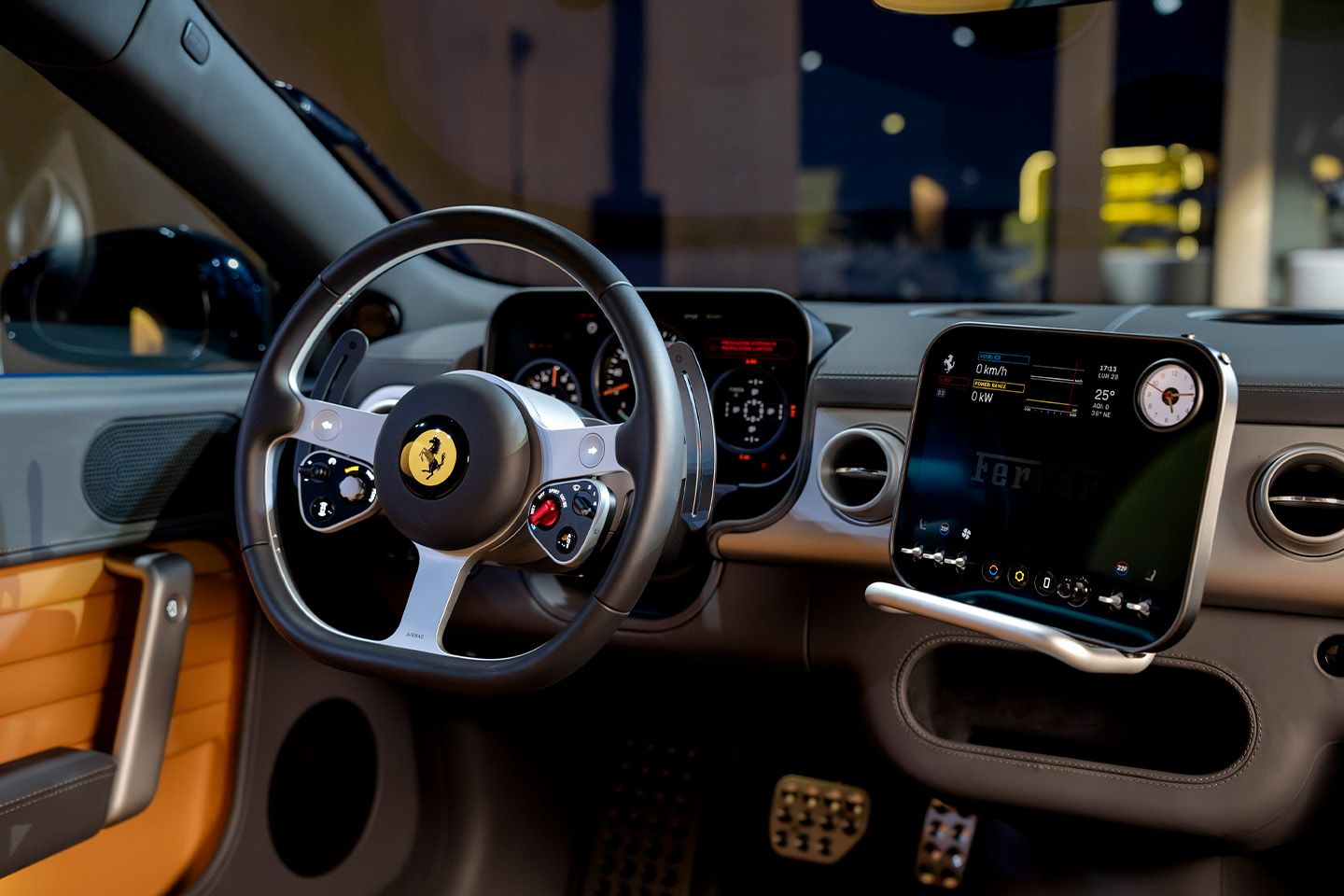
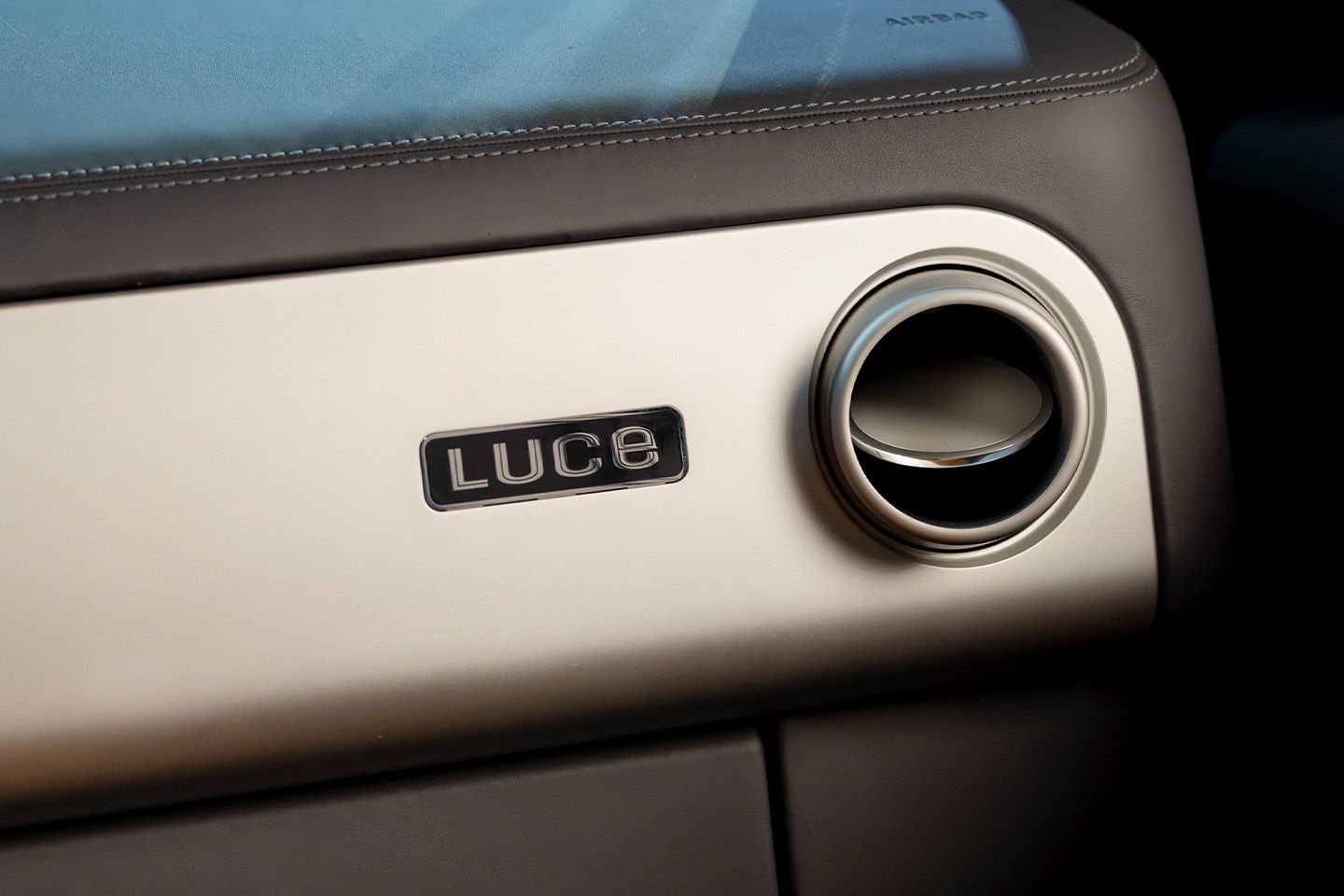
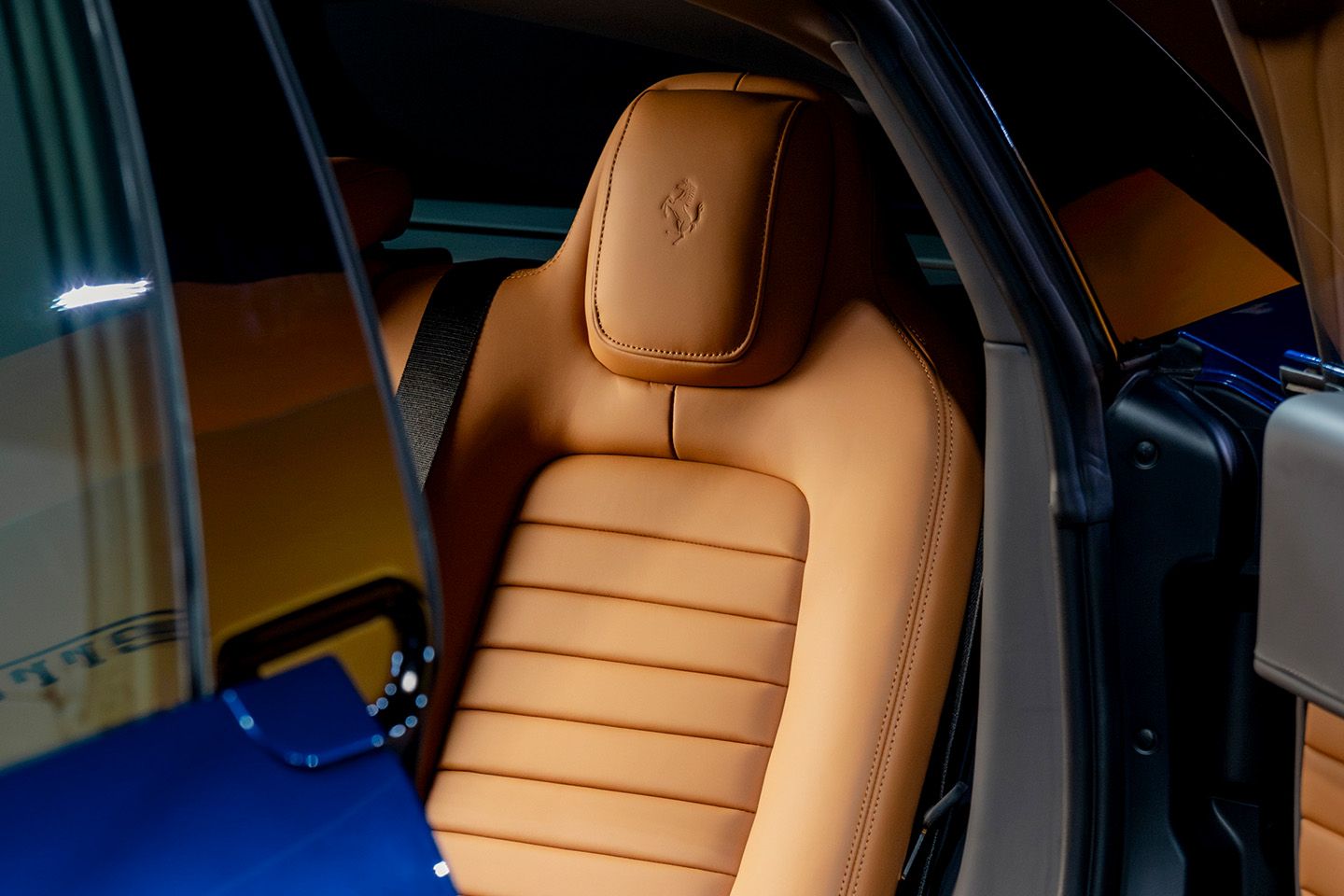
Where there’s been a degree of consensus on the Luce is the quality of its interior. Unlike the exterior, the pictures simply do not do it justice. This is where LoveFrom’s influence is most apparent, with the matte-textured aluminium steering wheel and dash looking as though they’ve come straight out of Cupertino. The buttons and switches are superbly damped, while the twisting mechanism used to open and close the air vents has no right to be as satisfying as it is. The steering wheel is delightfully thin, the complete antithesis of those found in current M cars, with a heavy ‘thunk’ accompanying each flick of the aluminium ‘shift’ paddles (which are actually used to manage power deployment). Every surface, every button press, every flick of the dial feels absolutely perfect.
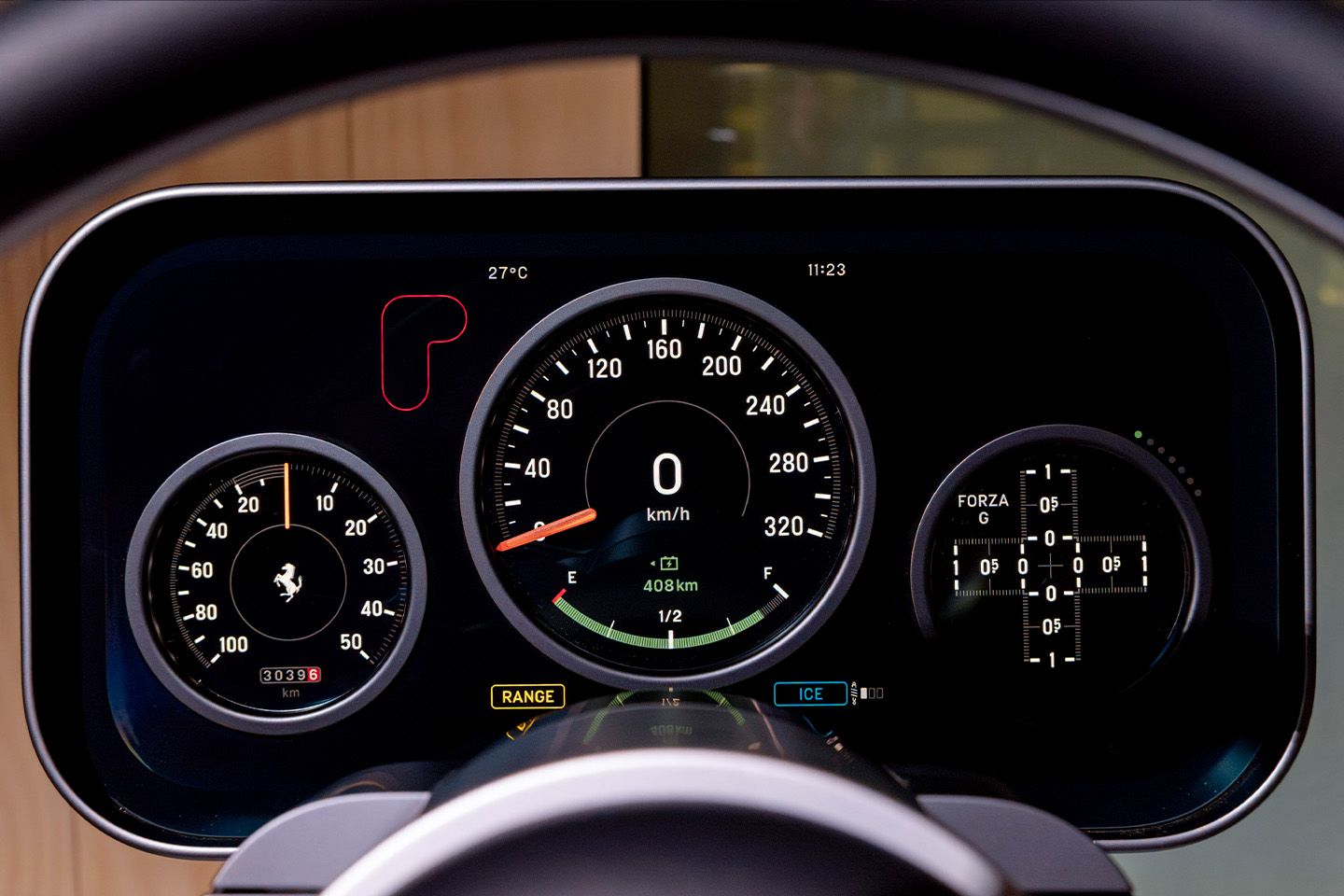
Better still, the digital elements are a genuine joy to interact with. The dials, for instance, use faces with analogue needles for the speedometer and power output, both taking inspiration from Ferraris of the '70s and ’80s. Flick the redesigned Manettino between its five different positions and the colour of the dials subtly changes from one hue to another, while switching between different submenus comes with a pleasing ‘nodding’ animation, as if one page were bumping the other off the screen.
The big question mark is how the centre screen will operate. Like the instrument panel, the main display carries that same retro look with a modern twist, and is set against a deep black background that really helps the colours pop. LoveFrom is particularly proud of the bar fitted below the screen, which gives you somewhere to rest your palm while jumping between menus. It’s certainly an improvement, but placing your palm on the bar with enough pressure can swivel the screen away from you. We’ll have to see if that can be locked in place on the production car, but it’s the only gripe we could find in what’s easily the new gold standard for car interiors. Which, come to think of it, is exactly what you’d expect from a collaboration between Ferrari and Apple (sort of).
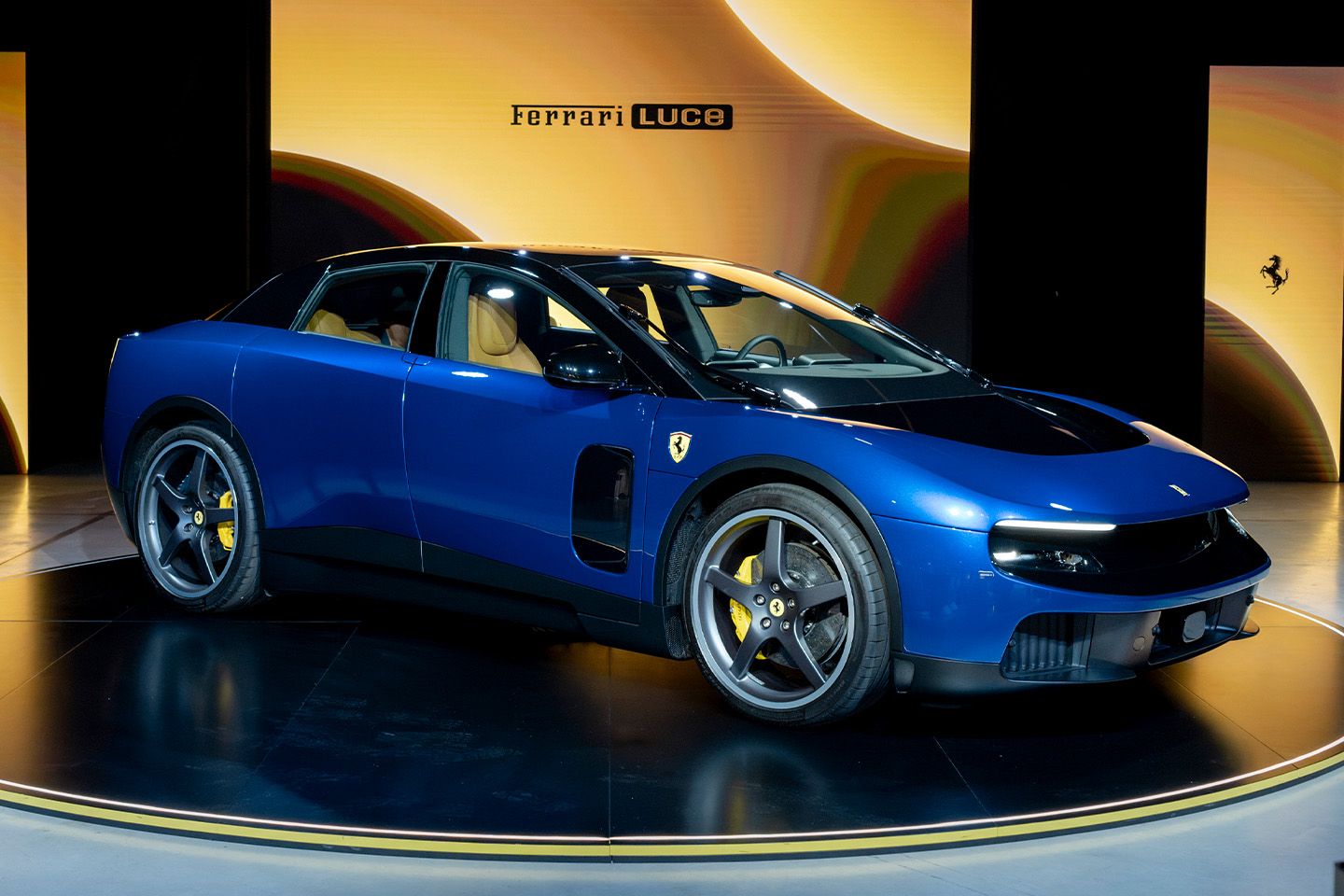
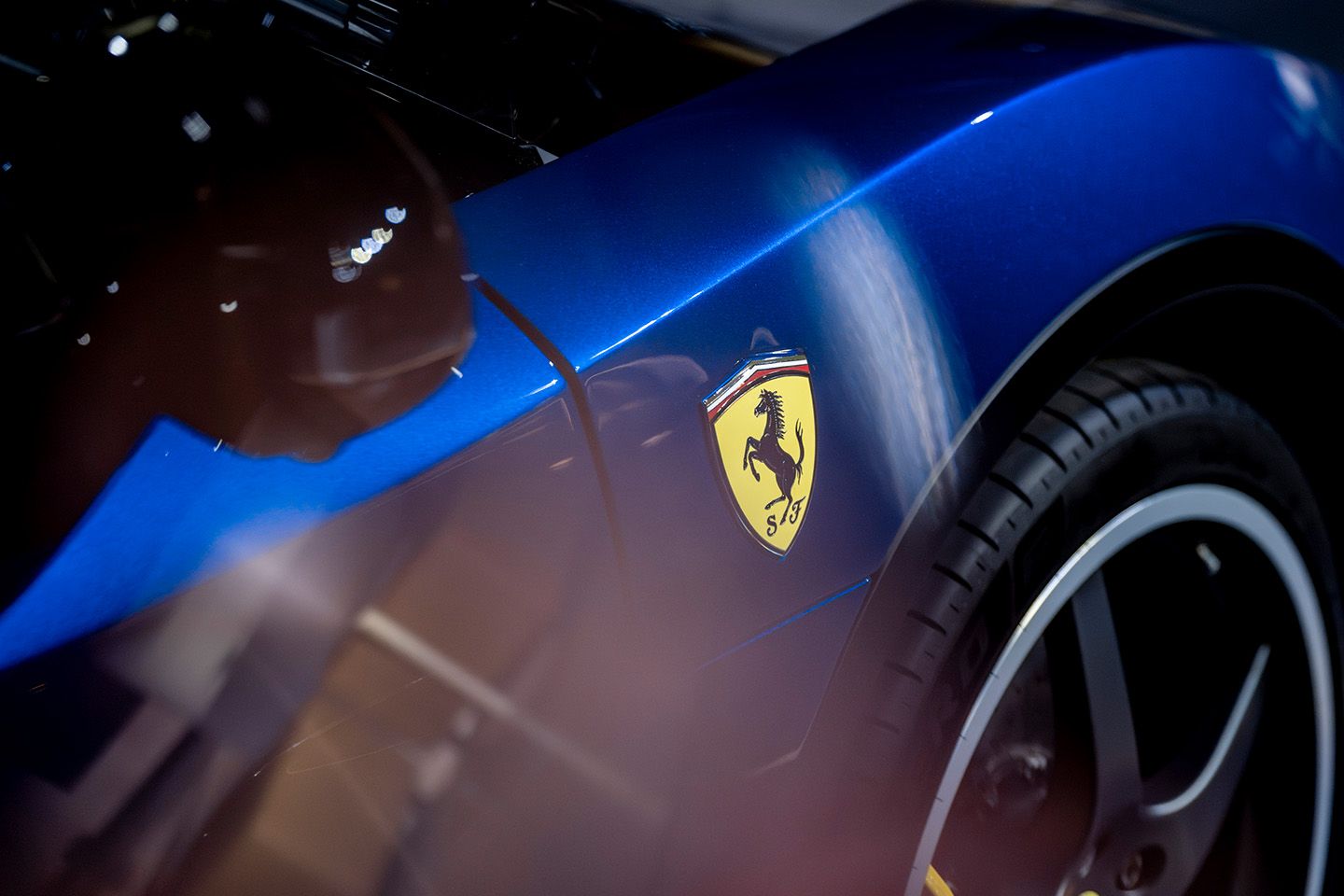
It’s just a shame that the same magic doesn’t extend to the exterior. In person, the Luce feels like a car of two halves, one that looks like an Apple Magic Mouse on the outside but feels like a mid-century-chic apartment on the inside. In its defence, it’s hard to think of what else Ferrari could have done. Crippling emissions targets make having an EV in your back pocket a necessity for manufacturers of this scale - and it’s arguably better to have an electric family car that customers will actually want to use than a battery-powered supercar that no one in their right mind would want.
Some have suggested that Ferrari would have been better off creating a new sub-brand for the Luce, as it did with Dino in the late '60s. That’s not a bad idea on paper, but it wouldn’t have garnered quite as much attention, or, worse still, attracted quite so many orders. Moreover, like all cars with highly divisive designs, what it looks like on the outside is easier to disregard when you're sitting inside - even more so when you’re up in the hills around Maranello, if promises made about its handling dynamic come true. Ultimately, it is the latter that will decide the Luce's place in the history books as a 'real' Ferrari. But, like it or not, its success as a product is already seemingly beyond doubt.


By making a big deal about it and building something truly hideous, they have damaged their reputation.
It's a PR disaster that cannot be solved.
This would be an ugly car with any badge on it.
A dark navy photo'd in a dark room doesn't help either, the first photo looks like a pick up truck.
If it had been Apples first car "with engineering by Ferrari" probably wouldn't have batted an eye lid. Its how apple or big tech might design a car. Trouble is its just not very Ferrari in style.
The below has been doing the rounds showing a BYD with Ferrari colours and wing shields v the Luce with a BYD logo. Kinda sums up what's wrong with the external design for me, it's just not very 'Ferrari'
I hope Doug DeMuro gets a hold of one because he'll actually be reasonably honest about it as he doesn't care if Ferrari like him or not.
Personally, I think the interior is a dull retro-pastiche, with the added horror of that god-awful moveable screen that someone memorably suggested looks like it belongs next to an NHS hospital bed.
I think people might actually point and laugh at you if anyone dared drive this down a street. Surely, almost no-one will, having presumably only bought it in order to get higher up the list for cars you actually want to buy.
I wonder how cheap these will end up being on the used market. Even with the badge and the rarity, I expect they'll go well under £100k in today's money.
I hope Doug DeMuro gets a hold of one because he'll actually be reasonably honest about it as he doesn't care if Ferrari like him or not.
.
I suspect - but obviously can't know or prove - that this will have an effect on what people think of Ferrari generally. Ferrari has long been held by many in higher regard than any other car maker. If this thing is made for a few years, will that continue?
I'm not a Tesla fanboy but this article smacks of advertorial.
As for my first impressions of the car, they're legitimate. Nothing about the exterior is 'Ferrari', but the interior is game-changing. Think that's reflected in the story.
I hope Doug DeMuro gets a hold of one because he'll actually be reasonably honest about it as he doesn't care if Ferrari like him or not.
I suspect - but obviously can't know or prove - that this will have an effect on what people think of Ferrari generally. Ferrari has long been held by many in higher regard than any other car maker. If this thing is made for a few years, will that continue?
I doubt very much that many Ferrari ICE buyers give a single toss about this car (which I don't like the look of and personally think is comically overpriced).
Gassing Station | General Gassing | Top of Page | What's New | My Stuff