
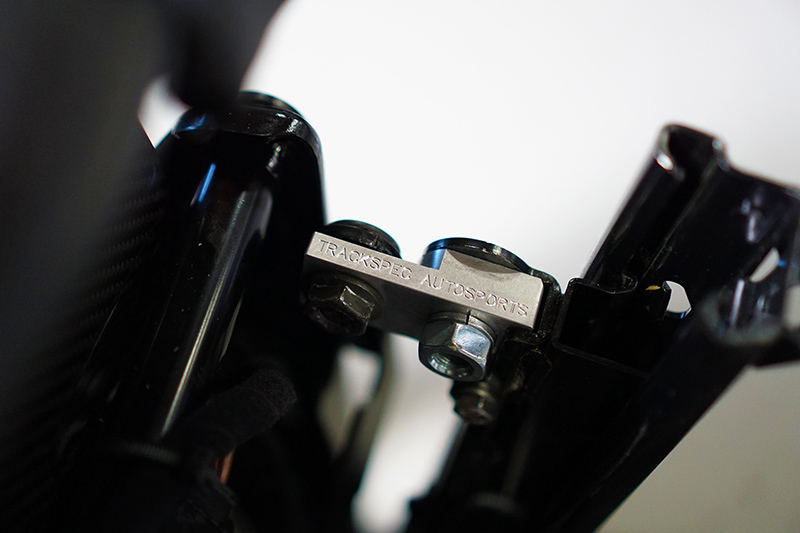
918 seat incline kit for 2019 gt3rs
Discussion


wonder what the shear strenght of these are if you crash ?
https://www.autoquestcars.com/custom-07
these were the 1st company to make parts, but as it rises the front it might give you pins and needles in your legs.
really s t seat design forced by the EU for non helmet use to protect whiplash. horrid things.
An Alloy bracket will be the 1st thing to snap that's for sure.
https://www.autoquestcars.com/custom-07
these were the 1st company to make parts, but as it rises the front it might give you pins and needles in your legs.
really s
t seat design forced by the EU for non helmet use to protect whiplash. horrid things.An Alloy bracket will be the 1st thing to snap that's for sure.
Edited by Porsche911R on Saturday 18th April 10:28
Porsche911R said:
wonder what the shear strenght of these are if you crash ?
https://www.autoquestcars.com/custom-07
these were the 1st company to make parts, but as it rises the front it might give you pins and needles in your legs.
really st seat design forced by the EU for non helmet use to protect whiplash. horrid things.
An Alloy bracket will be the 1st thing to snap that's for sure.
R is there nothing you are not a expert in!https://www.autoquestcars.com/custom-07
these were the 1st company to make parts, but as it rises the front it might give you pins and needles in your legs.
really s
t seat design forced by the EU for non helmet use to protect whiplash. horrid things.An Alloy bracket will be the 1st thing to snap that's for sure.
Edited by Porsche911R on Saturday 18th April 10:28
Some alloys are stonger than steel,if you are gong to worry about this shearing you would probably be dead any way.
Thanks hunter,i thought a booster seat did not look right in a nice carbon seat with houndstooth inserts

2010spy said:
Can anyone fit these or would you need to take to a proper garage?
You can fit yourself - if you're comfortable.... if not less that 1hr for an indie to do it for you..if you don't want OPC questions.These are the steps..
Disconnect the car battery... one terminal is fine.
undo the yellow plug under the seat..
undo the 4 floor bolts that hold the seat in...
take the seat out... your seat belt is route though a hole in the seat and probably attached to a point on the car... so you'll be restricted on how far you can move the seat away from the car...unless you also undo this bottom bolt... you can choose to undo the seatbelt bolt or not.
add these shims in...
and then put the seat back in...
4 floor bolts back in...
plug the yellow plug back in...
reconnect battery.
Job done.
Edited by TDT on Saturday 18th April 14:56
Yellow491 said:
Porsche911R said:
wonder what the shear strenght of these are if you crash ?
https://www.autoquestcars.com/custom-07
these were the 1st company to make parts, but as it rises the front it might give you pins and needles in your legs.
really st seat design forced by the EU for non helmet use to protect whiplash. horrid things.
An Alloy bracket will be the 1st thing to snap that's for sure.
R is there nothing you are not a expert in!https://www.autoquestcars.com/custom-07
these were the 1st company to make parts, but as it rises the front it might give you pins and needles in your legs.
really s
t seat design forced by the EU for non helmet use to protect whiplash. horrid things.An Alloy bracket will be the 1st thing to snap that's for sure.
Edited by Porsche911R on Saturday 18th April 10:28
Some alloys are stonger than steel,if you are gong to worry about this shearing you would probably be dead any way.
Thanks hunter,i thought a booster seat did not look right in a nice carbon seat with houndstooth inserts
Working out the likelehood of a part failure due to the materials strength being exceeded is amazingly difficult. First you have to ascertain the load path(s), then calculate the load taking into accounte acceleration and also possibly factor in fatigue lifecycles. Materials (alloys of steel and aluminium) have given strength characteristics, defined as (amongst others) yield strength.
Very broadly speaking if you can define the load you can calculate the stress at what you consider to be the weakest point. If it is a very low percentage of the yield strength then the part will not fail (at the specific point you calculate).
You also have to consider methods of manufacturing and detail design, welded structures are particularly tricky as the weld pool naturally has an 'undercut' in the surface which is where cracks love to propogate from. Welding aluminium is fraught with problems, hence many aluminium structures are rivited or bonded. If you look at a chassis for a rigid HGV (steel) you'll see the body, suspension etc is bolted to the chassis rails. Articulated trailers and tankers are designed with a fatigue life of 20 to 25 years, with very controlled weld procedures. (They were in the 80's anyway).
Car manufacturers go to enormous lengths to corroborate life cycles and suitability of components and assemblies. Calculated stress levels on critical parts (suspensions) are proven by running test rigs cycling between max (or a known level) stress and no stress. FEA is a massive part of design now but it has to be backed up as well.
I think a good start for that bracket would be a bolt that at least is long enough to reach the end of the nut!
All the above is from memory of working as a drafty in the 80's at Crane Fruehauf, where I was lucky enough to work with some amazing Stress Engineers, way beyond my level. They would calculate the high stress areas of a chassis and we would fit strain guages to a first off then charge around trying to exceed the levels. They were always within 10% in the time I was there.
A good rule of thumb is to avoid introducing large bending moments and make the new part way stronger then what you are fixing to. And don't weld unless more thought has gone into it if there is a cyclic loading.
TDT said:
2010spy said:
Can anyone fit these or would you need to take to a proper garage?
You can fit yourself - if you're comfortable.... if not less that 1hr for an indie to do it for you..if you don't want OPC questions.These are the steps..
Disconnect the car battery... one terminal is fine.
undo the yellow plug under the seat..
undo the 4 floor bolts that hold the seat in...
take the seat out... your seat belt is route though a hole in the seat and probably attached to a point on the car... so you'll be restricted on how far you can move the seat away from the car...unless you also undo this bottom bolt... you can choose to undo the seatbelt bolt or not.
add these shims in...
and then put the seat back in...
4 floor bolts back in...
plug the yellow plug back in...
reconnect battery.
Job done.
Edited by TDT on Saturday 18th April 14:56
robj4 said:
Yellow491 said:
Porsche911R said:
wonder what the shear strenght of these are if you crash ?
https://www.autoquestcars.com/custom-07
these were the 1st company to make parts, but as it rises the front it might give you pins and needles in your legs.
really st seat design forced by the EU for non helmet use to protect whiplash. horrid things.
An Alloy bracket will be the 1st thing to snap that's for sure.
R is there nothing you are not a expert in!https://www.autoquestcars.com/custom-07
these were the 1st company to make parts, but as it rises the front it might give you pins and needles in your legs.
really s
t seat design forced by the EU for non helmet use to protect whiplash. horrid things.An Alloy bracket will be the 1st thing to snap that's for sure.
Edited by Porsche911R on Saturday 18th April 10:28
Some alloys are stonger than steel,if you are gong to worry about this shearing you would probably be dead any way.
Thanks hunter,i thought a booster seat did not look right in a nice carbon seat with houndstooth inserts
Working out the likelehood of a part failure due to the materials strength being exceeded is amazingly difficult. First you have to ascertain the load path(s), then calculate the load taking into accounte acceleration and also possibly factor in fatigue lifecycles. Materials (alloys of steel and aluminium) have given strength characteristics, defined as (amongst others) yield strength.
Very broadly speaking if you can define the load you can calculate the stress at what you consider to be the weakest point. If it is a very low percentage of the yield strength then the part will not fail (at the specific point you calculate).
You also have to consider methods of manufacturing and detail design, welded structures are particularly tricky as the weld pool naturally has an 'undercut' in the surface which is where cracks love to propogate from. Welding aluminium is fraught with problems, hence many aluminium structures are rivited or bonded. If you look at a chassis for a rigid HGV (steel) you'll see the body, suspension etc is bolted to the chassis rails. Articulated trailers and tankers are designed with a fatigue life of 20 to 25 years, with very controlled weld procedures. (They were in the 80's anyway).
Car manufacturers go to enormous lengths to corroborate life cycles and suitability of components and assemblies. Calculated stress levels on critical parts (suspensions) are proven by running test rigs cycling between max (or a known level) stress and no stress. FEA is a massive part of design now but it has to be backed up as well.
I think a good start for that bracket would be a bolt that at least is long enough to reach the end of the nut!
All the above is from memory of working as a drafty in the 80's at Crane Fruehauf, where I was lucky enough to work with some amazing Stress Engineers, way beyond my level. They would calculate the high stress areas of a chassis and we would fit strain guages to a first off then charge around trying to exceed the levels. They were always within 10% in the time I was there.
A good rule of thumb is to avoid introducing large bending moments and make the new part way stronger then what you are fixing to. And don't weld unless more thought has gone into it if there is a cyclic loading.
Not just the short bolt,the spring washer also not great in critical points,for the cost of the kits they could have put some quality fastners in place.
You would also assume from the cost the alloy bracket is a quality billet supply.
Think i will make my own
Yellow491 said:
I am a bit bored also!i was a engineer for many years.
Not just the short bolt,the spring washer also not great in critical points,for the cost of the kits they could have put some quality fastners in place.
You would also assume from the cost the alloy bracket is a quality billet supply.
Think i will make my own
Then crash test it and get it TuV approved.Not just the short bolt,the spring washer also not great in critical points,for the cost of the kits they could have put some quality fastners in place.
You would also assume from the cost the alloy bracket is a quality billet supply.
Think i will make my own
Or just fit some proper seats :-) and save another 50lbs.
I am no tensile strength eng, but you know it looks noddy.
One does not have to be an expert to post a view it’s just a forum and I hated the bloody seats.
So the repeated digs are annoying at best :-).
Porsche911R said:
Yellow491 said:
I am a bit bored also!i was a engineer for many years.
Not just the short bolt,the spring washer also not great in critical points,for the cost of the kits they could have put some quality fastners in place.
You would also assume from the cost the alloy bracket is a quality billet supply.
Think i will make my own
Then crash test it and get it TuV approved.Not just the short bolt,the spring washer also not great in critical points,for the cost of the kits they could have put some quality fastners in place.
You would also assume from the cost the alloy bracket is a quality billet supply.
Think i will make my own
Or just fit some proper seats :-) and save another 50lbs.
I am no tensile strength eng, but you know it looks noddy.
One does not have to be an expert to post a view it’s just a forum and I hated the bloody seats.
So the repeated digs are annoying at best :-).
As you say you are not a tensile strength engineer.
I happen to like the seats,if i make the parts they will be over engineered with quality fixings,its not a big job.
Gassing Station | 911/Carrera GT | Top of Page | What's New | My Stuff