
Any known issues with the Cayman 987 Gen 2?
Discussion


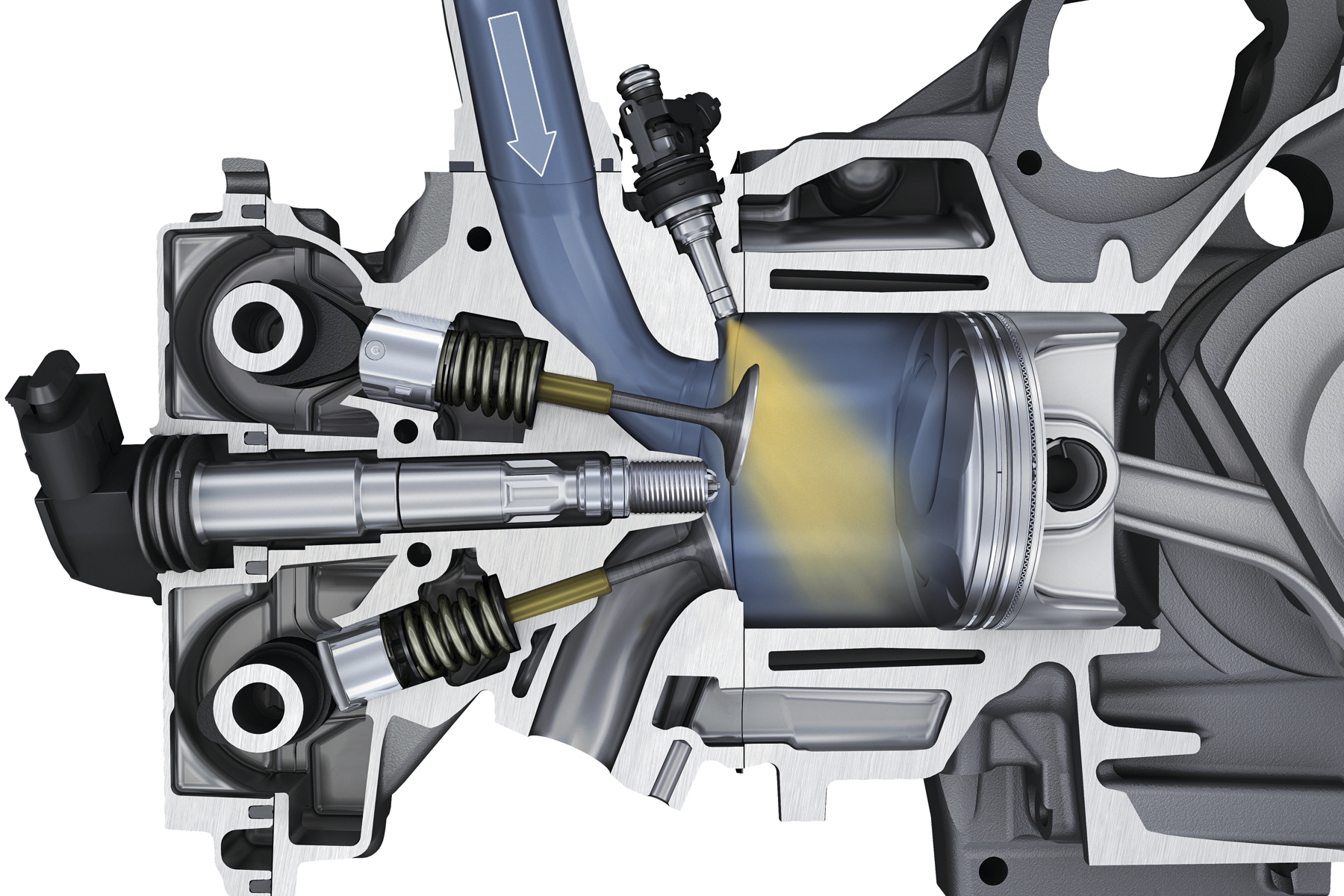
Speaking to my independent specialist he said the only issue that could even vaguely be considered a trend was the failure of the high pressure fuel pump. A revised part was fitted as part of a service campaign, so check for that in the service book. There has been some talk of DFI engines suffering from heavy carbon deposits as the fuel sprays directly into the cylinder rather than hitting the back of the inlet valve. The 9A1 seems to be pretty much immune from this too, possibly to dye with the flat 6 design but I also believe (I'll try and find the pic later) the 9A1 injects the fuel at such an angle that it does at least hit part of the inlet valve.
Found the pic:
http://www.total911.com/wp-content/uploads/2015/02...
Found the pic:
http://www.total911.com/wp-content/uploads/2015/02...
Edited by finestjammy on Monday 11th January 12:28
There don't appear to be any major issues with the 987.2, but the following items could require attention and although not wallet-busting, they are still fairly costly to do. Radiators and A/C condensors will need replacing after about 5-6 years due to corrosion if grills have not been fitted. Discs rust on the rear faces and require replacing every few years. Exhaust manifold, cat bolts and exhaust clamps fall apart and are best upgraded with s/s. Gear linkage cables are fairly prones to breaking.
Don't be put off by this as they are superb cars and very rewarding to drive, but you need to be aware that they can be costly.
Don't be put off by this as they are superb cars and very rewarding to drive, but you need to be aware that they can be costly.
finestjammy said:
Speaking to my independent specialist he said the only issue that could even vaguely be considered a trend was the failure of the high pressure fuel pump. A revised part was fitted as part of a service campaign, so check for that in the service book. There has been some talk of DFI engines suffering from heavy carbon deposits as the fuel sprays directly into the cylinder rather than hitting the back of the inlet valve. The 9A1 seems to be pretty much immune from this too, possibly to dye with the flat 6 design but I also believe (I'll try and find the pic later) the 9A1 injects the fuel at such an angle that it does at least hit part of the inlet valve.
Found the pic:
http://www.total911.com/wp-content/uploads/2015/02...
A lot of DFi engines suffer with this, but seems to only happen for townies, where the car is predominantly used for short low speed journeys. A regular damn good thrashing should keep it clear.Found the pic:
http://www.total911.com/wp-content/uploads/2015/02...
Edited by finestjammy on Monday 11th January 12:28
I did 34,000 miles over four years of track days and fast road --- interwoven with motorway and commuting.
It is now with another owner and I gave a glowing testimony. In the first 1000 miles it used 350 ml of oil, outside of which I don't think it used this amount of oil between changes.
Of course these were every four or five track days and 4000 miles ... and now I'm very confident to have a 3.8 DFI in my GT4 !!
By comparison my bespoke built Gen1 race Cayman lunched it's engine at 1850 miles in the penultimate race of the season at Snetterton, --- and needed a re-re-build after 500 miles of running in due to bearing failure (which thankfully I caught early !).
In the Gen2 engine Porsche removed 40% of the parts --- all those that had caused trouble in the Gen1 --- and it appears that they may now be using the 9A1 engine in 2016 GT3R racing ... and certainly in the GT4 Clubsport for use with slicks and apparently, no engine mods !
It is now with another owner and I gave a glowing testimony. In the first 1000 miles it used 350 ml of oil, outside of which I don't think it used this amount of oil between changes.
Of course these were every four or five track days and 4000 miles ... and now I'm very confident to have a 3.8 DFI in my GT4 !!
By comparison my bespoke built Gen1 race Cayman lunched it's engine at 1850 miles in the penultimate race of the season at Snetterton, --- and needed a re-re-build after 500 miles of running in due to bearing failure (which thankfully I caught early !).
In the Gen2 engine Porsche removed 40% of the parts --- all those that had caused trouble in the Gen1 --- and it appears that they may now be using the 9A1 engine in 2016 GT3R racing ... and certainly in the GT4 Clubsport for use with slicks and apparently, no engine mods !
Thanks for all your responses. Most helpful. Have been a very happy gen 1 owner for over two years and decided to jump to a 2012 R. Just didn't want to jump of the pan into the fire! I realise that these things are expensive so am well prepared for the various issues you mention. Actually just put grilles on the front and rear of the CS that is about to be sold (hopefully!) so that was a bit of hard-earned already 'wasted'.

jmcc42uk said:
Has anyone thought of Terraclean to de-carbonise if needed? Suppose it wouldn't hurt to get it done on a 40-50k car. Would it harm the engine in any way?
I've never felt the need to "de-carbonise" any engine in my life.IMO you should only put into an engine what the manufacturer recommends. Usually good quality fuel and good quality oil.
Tried it once on an 1 litre A series about 20 years ago, disaster, the thing lost compression and burned more oil leading to it being binned off for a metro GTi engine. Never again, I don't believe in these various snake oil BS cures or improvements a legion of shysters would like to sell to the unsuspecting motorist. The only way I can see it is realistic to decarbonise is by taking things apart, clean em and rebuild.
Gassing Station | Boxster/Cayman | Top of Page | What's New | My Stuff