
12 volt battery shambles, or is it?
Discussion


Something I wasn't aware of is how the 12v battery is charged.
Obviously on a pure EV it must be charged either by some means from the drive battery and/or from the vehicle braking system feeding power back.
However I'd assumed, yes I know assume, that on hybrids that the batteries , drive and 12v, were charged by the engine. Didn't realise that nowadays the engines don't have a charging system, and rely on the energy recovery under braking to charge both.
A thread on HJ site brought my attention to this, and there does seem to be an issue which Toyota, in this case an Auris, just don't seem able to solve.
There also seems to be the recommendation from the manufacturer that a monthly maintenance charge, presumably from such as a Ctek charger, is a really good idea.
How widespread is this an issue? There certainly seems to be a set of people brassed off with Toyota. Is it just Toyota? Certainly years back at work we had a couple of Prius on long term manufacturer loan as pool cars. They hardly ever went out, I just drove one once to see what the fuss was about. Then again together with the fleet manager to see if reports they were rubbish in snow was valid. We got stuck going downhill believe it or not, so yes was the answer there.
Anyway I digress, both of them at some point refused to work due to bat flatteries, we just put it down to them sitting unused and unloved for weeks at a time. Toyota would just come, take it away on a flat bed, bring it back saying sorted and we never got a real answer as to the trouble.
Seeing as these things are putting up starship mileages as taxis, yet people who use them everyday are having flat battery issues, is there a mode of use which is more likely to give rise to this problem?
Not to mention, which fricking idiot decided to build cars without an engine driven alternator, twerp. No doubt it's to save 0.1gram of CO2 per 100km. Double twerp.
Wondered about experience here.
Obviously on a pure EV it must be charged either by some means from the drive battery and/or from the vehicle braking system feeding power back.
However I'd assumed, yes I know assume, that on hybrids that the batteries , drive and 12v, were charged by the engine. Didn't realise that nowadays the engines don't have a charging system, and rely on the energy recovery under braking to charge both.
A thread on HJ site brought my attention to this, and there does seem to be an issue which Toyota, in this case an Auris, just don't seem able to solve.
There also seems to be the recommendation from the manufacturer that a monthly maintenance charge, presumably from such as a Ctek charger, is a really good idea.
How widespread is this an issue? There certainly seems to be a set of people brassed off with Toyota. Is it just Toyota? Certainly years back at work we had a couple of Prius on long term manufacturer loan as pool cars. They hardly ever went out, I just drove one once to see what the fuss was about. Then again together with the fleet manager to see if reports they were rubbish in snow was valid. We got stuck going downhill believe it or not, so yes was the answer there.
Anyway I digress, both of them at some point refused to work due to bat flatteries, we just put it down to them sitting unused and unloved for weeks at a time. Toyota would just come, take it away on a flat bed, bring it back saying sorted and we never got a real answer as to the trouble.
Seeing as these things are putting up starship mileages as taxis, yet people who use them everyday are having flat battery issues, is there a mode of use which is more likely to give rise to this problem?
Not to mention, which fricking idiot decided to build cars without an engine driven alternator, twerp. No doubt it's to save 0.1gram of CO2 per 100km. Double twerp.
Wondered about experience here.
Edited by FiF on Sunday 11th June 12:04
Duplication - why have an expensive alternator when you can more than amply cover your cars electrical needs with the hybrid system thats installed.
you will find that some dont even have a starter motor and rely on the main hybrid battery to provide that initial rolling movement and then the engine will bump start off of that motion. integrated seemlessly so you dont really know or feel it.
If you are leaving the car long periods of time with out using it then you will run the risk of the battery being flat, but would need to be really long periods of non use.
you will find that some dont even have a starter motor and rely on the main hybrid battery to provide that initial rolling movement and then the engine will bump start off of that motion. integrated seemlessly so you dont really know or feel it.
If you are leaving the car long periods of time with out using it then you will run the risk of the battery being flat, but would need to be really long periods of non use.
Can't say I've heard of anyone who has run into flat battery issues with the Toyota Prius or Lexus CT 200h (which I have).
The system prevents the main battery being drained so much that it wouldn't have sufficient power to enable the car to start again. Yes the 12V battery will go flat if you don't use the car for weeks but that is no different to a conventional ICE car. The traction battery would eventually die but that would take months or a very cold climate unless the unit is faulty. It doesn't only charge under regenerative braking - if you are sat in stationary traffic long enough the petrol motor will be started to put some charge back in the battery and take load off it which you creep along until there the traction battery is sufficiently charged again.
They have a starter motor when you already have a big electric motor there anyway? It can do the same job and once the engine is running it can start charging the batteries again. In some ways the hybrid is better as the 12V battery is only used to get the electrics running so it doesn't need to have as much charge as it would to turn the engine over.
The system prevents the main battery being drained so much that it wouldn't have sufficient power to enable the car to start again. Yes the 12V battery will go flat if you don't use the car for weeks but that is no different to a conventional ICE car. The traction battery would eventually die but that would take months or a very cold climate unless the unit is faulty. It doesn't only charge under regenerative braking - if you are sat in stationary traffic long enough the petrol motor will be started to put some charge back in the battery and take load off it which you creep along until there the traction battery is sufficiently charged again.
They have a starter motor when you already have a big electric motor there anyway? It can do the same job and once the engine is running it can start charging the batteries again. In some ways the hybrid is better as the 12V battery is only used to get the electrics running so it doesn't need to have as much charge as it would to turn the engine over.
If you Google hybrid flat 12v battery you get loads of threads.
This is just one https://priuschat.com/threads/toyota-auris-excel-h...
Also reported by at least two car magazines that they have had flat 12v batteries on other makes, so not just Toyota. I know Autocar iirc reported a problem with a Kia, but imo their problem was an extended photo shoot with doors open, lights on etc.
The Honest John thread guy had a flat battery on his Auris Tourer, not used for some days. Got it jump started, set off down the road to charge it up with a drive, 10 minutes later pulled up at a junction, stop start activated, not enough power in the battery to start again. Oops. To me if the battery was so low it should have kept running.
This is just one https://priuschat.com/threads/toyota-auris-excel-h...
Also reported by at least two car magazines that they have had flat 12v batteries on other makes, so not just Toyota. I know Autocar iirc reported a problem with a Kia, but imo their problem was an extended photo shoot with doors open, lights on etc.
The Honest John thread guy had a flat battery on his Auris Tourer, not used for some days. Got it jump started, set off down the road to charge it up with a drive, 10 minutes later pulled up at a junction, stop start activated, not enough power in the battery to start again. Oops. To me if the battery was so low it should have kept running.
Multiple battery failures in a short space of time points to something else draining it. The 12v batteries are smaller in hybrids as they don't have to crank the engine but they still hold sufficient charge for weeks unless something else is going on.
Not sure why it would have refused to start again 10 mins in as the 12v battery isn't used to start the engine but that said the best course of action would have been to stick it on a charger rather than jump starting and going for a run. It may be the battery is damaged as it was drained so low.
So I guess my answer to the thread title is no. Yes there can be issues but just in the same was as 12V batteries in conventionally powered cars. If they are drained too far they will cause issues and like all modern cars there is more demand on the battery to run electrics and more things that could go wrong and drain it when parked up.
Not sure why it would have refused to start again 10 mins in as the 12v battery isn't used to start the engine but that said the best course of action would have been to stick it on a charger rather than jump starting and going for a run. It may be the battery is damaged as it was drained so low.
So I guess my answer to the thread title is no. Yes there can be issues but just in the same was as 12V batteries in conventionally powered cars. If they are drained too far they will cause issues and like all modern cars there is more demand on the battery to run electrics and more things that could go wrong and drain it when parked up.
Mostly these problems are a result of either leaving something powered up that drains the 12v auxiliary battery, or leaving the car unused for long enough that the battery self-discharges.
It's pronounced in hybrids as the 12v battery is only very small. It doesn't need a great deal of capacity since its main purpose (at least in the Toyota hybrids) is to power some control systems and to pull in the main contactorswhich connect the high voltage traction battery to the inverters/motor-generators.
They could use a full sized car battery, but this would add weight and cost so instead they fit a small auxiliary battery that's nearer in size to a motorbike battery.
The downside being that it only has a very limited amount of energy storage, and if you think of the self discharge (which every battery in the known universe will suffer when unused ) as a slow leak on a fuel tank, a smaller tank will become empty quicker than a big tank.
Hope that helps. If you have a hybrid that's going to stand for a few weeks, I'd suggest connecting a maintenance charger such as a CTEK or Optimate.
It's pronounced in hybrids as the 12v battery is only very small. It doesn't need a great deal of capacity since its main purpose (at least in the Toyota hybrids) is to power some control systems and to pull in the main contactorswhich connect the high voltage traction battery to the inverters/motor-generators.
They could use a full sized car battery, but this would add weight and cost so instead they fit a small auxiliary battery that's nearer in size to a motorbike battery.
The downside being that it only has a very limited amount of energy storage, and if you think of the self discharge (which every battery in the known universe will suffer when unused ) as a slow leak on a fuel tank, a smaller tank will become empty quicker than a big tank.
Hope that helps. If you have a hybrid that's going to stand for a few weeks, I'd suggest connecting a maintenance charger such as a CTEK or Optimate.
The comment I liked was somewhere on that priuschat thread. It likened the issue to a bucket that's a bit small for the job intended. The bucket also has a small hole in it, and when the aggregate of the water leaking out is more than is being put in then problems occur. On top of that everytime the bucket is emptied it suffers a little bit of damage so that it holds a little less water each time. Seems a fair analogy to me.
One thing I've found is that the Hyundai Ionia doesn't have a 12v battery. A bit of the main traction battery is sectioned off, bit like a second partition on a hard drive.
http://blog.caranddriver.com/how-the-hyundai-ioniq...
One thing I've found is that the Hyundai Ionia doesn't have a 12v battery. A bit of the main traction battery is sectioned off, bit like a second partition on a hard drive.
http://blog.caranddriver.com/how-the-hyundai-ioniq...
I may have the answer. The 2017 yaris has keyless start. I kept the fobs in a pot by the door and the car first in the drive. The 12v battery would be down to 9v in a couple of days. I charged the battery and it went from 12.7 to 12.3 in 2 days. Then I put the keyfobs in an RFID pouch. And presto, the battery stopped draining. I guess the ECU was picking up a key signal and wouldnt go to sleep so it drained the battery. When it couldn't find a key, it gave up went to sleep and stopped draining the battery.
Now I just have to return the new £100 battery that I dont need.....
Now I just have to return the new £100 battery that I dont need.....
Something does't feel right, BMW as part of their efficient dynamics technology disconnect the alternator and only engage it when braking thereby improving efficiency, been like that for quite a few years. I guess that it can technically cut in if necessary when accelerating but its pretty rare, and with the advent of stop start the battery is working harder than ever.
So if cars do have the problem its more a case of badly implemented rather than a bad idea.
So if cars do have the problem its more a case of badly implemented rather than a bad idea.
Yaris2017 said:
I may have the answer. The 2017 yaris has keyless start. I kept the fobs in a pot by the door and the car first in the drive. The 12v battery would be down to 9v in a couple of days. I charged the battery and it went from 12.7 to 12.3 in 2 days. Then I put the keyfobs in an RFID pouch. And presto, the battery stopped draining. I guess the ECU was picking up a key signal and wouldnt go to sleep so it drained the battery. When it couldn't find a key, it gave up went to sleep and stopped draining the battery.
Now I just have to return the new £100 battery that I dont need.....
That's interesting. Lots of Nissan Leaf owners have 12v battery problems, and Leafs (Leaves?) are also keyless start...Now I just have to return the new £100 battery that I dont need.....
Heres Johnny said:
Something does't feel right, BMW as part of their efficient dynamics technology disconnect the alternator and only engage it when braking thereby improving efficiency, been like that for quite a few years. I guess that it can technically cut in if necessary when accelerating but its pretty rare, and with the advent of stop start the battery is working harder than ever.
So if cars do have the problem its more a case of badly implemented rather than a bad idea.
not how it works....So if cars do have the problem its more a case of badly implemented rather than a bad idea.
alternator charges battery when its needed, The car electrics are run from the alternator when the engine is running, all the car electrical load is supplied by the alternator so the alternator is not turned off.
ruggedscotty said:
Heres Johnny said:
Something does't feel right, BMW as part of their efficient dynamics technology disconnect the alternator and only engage it when braking thereby improving efficiency, been like that for quite a few years. I guess that it can technically cut in if necessary when accelerating but its pretty rare, and with the advent of stop start the battery is working harder than ever.
So if cars do have the problem its more a case of badly implemented rather than a bad idea.
not how it works....So if cars do have the problem its more a case of badly implemented rather than a bad idea.
alternator charges battery when its needed, The car electrics are run from the alternator when the engine is running, all the car electrical load is supplied by the alternator so the alternator is not turned off.
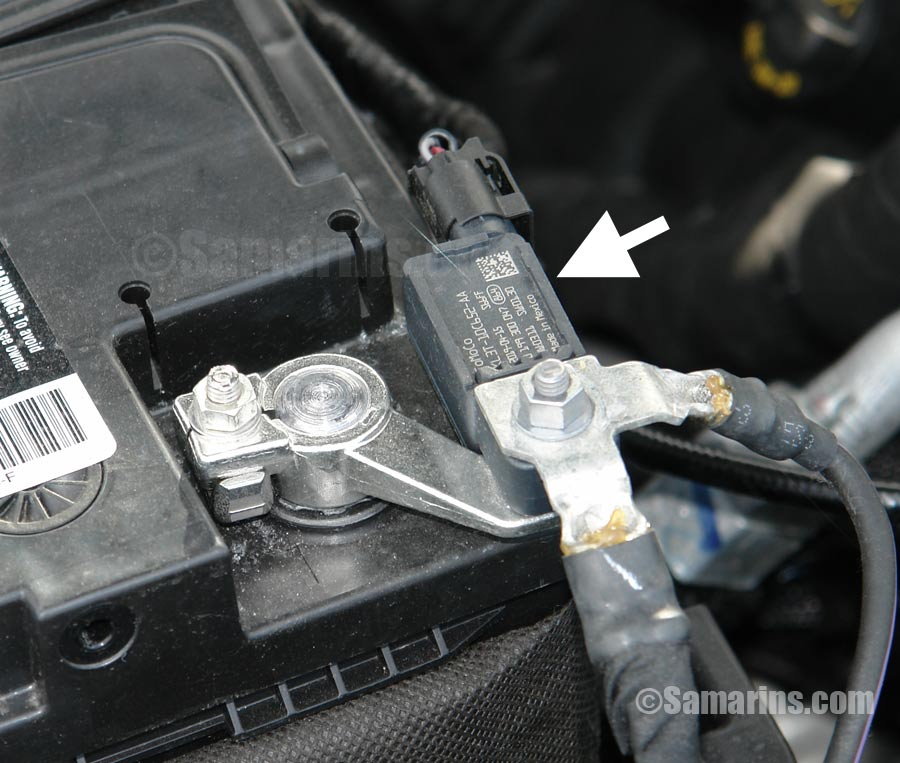
This uses "columb counting" (google it) to estimate the batteries SoC at all times and hence run the alternator in the most efficient way. This does result in more deep cycling of the battery, but generally thanks to modern control strategies, batteries have a much longer life than they used too (with dumb alternators with basic voltage controlled charging)
This is also why modern cars typically need a scan tool to "reset" the battery model when a new battery is fitted. This reset basically deliberately runs the battery up to full voltage and down to min voltage, and whilst doing so, columb counts and so it then knows the batteries capacity, and can reset and initalise the battery SoC model appropriately.
Edited by anonymous-user on Wednesday 13th May 20:12
Max_Torque said:
ruggedscotty said:
Heres Johnny said:
Something does't feel right, BMW as part of their efficient dynamics technology disconnect the alternator and only engage it when braking thereby improving efficiency, been like that for quite a few years. I guess that it can technically cut in if necessary when accelerating but its pretty rare, and with the advent of stop start the battery is working harder than ever.
So if cars do have the problem its more a case of badly implemented rather than a bad idea.
not how it works....So if cars do have the problem its more a case of badly implemented rather than a bad idea.
alternator charges battery when its needed, The car electrics are run from the alternator when the engine is running, all the car electrical load is supplied by the alternator so the alternator is not turned off.
This uses "columb counting" (google it) to estimate the batteries SoC at all times and hence run the alternator in the most efficient way. This does result in more deep cycling of the battery, but generally thanks to modern control strategies, batteries have a much longer life than they used too (with dumb alternators with basic voltage controlled charging)
This is also why modern cars typically need a scan tool to "reset" the battery model when a new battery is fitted. This reset basically deliberately runs the battery up to full voltage and down to min voltage, and whilst doing so, columb counts and so it then knows the batteries capacity, and can reset and initalise the battery SoC model appropriately.
Edited by anonymous-user on Wednesday 13th May 20:12

Presumably you mean coulomb counting, the coulomb being the electrical unit you’re describing.
My MB C350e has the worst of all worlds in some ways, it has no conventional alternator but does have a conventional starter. It sees very irregular use at the best of times (not sure why I even have a car at times, let alone the 3 we have, plus the 4th I’m building) but never experienced issues with the 12V battery. My assumption(!) is that it is charged from the HV system.
FiF said:
REALIST123 said:
Might I suggest you google ‘columb’ counting?
Presumably you mean coulomb counting, the coulomb being the electrical unit you’re describing.
Come on, we knew what he meant, it was clearly a typo. FFS!Presumably you mean coulomb counting, the coulomb being the electrical unit you’re describing.

I thought it was quite ironic that he suggested that someone else might be ignorant of the term and should look it up, when he himself clearly isn’t that familiar with the term.
It stands out like the proverbial to anyone who knows what a coulomb is.
REALIST123 said:
FiF said:
REALIST123 said:
Might I suggest you google ‘columb’ counting?
Presumably you mean coulomb counting, the coulomb being the electrical unit you’re describing.
Come on, we knew what he meant, it was clearly a typo. FFS!Presumably you mean coulomb counting, the coulomb being the electrical unit you’re describing.
I thought it was quite ironic that he suggested that someone else might be ignorant of the term and should look it up, when he himself clearly isn’t that familiar with the term.
It stands out like the proverbial to anyone who knows what a coulomb is.
Can confirm that on Lexus, and so also Toyota, the 12v battery is charged by the motor and/or hybrid battery. My Lexus garage sent round an email a number of weeks back advising running the engine every two weeks if you're not driving it, so no braking regeneration here. To quote from their email
said:
Battery maintenance – if you are still using the car fairly regularly, eg: to do your weekly shop, it will be fine. However, If you are not going to use the car for a period of 10-days to 2 weeks, then it is advisable to either connect your car's battery to a mains-powered battery charger, or start the engine once a week and allow it to run for about 15 minutes. This will re-charge the battery and help keep the engine in good condition. It’s important to allow the engine to run for at least 15 minutes so the battery can charge properly.
But please note: NEVER leave your car unattended with the engine running.
Hybrid vehicles – in addition to the hybrid battery that drives the car our hybrids have the same 12-volt battery as conventional vehicles - simply press the start button, so the ready light comes on, and allow to run for 15 minutes. This will keep the conventional battery topped up – the hybrid battery requires no maintenance and will be ready when you need it.
But please note: NEVER leave your car unattended with the engine running.
Hybrid vehicles – in addition to the hybrid battery that drives the car our hybrids have the same 12-volt battery as conventional vehicles - simply press the start button, so the ready light comes on, and allow to run for 15 minutes. This will keep the conventional battery topped up – the hybrid battery requires no maintenance and will be ready when you need it.
The implementation of coulomb counting, and the small errors within it have been shocking in some cars. Anyone with an Alfa Giulia has probably experienced the “start stop not working and the battery needs replacing” - and a lot of owners have ended up buying a CTEK or similar to change their 60k car on a regular basis. This seems to be a retrograde step - in the old days when we had “dumb” alternators, the state of the battery was something the 3rd owner had to care about.
Gassing Station | EV and Alternative Fuels | Top of Page | What's New | My Stuff