
1200v charging.... yes really
Discussion


I read that there are a few companies out there searching for faster charging and going down the route of higher voltages. BMW are talking about 1200v dc charging, the artical is also discussing that there is requirements with documentation on earthing requirements. Its going to be interesting to see what system they are proposing and how they are going to work it.
I know from experiance and working with high voltage distribution the need for earthing and putting to earth before handling high voltage apparatus, so if they are discussing this then there will be some interesting developments with the lead and plug socket requirements.
A need to connect and then specific activations to energise. The amount of paper work we had to fill in and work with when working on 3.3kv which isnt as far away from 1.2 kv in the scheme of things.
it going to get interesting indeed me thinks. as they look to increase voltage of the systems.
I know from experiance and working with high voltage distribution the need for earthing and putting to earth before handling high voltage apparatus, so if they are discussing this then there will be some interesting developments with the lead and plug socket requirements.
A need to connect and then specific activations to energise. The amount of paper work we had to fill in and work with when working on 3.3kv which isnt as far away from 1.2 kv in the scheme of things.
it going to get interesting indeed me thinks. as they look to increase voltage of the systems.
ruggedscotty said:
I read that there are a few companies out there searching for faster charging and going down the route of higher voltages. BMW are talking about 1200v dc charging, the artical is also discussing that there is requirements with documentation on earthing requirements. Its going to be interesting to see what system they are proposing and how they are going to work it.
I know from experiance and working with high voltage distribution the need for earthing and putting to earth before handling high voltage apparatus, so if they are discussing this then there will be some interesting developments with the lead and plug socket requirements.
A need to connect and then specific activations to energise. The amount of paper work we had to fill in and work with when working on 3.3kv which isnt as far away from 1.2 kv in the scheme of things.
it going to get interesting indeed me thinks. as they look to increase voltage of the systems.
Bigger worry is current battery technology coping with that kind of load? Already read about issues with 800v/350kW charging and battery degradation I believe?I know from experiance and working with high voltage distribution the need for earthing and putting to earth before handling high voltage apparatus, so if they are discussing this then there will be some interesting developments with the lead and plug socket requirements.
A need to connect and then specific activations to energise. The amount of paper work we had to fill in and work with when working on 3.3kv which isnt as far away from 1.2 kv in the scheme of things.
it going to get interesting indeed me thinks. as they look to increase voltage of the systems.
ruggedscotty said:
I read that there are a few companies out there searching for faster charging and going down the route of higher voltages. BMW are talking about 1200v dc charging, the artical is also discussing that there is requirements with documentation on earthing requirements. Its going to be interesting to see what system they are proposing and how they are going to work it.
I know from experiance and working with high voltage distribution the need for earthing and putting to earth before handling high voltage apparatus, so if they are discussing this then there will be some interesting developments with the lead and plug socket requirements.
A need to connect and then specific activations to energise. The amount of paper work we had to fill in and work with when working on 3.3kv which isnt as far away from 1.2 kv in the scheme of things.
it going to get interesting indeed me thinks. as they look to increase voltage of the systems.
Something interesting happens at 1001 volts, and it's nothing to do with physics itself!I know from experiance and working with high voltage distribution the need for earthing and putting to earth before handling high voltage apparatus, so if they are discussing this then there will be some interesting developments with the lead and plug socket requirements.
A need to connect and then specific activations to energise. The amount of paper work we had to fill in and work with when working on 3.3kv which isnt as far away from 1.2 kv in the scheme of things.
it going to get interesting indeed me thinks. as they look to increase voltage of the systems.
What happens is that you move from operating under the legal framework of the "Low voltage directive" which covers systems up to 1kv, to working under the "high voltage directive"
Now in physics terms, the difference between say 950v and 1.2kV is really nothing. That's still not enough voltage to move to an "ionise the air and jump out and get you" type situation, which is broadly what the High Voltage directive is protecting against. Basically, according to those directives, to get a shock from a sub 1kV system you need to physically touch a bare conductor, but once you move > 1kV the directive includes the possibility that the conductor might have 33kV on it, and hence it'll perhaps jump out and zap you as you walk past 1meter away!
Now what all that means is the high voltage directive is massively more onerous in terms of working methods, tooling, PPE, guarding, earthing and circuit breaking etc. it has to be. But for an EV, really, there is no difference in practice at "just" 1.2kV. So you are adding a huge amount of cost to your processes and systems, but not really getting any significant benefit.
Basically, once you > 1kV, you may as well be at 10kV and at least make the additonal voltage really work for you...........
Max_Torque said:
ruggedscotty said:
I read that there are a few companies out there searching for faster charging and going down the route of higher voltages. BMW are talking about 1200v dc charging, the artical is also discussing that there is requirements with documentation on earthing requirements. Its going to be interesting to see what system they are proposing and how they are going to work it.
I know from experiance and working with high voltage distribution the need for earthing and putting to earth before handling high voltage apparatus, so if they are discussing this then there will be some interesting developments with the lead and plug socket requirements.
A need to connect and then specific activations to energise. The amount of paper work we had to fill in and work with when working on 3.3kv which isnt as far away from 1.2 kv in the scheme of things.
it going to get interesting indeed me thinks. as they look to increase voltage of the systems.
Something interesting happens at 1001 volts, and it's nothing to do with physics itself!I know from experiance and working with high voltage distribution the need for earthing and putting to earth before handling high voltage apparatus, so if they are discussing this then there will be some interesting developments with the lead and plug socket requirements.
A need to connect and then specific activations to energise. The amount of paper work we had to fill in and work with when working on 3.3kv which isnt as far away from 1.2 kv in the scheme of things.
it going to get interesting indeed me thinks. as they look to increase voltage of the systems.
What happens is that you move from operating under the legal framework of the "Low voltage directive" which covers systems up to 1kv, to working under the "high voltage directive"
Now in physics terms, the difference between say 950v and 1.2kV is really nothing. That's still not enough voltage to move to an "ionise the air and jump out and get you" type situation, which is broadly what the High Voltage directive is protecting against. Basically, according to those directives, to get a shock from a sub 1kV system you need to physically touch a bare conductor, but once you move > 1kV the directive includes the possibility that the conductor might have 33kV on it, and hence it'll perhaps jump out and zap you as you walk past 1meter away!
Now what all that means is the high voltage directive is massively more onerous in terms of working methods, tooling, PPE, guarding, earthing and circuit breaking etc. it has to be. But for an EV, really, there is no difference in practice at "just" 1.2kV. So you are adding a huge amount of cost to your processes and systems, but not really getting any significant benefit.
Basically, once you > 1kV, you may as well be at 10kV and at least make the additonal voltage really work for you...........
Note that a 1700VDC class semiconductor cannot operate at more than about 1200VDC design voltage and a 1200VDC class semiconductor cannot operate at more than around 800 VDC design voltage, to allow sufficient headroom for spikes.
Max_Torque said:
ruggedscotty said:
I read that there are a few companies out there searching for faster charging and going down the route of higher voltages. BMW are talking about 1200v dc charging, the artical is also discussing that there is requirements with documentation on earthing requirements. Its going to be interesting to see what system they are proposing and how they are going to work it.
I know from experiance and working with high voltage distribution the need for earthing and putting to earth before handling high voltage apparatus, so if they are discussing this then there will be some interesting developments with the lead and plug socket requirements.
A need to connect and then specific activations to energise. The amount of paper work we had to fill in and work with when working on 3.3kv which isnt as far away from 1.2 kv in the scheme of things.
it going to get interesting indeed me thinks. as they look to increase voltage of the systems.
Something interesting happens at 1001 volts, and it's nothing to do with physics itself!I know from experiance and working with high voltage distribution the need for earthing and putting to earth before handling high voltage apparatus, so if they are discussing this then there will be some interesting developments with the lead and plug socket requirements.
A need to connect and then specific activations to energise. The amount of paper work we had to fill in and work with when working on 3.3kv which isnt as far away from 1.2 kv in the scheme of things.
it going to get interesting indeed me thinks. as they look to increase voltage of the systems.
What happens is that you move from operating under the legal framework of the "Low voltage directive" which covers systems up to 1kv, to working under the "high voltage directive"
Now in physics terms, the difference between say 950v and 1.2kV is really nothing. That's still not enough voltage to move to an "ionise the air and jump out and get you" type situation, which is broadly what the High Voltage directive is protecting against. Basically, according to those directives, to get a shock from a sub 1kV system you need to physically touch a bare conductor, but once you move > 1kV the directive includes the possibility that the conductor might have 33kV on it, and hence it'll perhaps jump out and zap you as you walk past 1meter away!
Now what all that means is the high voltage directive is massively more onerous in terms of working methods, tooling, PPE, guarding, earthing and circuit breaking etc. it has to be. But for an EV, really, there is no difference in practice at "just" 1.2kV. So you are adding a huge amount of cost to your processes and systems, but not really getting any significant benefit.
Basically, once you > 1kV, you may as well be at 10kV and at least make the additonal voltage really work for you...........
GT911 said:
Max_Torque said:
ruggedscotty said:
I read that there are a few companies out there searching for faster charging and going down the route of higher voltages. BMW are talking about 1200v dc charging, the artical is also discussing that there is requirements with documentation on earthing requirements. Its going to be interesting to see what system they are proposing and how they are going to work it.
I know from experiance and working with high voltage distribution the need for earthing and putting to earth before handling high voltage apparatus, so if they are discussing this then there will be some interesting developments with the lead and plug socket requirements.
A need to connect and then specific activations to energise. The amount of paper work we had to fill in and work with when working on 3.3kv which isnt as far away from 1.2 kv in the scheme of things.
it going to get interesting indeed me thinks. as they look to increase voltage of the systems.
Something interesting happens at 1001 volts, and it's nothing to do with physics itself!I know from experiance and working with high voltage distribution the need for earthing and putting to earth before handling high voltage apparatus, so if they are discussing this then there will be some interesting developments with the lead and plug socket requirements.
A need to connect and then specific activations to energise. The amount of paper work we had to fill in and work with when working on 3.3kv which isnt as far away from 1.2 kv in the scheme of things.
it going to get interesting indeed me thinks. as they look to increase voltage of the systems.
What happens is that you move from operating under the legal framework of the "Low voltage directive" which covers systems up to 1kv, to working under the "high voltage directive"
Now in physics terms, the difference between say 950v and 1.2kV is really nothing. That's still not enough voltage to move to an "ionise the air and jump out and get you" type situation, which is broadly what the High Voltage directive is protecting against. Basically, according to those directives, to get a shock from a sub 1kV system you need to physically touch a bare conductor, but once you move > 1kV the directive includes the possibility that the conductor might have 33kV on it, and hence it'll perhaps jump out and zap you as you walk past 1meter away!
Now what all that means is the high voltage directive is massively more onerous in terms of working methods, tooling, PPE, guarding, earthing and circuit breaking etc. it has to be. But for an EV, really, there is no difference in practice at "just" 1.2kV. So you are adding a huge amount of cost to your processes and systems, but not really getting any significant benefit.
Basically, once you > 1kV, you may as well be at 10kV and at least make the additonal voltage really work for you...........
Note that a 1700VDC class semiconductor cannot operate at more than about 1200VDC design voltage and a 1200VDC class semiconductor cannot operate at more than around 800 VDC design voltage, to allow sufficient headroom for spikes.
The rules and reg are a minefield of contradiction currently. It's also worth remembering that none of the normal regs cover "automotive" products that are validated and certfied for automotive use. These are explicitly excluded in fact. However, HSE and the HV/LV directives might not cover the actual product, they do cover the way a company protects it's employees during the process of developing that automotive device, and moving to working under the HV directive is (sensibly) much more onerous due to that ionisation risk!
Edited by anonymous-user on Friday 7th May 19:35
Max_Torque said:
GT911 said:
Max_Torque said:
ruggedscotty said:
I read that there are a few companies out there searching for faster charging and going down the route of higher voltages. BMW are talking about 1200v dc charging, the artical is also discussing that there is requirements with documentation on earthing requirements. Its going to be interesting to see what system they are proposing and how they are going to work it.
I know from experiance and working with high voltage distribution the need for earthing and putting to earth before handling high voltage apparatus, so if they are discussing this then there will be some interesting developments with the lead and plug socket requirements.
A need to connect and then specific activations to energise. The amount of paper work we had to fill in and work with when working on 3.3kv which isnt as far away from 1.2 kv in the scheme of things.
it going to get interesting indeed me thinks. as they look to increase voltage of the systems.
Something interesting happens at 1001 volts, and it's nothing to do with physics itself!I know from experiance and working with high voltage distribution the need for earthing and putting to earth before handling high voltage apparatus, so if they are discussing this then there will be some interesting developments with the lead and plug socket requirements.
A need to connect and then specific activations to energise. The amount of paper work we had to fill in and work with when working on 3.3kv which isnt as far away from 1.2 kv in the scheme of things.
it going to get interesting indeed me thinks. as they look to increase voltage of the systems.
What happens is that you move from operating under the legal framework of the "Low voltage directive" which covers systems up to 1kv, to working under the "high voltage directive"
Now in physics terms, the difference between say 950v and 1.2kV is really nothing. That's still not enough voltage to move to an "ionise the air and jump out and get you" type situation, which is broadly what the High Voltage directive is protecting against. Basically, according to those directives, to get a shock from a sub 1kV system you need to physically touch a bare conductor, but once you move > 1kV the directive includes the possibility that the conductor might have 33kV on it, and hence it'll perhaps jump out and zap you as you walk past 1meter away!
Now what all that means is the high voltage directive is massively more onerous in terms of working methods, tooling, PPE, guarding, earthing and circuit breaking etc. it has to be. But for an EV, really, there is no difference in practice at "just" 1.2kV. So you are adding a huge amount of cost to your processes and systems, but not really getting any significant benefit.
Basically, once you > 1kV, you may as well be at 10kV and at least make the additonal voltage really work for you...........
Note that a 1700VDC class semiconductor cannot operate at more than about 1200VDC design voltage and a 1200VDC class semiconductor cannot operate at more than around 800 VDC design voltage, to allow sufficient headroom for spikes.
The rules and reg are a minefield of contradiction currently. It's also worth remembering that none of the normal regs cover "automotive" products that are validated and certfied for automotive use. These are explicitly excluded in fact. However, HSE and the HV/LV directives might not cover the actual product, they do cover the way a company protects it's employees during the process of developing that automotive device, and moving to working under the HV directive is (sensibly) much more onerous due to that ionisation risk!
Edited by Max_Torque on Friday 7th May 19:35
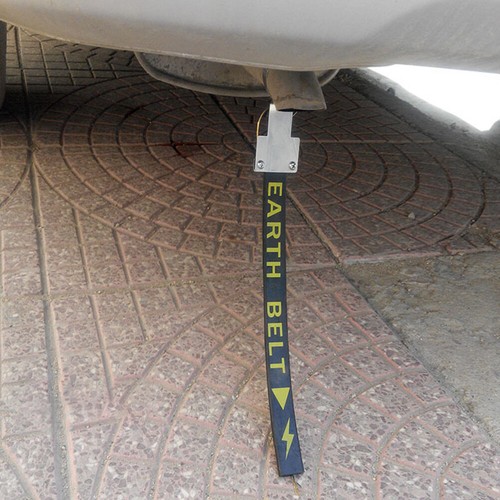

800v seems to be the current state of the art for passenger vehicles - this is what Ionity 350kW chargers are providing .. and so far only Porsche support this on a car you can drive today, soon to be joined by Audi and then Kia/Hyundai. The Kia EV6 will do 10->80% in 18minutes and that's not even fully exploiting the power available.
1200+v for commercial vehicles , perhaps?
1200+v for commercial vehicles , perhaps?
Max_Torque said:
Something interesting happens at 1001 volts, and it's nothing to do with physics itself!
What happens is that you move from operating under the legal framework of the "Low voltage directive" which covers systems up to 1kv, to working under the "high voltage directive"
Now in physics terms, the difference between say 950v and 1.2kV is really nothing. That's still not enough voltage to move to an "ionise the air and jump out and get you" type situation, which is broadly what the High Voltage directive is protecting against. Basically, according to those directives, to get a shock from a sub 1kV system you need to physically touch a bare conductor, but once you move > 1kV the directive includes the possibility that the conductor might have 33kV on it, and hence it'll perhaps jump out and zap you as you walk past 1meter away!
Now what all that means is the high voltage directive is massively more onerous in terms of working methods, tooling, PPE, guarding, earthing and circuit breaking etc. it has to be. But for an EV, really, there is no difference in practice at "just" 1.2kV. So you are adding a huge amount of cost to your processes and systems, but not really getting any significant benefit.
Basically, once you > 1kV, you may as well be at 10kV and at least make the additonal voltage really work for you...........
^^^^This. What happens is that you move from operating under the legal framework of the "Low voltage directive" which covers systems up to 1kv, to working under the "high voltage directive"
Now in physics terms, the difference between say 950v and 1.2kV is really nothing. That's still not enough voltage to move to an "ionise the air and jump out and get you" type situation, which is broadly what the High Voltage directive is protecting against. Basically, according to those directives, to get a shock from a sub 1kV system you need to physically touch a bare conductor, but once you move > 1kV the directive includes the possibility that the conductor might have 33kV on it, and hence it'll perhaps jump out and zap you as you walk past 1meter away!
Now what all that means is the high voltage directive is massively more onerous in terms of working methods, tooling, PPE, guarding, earthing and circuit breaking etc. it has to be. But for an EV, really, there is no difference in practice at "just" 1.2kV. So you are adding a huge amount of cost to your processes and systems, but not really getting any significant benefit.
Basically, once you > 1kV, you may as well be at 10kV and at least make the additonal voltage really work for you...........
You’ve just saved me 15 minutes. Cheers
Gassing Station | EV and Alternative Fuels | Top of Page | What's New | My Stuff