
Carbon Fiber-Reinforced Plastics (CFRP)
Discussion


http://www.sglgroup.com/cms/international/products...
Carbon fiber-reinforced plastics (CFRP) Any experience with this type of material ?
Would it make sense in kitcar body manufacturing ?
Thanks in advance for your info and comments......
Italo
Carbon fiber-reinforced plastics (CFRP) Any experience with this type of material ?
Would it make sense in kitcar body manufacturing ?
Thanks in advance for your info and comments......
Italo
I've used carbon fibre for its cosmetic appearance in small components using both polyester and epoxy resins.

For most normal automotive use the performance of GRP is perfectly adequate and the properties of carbon, kevlar and epoxy resins are only really needed for outright competition use.
For most normal automotive use the performance of GRP is perfectly adequate and the properties of carbon, kevlar and epoxy resins are only really needed for outright competition use.
singlecoil said:
Not economic sense, no. It really is a cost-is-no-object material as far as road cars are concerned.
 I've got a Westfield made out of the stuff.
 The cost was phenomenal - they built six of them (at £40K a throw, back in 1999 when £40K was a lot of money) and allegedly couldn't make it financially viable even at that price. Rumour has it that when they went back to the subcontractor who had made the original run of tubs to place an order for the next batch, he quoted a revised price (at which he could turn a profit) that would have seen the retail price of the car rise to Porsche 911 levels.
It's maybe 50 kilos lighter than a steel spaceframe Caterham with a similar engine (which would have been something like a Caterham R400 costing maybe £14K less). On the road, if I'm honest, you can't really detect the other major advantage of carbon - the chassis stiffness - even compared to the spaceframe in my Sylva which is as limp as a boiled noodle in comparison, and any sort of substantial accident would probably write the car off due to the costs of repairing the tub (it can be repaired, but not by the trained monkeys in your local crash repair centre).
Edited by Sam_68 on Friday 23 April 17:37
At the risk of looking (more of) a thickie, CFRP is actually the correct term for what most of us call Carbon Fibre - which is in fact literally the carbon fibres, usually in the form of a fabric. Whilst we're on the subject I've also seen the P defined as either Plastics and Polymers - I assume the former is correct, as polymer is a structural term which can be applied to many materials?
Initially thought there might be a new group of materials that addressed some of theCF, er, CFRP disadvantages such as cost, being baked under pressure in an autoclave, failure mode and recyclability (or lack thereof).
Initially thought there might be a new group of materials that addressed some of the
http://www.ocvreinforcements.com/solutions/Twintex...
Has anybody used this type of material for body construction ?
I undedrstand by reading some of the info, that it's kind of a glassfibre reinforced polypropylene weave and wonder if it would suit small scale production ?
Has anybody used this type of material for body construction ?
I undedrstand by reading some of the info, that it's kind of a glassfibre reinforced polypropylene weave and wonder if it would suit small scale production ?
twintex is horrible stuff to work with. that being said if you're used to working with grp it's probably a luxury! I work with nice clean pre-preg carbon nowadays but have worked with pretty much everything.
twintex is actually really cheap and we still use it all the time for non-important parts like floor trays and wheel arch liners which will all be thrown away even if they're still in one piece after a race! not sure what advantages it would give over grp for kit car stuff though. it wouldn't be brilliant for large panels or flat surfaces as it's actually quite flimsy when cured so it will bend a lot but also does crack easily if bent too much
twintex is actually really cheap and we still use it all the time for non-important parts like floor trays and wheel arch liners which will all be thrown away even if they're still in one piece after a race! not sure what advantages it would give over grp for kit car stuff though. it wouldn't be brilliant for large panels or flat surfaces as it's actually quite flimsy when cured so it will bend a lot but also does crack easily if bent too much
dazm said:
twintex is horrible stuff to work with. that being said if you're used to working with grp it's probably a luxury! I work with nice clean pre-preg carbon nowadays but have worked with pretty much everything.
twintex is actually really cheap and we still use it all the time for non-important parts like floor trays and wheel arch liners which will all be thrown away even if they're still in one piece after a race! not sure what advantages it would give over grp for kit car stuff though. it wouldn't be brilliant for large panels or flat surfaces as it's actually quite flimsy when cured so it will bend a lot but also does crack easily if bent too much
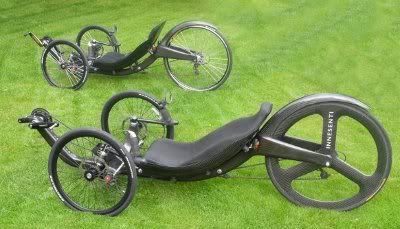
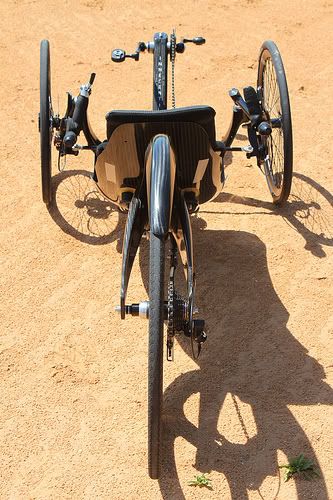
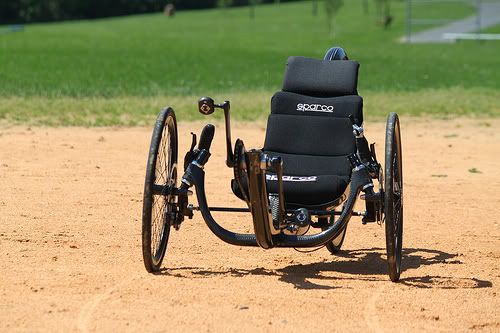
Thanks for the information, I like recumbent trikes and was wondering if you could do something similar to the Issenti Trike, that is a carbon trike and very expensive.twintex is actually really cheap and we still use it all the time for non-important parts like floor trays and wheel arch liners which will all be thrown away even if they're still in one piece after a race! not sure what advantages it would give over grp for kit car stuff though. it wouldn't be brilliant for large panels or flat surfaces as it's actually quite flimsy when cured so it will bend a lot but also does crack easily if bent too much
Do you think that you could use Twintex instead of carbon for the chassis ? a few images of the Issenti



The main problem is with the cost of a car sized autoclave and the time taken to cure a part in it. There is also the cost of the raw material and the need to carefully position lots of bonded in fixing positions (which must be accurate the first time).
Aparently Gordon murray has been working on a fast curing prepreg to massively speed up the curing process. This makes a production run a lot more economical as car sized parts can be produced without either (a) a lot of very big and expensive equipment or (b) a very long time waiting for each part to cure in the oven. He is also experimenting with a pressed metal subframe with all the mounting points on it. This has no structural purpose, it is only to ensure that all the fixing positions are correctly placed. It is bonded into the composite structure. Using this process a composite car becomes a lot more viable.
However an interesting use of current technology could be to make a simple chassis such as an Elan style backbone or ladder frame out of composites. These could be stacked up in an autoclave to speed up the process. With a bonded in frame to position all the fixings this could be a very quick way to make a very accurate and stiff chassis.
Aparently Gordon murray has been working on a fast curing prepreg to massively speed up the curing process. This makes a production run a lot more economical as car sized parts can be produced without either (a) a lot of very big and expensive equipment or (b) a very long time waiting for each part to cure in the oven. He is also experimenting with a pressed metal subframe with all the mounting points on it. This has no structural purpose, it is only to ensure that all the fixing positions are correctly placed. It is bonded into the composite structure. Using this process a composite car becomes a lot more viable.
However an interesting use of current technology could be to make a simple chassis such as an Elan style backbone or ladder frame out of composites. These could be stacked up in an autoclave to speed up the process. With a bonded in frame to position all the fixings this could be a very quick way to make a very accurate and stiff chassis.
cymtriks said:
The main problem is with the cost of a car sized autoclave and the time taken to cure a part in it. There is also the cost of the raw material and the need to carefully position lots of bonded in fixing positions (which must be accurate the first time).
Aparently Gordon murray has been working on a fast curing prepreg to massively speed up the curing process. This makes a production run a lot more economical as car sized parts can be produced without either (a) a lot of very big and expensive equipment or (b) a very long time waiting for each part to cure in the oven. He is also experimenting with a pressed metal subframe with all the mounting points on it. This has no structural purpose, it is only to ensure that all the fixing positions are correctly placed. It is bonded into the composite structure. Using this process a composite car becomes a lot more viable.
However an interesting use of current technology could be to make a simple chassis such as an Elan style backbone or ladder frame out of composites. These could be stacked up in an autoclave to speed up the process. With a bonded in frame to position all the fixings this could be a very quick way to make a very accurate and stiff chassis.
Thanks for the info...Aparently Gordon murray has been working on a fast curing prepreg to massively speed up the curing process. This makes a production run a lot more economical as car sized parts can be produced without either (a) a lot of very big and expensive equipment or (b) a very long time waiting for each part to cure in the oven. He is also experimenting with a pressed metal subframe with all the mounting points on it. This has no structural purpose, it is only to ensure that all the fixing positions are correctly placed. It is bonded into the composite structure. Using this process a composite car becomes a lot more viable.
However an interesting use of current technology could be to make a simple chassis such as an Elan style backbone or ladder frame out of composites. These could be stacked up in an autoclave to speed up the process. With a bonded in frame to position all the fixings this could be a very quick way to make a very accurate and stiff chassis.
http://www.raid.architectgroup.ro/Architectgroup_R...
Just Noticed that the Bowler Nemesis has parts of the body in Twintex
Just Noticed that the Bowler Nemesis has parts of the body in Twintex
Can someone explain to me the use of SMC ( Sheet Moulding Compound) ? I was told that the new Alfa 4C concept will be using an SMC chassis and was wondering if it can be used in kitcars? or maybe someone is already using this process ?
It does look interesting and found this PDF with a brief explanation:
http://www.wiz.it/index2.php?option=com_content&am...
Found also this video:
http://www.youtube.com/watch?v=SZYLGtl4dg8
Thanks
Italo
It does look interesting and found this PDF with a brief explanation:
http://www.wiz.it/index2.php?option=com_content&am...
Found also this video:
http://www.youtube.com/watch?v=SZYLGtl4dg8
Thanks
Italo
Edited by fuoriserie on Thursday 26th July 10:17
Gassing Station | Kit Cars | Top of Page | What's New | My Stuff