
Very odd engine seizure
Discussion


After running in the 1800 VVC engine fitted to my Triumph Spitfire I decided to drop out the Millers running in oil, change filters and replace with some proper fully synthetic oil.
I've used 5W40 Millers Motorsport, which I have used in the past in an Elise with the same engine, however, when I started the engine it was very tappety - I assumed because the oil had drained and the hydraulic tappets still needed to fill properly. I decided to run it up the road, but the throttle response felt very "woolly" and the car stalled as I changed from 1st to 2nd. Given I was short of time, I reversed back onto the drive, had a look to see if I'd knocked off a TPS or anything silly and then just pushed it back into the garage as my wife had arrived home with the kids.
Anyway, I've gone to look at it again this evening and, when I when to start the engine it turned over very slowly on the starter (didn't start) and is now completely seized - It won't turn at all even with the plugs out. It has coolant, the correct quantity of oil a new, correct filter and all seems to be in order.
I'm baffled. The engine had a head rebuild by a trusted local engineering shop, re-honed bores, new rings, big ends, mains seals etc and has run beautifully for the past 180 odd miles, freeing up nicely.
Before I pull it all out again and start stripping it down has anyone got any bright ideas?
I've used 5W40 Millers Motorsport, which I have used in the past in an Elise with the same engine, however, when I started the engine it was very tappety - I assumed because the oil had drained and the hydraulic tappets still needed to fill properly. I decided to run it up the road, but the throttle response felt very "woolly" and the car stalled as I changed from 1st to 2nd. Given I was short of time, I reversed back onto the drive, had a look to see if I'd knocked off a TPS or anything silly and then just pushed it back into the garage as my wife had arrived home with the kids.
Anyway, I've gone to look at it again this evening and, when I when to start the engine it turned over very slowly on the starter (didn't start) and is now completely seized - It won't turn at all even with the plugs out. It has coolant, the correct quantity of oil a new, correct filter and all seems to be in order.
I'm baffled. The engine had a head rebuild by a trusted local engineering shop, re-honed bores, new rings, big ends, mains seals etc and has run beautifully for the past 180 odd miles, freeing up nicely.
Before I pull it all out again and start stripping it down has anyone got any bright ideas?
A guess
Draining the Millers has dislodged muck, jammed an oil way, a bearing has spun.
Only other thing that would jam the rotating mass would be a broken piston ring.
I would remove engine, turn it over, take off sump, undo con rod big ends and see if crank will move, a jammed piston would leave one rod stationary
If crank won't move then look at mains
What is not clear is that it stalled in second but you reversed back home?
Draining the Millers has dislodged muck, jammed an oil way, a bearing has spun.
Only other thing that would jam the rotating mass would be a broken piston ring.
I would remove engine, turn it over, take off sump, undo con rod big ends and see if crank will move, a jammed piston would leave one rod stationary
If crank won't move then look at mains
What is not clear is that it stalled in second but you reversed back home?
Thanks Paul, I think I'll give that a go today, I suspect you're correct about the pistons seizing, though perhaps through lack of coolant? I have added a more complete update below as per the earlier request from Stevieturbo.
Engine was bought as an unknown quantity from a breaker in order to fit to my Triumph Spitfire. Supposedly it had done 60k and was fine, however, who knows with these things, so I stripped it down to have a look but found no obvious faults and so had the head rebuilt - valves reseated, new seals, light skim, and had the liners honed and fitted new rings, big ends, mains, all gaskets and seals, new oil pump and an MLS head gasket with new stretch bolts. I also gas flowed the head as per Dave Andrews excellent website.
Installation is longitudinal with a Ford type 9 box attached via a Caterham bell housing. The engine runs the standard ECU and injection. The only real change required by the installation is the fitment of a MOCAL oil filter take off via an adapter block fitted in the standard oil filter position. The oil pressure take off is from this adapter.
I have run it for about 180 miles during which time it ran nicely, other than a slightly noisy hydraulic tappet.
I drove the car for about 15 miles before changing the oil and ,when I dropped the old oil out I noticed a slight water leak from the bottom hose which I sorted and topped up with no more than 1 litre of coolant. After changing the oil I started the engine briefly before allowing the oil to settle again and recheck the level. The only thing I noticed then was that the hydraulic tappet noise was more evident which I put down to the change in the grade of oil. After letting it tick over for a few minutes I drove it up the road, though the throttle response was poor and it stalled between first and second. It restarted immediately though and, as I hadn't got 50m so just reversed it back on to the drive to see whether I'd knocked off the TPS or something. I couldn't see anything and then the hoardes arrived from school so I pushed it back into the garage until a quieter time.
Having slept on it the poor throttle response and stalling when depressing the clutch have to be classic symptoms of an engine tightening up and I can only imagine that I cooked it before changing the oil and have seized the pistons in the liners. Though I still cant understand why, some hours later (with the coolant still appearing full - though I can't discount an airlock), it should turn over slowly before seeming to completely lock.
Engine was bought as an unknown quantity from a breaker in order to fit to my Triumph Spitfire. Supposedly it had done 60k and was fine, however, who knows with these things, so I stripped it down to have a look but found no obvious faults and so had the head rebuilt - valves reseated, new seals, light skim, and had the liners honed and fitted new rings, big ends, mains, all gaskets and seals, new oil pump and an MLS head gasket with new stretch bolts. I also gas flowed the head as per Dave Andrews excellent website.
Installation is longitudinal with a Ford type 9 box attached via a Caterham bell housing. The engine runs the standard ECU and injection. The only real change required by the installation is the fitment of a MOCAL oil filter take off via an adapter block fitted in the standard oil filter position. The oil pressure take off is from this adapter.
I have run it for about 180 miles during which time it ran nicely, other than a slightly noisy hydraulic tappet.
I drove the car for about 15 miles before changing the oil and ,when I dropped the old oil out I noticed a slight water leak from the bottom hose which I sorted and topped up with no more than 1 litre of coolant. After changing the oil I started the engine briefly before allowing the oil to settle again and recheck the level. The only thing I noticed then was that the hydraulic tappet noise was more evident which I put down to the change in the grade of oil. After letting it tick over for a few minutes I drove it up the road, though the throttle response was poor and it stalled between first and second. It restarted immediately though and, as I hadn't got 50m so just reversed it back on to the drive to see whether I'd knocked off the TPS or something. I couldn't see anything and then the hoardes arrived from school so I pushed it back into the garage until a quieter time.
Having slept on it the poor throttle response and stalling when depressing the clutch have to be classic symptoms of an engine tightening up and I can only imagine that I cooked it before changing the oil and have seized the pistons in the liners. Though I still cant understand why, some hours later (with the coolant still appearing full - though I can't discount an airlock), it should turn over slowly before seeming to completely lock.
Edited by itiejim on Thursday 5th September 08:01
itiejim said:
The only real change required by the installation is the fitment of a MOCAL oil filter take off via an adapter block fitted in the standard oil filter position. The oil pressure take off is from this adapter.
Having done something similar in the past myself, although in my case it was swapping only the remote filter head for another.It is vital you plumb the in/out correctly. Oil will only flow through most oil filters in one direction. If the gauge is taken from here, it can read very high pressure because oil is getting pumped against the one way valve in the filter. But almost no oil is getting through.
My RV8 engine actually ran quite well for a few miles, it was making some noise, but really not as loud as you'd think given what was happening.
It eventually got more lethargic, then broke the crank into 3 pieces, destroying the rods and block too.
stevieturbo said:
Having done something similar in the past myself, although in my case it was swapping only the remote filter head for another.
It is vital you plumb the in/out correctly. Oil will only flow through most oil filters in one direction. If the gauge is taken from here, it can read very high pressure because oil is getting pumped against the one way valve in the filter. But almost no oil is getting through.
My RV8 engine actually ran quite well for a few miles, it was making some noise, but really not as loud as you'd think given what was happening.
It eventually got more lethargic, then broke the crank into 3 pieces, destroying the rods and block too.
Bingo - that's exactly what has happened. just removed the adapter, worked out the direction of flow and that's the cause. Clearly I'm not exactly delighted about the whole thing, but at least I now understand the issue. Thanks very much for taking the time to share your experience.It is vital you plumb the in/out correctly. Oil will only flow through most oil filters in one direction. If the gauge is taken from here, it can read very high pressure because oil is getting pumped against the one way valve in the filter. But almost no oil is getting through.
My RV8 engine actually ran quite well for a few miles, it was making some noise, but really not as loud as you'd think given what was happening.
It eventually got more lethargic, then broke the crank into 3 pieces, destroying the rods and block too.
itiejim said:
stevieturbo said:
Having done something similar in the past myself, although in my case it was swapping only the remote filter head for another.
It is vital you plumb the in/out correctly. Oil will only flow through most oil filters in one direction. If the gauge is taken from here, it can read very high pressure because oil is getting pumped against the one way valve in the filter. But almost no oil is getting through.
My RV8 engine actually ran quite well for a few miles, it was making some noise, but really not as loud as you'd think given what was happening.
It eventually got more lethargic, then broke the crank into 3 pieces, destroying the rods and block too.
Bingo - that's exactly what has happened. just removed the adapter, worked out the direction of flow and that's the cause. Clearly I'm not exactly delighted about the whole thing, but at least I now understand the issue. Thanks very much for taking the time to share your experience.It is vital you plumb the in/out correctly. Oil will only flow through most oil filters in one direction. If the gauge is taken from here, it can read very high pressure because oil is getting pumped against the one way valve in the filter. But almost no oil is getting through.
My RV8 engine actually ran quite well for a few miles, it was making some noise, but really not as loud as you'd think given what was happening.
It eventually got more lethargic, then broke the crank into 3 pieces, destroying the rods and block too.
itiejim said:
Bingo - that's exactly what has happened. just removed the adapter, worked out the direction of flow and that's the cause. Clearly I'm not exactly delighted about the whole thing, but at least I now understand the issue. Thanks very much for taking the time to share your experience.
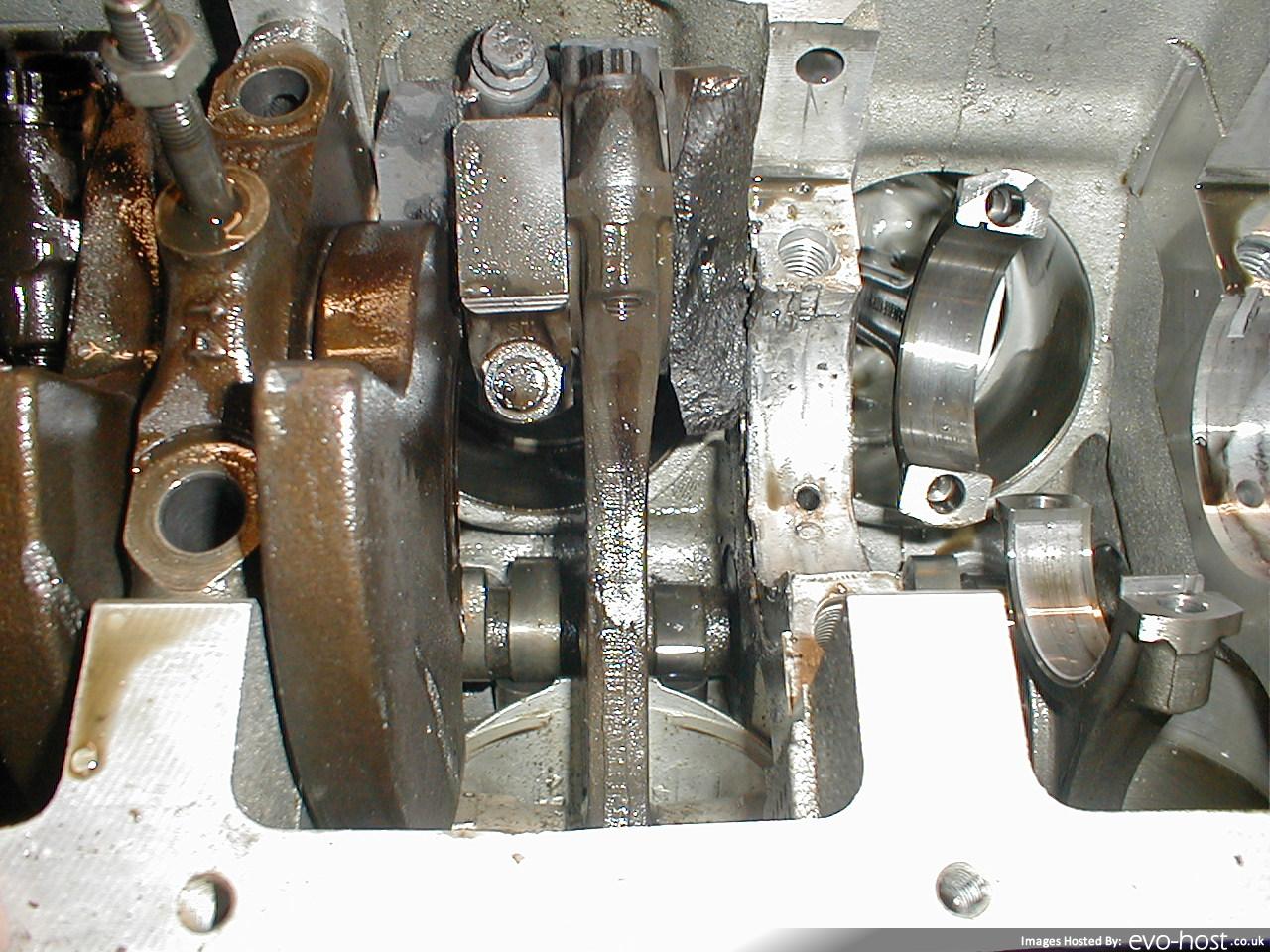
This wont make you feel any better lol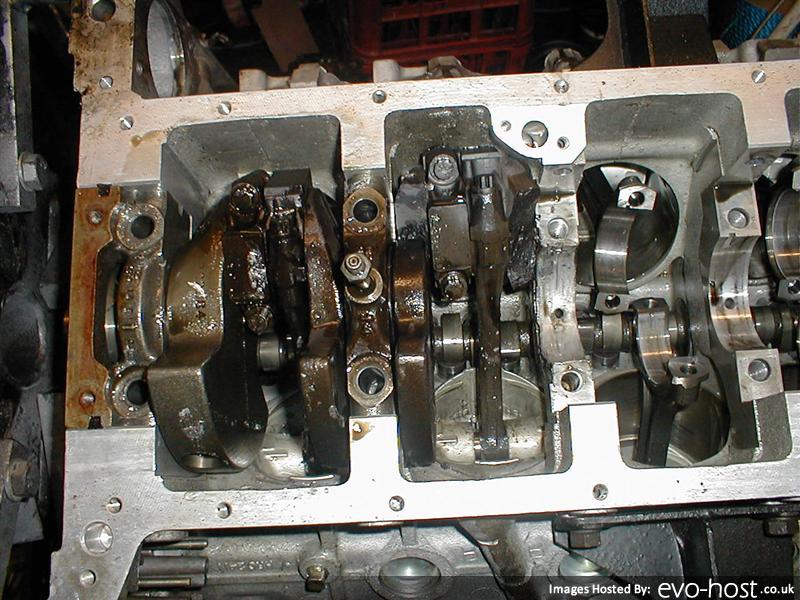
Gassing Station | Engines & Drivetrain | Top of Page | What's New | My Stuff