
Weber 32/36 DGV fast idle problem???
Discussion


Apologies if this is a little long and detailed, but I wanted to go over what I have tried so far.
The car has suddenly started idling at a higher rpm without any choke or idle screw settings!?
I have a tuned Ford crossflow with a 32/36 DGV and manual choke.
I have owned the car for many years and had the carb set up on a rolling road some time ago, it has never caused any problems. Air filter is a foam type having run for 3000 miles. Idle is same if filter is fitted or not.
In the last few hundred miles the car had had new plugs, ignition leads, distributor cap and rotor arm. Valve clearances are set fine as per camshaft. I last used it a month ago after a winter lay up and it ran fine as expected over 30 mile drive.
This weekend, I started the car up with the manual choke and it ran at around 1800rpm, once steady and starting to warm I pushed the choke in and it still ran at around 1800rpm, where as it normally sits back at 1050-1100 rpm (highish due to BFC2 cam) when you push the choke in. Choke flaps and cam/lever appear to function as expected.
I have disconnected the choke cable and the mechanism lever works as it should, even with the idle mixture screw set correctly at 2 turns out and the the idle speed screw released so it is not even in contact with the throttle stop lever. Still the high idle speed.
I checked the ignition timing and took the distributor apart to check if it was advancing the timing prematurely? The centrifugal weights and springs were in place, all appeared fine. I re fitted and re timed, car runs....at 1800rpm!
Next I took the carburettor (mostly) apart, the butterflies appear to be fully shut with strong springs, I removed and blew through all jets and emulsion tubes on the idle circuit and rest of carb to make sure all was clear. Checked the float level and cleaned out fuel pump and carb guaze filters.
The car starts instantly and runs fine when on the move, but idles at 1800 rpm without choke or tension in the throttle cable. I even fitted a new cable in case there was a kink in the old one (there wasn't), no change to the idle.
I don't have any carb cleaner, so squirted GT85 around the edge of the carb base plate and inlet manifold. No discernable difference at all.
I now wonder if it is an air leak?
There is one vacuum pipe which is not used and blanked off due to the vacuum advance not being used for the distributor, I checked and re-blanked this anyway.
Basically the car suddenly now runs at a higher idle rpm, without altering anything or any choke or idle speed screw settings.
I would be grateful if anyone with a similar experience could share their thoughts, having looked online I cannot find anything relevant.
Cheers.
The car has suddenly started idling at a higher rpm without any choke or idle screw settings!?
I have a tuned Ford crossflow with a 32/36 DGV and manual choke.
I have owned the car for many years and had the carb set up on a rolling road some time ago, it has never caused any problems. Air filter is a foam type having run for 3000 miles. Idle is same if filter is fitted or not.
In the last few hundred miles the car had had new plugs, ignition leads, distributor cap and rotor arm. Valve clearances are set fine as per camshaft. I last used it a month ago after a winter lay up and it ran fine as expected over 30 mile drive.
This weekend, I started the car up with the manual choke and it ran at around 1800rpm, once steady and starting to warm I pushed the choke in and it still ran at around 1800rpm, where as it normally sits back at 1050-1100 rpm (highish due to BFC2 cam) when you push the choke in. Choke flaps and cam/lever appear to function as expected.
I have disconnected the choke cable and the mechanism lever works as it should, even with the idle mixture screw set correctly at 2 turns out and the the idle speed screw released so it is not even in contact with the throttle stop lever. Still the high idle speed.
I checked the ignition timing and took the distributor apart to check if it was advancing the timing prematurely? The centrifugal weights and springs were in place, all appeared fine. I re fitted and re timed, car runs....at 1800rpm!
Next I took the carburettor (mostly) apart, the butterflies appear to be fully shut with strong springs, I removed and blew through all jets and emulsion tubes on the idle circuit and rest of carb to make sure all was clear. Checked the float level and cleaned out fuel pump and carb guaze filters.
The car starts instantly and runs fine when on the move, but idles at 1800 rpm without choke or tension in the throttle cable. I even fitted a new cable in case there was a kink in the old one (there wasn't), no change to the idle.
I don't have any carb cleaner, so squirted GT85 around the edge of the carb base plate and inlet manifold. No discernable difference at all.
I now wonder if it is an air leak?
There is one vacuum pipe which is not used and blanked off due to the vacuum advance not being used for the distributor, I checked and re-blanked this anyway.
Basically the car suddenly now runs at a higher idle rpm, without altering anything or any choke or idle speed screw settings.
I would be grateful if anyone with a similar experience could share their thoughts, having looked online I cannot find anything relevant.
Cheers.
Could it be a sticking butterfly when under load from suction with the engine running?
Have you tried fully closing the throttle when running (or tapping either end of the butterfly spindle)? Or simply cleaning the barrel.
Other than that it sounds like some kind of air leak between the carb and inlet valve: gasket between the carbn and inlet manifold, inlet manifold to cylinder head or cracked manifold.
Have you tried fully closing the throttle when running (or tapping either end of the butterfly spindle)? Or simply cleaning the barrel.
Other than that it sounds like some kind of air leak between the carb and inlet valve: gasket between the carbn and inlet manifold, inlet manifold to cylinder head or cracked manifold.
clubsport said:
vacuum advance not being used for the distributor
Is the ignition timing right? If it had previously been set up with retarded timing at idle, and the timing had been advanced for some reason, the revs would increase. Otherwise the only explanation I can see is that it's getting more air, and that must be coming either through the throttle butterfly or via an air leak downstream of the throttle.
Cheers GreenV8S, Ref ignition timing..... it was fine before when the car was running right, set last year when ignition parts were fitted.
The dizzy clamp was tight, so no slippage, I have since tried retarding the ignition back to reduce the tickover, but this results in uneven running on the move and slight backfire in the exhaust.
I have set it to baseline 10 degrees BTDC and car drives fine, no lurching or pinking when on the move, just the high tickover.
From previous experience the car doesn't drive like the timing is out, easy starting, not fighting the starter and no running on as you can get with some X-flows?
Tks JC, butterfly spindles run smoothly with no play to stick, I meticulously cleaned all of the carb internals with petrol dipped cotton buds, it wasn't exactly dirty or stained inside. The secondary butterfly doesn't do anything at idle as far as I can tell from diagrams.
Carb base plate and inlet manifold bolts are all tight and half a tank of 99 octane was put in a month ago. I doubt fuel is stale yet and crossflows don't seem too fussy in this regard.
As I thought earlier and you guys have suggested, I now have to go down the air leak route.
Other than just replace the carb baseplate/gasket and inlet manifold gasket I am not sure of the best way to check?
I think I will try a length of tube as an ear trumpet, I assume I should be able to pick up any hissing from a leak?
Cheers.
The dizzy clamp was tight, so no slippage, I have since tried retarding the ignition back to reduce the tickover, but this results in uneven running on the move and slight backfire in the exhaust.
I have set it to baseline 10 degrees BTDC and car drives fine, no lurching or pinking when on the move, just the high tickover.
From previous experience the car doesn't drive like the timing is out, easy starting, not fighting the starter and no running on as you can get with some X-flows?
Tks JC, butterfly spindles run smoothly with no play to stick, I meticulously cleaned all of the carb internals with petrol dipped cotton buds, it wasn't exactly dirty or stained inside. The secondary butterfly doesn't do anything at idle as far as I can tell from diagrams.
Carb base plate and inlet manifold bolts are all tight and half a tank of 99 octane was put in a month ago. I doubt fuel is stale yet and crossflows don't seem too fussy in this regard.
As I thought earlier and you guys have suggested, I now have to go down the air leak route.
Other than just replace the carb baseplate/gasket and inlet manifold gasket I am not sure of the best way to check?
I think I will try a length of tube as an ear trumpet, I assume I should be able to pick up any hissing from a leak?
Cheers.

Tks Sardonicus, I will have another look, both seemed firmly shut when I last looked. With no spindle play,location screws tight and spring in place is there any way butterfly could be out?
I will splash out on some carb cleaner to spray around the gasket edges, I assume it is more effective than GT85?
I will splash out on some carb cleaner to spray around the gasket edges, I assume it is more effective than GT85?
Resolved!
I took a trip to Burton Power in Ilford to pick up a new carb base plate. Whilst there I thought I would replace the inlet manifold gasket to be sure that was not leaking, with total disregard to cost I stumped up the extra £1.80.
You have to love some classic Ford parts prices (Porsche please take note!)
Once removed from the manifold, I totally stripped and cleaned the DGV with carb cleaner and blew it through with compressed air. The closed butterflies did not let the pool of carb cleaner pass, so I was quietly confident the carb itself was fine.
I assume it was the base plate causing the issue as that had started to disintegrate due to age, heat cycles and the fumes/oil of the Crossflow.
Now the car seems to run quieter and smoother than it has for some time, result!
Thank for the quick response guys and hopefully this thread may be useful to others who ever come into contact with a carburettor and possible issues.
I took a trip to Burton Power in Ilford to pick up a new carb base plate. Whilst there I thought I would replace the inlet manifold gasket to be sure that was not leaking, with total disregard to cost I stumped up the extra £1.80.
You have to love some classic Ford parts prices (Porsche please take note!)
Once removed from the manifold, I totally stripped and cleaned the DGV with carb cleaner and blew it through with compressed air. The closed butterflies did not let the pool of carb cleaner pass, so I was quietly confident the carb itself was fine.
I assume it was the base plate causing the issue as that had started to disintegrate due to age, heat cycles and the fumes/oil of the Crossflow.
Now the car seems to run quieter and smoother than it has for some time, result!
Thank for the quick response guys and hopefully this thread may be useful to others who ever come into contact with a carburettor and possible issues.
clubsport said:
Resolved!
I took a trip to Burton Power in Ilford to pick up a new carb base plate. Whilst there I thought I would replace the inlet manifold gasket to be sure that was not leaking, with total disregard to cost I stumped up the extra £1.80.
You have to love some classic Ford parts prices (Porsche please take note!)
Once removed from the manifold, I totally stripped and cleaned the DGV with carb cleaner and blew it through with compressed air. The closed butterflies did not let the pool of carb cleaner pass, so I was quietly confident the carb itself was fine.
I assume it was the base plate causing the issue as that had started to disintegrate due to age, heat cycles and the fumes/oil of the Crossflow.
Now the car seems to run quieter and smoother than it has for some time, result!
Thank for the quick response guys and hopefully this thread may be useful to others who ever come into contact with a carburettor and possible issues.
Good Job I took a trip to Burton Power in Ilford to pick up a new carb base plate. Whilst there I thought I would replace the inlet manifold gasket to be sure that was not leaking, with total disregard to cost I stumped up the extra £1.80.
You have to love some classic Ford parts prices (Porsche please take note!)
Once removed from the manifold, I totally stripped and cleaned the DGV with carb cleaner and blew it through with compressed air. The closed butterflies did not let the pool of carb cleaner pass, so I was quietly confident the carb itself was fine.
I assume it was the base plate causing the issue as that had started to disintegrate due to age, heat cycles and the fumes/oil of the Crossflow.
Now the car seems to run quieter and smoother than it has for some time, result!
Thank for the quick response guys and hopefully this thread may be useful to others who ever come into contact with a carburettor and possible issues.
 thanks for the update
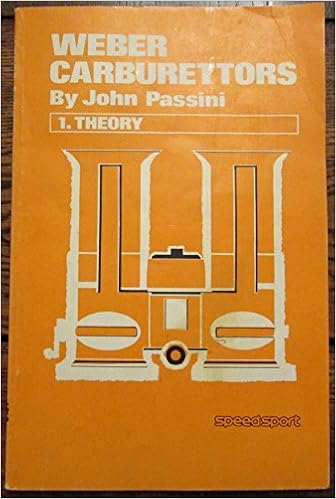
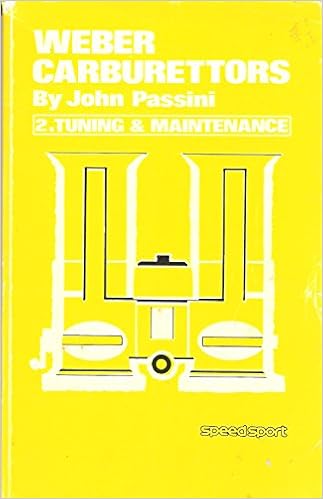
 I swear by my 1972/73 Passini books on Webers - well worth finding a copy if you have carbs to look after.
Volume 1: Theory
Volume 2: Tuning & Maintenance
Gassing Station | Engines & Drivetrain | Top of Page | What's New | My Stuff