
Dry sumping and crankcase vacuum.
Discussion


Does anyone have experience that they could share on what happens with seals that were designed for a wet sumped engine when such an engine is converted to dry sump?
Quite possibly over thinking this but the GT3 RMS seal is essentially backwards, as it is designed to avoid being sucked into the crankcase rather then being forced out, so I don’t want a consequence of dry sumping an M96 to be ingestion of seals.
Quite possibly over thinking this but the GT3 RMS seal is essentially backwards, as it is designed to avoid being sucked into the crankcase rather then being forced out, so I don’t want a consequence of dry sumping an M96 to be ingestion of seals.
Firstly what sort of crank case depression are you targeting and where are you scavenging from? Dry sumped doesn't neccesarily mean you will be generating high amounts of depression in the crank case unless this is a design aim to reduce losses and improve ring pack sealing. If it's just for oil control then there is no reason to run significant depression in the crank case.
2 head mounted scavenge pumps (dual stage, on the exhaust cam), scavenging either end of each head, then (and this is a bit I’m unsure of) either using the stock oil pressure pump to scavenge the sump (via the standard oil pickup), or using a new dedicated scavenge pump for this (which would complicate routing, but IDK what would be the outcome of running a standard oil pump as a scavenge pump).
I have to admit I don’t have a target for pressure drop, that would need to be calculated- before I went there I wanted to check that the engine wouldn’t simply inhale all its seals and expire with a satisfied burp.
I have to admit I don’t have a target for pressure drop, that would need to be calculated- before I went there I wanted to check that the engine wouldn’t simply inhale all its seals and expire with a satisfied burp.
Dammit said:
2 head mounted scavenge pumps (dual stage, on the exhaust cam), scavenging either end of each head, then (and this is a bit I’m unsure of) either using the stock oil pressure pump to scavenge the sump (via the standard oil pickup), or using a new dedicated scavenge pump for this (which would complicate routing, but IDK what would be the outcome of running a standard oil pump as a scavenge pump).
I have to admit I don’t have a target for pressure drop, that would need to be calculated- before I went there I wanted to check that the engine wouldn’t simply inhale all its seals and expire with a satisfied burp.
Standard oil pressure pump won't be of a design suitable to move significant amounts of air/gas and as such little use as a scavenge pump. Scavenges are designed to move large amounts of fluids and crank case gasses to create the crank case depression not just fluid, hence the use of deaireators etc. in very high scav applications. Your ideal scavenge ratio will also determine just how much scavenge you are looking at vs engine oil supply requirement and this in turn will be determined by how much of a pumping loss you want i.e. there is no point having significantly more oil pressure than is actually required as it's all just losses. I have to admit I don’t have a target for pressure drop, that would need to be calculated- before I went there I wanted to check that the engine wouldn’t simply inhale all its seals and expire with a satisfied burp.
The M96/M97 with it's seperate sump setup also likely won't benefit from a lot of scavenge in that area but the heads certainly will. You can run external returns from the heads to the original sump then just scavenge the whole lot from there back to the tank, if you have sufficent scavenge then the depression in the sump chamber will pull oil from the heads or you can feed your head mounted scavenges back to the sump. Modify the original oil pump pickup to exit via a dash 12 out the back of the block/upper sump and feed this directly off the tank. With a decent scavenge pump on the sump you'll achieve around 400mbar depression which is beyond the limit of most seals, hence breathing the engine with pressure regs on the heads to achieve 50mbar or so is most sensible.
Realistically though this is a lot of effort when the X51 scav setup, an enlarged sump lower closing plate and some decent baffling will do just as good a job in absolute oil control with a lot fewer failure modes and less parasitic loss.
My thinking was this:
As stock the M96 rubs two scavenge pumps (one in each head, picking up from that heads sump) which return oil to the central sump via a swirl pot. Each head returns to a separate swirl pot so two scavenge pumps, two swirl pots.
In the central sump is an oil pickup that runs to the main oil pump, which supplies the whole engine. The central sump is below the crank, and main bearing and piston-squirter oil drains down into said sump.
Everything works pretty well, and on a road car probably beyond that which is required, until you add some serious cornering, braking and acceleration into the mix, at which point it is possible for the pickup to become uncovered, to such in air and cause a momentary drop of pressure for the rest of the engine- which might not kill the engine then and there, but is sub-optimal.
What I was thinking was to add a stage to each exhaust cam driven scavenge, as Porsche did for the X51, which enables scavenging of the front and back of each head. Then, rather than routing this oil to the central sump I was thinking of routing it to a dry sump tank, built to include centrifugal de-foaming.
The central oil pickup would continue to evacuate the sump, but rather than going through the oil filter, cooler and then back into the engine would route into the dry sump tank.
Finally I’d add a stage to the existing oil pump which would be the (new) pressure pump, taking oil from the dry sump tank and routing it into the filter/cooler/block.
The current main oil pump would therefore become a scavenge pump for the central sump, dealing only with the oil supplied to the main bearings and the piston oil squirters. The new pressure stage would sit on top of the old main oil pump, driven by the IMS.
Of course, this is all for the birds if the existing oil pump would kill itself rapidly in this new arrangement.
As stock the M96 rubs two scavenge pumps (one in each head, picking up from that heads sump) which return oil to the central sump via a swirl pot. Each head returns to a separate swirl pot so two scavenge pumps, two swirl pots.
In the central sump is an oil pickup that runs to the main oil pump, which supplies the whole engine. The central sump is below the crank, and main bearing and piston-squirter oil drains down into said sump.
Everything works pretty well, and on a road car probably beyond that which is required, until you add some serious cornering, braking and acceleration into the mix, at which point it is possible for the pickup to become uncovered, to such in air and cause a momentary drop of pressure for the rest of the engine- which might not kill the engine then and there, but is sub-optimal.
What I was thinking was to add a stage to each exhaust cam driven scavenge, as Porsche did for the X51, which enables scavenging of the front and back of each head. Then, rather than routing this oil to the central sump I was thinking of routing it to a dry sump tank, built to include centrifugal de-foaming.
The central oil pickup would continue to evacuate the sump, but rather than going through the oil filter, cooler and then back into the engine would route into the dry sump tank.
Finally I’d add a stage to the existing oil pump which would be the (new) pressure pump, taking oil from the dry sump tank and routing it into the filter/cooler/block.
The current main oil pump would therefore become a scavenge pump for the central sump, dealing only with the oil supplied to the main bearings and the piston oil squirters. The new pressure stage would sit on top of the old main oil pump, driven by the IMS.
Of course, this is all for the birds if the existing oil pump would kill itself rapidly in this new arrangement.
[quote=poppopbangba
Standard oil pressure pump won't be of a design suitable to move significant amounts of air/gas and as such little use as a scavenge pump. Scavenges are designed to move large amounts of fluids and crank case gasses to create the crank case depression not just fluid, hence the use of deaireators etc. in very high scav applications. Your ideal scavenge ratio will also determine just how much scavenge you are looking at vs engine oil supply requirement and this in turn will be determined by how much of a pumping loss you want i.e. there is no point having significantly more oil pressure than is actually required as it's all just losses.
The M96/M97 with it's seperate sump setup also likely won't benefit from a lot of scavenge in that area but the heads certainly will. You can run external returns from the heads to the original sump then just scavenge the whole lot from there back to the tank, if you have sufficent scavenge then the depression in the sump chamber will pull oil from the heads or you can feed your head mounted scavenges back to the sump. Modify the original oil pump pickup to exit via a dash 12 out the back of the block/upper sump and feed this directly off the tank. With a decent scavenge pump on the sump you'll achieve around 400mbar depression which is beyond the limit of most seals, hence breathing the engine with pressure regs on the heads to achieve 50mbar or so is most sensible.
Realistically though this is a lot of effort when the X51 scav setup, an enlarged sump lower closing plate and some decent baffling will do just as good a job in absolute oil control with a lot fewer failure modes and less parasitic loss.
[/quote]
And there it is in one post reply.
I now know more about dry sumps than I thought I new.
Thanks
Standard oil pressure pump won't be of a design suitable to move significant amounts of air/gas and as such little use as a scavenge pump. Scavenges are designed to move large amounts of fluids and crank case gasses to create the crank case depression not just fluid, hence the use of deaireators etc. in very high scav applications. Your ideal scavenge ratio will also determine just how much scavenge you are looking at vs engine oil supply requirement and this in turn will be determined by how much of a pumping loss you want i.e. there is no point having significantly more oil pressure than is actually required as it's all just losses.
The M96/M97 with it's seperate sump setup also likely won't benefit from a lot of scavenge in that area but the heads certainly will. You can run external returns from the heads to the original sump then just scavenge the whole lot from there back to the tank, if you have sufficent scavenge then the depression in the sump chamber will pull oil from the heads or you can feed your head mounted scavenges back to the sump. Modify the original oil pump pickup to exit via a dash 12 out the back of the block/upper sump and feed this directly off the tank. With a decent scavenge pump on the sump you'll achieve around 400mbar depression which is beyond the limit of most seals, hence breathing the engine with pressure regs on the heads to achieve 50mbar or so is most sensible.
Realistically though this is a lot of effort when the X51 scav setup, an enlarged sump lower closing plate and some decent baffling will do just as good a job in absolute oil control with a lot fewer failure modes and less parasitic loss.
[/quote]
And there it is in one post reply.
I now know more about dry sumps than I thought I new.
Thanks
Dammit said:
Everything works pretty well, and on a road car probably beyond that which is required, until you add some serious cornering, braking and acceleration into the mix, at which point it is possible for the pickup to become uncovered, to such in air and cause a momentary drop of pressure for the rest of the engine- which might not kill the engine then and there, but is sub-optimal.
This is mostly due to oil hang up in the heads though due to the single point scavenge on each head in the standard application. You end up with a litre + in one of the heads which effectively means the sump level is below that which is acceptable. The solution to this is to run the X51 scavenge setup which gets this back to the sump effectively and a simple sump baffle setup such as the X51 items which reduce the oil movement in the sump. You can also use something like the FVD sump which as well as having X51 style baffles (they are a straight copy) also has additional depth and relocated the oil pickup lower in the sump accordingly to allow for an additional 3/4 litre of oil capacity. Dammit said:
What I was thinking was to add a stage to each exhaust cam driven scavenge, as Porsche did for the X51, which enables scavenging of the front and back of each head. Then, rather than routing this oil to the central sump I was thinking of routing it to a dry sump tank, built to include centrifugal de-foaming.
The central oil pickup would continue to evacuate the sump, but rather than going through the oil filter, cooler and then back into the engine would route into the dry sump tank.
Finally I’d add a stage to the existing oil pump which would be the (new) pressure pump, taking oil from the dry sump tank and routing it into the filter/cooler/block.
The current main oil pump would therefore become a scavenge pump for the central sump, dealing only with the oil supplied to the main bearings and the piston oil squirters. The new pressure stage would sit on top of the old main oil pump, driven by the IMS.
Of course, this is all for the birds if the existing oil pump would kill itself rapidly in this new arrangement.
There is a lot of work in that and most of it is unnecesary The central oil pickup would continue to evacuate the sump, but rather than going through the oil filter, cooler and then back into the engine would route into the dry sump tank.
Finally I’d add a stage to the existing oil pump which would be the (new) pressure pump, taking oil from the dry sump tank and routing it into the filter/cooler/block.
The current main oil pump would therefore become a scavenge pump for the central sump, dealing only with the oil supplied to the main bearings and the piston oil squirters. The new pressure stage would sit on top of the old main oil pump, driven by the IMS.
Of course, this is all for the birds if the existing oil pump would kill itself rapidly in this new arrangement.
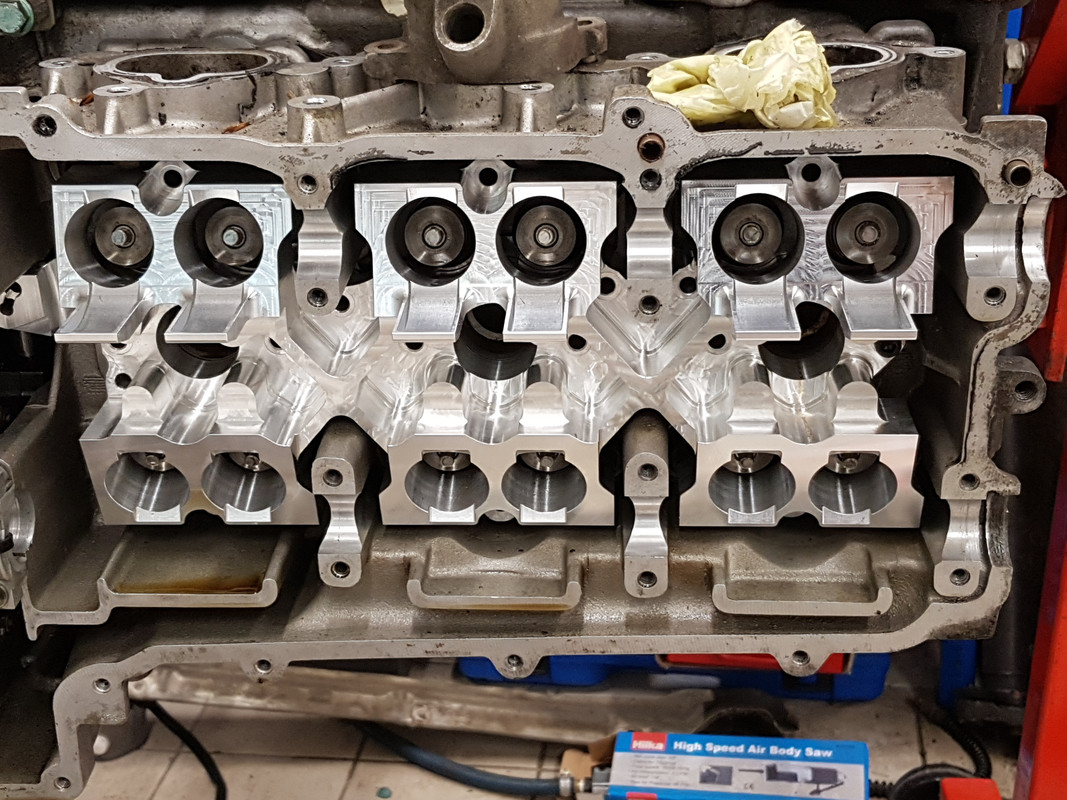
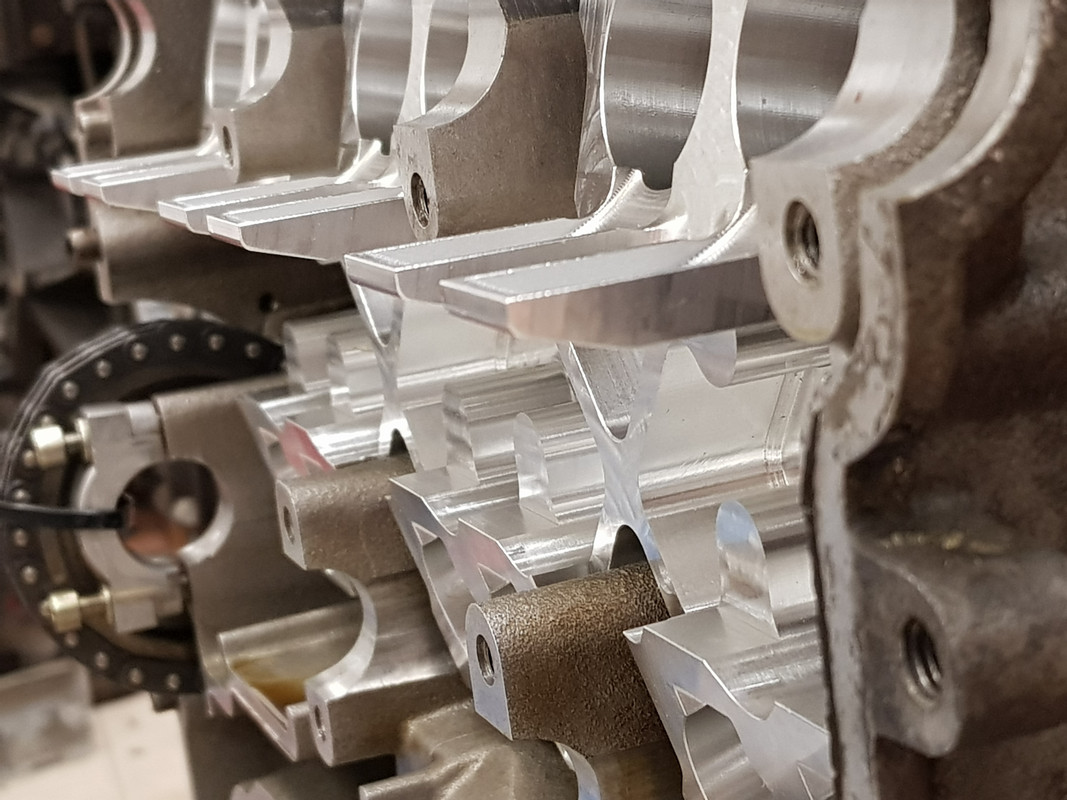
 Keep in mind the thing you are scavenging doesn't care where the pump is as long as there is vacuum at it's point of connection. If I had to do this I would use the current sump void as the carrier for the new oil pump. I'd do a 6 stage (5 scav/1 pressure) pump and plumb it to the heads fore and aft then use the remaining scavenge stage to clear the original sump. The pressure stage can then feed straight up to the original oil pump output. You can drive all this off the original oil pump drive which keeps everything internal and reliable and all you have on the back of the sump are two dash fittings for feed/return to tank. Keep the standard water/oil heat exchanger as it's more than good enough and has very low pressure drop. This will give you a reasonably efficent setup with the minimum of pumping losses but still no where near as efficent as the original.
 However that is all unnecesary if you aren't chasing the last % of performance and need the crank case depression for windage and sealing purposes. You can do 2G+ sustained with an M96 with the right oil control setup i.e. X51 and it will be fine

Windage and pumping losses are on my mind, as well as addressing oil starvation concerns - we're going to spin these engines rather faster than Porsche ever intended.
I think we're roughly aligned on some things (that this is possibly a bit silly being one of them), my intention was 5 scavenge stages and 1 pressure stage.
If we kept the four head scavenge pumps where Porsche intended then that means we have to add a single scavenge stage for the sump, scavenging from the centre of the X51 sump plate.
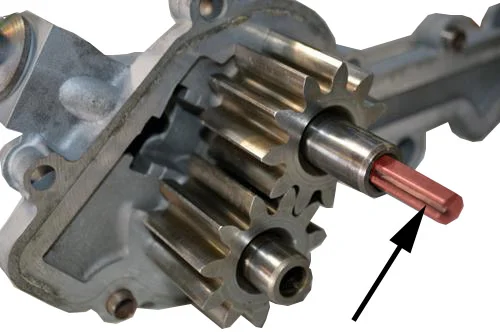
With regards to putting it inside the sump cavity how were you thinking of routing power to the scavenge stage? The existing oil pump is driven by a small shaft that fits into the end of the IMS, the only way I could see of routing that back into the sump would be to add a shaft to the currently non-driven oil pump gear that routes back into the block and connects to a scavenge - is that roughly what you had in mind or have I missed something?
I think we're roughly aligned on some things (that this is possibly a bit silly being one of them), my intention was 5 scavenge stages and 1 pressure stage.
If we kept the four head scavenge pumps where Porsche intended then that means we have to add a single scavenge stage for the sump, scavenging from the centre of the X51 sump plate.
With regards to putting it inside the sump cavity how were you thinking of routing power to the scavenge stage? The existing oil pump is driven by a small shaft that fits into the end of the IMS, the only way I could see of routing that back into the sump would be to add a shaft to the currently non-driven oil pump gear that routes back into the block and connects to a scavenge - is that roughly what you had in mind or have I missed something?
Gassing Station | Engines & Drivetrain | Top of Page | What's New | My Stuff