
Rover V8 high oil pressure
Discussion


Hi,
A 3.9 litre Rover V8, recent oil and filter change - 10w40 semi synthetic oil (same that I've used for the past few thousand miles). The oil and filter change was due to replacing the sump gasket to cure a leak. The pick-up strainer was clear at the time and the new sump gasket was glued onto the dry, clean sump with hylomar smeared on the mating face. This leaves me to not suspect that silicone or similar has oozed out and caused problem.
Fault No. 1 was flickering then steady oil pressure warning light. The capillary gauge indicated good oil pressure (about 15PSI at idle).
I checked the wiring for a short to earth - no fault found.
Removed the oil pressure switch and fitted a spare one I had.
Also unscrewed the pressure relief cap to check that the tadpole pressure relief valve wasn't sticking - this moved freely.
Removed RH rocker cover to check that oil is getting "up high" in case there is genuinely a problem - all oily in there.
Took car for brief test drive light promptly out but now I have...
"Fault No. 2" - the oil pressure is very high being around 45 PSI at cruise then dropping to about 30 PSI once warm
Should I investigate further? Next thought was to remove the whole oil pump and inspect thoroughly.
I am aware that oil is more viscous when cold but it isn't that cold out and the car lives in a garage.
A 3.9 litre Rover V8, recent oil and filter change - 10w40 semi synthetic oil (same that I've used for the past few thousand miles). The oil and filter change was due to replacing the sump gasket to cure a leak. The pick-up strainer was clear at the time and the new sump gasket was glued onto the dry, clean sump with hylomar smeared on the mating face. This leaves me to not suspect that silicone or similar has oozed out and caused problem.
Fault No. 1 was flickering then steady oil pressure warning light. The capillary gauge indicated good oil pressure (about 15PSI at idle).
I checked the wiring for a short to earth - no fault found.
Removed the oil pressure switch and fitted a spare one I had.
Also unscrewed the pressure relief cap to check that the tadpole pressure relief valve wasn't sticking - this moved freely.
Removed RH rocker cover to check that oil is getting "up high" in case there is genuinely a problem - all oily in there.
Took car for brief test drive light promptly out but now I have...
"Fault No. 2" - the oil pressure is very high being around 45 PSI at cruise then dropping to about 30 PSI once warm
Should I investigate further? Next thought was to remove the whole oil pump and inspect thoroughly.
I am aware that oil is more viscous when cold but it isn't that cold out and the car lives in a garage.

100SRV said:
What bothers me is I briefly saw nearly sixty psi when cold and setting off from a junction. The engine usually is nowhere near that high even when cold hence my concerns.
I once burst an oil cooler on a cold winter's start up because I blipped the throttle. It was an rv8. The new oil pressure capillary hose arrived today, I bought a stainless steel braided item having learnt my lesson with the nylon hose.
The hose was fitted and engine run - same as before with around 30PSI cold idle and about 40ish driving - this drops to 15 idling and 30 driving when warmed up.
Now I am becoming paranoid that I've damaged the engine and, hearing the tapping of the cam followers at idle decided to remove the coolant pump / alternator drive belt in case it was noisy water pump or alternator bearings. No change in the noise at idle, although it is much quieter after a run when properly warm.
I decided to remove the sump, rocker covers and inlet manifold for a more in-depth investigation.
Having removed the inlet manifold and expecting to see it dry and full of swarf I found it oily and clean, the same is true of the rocker gear on both sides.
I am saving the removal of the sump as a treat for a week-day night - plan is to unbolt a couple of big end bearing caps and have a look at the shells for any problems. Also I am considering removing the rocker gear so I can get the cam followers out to check the working faces.
Am I being too cautious?
Anything else I should check?
The engine oil is 15/40 - should I be trying 20/50?
The hose was fitted and engine run - same as before with around 30PSI cold idle and about 40ish driving - this drops to 15 idling and 30 driving when warmed up.
Now I am becoming paranoid that I've damaged the engine and, hearing the tapping of the cam followers at idle decided to remove the coolant pump / alternator drive belt in case it was noisy water pump or alternator bearings. No change in the noise at idle, although it is much quieter after a run when properly warm.
I decided to remove the sump, rocker covers and inlet manifold for a more in-depth investigation.
Having removed the inlet manifold and expecting to see it dry and full of swarf I found it oily and clean, the same is true of the rocker gear on both sides.
I am saving the removal of the sump as a treat for a week-day night - plan is to unbolt a couple of big end bearing caps and have a look at the shells for any problems. Also I am considering removing the rocker gear so I can get the cam followers out to check the working faces.
Am I being too cautious?
Anything else I should check?
The engine oil is 15/40 - should I be trying 20/50?
100SRV said:
227bhp said:
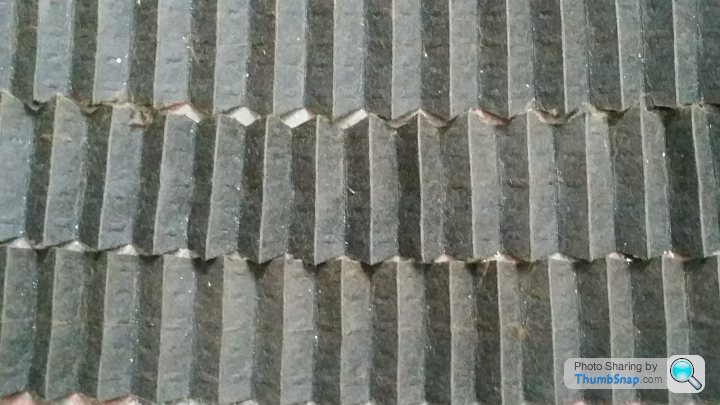
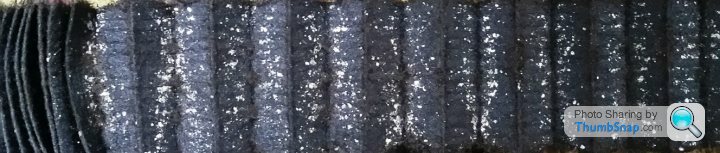
The easiest way to check for bearing damage is to cut open the oil filter and see what it's caught.
That is a messy but good idea. Tin opener, not hacksaw obviously!Whilst it's good practice to not use a saw or grinder, what you are looking for is nothing like steel swarf so it can't be mixed up in reality.
This was knocking lightly, but still running and went on to see another day, you can see the odd shiny flake here and there:
This is 'Sorry, new engine time sir':
Gassing Station | Engines & Drivetrain | Top of Page | What's New | My Stuff