
WRC engine - how did they get so much torque ?
Discussion


those current WRC engines as seen in ford focus, subaru impreza.. they have regulated 300bhp 2 litre turbocharged engine, but they put out 600nm of torque... I _think_ they do 0.5 bar (7 ish psi) of turbo boost.
How do they put out so much torque from 2 litre engine?
So what the serects?

Just been reading the wikipedia page on WRC cars - apparently the restrictor limits them to about 320hp - so they tune them for a wide torque band. The figures they quote are 200hp at 2000 rpm, and over 300 all the way from 3000 to 7500!! 

200hp @ 2000rpm is 525 torques isn't it? close enough, guess they must be running massive boost at low RPM to get that much power at low revs? How do they get away with it..
200hp @ 2000rpm is 525 torques isn't it? close enough, guess they must be running massive boost at low RPM to get that much power at low revs? How do they get away with it..
Edited by SneakyNeil on Sunday 13th May 13:55

350matt said:
Don't forget the restrict or will actually boost the torque figure as it ensures a high air velocity, but mainly its a lot of boost that's the main culprit
Matt
Matt
Not sure about that, the restrictor is in the inlet to the turbo, not the inlet to the valves, so you don't really want high velocity

The Fell diesel-mechanical locomotive had four main engines which were supercharged by positive-displacement superchargers driven by auxiliary engines. So the power output of the main engines was essentially set by the speed of the auxiliary engines, not that of the main engine itself... totally flat power curve and massive bottom end torque. You could do more or less the same trick with an appropriate control law on the turbo once you were on boost.
vrooom said:
those current WRC engines as seen in ford focus, subaru impreza.. they have regulated 300bhp 2 litre turbocharged engine, but they put out 600nm of torque... I _think_ they do 0.5 bar (7 ish psi) of turbo boost.
How do they put out so much torque from 2 litre engine?
So what the serects?
0.5bar???? are you kidding????? they run about 45psi and thats at over 10-1 comp ratio. plus they run amazing elctronics to get the best ignition timing and fueling they can. even saw on a WRC scooby that they ran indavidual water injection per cylinder so they could map each cylinders and run as much boost as poss! then you have cams which will have MASSIVE lift and very little overlap, cylinder heads that are a work of are and a rotating asembly thats as strong as, well, moiney can buy! lol i think the fuel is specially blended to. this allows more boost, comp. ratio and timing before dept. becomes a problem.
also read an article on the Focus about 4 years ago. said ford had to run ceramic turbine blades to take the temperatrues!!! EGT's on that car where off the charts. i think it was over 1000 degrees C. one mecanic was removing the exhaust off the car just after a stage. he put his nomex'ed gloved hand on the exhaust and the glove burst into flame!!!!
the problem with these engines is the restrictors. 34mm isn't very big and thats all they have to pull the air through! so i guess they basically run the turbo flat out and allow the restrictor to govern the boost. also they dont run that hard all through the weekend. they will turn the boost right down in between stages to save the engine.
and dont forget the anti-lag. this enables them to make positive boost saton the line. i think i read they where making over 1bar (15psi) just sat there on the launch control!!!
thanks Chris.

vrooom said:
45 psi..  dont they get lots of pinking... hehe
So noone really know what makes wrc engine have such high torque.
dont they get lots of pinking... hehe So noone really know what makes wrc engine have such high torque.
essentially boost, octane, high compression
and ignition advance. high
octane petrol allows the most power to be had from the air being forced in by allowing much more ignition advance, and hence torque than you or i can run in our turbo car on pump fuel
Why are people adding ignition advance into this ???
Race fuels create more power, beacause they are more resistant to detonation, and they contain more energy !!
Ignition advance is only required because the mixture takes a certain length of time to burn.
Its not just a simple case of more is better. If you could create an instantaneous explosion in the cylidner, you would require minimal advance...and be able to make loads of power.
Race fuels create more power, beacause they are more resistant to detonation, and they contain more energy !!
Ignition advance is only required because the mixture takes a certain length of time to burn.
Its not just a simple case of more is better. If you could create an instantaneous explosion in the cylidner, you would require minimal advance...and be able to make loads of power.
stevieturbo said:
Why are people adding ignition advance into this ???
Because octane and the amount of advance you can run are inextricably linked! Race Fuels are more resistant to auto ignition, allowing more compression of the mixture before the spark is applied, i.e. more advance.

From your post one would almost assume the ignition map on a WRC engine would be identical between pump and race fuel.
"At high engine loads, the advance map contains much larger values. This shows that the timing possible varies greatly with the octane of fuel being used. Under boost, it may not be possible to reach MBT. In other words, the more timing advance that can be run, the higher the engine power output produced - MBT cannot be reached before the engine begins to knock before the plateau is reached. This is where the active ignition timing excels - it allows the ECU to run the highest timing possible without engine knock. This results in high power output, good fuel consumption and low exhaust gas temperatures. At these high loads, emissions aren't relevant for passing government emissions testing procedures, since the cars are always tested at relatively light loads - a handy loophole for turbo cars."
www.ecutek.com/tuning/ignition/
Edited by marfgtxx on Monday 14th May 19:10
Edited by marfgtxx on Monday 14th May 19:10
Has anyone read the Wikipedia entry for dragster engines? 1000 bhp per litre with pushrods, and ignition advance set to a time controlled program triggered at the start of the race as electronic feedback is not allowed! I think the article said there was no cooling system - the engine was cooled by airflow through it and the latent heat of evaporation of the exotic fuels!! Still they only ever run for about 45 sec total. In the early days of F1 turbo engines would run really rich to use the fuel evaporation to cool the charge, which was more pronounced with the dense toluene-based fuels in the mid eighties. Water injection works similarly I believe. So WRC probably does depend to some extent on internal charge cooling too, if less than the old racers because of fuel inefficiency.
baddie said:
Has anyone read the Wikipedia entry for dragster engines? 1000 bhp per litre with pushrods, and ignition advance set to a time controlled program triggered at the start of the race as electronic feedback is not allowed! I think the article said there was no cooling system - the engine was cooled by airflow through it and the latent heat of evaporation of the exotic fuels!! Still they only ever run for about 45 sec total. In the early days of F1 turbo engines would run really rich to use the fuel evaporation to cool the charge, which was more pronounced with the dense toluene-based fuels in the mid eighties. Water injection works similarly I believe. So WRC probably does depend to some extent on internal charge cooling too, if less than the old racers because of fuel inefficiency.
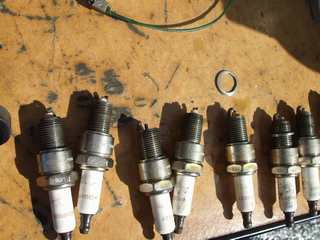
did you also know that top fuel drag cars actually melt the plug and use only the heat of the cumbution chambers to ignite the fuel??? this normally happens about half track. also the fuel they use (85% nitro 15% meth i think) only operates under load. hence why you get flames out the exhaust at idle. also the fuel works best in HOT intake temps!
Chris.
chuntington101 said:
did you also know that top fuel drag cars actually melt the plug and use only the heat of the cumbution chambers to ignite the fuel??? this normally happens about half track. also the fuel they use (85% nitro 15% meth i think) only operates under load. hence why you get flames out the exhaust at idle. also the fuel works best in HOT intake temps!
Chris.
Yep - Ive even got the photo's to proove it:
more at:
www.mez.co.uk/santapod.html
Gassing Station | Engines & Drivetrain | Top of Page | What's New | My Stuff