
Oil in Exhaust port
Discussion


I've just taken the exhaust manifold of my car in order to swap it to the CAT version for MOT but have found one of the four exhaust ports covered in oil:


It's wiped a bit in these pictures but it has been running down the exhaust gasket into the area between head/block. The other three ports are a dull matt black as I expected to see:

These four exhaust valves/guides/seals were put in as part of some headwork I paid for. I'm thinking these haven't been fitted correctly on this cylinder, is this what it looks like? There is only a few hundred miles on the engine but I think this is too severe for any running in behaviour?
I did a compression test on the engine and all cylinders were 120psi give or take 5psi (Low comp pistons).
It's wiped a bit in these pictures but it has been running down the exhaust gasket into the area between head/block. The other three ports are a dull matt black as I expected to see:
These four exhaust valves/guides/seals were put in as part of some headwork I paid for. I'm thinking these haven't been fitted correctly on this cylinder, is this what it looks like? There is only a few hundred miles on the engine but I think this is too severe for any running in behaviour?
I did a compression test on the engine and all cylinders were 120psi give or take 5psi (Low comp pistons).
As always it would help if you said what engine it was!
Anyway 120psi is very low for any engine, even something turbocharged on 8:1 CR. I take it you did actually do the test with the throttle open?
Anyway that's by the by because an oil problem on just one cylinder is not related to that. You'll have to strip the head and see if the guides and seals are ok. It may just be a stem seal that's lost its coil spring at the top or a seal that came off the guide when the valve was fitted. I can't really see how a even a badly worn guide would let so much oil through if there was even a semi functional seal on it.
It's slightly possible that oil is leaking down the side of the guide if there's some damage to the guide bore but that's a rare occurence.
However because there's usually positive pressure in the cylinder and port when the exhaust valve is open this tends to blow any oil back up the guide rather than suck any down it. Oil consumption is more associated with worn inlet guides and seals. You need to be sure there's no other path for oil to have got into the port such as a crack or some sort of emissions system or just a leak from above.
Anyway 120psi is very low for any engine, even something turbocharged on 8:1 CR. I take it you did actually do the test with the throttle open?
Anyway that's by the by because an oil problem on just one cylinder is not related to that. You'll have to strip the head and see if the guides and seals are ok. It may just be a stem seal that's lost its coil spring at the top or a seal that came off the guide when the valve was fitted. I can't really see how a even a badly worn guide would let so much oil through if there was even a semi functional seal on it.
It's slightly possible that oil is leaking down the side of the guide if there's some damage to the guide bore but that's a rare occurence.
However because there's usually positive pressure in the cylinder and port when the exhaust valve is open this tends to blow any oil back up the guide rather than suck any down it. Oil consumption is more associated with worn inlet guides and seals. You need to be sure there's no other path for oil to have got into the port such as a crack or some sort of emissions system or just a leak from above.
Edited by Pumaracing on Thursday 25th March 10:56
Sorry, I've posted this same thread on some mark specific forums so forgot to add the engine details to this one.
The engine is a 99 TU5JP Saxo VTR engine with Omega forged low compression pistons (.3 overbore) attached to standard Saxo VTS rods. The camshaft is a 4901102 catcam (234/234 1.0mm). The head was flowed and had these larger exhaust valves fitted. The engine will be running a GT25R turbo charger once up and running, but this hasn't been fitted yet and it's only done a few hundred NA miles so far.
The test was run with the engine cold which I know is incorrect but I just wanted to make sure all cylinders were a similar reading. I'm not sure how much the compression will rise with the engine up to temp? There was no inlet or exhaust manifold on when I ran the test.
I can see the stem seal spring is still in place at the top of the seal for this valve just by having the rocker cover off but I can't see much below this as it's immersed in a pool of oil. The tip of the spark plug in that cylinder also has a light glossy black coating, somebody has suggested that this means it isn't a guide/stem seal problem. Is there any truth to that? I'm a bit confused to be honest because if it was a ring problem I would have expected something to show on the compression readings for that cylinder.
The engine is a 99 TU5JP Saxo VTR engine with Omega forged low compression pistons (.3 overbore) attached to standard Saxo VTS rods. The camshaft is a 4901102 catcam (234/234 1.0mm). The head was flowed and had these larger exhaust valves fitted. The engine will be running a GT25R turbo charger once up and running, but this hasn't been fitted yet and it's only done a few hundred NA miles so far.
The test was run with the engine cold which I know is incorrect but I just wanted to make sure all cylinders were a similar reading. I'm not sure how much the compression will rise with the engine up to temp? There was no inlet or exhaust manifold on when I ran the test.
I can see the stem seal spring is still in place at the top of the seal for this valve just by having the rocker cover off but I can't see much below this as it's immersed in a pool of oil. The tip of the spark plug in that cylinder also has a light glossy black coating, somebody has suggested that this means it isn't a guide/stem seal problem. Is there any truth to that? I'm a bit confused to be honest because if it was a ring problem I would have expected something to show on the compression readings for that cylinder.
Hmmpf. Yet another person who's been told they need bigger exhaust valves just because a turbo is being fitted. Complete waste of money.
http://www.pumaracing.co.uk/Exvalve.htm
Anyway, back to the plot. Any oil that gets down an exhaust guide shouldn't get into the cylinder other than when the engine's stopped with that valve open. It'll just get blown straight down the exhaust port so if the plug is wet too the oil is getting into the cylinder from somewhere else as I surmised previously.
The cranking pressure shouldn't go up much when the engine is hot. Maybe 5 to 10 psi or so. I'd expect closer to 150 psi if the bottom end is in good nick even with low comp pistons unless the CR is much lower than 8 which it shouldn't be. However your long duration cam will also be knocking it down a bit so maybe it's not too bad and compression testers do vary.
Without examining things in the flesh I don't think there's much else anyone can tell you. You'll have to dive in and have a good look.
http://www.pumaracing.co.uk/Exvalve.htm
Anyway, back to the plot. Any oil that gets down an exhaust guide shouldn't get into the cylinder other than when the engine's stopped with that valve open. It'll just get blown straight down the exhaust port so if the plug is wet too the oil is getting into the cylinder from somewhere else as I surmised previously.
The cranking pressure shouldn't go up much when the engine is hot. Maybe 5 to 10 psi or so. I'd expect closer to 150 psi if the bottom end is in good nick even with low comp pistons unless the CR is much lower than 8 which it shouldn't be. However your long duration cam will also be knocking it down a bit so maybe it's not too bad and compression testers do vary.
Without examining things in the flesh I don't think there's much else anyone can tell you. You'll have to dive in and have a good look.
I've started removing the engine from the car again and have got hold of a compressor to do a leak down test before taking it apart. I noticed this morning when looking at the head that stamped on it is
213SH
35cc
0.006"
18-06-07
I'm guessing the first line is a work number plus an initial and the last line is obviously the date the work was done, but what do the two in between represent?
My best guess at 35cc is that the volume has been increased in the bowl areas by the head man to reduce compression as they knew it was for a turbo car, this could be totally wrong... and the 0.006" I've no ideas?
I would ask the person who done the work but the company who I got the head through are very secretive about who actually done it.
213SH
35cc
0.006"
18-06-07
I'm guessing the first line is a work number plus an initial and the last line is obviously the date the work was done, but what do the two in between represent?
My best guess at 35cc is that the volume has been increased in the bowl areas by the head man to reduce compression as they knew it was for a turbo car, this could be totally wrong... and the 0.006" I've no ideas?
I would ask the person who done the work but the company who I got the head through are very secretive about who actually done it.
Stevieturbo said:
Is there a reason behind the maths lesson ?
I'm hazarding a guess at 8(compression ratio) * 15(PSI - approx atmospheric pressure) = 120PSI (measured pressure in the cylinder).NISaxoVTR said:
35cc
0.006"
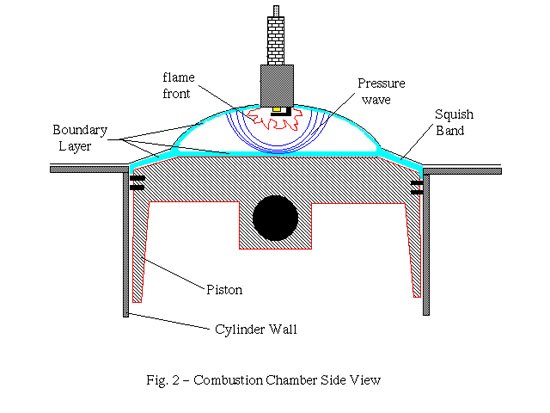
35cc will be the clearance volume (volume of the combustion chamber at TDC) but might just be the head volume +/- any volume added or subtracted by the piston?0.006"
0.0006" sounds like the squish band.
NISaxoVTR said:
I've started removing the engine from the car again and have got hold of a compressor to do a leak down test before taking it apart. I noticed this morning when looking at the head that stamped on it is
213SH
35cc
0.006"
18-06-07
I'm guessing the first line is a work number plus an initial and the last line is obviously the date the work was done, but what do the two in between represent?
35cc is the chamber volume and 0.006" will be the amount they skimmed off to clean the gasket face up.213SH
35cc
0.006"
18-06-07
I'm guessing the first line is a work number plus an initial and the last line is obviously the date the work was done, but what do the two in between represent?
I suggest you measure your compression ratio properly while it's apart. I can't see any need for it to be below about 8.5 unless you're intending to put some ridiculous amount of boost through it. The TU engine is very resistant to detonation and I run well over 11:1 on N/A engines with no problems.
Cranking pressure should be 17 to 20 times the CR with a good bottom end and standard cam. Your actual cam will be knocking off 5 to 10 psi from that.
Zad said:
0.0006" sounds like the squish band.
Lol, no it definitely doesn't. If any engine had a squish clearance of only 6 thou the pistons would be hitting the head already at idle speed. 40 thou is a normal figure for a carefully modified engine and most standard ones have half as much again.Probably best not to post wild guesses at things you don't actually understand as this rarely helps any OP.
Pumaracing said:
Zad said:
0.0006" sounds like the squish band.
Lol, no it definitely doesn't. If any engine had a squish clearance of only 6 thou the pistons would be hitting the head already at idle speed. 40 thou is a normal figure for a carefully modified engine and most standard ones have half as much again.Probably best not to post wild guesses at things you don't actually understand as this rarely helps any OP.


Pumaracing said:
Zad said:
0.0006" sounds like the squish band.
Lol, no it definitely doesn't. If any engine had a squish clearance of only 6 thou the pistons would be hitting the head already at idle speed. 40 thou is a normal figure for a carefully modified engine and most standard ones have half as much again.Probably best not to post wild guesses at things you don't actually understand as this rarely helps any OP.
Ooh no, can't have people commenting on things. This is Pistonheads. Please don't act as if someone's life depends on it, you aren't a doctor and I don't see you offering any other suggestion.
Zad said:
Pumaracing said:
Zad said:
0.0006" sounds like the squish band.
Lol, no it definitely doesn't. If any engine had a squish clearance of only 6 thou the pistons would be hitting the head already at idle speed. 40 thou is a normal figure for a carefully modified engine and most standard ones have half as much again.Probably best not to post wild guesses at things you don't actually understand as this rarely helps any OP.
Ooh no, can't have people commenting on things. This is Pistonheads. Please don't act as if someone's life depends on it, you aren't a doctor and I don't see you offering any other suggestion.
Zad said:
Pumaracing said:
Zad said:
0.0006" sounds like the squish band.
Lol, no it definitely doesn't. If any engine had a squish clearance of only 6 thou the pistons would be hitting the head already at idle speed. 40 thou is a normal figure for a carefully modified engine and most standard ones have half as much again.Probably best not to post wild guesses at things you don't actually understand as this rarely helps any OP.
Ooh no, can't have people commenting on things. This is Pistonheads. Please don't act as if someone's life depends on it, you aren't a doctor and I don't see you offering any other suggestion.
The internet is full of people commenting on things though.
And out of interest....are there any doctor forums so we can go and have a laugh posting on them

Zad said:
Stevieturbo said:
Is there a reason behind the maths lesson ?
I'm hazarding a guess at 8(compression ratio) * 15(PSI - approx atmospheric pressure) = 120PSI (measured pressure in the cylinder).(For pure adiabatic compression 8 becomes 8^1.4 and the pressure 276psi
 )
)Real world figure (because I have it to hand) - Volvo B21A, CR 8.5:1, quoted comp test pressure >=128psi. Interesting coincidence that the amount by which the process deviates from isothermal compensates so closely for the inlet valve not closing at BDC.
Remember that the quoted cranking pressure in Haynes manuals and the like is often the minimum acceptable before the manufacturer deems the engine to have a problem. Optimum figures can be considerably higher and sometimes a range is quoted. Over the years I've collected a lot of data from properly rebuilt race and road engines and the factors that affect cranking pressure are discussed in detail on my website.
http://www.pumaracing.co.uk/comp.htm
An equation that gives a good estimate of cranking pressure with standard duration road cams for an engine in perfect condition is CR^1.3 x 14.7 x 2/3 which as near as dammit is CR^1.3 x 10.
So for a 10:1 engine we might expect 10^1.3 = 19.95 x 14.7 x 2/3 = 195 psi
For an 8:1 engine this would be 8^1.3 x 14.7 x 2/3 = 146 psi
Longer duration cams will reduce this figure due to the later closing inlet valve. Fast road cams might drop the expected pressure by 5%, rally cams 10% and race duration cams perhaps 15%.
Obviously cranking speed also plays a part as does the design and accuracy of the compression gauge.
For normally aspirated engines I like to see a figure of close to 200 psi regardless of cam duration, perhaps a bit higher with 16v engines than 8v ones. Longer duration cams obviously need higher CRs and when properly matched the two factors cancel out to maintain the 200 psi.
For 8v turbo engines to about 1 bar of boost a figure of 150 psi should be perfectly acceptable which implies a CR in the 8 to 8.5 range. Only for very high boost engines might you need to drop the CR to get cranking pressures lower than this. 16V turbo engines can usually stand between 0.5 and 1 ratio higher CR than 8V ones due to the better combustion chamber characteristics.
http://www.pumaracing.co.uk/comp.htm
An equation that gives a good estimate of cranking pressure with standard duration road cams for an engine in perfect condition is CR^1.3 x 14.7 x 2/3 which as near as dammit is CR^1.3 x 10.
So for a 10:1 engine we might expect 10^1.3 = 19.95 x 14.7 x 2/3 = 195 psi
For an 8:1 engine this would be 8^1.3 x 14.7 x 2/3 = 146 psi
Longer duration cams will reduce this figure due to the later closing inlet valve. Fast road cams might drop the expected pressure by 5%, rally cams 10% and race duration cams perhaps 15%.
Obviously cranking speed also plays a part as does the design and accuracy of the compression gauge.
For normally aspirated engines I like to see a figure of close to 200 psi regardless of cam duration, perhaps a bit higher with 16v engines than 8v ones. Longer duration cams obviously need higher CRs and when properly matched the two factors cancel out to maintain the 200 psi.
For 8v turbo engines to about 1 bar of boost a figure of 150 psi should be perfectly acceptable which implies a CR in the 8 to 8.5 range. Only for very high boost engines might you need to drop the CR to get cranking pressures lower than this. 16V turbo engines can usually stand between 0.5 and 1 ratio higher CR than 8V ones due to the better combustion chamber characteristics.
Well this weekend I performed a leak down test on the engine, as I understand it's meant to be done anyway. I don't have a proper tester but basically I ran 80psi of air through the spark plug hole and observed what the preasure gauge read. With the air on the gauge read 73-76psi for each cylinder. When the air shut off the gauge returned to 0 in around 4 seconds.
I did the same on a spare standard engine I have and that showed slightly less psi (70-72) but when I shut of the air the gauge dropped to 0 in about double the time (8ish seconds). If I'm doing this right (highly possible I'm not) then the most I lost was 8.75%, again this is on a cold engine. There didn't appear to be any air escaping from the valves and all the air was comming from the oil gallerys in the head or when they were plugged the dip stick.
Things took a turn for the worse when I removed the head..


As you can see three of the pistons are oily and one looks like its fresh out of the box, as did the bowl of the head for this cylinder. The clean piston is the same cylinder which has the oily port in my first post. The head gasket also had a considerable amount of oil on it, more than I expected to see. I don't have enough knowledge to interpret fully whats happening here so any help is appreciated.
My best guess is some problem with the headgasket seal thats leaking oil into all cylinders and maybe an oil ring problem on the clean piston which is having some kind of cleaning effect?
I did the same on a spare standard engine I have and that showed slightly less psi (70-72) but when I shut of the air the gauge dropped to 0 in about double the time (8ish seconds). If I'm doing this right (highly possible I'm not) then the most I lost was 8.75%, again this is on a cold engine. There didn't appear to be any air escaping from the valves and all the air was comming from the oil gallerys in the head or when they were plugged the dip stick.
Things took a turn for the worse when I removed the head..
As you can see three of the pistons are oily and one looks like its fresh out of the box, as did the bowl of the head for this cylinder. The clean piston is the same cylinder which has the oily port in my first post. The head gasket also had a considerable amount of oil on it, more than I expected to see. I don't have enough knowledge to interpret fully whats happening here so any help is appreciated.
My best guess is some problem with the headgasket seal thats leaking oil into all cylinders and maybe an oil ring problem on the clean piston which is having some kind of cleaning effect?
Gassing Station | Engines & Drivetrain | Top of Page | What's New | My Stuff