
AMR twin plate clutch
Discussion


I have been enquiring with various people regarding the AMR twin plate clutch for my 2010 V8V and there seems to be some confusion regarding the friction plate material used. Some tell me it’s organic and others sintered which I understand to be primarily suited for track use only.
Can anyone help clear this up for me. Are there multiple options or maybe AM changed the material used at some point? I just don’t want to put a unit in that is really for track use.
Cheers
Brian
Can anyone help clear this up for me. Are there multiple options or maybe AM changed the material used at some point? I just don’t want to put a unit in that is really for track use.
Cheers
Brian
I don't know the plate material used, but I presume you might be concerned about the amount of bite tolerance.
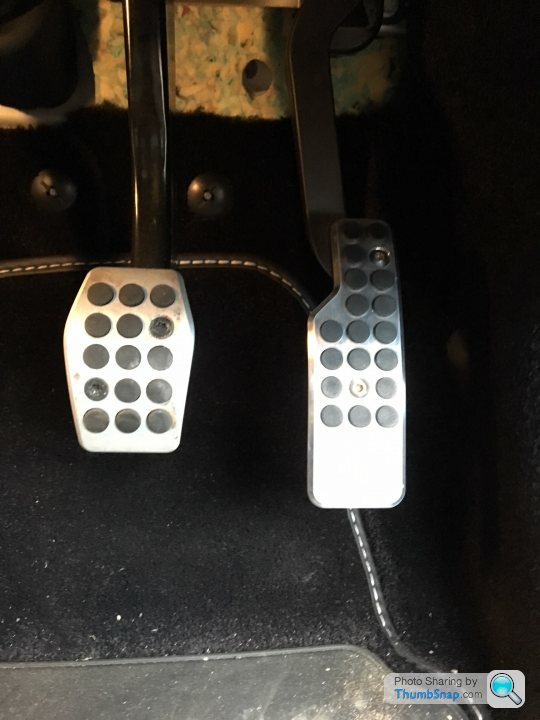
My twin plate was fitted by Bamford Rose. The far lighter pedal and the increased amount of bite available, are the very noticeable driver features. With the V8, you may experience a little more gear chatter than before, but that has always been a common aspect with the standard OEM clutch at low revs.
8Tech said:
Does it not make you wonder why if it is better in every way as reported, the car is not fitted with one as standard?
With the price of the cars anyway, surely it's not a cost cutting exercise!
I've always wondered about this. Perhaps the increased gear chatter at low revs was considered too unrefined for the "average" new buyer. They'd forever be bringing them back to the main dealers saying something sounded wrong, to be told TADTS which, for once, would have been true.With the price of the cars anyway, surely it's not a cost cutting exercise!
I don't think the AMR twin plate has as light a flywheel as some others so maybe they eventually found a compromise they were happy with just before the end of the model run.
8Tech said:
Does it not make you wonder why if it is better in every way as reported, the car is not fitted with one as standard?
With the price of the cars anyway, surely it's not a cost cutting exercise!
I think they let the accountants make one decision only when designing this car 🤔With the price of the cars anyway, surely it's not a cost cutting exercise!
The later standard clutch is much lighter, like a "regular" car so the twin plate is all about longevity.
So you pay say £500-800 more with the promise that it will last longer.....
So how many people have worn out a twin plate yet, or got 50k miles on one ? ....havnt heard of a single example......have heard of plenty of OE clutches lasting 50k though.
Sorry, im just a bit cynical, so many of us signing up to the "upgrade" option based on a promise made by the supplier selling said upgrade part
bogie said:
The later standard clutch is much lighter, like a "regular" car so the twin plate is all about longevity.
When did later begin though?
The introduction announcement of the 4.7 did refer to a lighter flywheel, but the clutch pedal remained far heavier than a 'regular' car.
For the model year 2009, the difference in pedal pressure is very noticeable, and certainly adds to the driving pleasure.
When a clutch has to be changed, a twin plate does seem to make sense.
As for the twin plate longevity, I don't think any figures have been mentioned, but hopefully more than 17,000 miles, which was the point when my single plate failed.
Edited by Dewi 2 on Wednesday 10th July 14:44
Dunno when the later lighter clutch came in, probably MY2012.25 onwards. When I had the OE clutch replaced on my 2006 Vantage it was in 2015 at 73k miles and it was so much lighter compared to the original 2005 clutch that was in there.
Shortest clutch failure Ive had is after 22k miles in current car, but it was the release bearing that failed rather than a worn out clutch. Twin plate is not going to prevent those kinds of component failures.
I guess we have to wait 5-10 years and do a survey of twin plates fitted, but it does seem like clutch life is so erratic in these cars, not sure what conclusion we will be able to come to. Since 2006 we have stories of clutches lasting anywhere from 15k miles to 140k miles !

Gassing Station | Aston Martin | Top of Page | What's New | My Stuff