
Discussion


Apologies if this has been done before, but what is the current consensus on non-leather protective gear. I always used to think of it as just waterproofs and town commuting, but all the main leathers names also seem to be making the textile stuff now. There is some quite good looking stuff with proper armour, so is it any good ? Have any of the mags tested it ? It's a fair bit cheaper than good leathers and is probably lighter and cooler to wear in the summer too. Feel free to point me to another thread if this has already been discussed.
I’m sure you’re going to get lots of replies to this one as it’s a topic that divides opinions – many of which are based on “my mate had this accident and if he/she had/hadn’t been wearing …….” 
There are many other materials that offer high degrees of protection (some claim better than leather) some of which are approved for racing. There are also many materials that offer little crash protection, but then there are also lots of leather items that offer poor to no crash protection. I think there is a defined CE standard for clothing supplied for crash protection purposes, but I’m not sure what it is.
Some testing has been done on protective gear (leather and non-leather) by the likes of Ride so it may be worth getting a hold of appropriate back issues. I am often pleasantly surprised how often the less expensive products do just as well as the expensive ones. Cost is no real indication of levels of protection.
I sometimes wear non-leather protective items as it’s easier to get “office clothing” underneath. However, I mostly wear my leather because I like leather! (Mrs black-k1 may be able to comment on that!!! )
)
I would say that the key to the type of clothing to wear is to decide on the levels of protection you want (not just crash protection but weather protection also) and to buy the items that are most comfortable to wear and use. Buy from a reputable supplier and don’t “pay for the label” unless you have specifically decided to do so. If you can afford it, you may also want to have different clothing for different conditions.
There are many other materials that offer high degrees of protection (some claim better than leather) some of which are approved for racing. There are also many materials that offer little crash protection, but then there are also lots of leather items that offer poor to no crash protection. I think there is a defined CE standard for clothing supplied for crash protection purposes, but I’m not sure what it is.
Some testing has been done on protective gear (leather and non-leather) by the likes of Ride so it may be worth getting a hold of appropriate back issues. I am often pleasantly surprised how often the less expensive products do just as well as the expensive ones. Cost is no real indication of levels of protection.
I sometimes wear non-leather protective items as it’s easier to get “office clothing” underneath. However, I mostly wear my leather because I like leather! (Mrs black-k1 may be able to comment on that!!!
) I would say that the key to the type of clothing to wear is to decide on the levels of protection you want (not just crash protection but weather protection also) and to buy the items that are most comfortable to wear and use. Buy from a reputable supplier and don’t “pay for the label” unless you have specifically decided to do so. If you can afford it, you may also want to have different clothing for different conditions.
For many years I've always worn leathers from two piece for commuting and 1 piece for weekend rides. Now however, I've recently purchased a Dainese gortex jacket and trousers which are fully armoured and 100% water proof with a zipout winter liner (I'm going to have to take it out soon as they are too warm!).
In my opinion, the new gear is much better for commuting than my old leathers (no body armour) and I don't need to carry a waterproof oversuit, but if I was going on a trackday I'd wear the 1 piece. I'll have to see how the gortex keeps me cooler in summer.
For interest the jacket is the new Gator and the trousers are Odessa.
Ian
In my opinion, the new gear is much better for commuting than my old leathers (no body armour) and I don't need to carry a waterproof oversuit, but if I was going on a trackday I'd wear the 1 piece. I'll have to see how the gortex keeps me cooler in summer.
For interest the jacket is the new Gator and the trousers are Odessa.
Ian
I wear a Dainese Goretex Jacket with the removable liner and Dainese leather trousers. I have got a pair of Dainese Goretex and 100% waterproof CE approved amoured trousers but I don't use them as I don't feel as protected as with the leathers.
I do however have two pairs of leather trousers, the old ones for the crap weather days and the newer ones for the dry days. I just carry a cheap pair of waterproof over trousers with me. For track days I only wear my one piece suit.
Andy.
I do however have two pairs of leather trousers, the old ones for the crap weather days and the newer ones for the dry days. I just carry a cheap pair of waterproof over trousers with me. For track days I only wear my one piece suit.
Andy.
I have been "down the road" twice in the same Cordura Jacket, once at around 50 mph and the second time at something over 70mph (in Spain).
On each occasion the jacked did it's job well, it's a bit scruffy and leaks a little in the rain these days, but I still wear it from time to time. I was fortunate not to hit anything solid during either crash, I escaped with a cracked knee cap from one and a whole lot of bruises from the other. (The bikes both did far worse)
I wear leathers for track days, but I also have a lot of faith in the better quality Cordura and similar, armoured jackets. I tend to wear the bottom half of a set of two piece leathers most of the time, after I wore through the knees of my wet weather trousers. (I got a bit carried away as the roads dried out.....)
One big advantage of leather over the synthetic stuff is you don't slide as far in leather, when I came off in Spain I thought I was never going to stop sliding! Hurtling down the road, expecting to hit something hard at any moment, is one of the more helpless feeling in life!
On each occasion the jacked did it's job well, it's a bit scruffy and leaks a little in the rain these days, but I still wear it from time to time. I was fortunate not to hit anything solid during either crash, I escaped with a cracked knee cap from one and a whole lot of bruises from the other. (The bikes both did far worse)
I wear leathers for track days, but I also have a lot of faith in the better quality Cordura and similar, armoured jackets. I tend to wear the bottom half of a set of two piece leathers most of the time, after I wore through the knees of my wet weather trousers. (I got a bit carried away as the roads dried out.....)
One big advantage of leather over the synthetic stuff is you don't slide as far in leather, when I came off in Spain I thought I was never going to stop sliding! Hurtling down the road, expecting to hit something hard at any moment, is one of the more helpless feeling in life!
Hi – A few thoughts …
- Textiles vary lots in abrasion resistance. Dynatec, Cordura and Armacor are tough. (Cordura 700 being better than Cordura 500, and Dynatec is tougher still.)
- Some brands offer clothing with leather on risk areas (knees, hips, bum) and textile elsewhere, e.g. Hein-Gericke’s Maxwell and Belstaff’s Osiris:
www.hein-gericke.com/int/product_i
www.busters-accessories.co.uk/prod
This type's my personal choice for year-round commuting and has been mega-comfortable
- There’s a CE standard for bike clothing. Only BKS, Carerra, Hideout, MJK ( www.glfacc.demon.co.uk/ ) and Crowtree offer leathers that meet the CE protection standard. Other leathers use CE-approved armour, but the suits themselves don’t meet the standard for protective clothing (seam strength, abrasion resistance, etc).
- Halvarssons make a ‘Safety’ textile suit meeting the full CE standard ( www.jofama.se/motorcycle_wear/reta and www.customlids.co.uk/textiles/halv ), as does BKS (Sales@bksleather.co.uk). Scott Leathers (tel. 01833 631526) will custom make a textile suit with a special “white lining” that meets the CE standard and actually exceeds the abrasion resistance of their race leathers.
Hope this helps
Edited to say: To clarify the technical jargon and info on bike clothing materials, click on 'Material glossary' under Good to know here:
www.bmw-motorrad.co.uk/com/en/prod
>> Edited by Mark_SV on Friday 24th March 16:26
- Textiles vary lots in abrasion resistance. Dynatec, Cordura and Armacor are tough. (Cordura 700 being better than Cordura 500, and Dynatec is tougher still.)
- Some brands offer clothing with leather on risk areas (knees, hips, bum) and textile elsewhere, e.g. Hein-Gericke’s Maxwell and Belstaff’s Osiris:
www.hein-gericke.com/int/product_i
www.busters-accessories.co.uk/prod
This type's my personal choice for year-round commuting and has been mega-comfortable
- There’s a CE standard for bike clothing. Only BKS, Carerra, Hideout, MJK ( www.glfacc.demon.co.uk/ ) and Crowtree offer leathers that meet the CE protection standard. Other leathers use CE-approved armour, but the suits themselves don’t meet the standard for protective clothing (seam strength, abrasion resistance, etc).
- Halvarssons make a ‘Safety’ textile suit meeting the full CE standard ( www.jofama.se/motorcycle_wear/reta and www.customlids.co.uk/textiles/halv ), as does BKS (Sales@bksleather.co.uk). Scott Leathers (tel. 01833 631526) will custom make a textile suit with a special “white lining” that meets the CE standard and actually exceeds the abrasion resistance of their race leathers.
Hope this helps
Edited to say: To clarify the technical jargon and info on bike clothing materials, click on 'Material glossary' under Good to know here:
www.bmw-motorrad.co.uk/com/en/prod
>> Edited by Mark_SV on Friday 24th March 16:26

Mark_SV said:
Edited to say: To clarify the technical jargon and info on bike clothing materials, click on 'Material glossary' under Good to know here:
www.bmw-motorrad.co.uk/com/en/prod
>> Edited by Mark_SV on Friday 24th March 14:24
the correct link is Material glossary
Cheers sybaseian
Try browsing through here: www.customlids.co.uk/textiles/halv
>> Edited by Mark_SV on Friday 24th March 16:31
pedal2metal said:
... anyone found any online/offline clothing stores that are worth a look?
Try browsing through here: www.customlids.co.uk/textiles/halv
>> Edited by Mark_SV on Friday 24th March 16:31
You might find this interesting:
www.pistonheads.com/gassing/topic.asp?t=238327&f=74&h=0
www.pistonheads.com/gassing/topic.asp?t=238327&f=74&h=0
Think it's mentioned above that Hein Gericke Cruise jacket came out best in Ride's textile kit test
Seems the issue of protection is that overall leather's do have the edge and may survive more than one spill whereas the textile stuff is much more "single use" like a lid.
Have just bought one of the HG Cruise jacket, which connects with a full zip to my HG leather jeans, and I'm well impressed with it so far. Also a lot more versatile than leathers ie warm and waterproof with plenty of pockets and you can use them to commute without totally knackering your work shirts.
Seems the issue of protection is that overall leather's do have the edge and may survive more than one spill whereas the textile stuff is much more "single use" like a lid.
Have just bought one of the HG Cruise jacket, which connects with a full zip to my HG leather jeans, and I'm well impressed with it so far. Also a lot more versatile than leathers ie warm and waterproof with plenty of pockets and you can use them to commute without totally knackering your work shirts.
Funny how often Ride prints "findings" that are completely at odds with my (and others) personal experience.
Almost without exception, when I have come off in leathers, the leathers have needed repaired before I could use them again.
As I have already said earlier in this thread, I have a cordura jacket has survived two crashes and is still servicable. Sparkey seems to have had a similar experience.
Almost without exception, when I have come off in leathers, the leathers have needed repaired before I could use them again.
As I have already said earlier in this thread, I have a cordura jacket has survived two crashes and is still servicable. Sparkey seems to have had a similar experience.
I have just bought a 125 scooter for getting through London Traffic, I haven't been on a bike in years (but have painful memories...), and want to protect myself as best I can. But after reading this entire thread, I think I may have bought the 'wrong gear'. I took the advice of the 'biker' salesman in the shop, who said he uses the same gear for keeping dry and warm, and said they have protective panels in them, but thinking harder about this, they are made from synthetic materials. Should I have bought leathers? or at least something more durable in the event of sliding down a london street?
here's what I bought.
I bought a Weise X-Blade Fabric Jacket like this one: It has CE approved Knox armour in shoulders, elbows and back, whatever that is?, doesn't sound like kevlar...
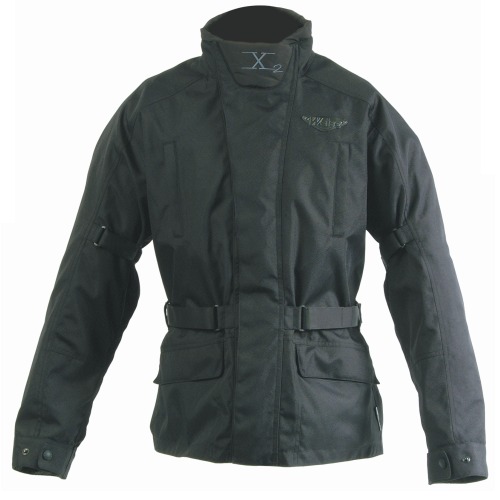
www.sportsbikeshop.co.uk/motorcycle_parts/content_prod/236/14829
I also bought a pair of these to keep my legs dry..., which I plan to wear over heavy jeans.
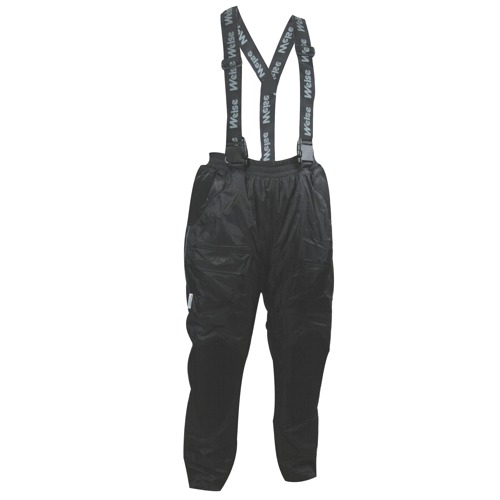
www.sportsbikeshop.co.uk/motorcycle_parts/content_prod/238/15926
and a pair of these gloves to keep my hands warm and dry
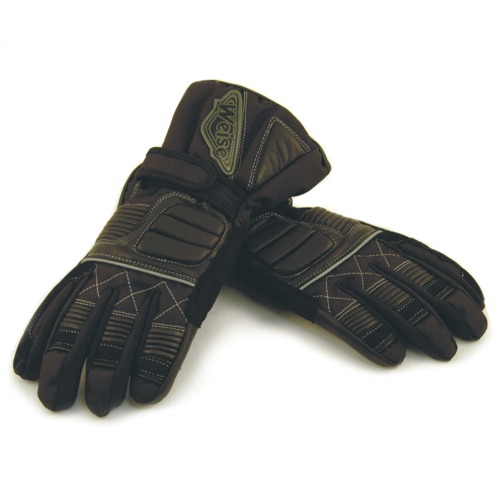
www.sportsbikeshop.co.uk/motorcycle_parts/content_prod/271/16228
But after reading this thread, I think I should not have been so focused on keeping warm and dry; as much as keeping my skin on my body, and then warm and dry...
Is this Weise gear any good, or should I have gone for a better brand?
here's what I bought.
I bought a Weise X-Blade Fabric Jacket like this one: It has CE approved Knox armour in shoulders, elbows and back, whatever that is?, doesn't sound like kevlar...
www.sportsbikeshop.co.uk/motorcycle_parts/content_prod/236/14829
I also bought a pair of these to keep my legs dry..., which I plan to wear over heavy jeans.
www.sportsbikeshop.co.uk/motorcycle_parts/content_prod/238/15926
and a pair of these gloves to keep my hands warm and dry
www.sportsbikeshop.co.uk/motorcycle_parts/content_prod/271/16228
But after reading this thread, I think I should not have been so focused on keeping warm and dry; as much as keeping my skin on my body, and then warm and dry...
Is this Weise gear any good, or should I have gone for a better brand?
police state said:
I have just bought a 125 scooter for getting through London Traffic, I haven't been on a bike in years (but have painful memories...), and want to protect myself as best I can.
...
But after reading this thread, I think I should not have been so focused on keeping warm and dry; as much as keeping my skin on my body, and then warm and dry...
Is this Weise gear any good, or should I have gone for a better brand?
I wouldn’t be too worried about your kit. Whatever gear you have you could always do something to make it offer better protection in the event of an accident but likewise, you need to be comfortable, warm (or cool – depending on the weather) and dry.
Like life, what you wear when riding your bike will be a compromise. Maintaining the correct body temperature and keeping dry will make you more comfortable and relaxed thus much less likely to have an accident in the first place. You could wear 3 sets of leathers, with inflatable clothing in between and armour in just about every position around the body. In the event of an accident you are likely to be better protected but are you going to enjoy riding your bike (if it is even physically possible!)? Are you going to have the freedom of movement required to ensure you observation is up to scratch? Are you going to be able to maintain a sensible body temperature should the sun eventually decide to show its’ face?
While the level of crash protection offered by your clothing is VERY important do not under estimate the even greater benefits that come from not having an accident in the first place! Likewise, never assume that conclusions can be drawn from one or two bits of anecdotal evidence from totally uncontrolled and unmonitored events.
Check out the likes of the Ride magazine tests or the CE safety standards. If the clothing you have purchased comes out acceptably well, then relax, stop worrying about it (as that is going to increase your likelihood of having an accident) and enjoy riding your bike. If you want/need to spend more money on your personal safety then book yourself on some advanced road riding courses.
Enjoy and ride safe.
black-k1 said:
I have just bought a 125 scooter for getting through London Traffic, I haven't been on a bike in years (but have painful memories...), and want to protect myself as best I can.
...
But after reading this thread, I think I should not have been so focused on keeping warm and dry; as much as keeping my skin on my body, and then warm and dry...
Is this Weise gear any good, or should I have gone for a better brand?
I wouldn’t be too worried about your kit. Whatever gear you have you could always do something to make it offer better protection in the event of an accident but likewise, you need to be comfortable, warm (or cool – depending on the weather) and dry.
Like life, what you wear when riding your bike will be a compromise. Maintaining the correct body temperature and keeping dry will make you more comfortable and relaxed thus much less likely to have an accident in the first place. You could wear 3 sets of leathers, with inflatable clothing in between and armour in just about every position around the body. In the event of an accident you are likely to be better protected but are you going to enjoy riding your bike (if it is even physically possible!)? Are you going to have the freedom of movement required to ensure you observation is up to scratch? Are you going to be able to maintain a sensible body temperature should the sun eventually decide to show its’ face?
While the level of crash protection offered by your clothing is VERY important do not under estimate the even greater benefits that come from not having an accident in the first place! Likewise, never assume that conclusions can be drawn from one or two bits of anecdotal evidence from totally uncontrolled and unmonitored events.
Check out the likes of the Ride magazine tests or the CE safety standards. If the clothing you have purchased comes out acceptably well, then relax, stop worrying about it (as that is going to increase your likelihood of having an accident) and enjoy riding your bike. If you want/need to spend more money on your personal safety then book yourself on some advanced road riding courses.
Enjoy and ride safe.
Thanks for that K1, good sound philosophical answer to a complex question from, I assume, and experienced biker. I feel somewhat reassured.
Gassing Station | Biker Banter | Top of Page | What's New | My Stuff