
Electronic supercharger
Discussion


Hi everybody,
There is a new trend with electric supercharging on japs n/a cars. It's a turbo cold side with a 24v motor on the other side (50'000rpm and 1bar extra pressure !). They get 40hp extra on 100hp cars (with some external/neutral reviews!!).
They tell the ecu on most japs could be smart enough to compensate to get a rich enough mixture. It wasn t the case when i turbocharged my eunos 1.6 (afr get very lean and i then add a fuel card to modify the injector signal to get it richer even if it blow 0.6bar)! What do you think a chimaera 500 would look like with an extra 1bar pressure and with a stock ecu?
I'm personnaly very interested in this solution to get the 340cv i pay my insurance for ! What do you think about it? Am i the only one to think this is a wonderfull idea (these uglys actual f1 use this technologie), i know the pain to get the oil/water to a regular turbo and the related problems (restrictors etc etc). There is also no lag (this technologie is sometime used in pair with a regular turbo to remove lag).
Thanks !!!
There is a new trend with electric supercharging on japs n/a cars. It's a turbo cold side with a 24v motor on the other side (50'000rpm and 1bar extra pressure !). They get 40hp extra on 100hp cars (with some external/neutral reviews!!).
They tell the ecu on most japs could be smart enough to compensate to get a rich enough mixture. It wasn t the case when i turbocharged my eunos 1.6 (afr get very lean and i then add a fuel card to modify the injector signal to get it richer even if it blow 0.6bar)! What do you think a chimaera 500 would look like with an extra 1bar pressure and with a stock ecu?
I'm personnaly very interested in this solution to get the 340cv i pay my insurance for ! What do you think about it? Am i the only one to think this is a wonderfull idea (these uglys actual f1 use this technologie), i know the pain to get the oil/water to a regular turbo and the related problems (restrictors etc etc). There is also no lag (this technologie is sometime used in pair with a regular turbo to remove lag).
Thanks !!!
Put this in context- I have a 2.5kw leaf blower, that that pumps less air flow than a 5ltr TVR engine at full power, so no 24 volt electric blower will ever be up to the job. If a super charger takes say 8 bhp to run, that works out at about 6kw and even at 24 volts that's 250 amps. There is a reason why electric superchargers have never really worked out.
Leaf blowers must be the standard for comparison of these ebay electric compressors. Here's a clip testing these on mighty car mods.
indigochim said:
Leaf blowers must be the standard for comparison of these ebay electric compressors. Here's a clip testing these on mighty car mods.
There is no comparsion between these 50$ plastic hair dryer and the product i'm talking about (it s half a real turbo!). There is comparsion berween the too and these make 20times less pressure than the one i m talking about?blitzracing said:
Put this in context- I have a 2.5kw leaf blower, that that pumps less air flow than a 5ltr TVR engine at full power, so no 24 volt electric blower will ever be up to the job. If a super charger takes say 8 bhp to run, that works out at about 6kw and even at 24 volts that's 250 amps. There is a reason why electric superchargers have never really worked out.
Your calculations are good but the person that tested it where also very sceptic and could not believe the dyno results....Torque amp seems to be the best. Please just check the kit there is really no comparsion with the ebay product (these are 0hp gain for sure)
https://www.google.com/url?sa=t&source=web&...
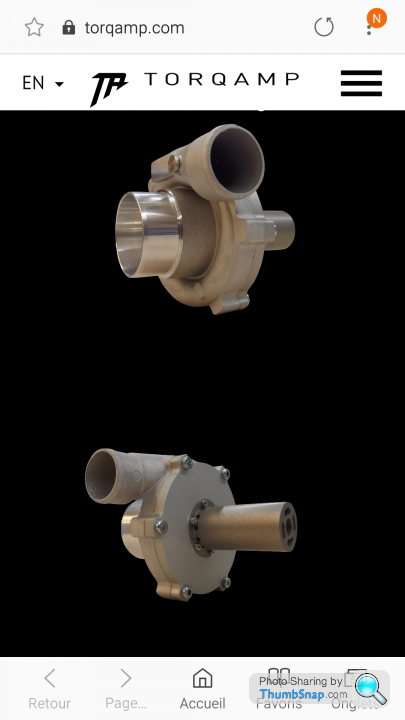
https://www.google.com/url?sa=t&source=web&...
Edited by Lolo256 on Monday 4th February 18:43
Edited by Lolo256 on Monday 4th February 18:45
Borg Warners E-Booster products are a realistic OEM proposition for this sort of thing:

https://www.borgwarner.com/newsroom/press-releases...
It's designed for boost/torque infill used in conjunction with a larger turbocharger to allow high specific outputs and flat torque curves from heavily booster small capacity engines.
40bhp worth of additional airflow on a 100bhp engine is still going to be 40bhp extra AT BEST on a larger engine and that's ignoring any restrictions it may impose on the inlet at higher revs/power outputs. Boost is just a measure of restriction so if you attach the same thing to an engine with a larger air mass demand you'll see the boost pressure it can generate drop accordingly.
https://www.borgwarner.com/newsroom/press-releases...
It's designed for boost/torque infill used in conjunction with a larger turbocharger to allow high specific outputs and flat torque curves from heavily booster small capacity engines.
40bhp worth of additional airflow on a 100bhp engine is still going to be 40bhp extra AT BEST on a larger engine and that's ignoring any restrictions it may impose on the inlet at higher revs/power outputs. Boost is just a measure of restriction so if you attach the same thing to an engine with a larger air mass demand you'll see the boost pressure it can generate drop accordingly.
poppopbangbang said:
Borg Warners E-Booster products are a realistic OEM proposition for this sort of thing:
https://www.borgwarner.com/newsroom/press-releases...
It's designed for boost/torque infill used in conjunction with a larger turbocharger to allow high specific outputs and flat torque curves from heavily booster small capacity engines.
40bhp worth of additional airflow on a 100bhp engine is still going to be 40bhp extra AT BEST on a larger engine and that's ignoring any restrictions it may impose on the inlet at higher revs/power outputs. Boost is just a measure of restriction so if you attach the same thing to an engine with a larger air mass demand you'll see the boost pressure it can generate drop accordingly.
The borg is crazy!!!! https://www.borgwarner.com/newsroom/press-releases...
It's designed for boost/torque infill used in conjunction with a larger turbocharger to allow high specific outputs and flat torque curves from heavily booster small capacity engines.
40bhp worth of additional airflow on a 100bhp engine is still going to be 40bhp extra AT BEST on a larger engine and that's ignoring any restrictions it may impose on the inlet at higher revs/power outputs. Boost is just a measure of restriction so if you attach the same thing to an engine with a larger air mass demand you'll see the boost pressure it can generate drop accordingly.
I dont know about the borg but the one i linked below is used both on NA (most of time) and turbo applications.
Thanks for all these reflexions on the engine capacity influence. To tell you the truth 40hp would be very welcome and i would be (more) happy with that! They made a test on the max airflow of the beast, it s 23 lb/min please tell me if it make sense for a 5.0 engine.
Still for me some interest in these technologies because it will not shut exhaust note down wich is a good thing specially in a chim.
Edited by Lolo256 on Monday 4th February 18:59
Edited by Lolo256 on Monday 4th February 19:11
indigochim said:
Leaf blowers must be the standard for comparison of these ebay electric compressors. Here's a clip testing these on mighty car mods.
I was trying to recalibrate a Bosch AFM output to be the same as a Lucas 5AM to reduce the airflow resistance with some simple electronics, but the only way I could replicate the airflow of a 5ltr TVR voltage wise was a petrol powered leaf blower at full power. Ummmmm ...2 stroke petrol powered supercharger......blitzracing said:
I was trying to recalibrate a Bosch AFM output to be the same as a Lucas 5AM to reduce the airflow resistance with some simple electronics, but the only way I could replicate the airflow of a 5ltr TVR voltage wise was a petrol powered leaf blower at full power. Ummmmm ...2 stroke petrol powered supercharger......
Please dont feed my craziness, i'm 750h2 2 stroke fanboy!!!! I can imagine it screaming with the v8 on background 
For this lack of airflow (is 23lb/min low???) The only incidence would be a more limited pressure?? Is this the confirmation that, As said before, the power gain would be more more limited proportionnaly to engine size but it will still have a in a relative perspective, a power gain very similar? (I mean if a 100hp car get 140hp il get also 40hp but not the 40% gain they will get with the 100hp engine)
Edited by Lolo256 on Monday 4th February 21:28
Edited by Lolo256 on Monday 4th February 21:48

There are many challenges facing electric supercharging:
1. Designing a sufficiently capable power source that's also sufficiently compact and lightweight
2. How you charge that power source
3. The energy it takes to charge the power source
4. The time it takes to charge the power source
Battery technology is moving very rapidly indeed but batteries will unlikely ever be the answer, what you need is a graphene supercapacitor which are here already but in their infancy and currently very expensive, however as costs come down we should expect to see a lot of proper electric supercharger kits (that actually do something) appearing the market.
Like all capacitors, a graphene supercapacitor takes time to charge, it then has the capacity to dump a huge amount on electrical energy in very short order, this means even a graphene supercapacitor supercharger will be something you only activate for short periods when additional power is needed such as overtaking maneuvers. In the early days it'll be much like an electric version of a nitrous oxide button.
How often you get to hit the button will be dictated by the refresh rate of the graphene supercapacitor ie how quickly you can recharge it....this will improve as the technology advances. But remember, while graphene supercapacitors are a very efficient and exciting technology they still don't enable us to break the basic rules of physics, you know stuff like......
1. "For every action, there is an equal and opposite reaction"
2. "The acceleration of an object as produced by a net force is directly proportional to the magnitude of the net force, in the same direction as the net force, and inversely proportional to the mass of the object"
Old man Newton could have simplified all this by just saying...... "You never get something for nothing"
For example if you're going to extract 'X' number of kilowatts from graphene supercapacitor you're going to need to put the same 'X' number of kilowatts in there in the first place, actually you'll need to put a bit more in to account for mechanical and electrical losses
In the end it'll all come down to time, ie how long it takes to charge your graphene supercapacitor and how much boost time you'll get out of it after it's fully charged, in the case of the graphene supercapacitor it's all about time, just like leverage and gearing what you're not getting, and never will get, is something for nothing!
Finally you can't get way from those inevitable mechanical and electrical losses, so the question to ponder is...... which of these two do you think will be more efficient?:
1. Use the engine to drive an alternator to charge a graphene supercapacitor to drive a supercharger
Or
2. Simply use the engine to directly drive a supercharger
I'll let you all answer that one for yourselves
1. Designing a sufficiently capable power source that's also sufficiently compact and lightweight
2. How you charge that power source
3. The energy it takes to charge the power source
4. The time it takes to charge the power source
Battery technology is moving very rapidly indeed but batteries will unlikely ever be the answer, what you need is a graphene supercapacitor which are here already but in their infancy and currently very expensive, however as costs come down we should expect to see a lot of proper electric supercharger kits (that actually do something) appearing the market.
Like all capacitors, a graphene supercapacitor takes time to charge, it then has the capacity to dump a huge amount on electrical energy in very short order, this means even a graphene supercapacitor supercharger will be something you only activate for short periods when additional power is needed such as overtaking maneuvers. In the early days it'll be much like an electric version of a nitrous oxide button.
How often you get to hit the button will be dictated by the refresh rate of the graphene supercapacitor ie how quickly you can recharge it....this will improve as the technology advances. But remember, while graphene supercapacitors are a very efficient and exciting technology they still don't enable us to break the basic rules of physics, you know stuff like......
1. "For every action, there is an equal and opposite reaction"
2. "The acceleration of an object as produced by a net force is directly proportional to the magnitude of the net force, in the same direction as the net force, and inversely proportional to the mass of the object"
Old man Newton could have simplified all this by just saying...... "You never get something for nothing"
For example if you're going to extract 'X' number of kilowatts from graphene supercapacitor you're going to need to put the same 'X' number of kilowatts in there in the first place, actually you'll need to put a bit more in to account for mechanical and electrical losses
In the end it'll all come down to time, ie how long it takes to charge your graphene supercapacitor and how much boost time you'll get out of it after it's fully charged, in the case of the graphene supercapacitor it's all about time, just like leverage and gearing what you're not getting, and never will get, is something for nothing!
Finally you can't get way from those inevitable mechanical and electrical losses, so the question to ponder is...... which of these two do you think will be more efficient?:
1. Use the engine to drive an alternator to charge a graphene supercapacitor to drive a supercharger
Or
2. Simply use the engine to directly drive a supercharger
I'll let you all answer that one for yourselves
ChimpOnGas said:
There are many challenges facing electric supercharging:
1. Designing a sufficiently capable power source that's also sufficiently compact and lightweight
2. How you charge that power source
3. The energy it takes to charge the power source
4. The time it takes to charge the power source
Battery technology is moving very rapidly indeed but batteries will unlikely ever be the answer, what you need is a graphene supercapacitor which are here already but in their infancy and currently very expensive, however as costs come down we should expect to see a lot of proper electric supercharger kits (that actually do something) appearing the market.
Like all capacitors, a graphene supercapacitor takes time to charge, it then has the capacity to dump a huge amount on electrical energy in very short order, this means even a graphene supercapacitor supercharger will be something you only activate for short periods when additional power is needed such as overtaking maneuvers. In the early days it'll be much like an electric version of a nitrous oxide button.
How often you get to hit the button will be dictated by the refresh rate of the graphene supercapacitor ie how quickly you can recharge it....this will improve as the technology advances. But remember, while graphene supercapacitors are a very efficient and exciting technology they still don't enable us to break the basic rules of physics, you know stuff like......
1. "For every action, there is an equal and opposite reaction"
2. "The acceleration of an object as produced by a net force is directly proportional to the magnitude of the net force, in the same direction as the net force, and inversely proportional to the mass of the object"
Old man Newton could have simplified all this by just saying...... "You never get something for nothing"
For example if you're going to extract 'X' number of kilowatts from graphene supercapacitor you're going to need to put the same 'X' number of kilowatts in there in the first place, actually you'll need to put a bit more in to account for mechanical and electrical losses
In the end it'll all come down to time, ie how long it takes to charge your graphene supercapacitor and how much boost time you'll get out of it after it's fully charged, in the case of the graphene supercapacitor it's all about time, just like leverage and gearing what you're not getting, and never will get, is something for nothing!
Finally you can't get way from those inevitable mechanical and electrical losses, so the question to ponder is...... which of these two do you think will be more efficient?:
1. Use the engine to drive an alternator to charge a graphene supercapacitor to drive a supercharger
Or
2. Simply use the engine to directly drive a supercharger
I'll let you all answer that one for yourselves
Bouf!!! Thank you, very erudite answer, as usual!!!!1. Designing a sufficiently capable power source that's also sufficiently compact and lightweight
2. How you charge that power source
3. The energy it takes to charge the power source
4. The time it takes to charge the power source
Battery technology is moving very rapidly indeed but batteries will unlikely ever be the answer, what you need is a graphene supercapacitor which are here already but in their infancy and currently very expensive, however as costs come down we should expect to see a lot of proper electric supercharger kits (that actually do something) appearing the market.
Like all capacitors, a graphene supercapacitor takes time to charge, it then has the capacity to dump a huge amount on electrical energy in very short order, this means even a graphene supercapacitor supercharger will be something you only activate for short periods when additional power is needed such as overtaking maneuvers. In the early days it'll be much like an electric version of a nitrous oxide button.
How often you get to hit the button will be dictated by the refresh rate of the graphene supercapacitor ie how quickly you can recharge it....this will improve as the technology advances. But remember, while graphene supercapacitors are a very efficient and exciting technology they still don't enable us to break the basic rules of physics, you know stuff like......
1. "For every action, there is an equal and opposite reaction"
2. "The acceleration of an object as produced by a net force is directly proportional to the magnitude of the net force, in the same direction as the net force, and inversely proportional to the mass of the object"
Old man Newton could have simplified all this by just saying...... "You never get something for nothing"
For example if you're going to extract 'X' number of kilowatts from graphene supercapacitor you're going to need to put the same 'X' number of kilowatts in there in the first place, actually you'll need to put a bit more in to account for mechanical and electrical losses
In the end it'll all come down to time, ie how long it takes to charge your graphene supercapacitor and how much boost time you'll get out of it after it's fully charged, in the case of the graphene supercapacitor it's all about time, just like leverage and gearing what you're not getting, and never will get, is something for nothing!
Finally you can't get way from those inevitable mechanical and electrical losses, so the question to ponder is...... which of these two do you think will be more efficient?:
1. Use the engine to drive an alternator to charge a graphene supercapacitor to drive a supercharger
Or
2. Simply use the engine to directly drive a supercharger
I'll let you all answer that one for yourselves
I'll chew it a bit and i'll learn a lot from it!!! You right say that a supercharger is an easier way in theory but you need a solid fixation, some room (moving things to get this space) etc and it s finally a big headhach
On the torque amp system there is a chip that regulate tensions to charge the 24v battery during partial or no-throtle period by converting the car 12v. During these phases the turbo is not functioning like a regular turbo that is rpm dependant that turn almost every time, there is here a physical switch on the pedal. The "charging speed" needed is then a bit lower but you're totally right that's a main thing to think!
Ps: we could also imagine to charge the 24v (not regulary on the kit) with an external charger when comming home and if the battery discharge slowly it would not be so problematic? No?
Edited by Lolo256 on Monday 4th February 23:23

Lolo256 said:
Bouf!!! Thank you, very erudite answer, as usual!!!!
Thanks, but rather than electric supercharging a far better application of graphene supercapacitors is to use this technology paired with the new breed of very high efficiency electric motors to work hand in hand with turbo charging 
The idea being to solve the inevitable compromises all designers of turbos must face, because the truth is these compromises dictate If you design your your turbo system to make boost at higher exhaust speeds you will be left with little or no boost at lower exhaust speeds, conversely if you design your turbo to make boost at lower exhaust speeds the system will become very inefficient at higher exhaust speeds.
Like fixed propeller design, fixed geometry compressor and exhaust wheel design will always be a compromise as both wheels (turbines) within the turbo charger will actually only operate within small windows of efficient operation, the eternal Holy Grail of turbo charging has therefore always been to widen these windows.
Variable geometry turbo chargers go some way to solving the compromise but there is another way, use an electric motor to artificially spool up the compressor when ordinarily slower exhaust speeds would mean it's not generating boost and you'll significantly improve engine responsiveness, you'll also massively widen the effective operating window from the turbo which is the same thing as significantly improving it's efficiency.
An electric motor assisted turbo potentially allows you to fit an exhaust wheel design that would only really work effectively at higher exhaust speeds, a design that ordinarily would be completely unsuitable for a road car.... now we're really talking chaps

The other significant challenge in the world of turbo charging is how quickly you can get your exhaust wheel spinning as the exhaust gasses start passing over it, inertia dictates acceleration of the exhaust wheel will always take time before it reaches its optimal speed, during this period of compressor wheel acceleration a turbo system will make little or no boost so the faster you can get it spinning the better. Because capacitors store energy over a period of time and release it in one big dump over a very short period of time, and because electric motors make 100% of their torque potential from zero RPM such a system is ideal for rapidly accelerating the exhaust wheel and so the compressor wheel where ordinarily they would only be slowly gathering pace.
The results of using the electric motor and graphene supercapacitor system to to rapidly spool the turbo up long before the exhaust gasses get to work on the exhaust wheel will be to almost entirely eliminate the age old challenge of turbo lag and to make the forced induction system far more efficient as it's operating range will be massively widened.
We've already seen this technology used on race cars, so you might expect it's only a matter of time before we see it used on road cars, however this is not the case as the trend subscribed to by car makers is actually to use electric power to augment engine torque directly by fitting wheel motors, its also quite clear this hybridised use of internal combustion and electric power will slowly morph into full electric as inevitably the old internal combustion engine element is destined to be phased out.
However, in the aftermarket performance world an electric motor and graphene supercapacitor assisted turbo system would make for a very effective product, if a kit could be created where the car's current turbo can be easily replaced with an electrically assisted one I feel certain it would sell extremely well. The kit would come with the electrically assisted turbo unit itself using common existing turbo architecture to make it a straight bolt in unit, a graphene supercapacitor, all the necessary high amp wiring, and small ECU so the owner can tune the point of electric motor activation based of engine speed vs turbine speed.
The end result of fitting such a graphene supercapacitor assisted turbo system would feel much the same as if you'd fitted a positive displacement old Roots type or the newer screw type positive displacement supercharger, unlike centrifugal superchargers and turbo chargers such positive displacement superchargers make boost (and so huge torque) right off of idle which is a wonderful thing, but their downfall is positive displacement superchargers compared with centrifugal superchargers and turbo chargers is they are a very inefficient compressor design indeed

A graphene supercapacitor electrically assisted turbo system would give you all the benefits of a positive displacement supercharger but with all the efficiency of a turbo system, effectively it would be the best of both worlds and a much much better idea than the concept of electric supercharging proposed by the OP
A standard GT35 turbo, supplied as a kit by Eann Whalley (TorqueV8), gives 395bhp from my bog standard Range Rover 4.6 engine at just half a bar of boost, ie 7.5 psi. I imagine supercharging will give similar results, as all either does is force more air into the engine.
That's Range Rover, and 4.6, so not even starting from your 275 bhp TVR 5 litre engine. No turbo lag, and good power, and it drives like my old 5 litre on the public road. Staying below 400 bhp protects the engine, though you will need bigger injectors. Gearbox, drive shafts and clutch should be fine at this power level. Go more ambitious and you ramp up the cost. And you will need to cook at the condition of your engine and its compression ratio and cam profile, as you need to avoid too much valve overlap, or you will be pissing the extra air straight out of the open exhaust valve.
It did seem to run fine on the 14 CUX for the 1000 miles of running in the new engine, but I changed ECU anyway to Emerald for safety.
Only issue I have had is under-bonnet temperatures at full boost on a hot track day, ie running at high speed and high revs with no time to cool down.
Mat Smith is working on that for me and has made a number of mods to airflow through the cooling system, which he feels will get temperatures back where they should be. Testing will commence on the, yes you guessed it, first hot track day of 2019.
So while I appreciate you are looking at an alternative approach, I suggest you may have less angst if you just go for something tried and tested. And, in my opinion (others do not agree) it is not worth spending any serious amount of money for less than a 50 bhp gain.
That's Range Rover, and 4.6, so not even starting from your 275 bhp TVR 5 litre engine. No turbo lag, and good power, and it drives like my old 5 litre on the public road. Staying below 400 bhp protects the engine, though you will need bigger injectors. Gearbox, drive shafts and clutch should be fine at this power level. Go more ambitious and you ramp up the cost. And you will need to cook at the condition of your engine and its compression ratio and cam profile, as you need to avoid too much valve overlap, or you will be pissing the extra air straight out of the open exhaust valve.
It did seem to run fine on the 14 CUX for the 1000 miles of running in the new engine, but I changed ECU anyway to Emerald for safety.
Only issue I have had is under-bonnet temperatures at full boost on a hot track day, ie running at high speed and high revs with no time to cool down.
Mat Smith is working on that for me and has made a number of mods to airflow through the cooling system, which he feels will get temperatures back where they should be. Testing will commence on the, yes you guessed it, first hot track day of 2019.
So while I appreciate you are looking at an alternative approach, I suggest you may have less angst if you just go for something tried and tested. And, in my opinion (others do not agree) it is not worth spending any serious amount of money for less than a 50 bhp gain.
QBee said:
A standard GT35 turbo, supplied as a kit by Eann Whalley (TorqueV8), gives 395bhp from my bog standard Range Rover 4.6 engine at just half a bar of boost, ie 7.5 psi. I imagine supercharging will give similar results, as all either does is force more air into the engine.
That's Range Rover, and 4.6, so not even starting from your 275 bhp TVR 5 litre engine. No turbo lag, and good power, and it drives like my old 5 litre on the public road. Staying below 400 bhp protects the engine, though you will need bigger injectors. Gearbox, drive shafts and clutch should be fine at this power level. Go more ambitious and you ramp up the cost. And you will need to cook at the condition of your engine and its compression ratio and cam profile, as you need to avoid too much valve overlap, or you will be pissing the extra air straight out of the open exhaust valve.
It did seem to run fine on the 14 CUX for the 1000 miles of running in the new engine, but I changed ECU anyway to Emerald for safety.
Only issue I have had is under-bonnet temperatures at full boost on a hot track day, ie running at high speed and high revs with no time to cool down.
Mat Smith is working on that for me and has made a number of mods to airflow through the cooling system, which he feels will get temperatures back where they should be. Testing will commence on the, yes you guessed it, first hot track day of 2019.
So while I appreciate you are looking at an alternative approach, I suggest you may have less angst if you just go for something tried and tested. And, in my opinion (others do not agree) it is not worth spending any serious amount of money for less than a 50 bhp gain.
Quality post, quality approach That's Range Rover, and 4.6, so not even starting from your 275 bhp TVR 5 litre engine. No turbo lag, and good power, and it drives like my old 5 litre on the public road. Staying below 400 bhp protects the engine, though you will need bigger injectors. Gearbox, drive shafts and clutch should be fine at this power level. Go more ambitious and you ramp up the cost. And you will need to cook at the condition of your engine and its compression ratio and cam profile, as you need to avoid too much valve overlap, or you will be pissing the extra air straight out of the open exhaust valve.
It did seem to run fine on the 14 CUX for the 1000 miles of running in the new engine, but I changed ECU anyway to Emerald for safety.
Only issue I have had is under-bonnet temperatures at full boost on a hot track day, ie running at high speed and high revs with no time to cool down.
Mat Smith is working on that for me and has made a number of mods to airflow through the cooling system, which he feels will get temperatures back where they should be. Testing will commence on the, yes you guessed it, first hot track day of 2019.
So while I appreciate you are looking at an alternative approach, I suggest you may have less angst if you just go for something tried and tested. And, in my opinion (others do not agree) it is not worth spending any serious amount of money for less than a 50 bhp gain.

ChimpOnGas said:
Thanks, but rather than electric supercharging a far better application of graphene supercapacitors is to use this technology paired with the new breed of very high efficiency electric motors to work hand in hand with turbo charging
The idea being to solve the inevitable compromises all designers of turbos must face, because the truth is these compromises dictate If you design your your turbo system to make boost at higher exhaust speeds you will be left with little or no boost at lower exhaust speeds, conversely if you design your turbo to make boost at lower exhaust speeds the system will become very inefficient at higher exhaust speeds.
Like fixed propeller design, fixed geometry compressor and exhaust wheel design will always be a compromise as both wheels (turbines) within the turbo charger will actually only operate within small windows of efficient operation, the eternal Holy Grail of turbo charging has therefore always been to widen these windows.
Variable geometry turbo chargers go some way to solving the compromise but there is another way, use an electric motor to artificially spool up the compressor when ordinarily slower exhaust speeds would mean it's not generating boost and you'll significantly improve engine responsiveness, you'll also massively widen the effective operating window from the turbo which is the same thing as significantly improving it's efficiency.
An electric motor assisted turbo potentially allows you to fit an exhaust wheel design that would only really work effectively at higher exhaust speeds, a design that ordinarily would be completely unsuitable for a road car.... now we're really talking chaps
The other significant challenge in the world of turbo charging is how quickly you can get your exhaust wheel spinning as the exhaust gasses start passing over it, inertia dictates acceleration of the exhaust wheel will always take time before it reaches its optimal speed, during this period of compressor wheel acceleration a turbo system will make little or no boost so the faster you can get it spinning the better. Because capacitors store energy over a period of time and release it in one big dump over a very short period of time, and because electric motors make 100% of their torque potential from zero RPM such a system is ideal for rapidly accelerating the exhaust wheel and so the compressor wheel where ordinarily they would only be slowly gathering pace.
The results of using the electric motor and graphene supercapacitor system to to rapidly spool the turbo up long before the exhaust gasses get to work on the exhaust wheel will be to almost entirely eliminate the age old challenge of turbo lag and to make the forced induction system far more efficient as it's operating range will be massively widened.
We've already seen this technology used on race cars, so you might expect it's only a matter of time before we see it used on road cars, however this is not the case as the trend subscribed to by car makers is actually to use electric power to augment engine torque directly by fitting wheel motors, its also quite clear this hybridised use of internal combustion and electric power will slowly morph into full electric as inevitably the old internal combustion engine element is destined to be phased out.
However, in the aftermarket performance world an electric motor and graphene supercapacitor assisted turbo system would make for a very effective product, if a kit could be created where the car's current turbo can be easily replaced with an electrically assisted one I feel certain it would sell extremely well. The kit would come with the electrically assisted turbo unit itself using common existing turbo architecture to make it a straight bolt in unit, a graphene supercapacitor, all the necessary high amp wiring, and small ECU so the owner can tune the point of electric motor activation based of engine speed vs turbine speed.
The end result of fitting such a graphene supercapacitor assisted turbo system would feel much the same as if you'd fitted a positive displacement old Roots type or the newer screw type positive displacement supercharger, unlike centrifugal superchargers and turbo chargers such positive displacement superchargers make boost (and so huge torque) right off of idle which is a wonderful thing, but their downfall is positive displacement superchargers compared with centrifugal superchargers and turbo chargers is they are a very inefficient compressor design indeed
A graphene supercapacitor electrically assisted turbo system would give you all the benefits of a positive displacement supercharger but with all the efficiency of a turbo system, effectively it would be the best of both worlds and a much much better idea than the concept of electric supercharging proposed by the OP
I can totally imagine the gain of a combined gaz + electric supercharger (as you said no spooling delay+huge high rpm only turbo), i saw that a year ago for the mercedes (f1 inspirated) new ultra tiny engine hypracar and found this technology really interesting!!! You were at least ten time more precise than the article i wrote at this time! The idea being to solve the inevitable compromises all designers of turbos must face, because the truth is these compromises dictate If you design your your turbo system to make boost at higher exhaust speeds you will be left with little or no boost at lower exhaust speeds, conversely if you design your turbo to make boost at lower exhaust speeds the system will become very inefficient at higher exhaust speeds.
Like fixed propeller design, fixed geometry compressor and exhaust wheel design will always be a compromise as both wheels (turbines) within the turbo charger will actually only operate within small windows of efficient operation, the eternal Holy Grail of turbo charging has therefore always been to widen these windows.
Variable geometry turbo chargers go some way to solving the compromise but there is another way, use an electric motor to artificially spool up the compressor when ordinarily slower exhaust speeds would mean it's not generating boost and you'll significantly improve engine responsiveness, you'll also massively widen the effective operating window from the turbo which is the same thing as significantly improving it's efficiency.
An electric motor assisted turbo potentially allows you to fit an exhaust wheel design that would only really work effectively at higher exhaust speeds, a design that ordinarily would be completely unsuitable for a road car.... now we're really talking chaps
The other significant challenge in the world of turbo charging is how quickly you can get your exhaust wheel spinning as the exhaust gasses start passing over it, inertia dictates acceleration of the exhaust wheel will always take time before it reaches its optimal speed, during this period of compressor wheel acceleration a turbo system will make little or no boost so the faster you can get it spinning the better. Because capacitors store energy over a period of time and release it in one big dump over a very short period of time, and because electric motors make 100% of their torque potential from zero RPM such a system is ideal for rapidly accelerating the exhaust wheel and so the compressor wheel where ordinarily they would only be slowly gathering pace.
The results of using the electric motor and graphene supercapacitor system to to rapidly spool the turbo up long before the exhaust gasses get to work on the exhaust wheel will be to almost entirely eliminate the age old challenge of turbo lag and to make the forced induction system far more efficient as it's operating range will be massively widened.
We've already seen this technology used on race cars, so you might expect it's only a matter of time before we see it used on road cars, however this is not the case as the trend subscribed to by car makers is actually to use electric power to augment engine torque directly by fitting wheel motors, its also quite clear this hybridised use of internal combustion and electric power will slowly morph into full electric as inevitably the old internal combustion engine element is destined to be phased out.
However, in the aftermarket performance world an electric motor and graphene supercapacitor assisted turbo system would make for a very effective product, if a kit could be created where the car's current turbo can be easily replaced with an electrically assisted one I feel certain it would sell extremely well. The kit would come with the electrically assisted turbo unit itself using common existing turbo architecture to make it a straight bolt in unit, a graphene supercapacitor, all the necessary high amp wiring, and small ECU so the owner can tune the point of electric motor activation based of engine speed vs turbine speed.
The end result of fitting such a graphene supercapacitor assisted turbo system would feel much the same as if you'd fitted a positive displacement old Roots type or the newer screw type positive displacement supercharger, unlike centrifugal superchargers and turbo chargers such positive displacement superchargers make boost (and so huge torque) right off of idle which is a wonderful thing, but their downfall is positive displacement superchargers compared with centrifugal superchargers and turbo chargers is they are a very inefficient compressor design indeed
A graphene supercapacitor electrically assisted turbo system would give you all the benefits of a positive displacement supercharger but with all the efficiency of a turbo system, effectively it would be the best of both worlds and a much much better idea than the concept of electric supercharging proposed by the OP
Thanks for your sharings!
Gassing Station | Chimaera | Top of Page | What's New | My Stuff