
New/Uprated Rad Fan wiring help
Discussion


Have upgraded to these rad fans:
https://bit.ly/37nrJBG
Same size as original but they shift a lot more air. Reason being I am fitting Air Con and the car runs hot as it is.
Seeing as they pull 22A (and momentarily probably more on fan start) I am taking this opportunity to build a new fan wiring circuit.
Fans will be triggered as normal off the otter but also the AC switch - each fan with it's own relay housed in the nose.
Fused HT Fan feed will come from the back of the alternator.
Question is where is best place to take a switched LT 12V for the relays?
How do I wire said relays and what rating should they be?
Thanks
https://bit.ly/37nrJBG
Same size as original but they shift a lot more air. Reason being I am fitting Air Con and the car runs hot as it is.
Seeing as they pull 22A (and momentarily probably more on fan start) I am taking this opportunity to build a new fan wiring circuit.
Fans will be triggered as normal off the otter but also the AC switch - each fan with it's own relay housed in the nose.
Fused HT Fan feed will come from the back of the alternator.
Question is where is best place to take a switched LT 12V for the relays?
How do I wire said relays and what rating should they be?
Thanks
Penelope Stopit said:
Don't know what gave you the idea to pick up the supply for the relays from the alternator, not a good idea, may cause burning alternator terminal in the future
If no one else has solved your problem will post back tomorrow with solution, no time now, sorry
Thanks and no worries - I recall another thread saying it would be a good take off point.If no one else has solved your problem will post back tomorrow with solution, no time now, sorry
Comes direct from the battery so assumed it would be ideal...
Penelope Stopit said:
Don't know what gave you the idea to pick up the supply for the relays from the alternator
https://www.pistonheads.com/gassing/topic.asp?h=0&...Ok then, nearly all is explained in that other topic
Are you bothered about the possibility of both fans kicking in at the same time? I wouldn't be as it's very doubtful that the alternator belt will jump off or break with the load, they will cause a drop in engine RPM though but not too much
Have you worked out a method for upping the RPM when the Compressor kicks in?
The heavier the relays the better, 70 Amp relays have bigger supply/output terminals which = Very Good

This from the other topic will do the job although it shows supply to battery +ive rather than starter +ive and 2 x Otter's rather than Otter and switch

Steve_D said:
supply direct from the back of the starter
You'll be able to get a heavy cable terminal bolted onto the starter main supply nice and tight, be careful not to crack the solenoid cap, keep the socket/spanner strain off the solenoid terminal and cap by holding the cable terminals in positition as they are tightenedAre you bothered about the possibility of both fans kicking in at the same time? I wouldn't be as it's very doubtful that the alternator belt will jump off or break with the load, they will cause a drop in engine RPM though but not too much
Have you worked out a method for upping the RPM when the Compressor kicks in?
The heavier the relays the better, 70 Amp relays have bigger supply/output terminals which = Very Good
This from the other topic will do the job although it shows supply to battery +ive rather than starter +ive and 2 x Otter's rather than Otter and switch
Edited by Penelope Stopit on Thursday 2nd January 09:34
The above diagram shows Otter's ignition +ive switching
Ignition +ive's can be wired direct to the relays allowing Otter's to -ive switch
If you do fit the relays at the front of the car there will be problems with corrosion unless they are in waterproof boxes, would be better to fit them inside the car and pick up the main positive supply directly from the battery
Suppose relays could be fitted to the bulkhead
Does road water ever reach the bulkhead area?
Ignition +ive's can be wired direct to the relays allowing Otter's to -ive switch
If you do fit the relays at the front of the car there will be problems with corrosion unless they are in waterproof boxes, would be better to fit them inside the car and pick up the main positive supply directly from the battery
Suppose relays could be fitted to the bulkhead
Does road water ever reach the bulkhead area?
Penelope Stopit said:
Are you bothered about the possibility of both fans kicking in at the same time? I wouldn't be as it's very doubtful that the alternator belt will jump off or break with the load, they will cause a drop in engine RPM though but not too much
Have you worked out a method for upping the RPM when the Compressor kicks in?
The heavier the relays the better, 70 Amp relays have bigger supply/output terminals which = Very Good
Excellent - many thanksHave you worked out a method for upping the RPM when the Compressor kicks in?
The heavier the relays the better, 70 Amp relays have bigger supply/output terminals which = Very Good
Edited by Penelope Stopit on Thursday 2nd January 09:34
I have told Megasquirt to keep idle RPM at 1250 regardless so it should compensate with some extra stepper when fans kick in
70 Amp looks great nice one
I'll see how it is with the belt - if it's jumping or causing issues I'll look into staging the fans but hopefully won't need to

debaron said:
Have upgraded to these rad fans:
https://bit.ly/37nrJBG
Same size as original but they shift a lot more air. Reason being I am fitting Air Con and the car runs hot as it is.
Seeing as they pull 22A (and momentarily probably more on fan start) I am taking this opportunity to build a new fan wiring circuit.
Fans will be triggered as normal off the otter but also the AC switch - each fan with it's own relay housed in the nose.
Fused HT Fan feed will come from the back of the alternator.
Question is where is best place to take a switched LT 12V for the relays?
How do I wire said relays and what rating should they be?
Thanks
I'd cosnsider a Davies Craig Fan controler, it offers the following advantages:https://bit.ly/37nrJBG
Same size as original but they shift a lot more air. Reason being I am fitting Air Con and the car runs hot as it is.
Seeing as they pull 22A (and momentarily probably more on fan start) I am taking this opportunity to build a new fan wiring circuit.
Fans will be triggered as normal off the otter but also the AC switch - each fan with it's own relay housed in the nose.
Fused HT Fan feed will come from the back of the alternator.
Question is where is best place to take a switched LT 12V for the relays?
How do I wire said relays and what rating should they be?
Thanks
1. Complete OEM quality pre-wired solution with integreated & potted electronics - Neat instalation made easy
2. Sold complete with two correctly rated 12v automotive relays - Factor this is when pricing up other options
3. Pre-wired waterproof fuse holders included - Factor this is when pricing up other options
4. User configurable activation temperature - Own matched thermister switch & LED display
5. Staged fan activation - 10 second delay between fan 1 & fan 2 activation - Removes idle drop due to excessive load of both fans activating simultaneously
6. Air con compressor switch - Will activate fans when air con compressor cuts in, this being irrespestive of coolant temp
7. A quality cost effective solution - Including VAT £40.00 for the controller & £24.00 for the top hose thermister adapter - Total = £70.00 including delivery
https://www.t7design.co.uk/davies-craig-digital-th...
https://www.t7design.co.uk/davies-craig-temperatur...
As you've already suggested the relays should be as close to the fans as possible, here's where I put my controller with its two integreated relays:
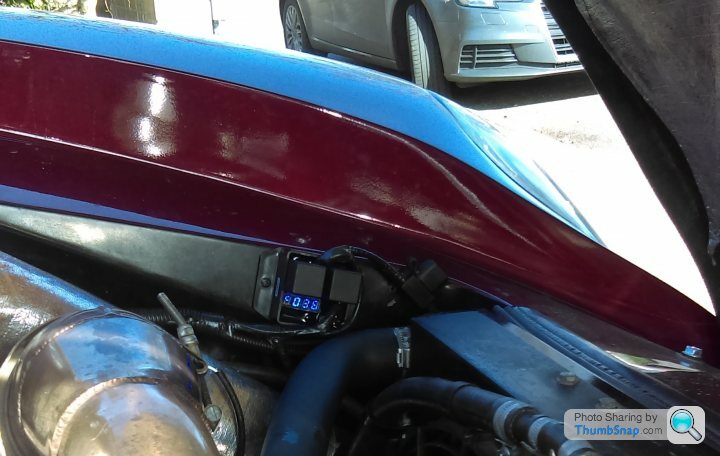
To wire, supply the controller with a single high amp 12v supply from the battery and a switched 12v supply from the ignition switch, then connect your fans to the pre-wired waterproof fuse holders that even come complete with fuses, finally connect the air con wire to your compressor. To fit the thermister adapter cut your top hose, insert and tighten the supplied Jubilee clips, fit the pre-wired thermister in the adapter using the supplied olive compression fitting for a completely watertight seal and you're all done.
To set the on temp simply hold the setting button down until the desired on temp is shown on the LED display, I suggest 90c, check this against Rover Gauge or your aftermarket ECU software as there will be a very slight 2-3 degree difference between the coolant temp measured at the inlet manifold and the top hose, tweak controller on temp as required.
I fitted my Davies Craig electronic fan controller and top hose adapter kit almost 3 years ago and it's performed flawlessly, here's my original post that includes a link to the fitting instructions:
https://www.pistonheads.com/gassing/topic.asp?h=0&...
The Davies Craig fan controller kit is ideal for you as it has the air con compressor trigger wire that brings your rad fans on even if your coolant dictated activation temp hasn't been reached.
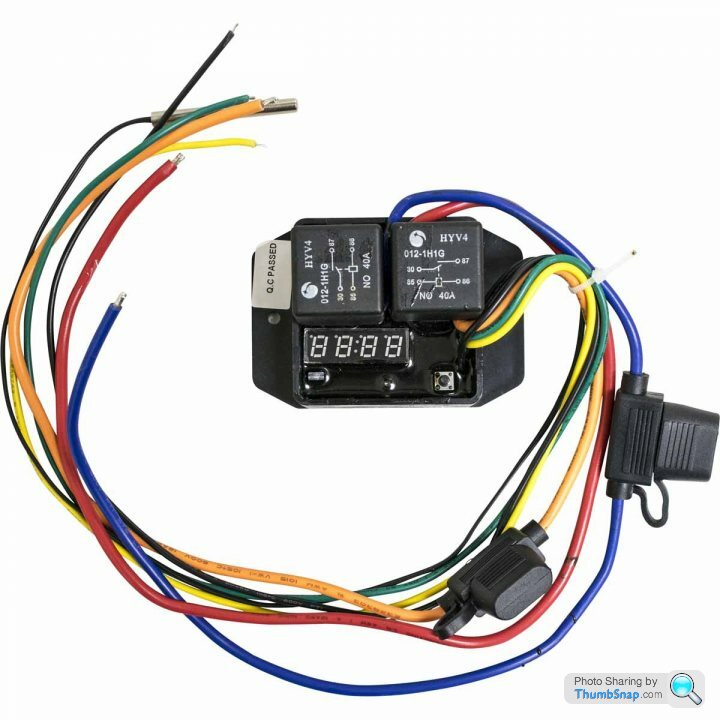
Highly recommended

debaron said:
Penelope Stopit said:
Are you bothered about the possibility of both fans kicking in at the same time? I wouldn't be as it's very doubtful that the alternator belt will jump off or break with the load, they will cause a drop in engine RPM though but not too much
Have you worked out a method for upping the RPM when the Compressor kicks in?
The heavier the relays the better, 70 Amp relays have bigger supply/output terminals which = Very Good
Excellent - many thanksHave you worked out a method for upping the RPM when the Compressor kicks in?
The heavier the relays the better, 70 Amp relays have bigger supply/output terminals which = Very Good
Edited by Penelope Stopit on Thursday 2nd January 09:34
I have told Megasquirt to keep idle RPM at 1250 regardless so it should compensate with some extra stepper when fans kick in
70 Amp looks great nice one
I'll see how it is with the belt - if it's jumping or causing issues I'll look into staging the fans but hopefully won't need to
phillpot said:
ChimpOnGas said:
I'd cosnsider a Davies Craig Fan controler, ...............................
looks like a "no brainer" to me, along with taking advice from someone who actually owns a TVR and has hands on experience 

True, good spot Steve
And to be fair now you mention it one did fail on me so both were replaced, it goes without saying there are way better splash proof fuse holders out there.
https://www.12voltplanet.co.uk/splashproof-standar...
Actually as an emercency field repair even two insulated female spade crimp connectors and some insulating tape create a better job than the cheap Chinese waterproof ones... don't ask how I know
However to do the job properly my preference has always been to use midi fuses, especially where the fuse is rated over 20a, a little Sugru or PU sealant at each end makes them splash proof.

Discussed here....
https://www.redarc.com.au/faq-tech-tips/bad-fuses-...
So I'll correct myself... "with the exception of the waterproof fuse holders the Davies Craig fan controler kit has performed flawlessly".
I would still definitely recomend it to the OP
And to be fair now you mention it one did fail on me so both were replaced, it goes without saying there are way better splash proof fuse holders out there.
https://www.12voltplanet.co.uk/splashproof-standar...
Actually as an emercency field repair even two insulated female spade crimp connectors and some insulating tape create a better job than the cheap Chinese waterproof ones... don't ask how I know
However to do the job properly my preference has always been to use midi fuses, especially where the fuse is rated over 20a, a little Sugru or PU sealant at each end makes them splash proof.
Discussed here....
https://www.redarc.com.au/faq-tech-tips/bad-fuses-...
So I'll correct myself... "with the exception of the waterproof fuse holders the Davies Craig fan controler kit has performed flawlessly".
I would still definitely recomend it to the OP

Gassing Station | Chimaera | Top of Page | What's New | My Stuff