
Cat-D insurance right offs - easily done in a Griff?
Discussion


Hi Guys,
I'm looking at another Griff 500 this weekend and it's been a cat-d write off. I broadly understand that "cat-d" means it's repairable damage, but was wondering how big an accident the car is likely to have had and how much damage will have likely been sustained for this to happen?
The guy selling it tells me it was the drivers wing, and by putting your hand up under the back of the body you can feel where it was fixed. He also tells me there was no structural damage. It's a '95 with 35k on the clock and FTVRSH, so I'm thinking the insurance company must have decided it was £13k at the least to fix it to choose to write it off.
Can one wing really write a Griff off? The guy selling it is making out he doesn't know much about the damage (may be right, or could be playing dumb). What should I be looking for and what other questions should I be asking?
Cheers, Will.
>> Edited by willdew on Friday 24th March 08:44
I'm looking at another Griff 500 this weekend and it's been a cat-d write off. I broadly understand that "cat-d" means it's repairable damage, but was wondering how big an accident the car is likely to have had and how much damage will have likely been sustained for this to happen?
The guy selling it tells me it was the drivers wing, and by putting your hand up under the back of the body you can feel where it was fixed. He also tells me there was no structural damage. It's a '95 with 35k on the clock and FTVRSH, so I'm thinking the insurance company must have decided it was £13k at the least to fix it to choose to write it off.
Can one wing really write a Griff off? The guy selling it is making out he doesn't know much about the damage (may be right, or could be playing dumb). What should I be looking for and what other questions should I be asking?
Cheers, Will.
>> Edited by willdew on Friday 24th March 08:44
Yep, mosty CAT D cars are only cosmetic damage. It comes from GRP being great at absorbing impacts. Hence is absorbs the force and splinters. To glass a new wing into a griff is very labour intensive, and therefore very expensive to fix. not at all like a metal car where you would just unbolt the damaged wing, and bolt on the new one. The GRP will have to be glasses in, then blended in to the existing structure of the car. Then sprayed up. Plus you have to get the part.
A friend who recently had his car written off for a very small amount of damage was told the following at the body shop:
"It's fibreglass, it's going to be expensive." And that was the end of it. Car was written off.
>> Edited by Wildfire on Thursday 23 March 13:38
A friend who recently had his car written off for a very small amount of damage was told the following at the body shop:
"It's fibreglass, it's going to be expensive." And that was the end of it. Car was written off.
>> Edited by Wildfire on Thursday 23 March 13:38
Wildfire said:
Yep, mosty CAT D cars are only cosmetic damage. It comes from GRP being great at absorbing impacts. Hence is absorbs the force and splinters. To glass a new wing into a griff is very labour intensive, and therefore very expensive to fix. not at all like a metal car where you would just unbolt the damaged wing, and bolt on the new one. The GRP will have to be glasses in, then blended in to the existing structure of the car. Then sprayed up. Plus you have to get the part.
A friend who recently had his car written off for a very small amount of damage was told the following at the body shop:
"It's fibreglass, it's going to be expensive." And that was the end of it. Car was written off.
>> Edited by Wildfire on Thursday 23 March 13:38
So if the repair job is cosmetically good, and "feels" good from behind (I'm told you can feel it from the back), are cat-d cars potentially a good buy?
Approximately how much less (percentage wise) would it be valued at than a car that's not been damaged?
>> Edited by willdew on Thursday 23 March 14:03
Stolen off another site:
The categories are as follows:
• Category A. The vehicles under this category are extensively damaged vehicles such as those destroyed by fire, with no salvageable parts and vehicles which can never be re-registered to return to the road.
• Category B. Category B vehicles are vehicles which are extensively damaged but which do have some parts with value, these vehicles can also never be re-registered and returned to road use, or vehicles which require a complete new body shell.
• Category C. Category C vehicles are vehicles where the repair cost exceeds the value of the vehicle, however the extent of the damage is such that the vehicle can be repaired by the use of recycled parts or by using other cost saving measures. With a category C vehicle the buyer needs to apply to the DVLA for a Vehicle Registration Document (VRD) what used to be called a ‘Log Book’
• Category D. Vehicles which fall within D category are vehicles where the cost of repair is less than the value of the vehicle, however for a number of reasons it may not be economically viable to repair the vehicle. This could be for a number of reasons:
=====================
The Vehicle Identity Check (VIC) Scheme
Government VCRAT Initiatives V5 and VIC Scheme - cont..
So in simple terms how does the Vehicle Identity Check work?
1. The original Vehicle Registration Document (V5 -- log Book) of any vehicle “with substantial damage to its bodywork” must be destroyed or returned to the DVLA. This usually will mean all Category A, B, and C salvage but not Category D.
2. The DVLA will be notified automatically of any substantially damaged vehicle by a direct link to them from the insurance register, MIAFTR.
3. Insurers should supply a photo copy of the V5 to the salvage operator when they sell the salvage.
4. Any vehicles repaired for road use will need to be taken to the nearest Vehicle Inspectorate testing station for a VIC. There will be no roadworthiness check, however the vehicle should be repaired to a visually roadworthy condition.
5. The VIC will check the identity of the vehicle to confirm it is the vehicle it purports to be and is not a ‘ringer’ or a substitute vehicle.
6. A fee of £26.50 will be charged by the Inspectorate for the VIC, and the DVLA will be notified automatically of the VIC. The Inspectorate will need proof of purchase and also it is advisable to provide receipts for repairs carried out.
7. If the vehicle is to be driven to the Vehicle Inspectorate, then the vehicle must be insured and have a Current MOT, if driven on public highway, otherwise an MOT is not required. You can request that the Vehicle Inspectorate carry out an MOT following the VIC inspection.
8. If the vehicle passes the VIC, the inspector will advise the DVLA that the vehicle has passed the inspection and will issue a certificate confirming the vehicle's identity. Once the vehicle has passed you can either apply for registration yourself or, if selling, pass the certificate onto the new owner enabling them to apply for registration.
9. If the vehicle fails the VIC, the inspection centre will not issue a certificate. They will inform the police and the DVLA. The police will then investigate the identity of the vehicle, and a decision will be made as to what to do with the vehicle. Obviously each case will be treated individually, however at this point the vehicle could be impounded. The owner has the right to appeal against the decision.
10. The Vehicle Registration Document (V5) of any vehicle which has passed a VIC will carry a note showing “Accident damaged and/or substantially repaired; identity checked on (date)”. All subsequent V5s will be endorsed with the same wording.
The categories are as follows:
• Category A. The vehicles under this category are extensively damaged vehicles such as those destroyed by fire, with no salvageable parts and vehicles which can never be re-registered to return to the road.
• Category B. Category B vehicles are vehicles which are extensively damaged but which do have some parts with value, these vehicles can also never be re-registered and returned to road use, or vehicles which require a complete new body shell.
• Category C. Category C vehicles are vehicles where the repair cost exceeds the value of the vehicle, however the extent of the damage is such that the vehicle can be repaired by the use of recycled parts or by using other cost saving measures. With a category C vehicle the buyer needs to apply to the DVLA for a Vehicle Registration Document (VRD) what used to be called a ‘Log Book’
• Category D. Vehicles which fall within D category are vehicles where the cost of repair is less than the value of the vehicle, however for a number of reasons it may not be economically viable to repair the vehicle. This could be for a number of reasons:
=====================
The Vehicle Identity Check (VIC) Scheme
Government VCRAT Initiatives V5 and VIC Scheme - cont..
So in simple terms how does the Vehicle Identity Check work?
1. The original Vehicle Registration Document (V5 -- log Book) of any vehicle “with substantial damage to its bodywork” must be destroyed or returned to the DVLA. This usually will mean all Category A, B, and C salvage but not Category D.
2. The DVLA will be notified automatically of any substantially damaged vehicle by a direct link to them from the insurance register, MIAFTR.
3. Insurers should supply a photo copy of the V5 to the salvage operator when they sell the salvage.
4. Any vehicles repaired for road use will need to be taken to the nearest Vehicle Inspectorate testing station for a VIC. There will be no roadworthiness check, however the vehicle should be repaired to a visually roadworthy condition.
5. The VIC will check the identity of the vehicle to confirm it is the vehicle it purports to be and is not a ‘ringer’ or a substitute vehicle.
6. A fee of £26.50 will be charged by the Inspectorate for the VIC, and the DVLA will be notified automatically of the VIC. The Inspectorate will need proof of purchase and also it is advisable to provide receipts for repairs carried out.
7. If the vehicle is to be driven to the Vehicle Inspectorate, then the vehicle must be insured and have a Current MOT, if driven on public highway, otherwise an MOT is not required. You can request that the Vehicle Inspectorate carry out an MOT following the VIC inspection.
8. If the vehicle passes the VIC, the inspector will advise the DVLA that the vehicle has passed the inspection and will issue a certificate confirming the vehicle's identity. Once the vehicle has passed you can either apply for registration yourself or, if selling, pass the certificate onto the new owner enabling them to apply for registration.
9. If the vehicle fails the VIC, the inspection centre will not issue a certificate. They will inform the police and the DVLA. The police will then investigate the identity of the vehicle, and a decision will be made as to what to do with the vehicle. Obviously each case will be treated individually, however at this point the vehicle could be impounded. The owner has the right to appeal against the decision.
10. The Vehicle Registration Document (V5) of any vehicle which has passed a VIC will carry a note showing “Accident damaged and/or substantially repaired; identity checked on (date)”. All subsequent V5s will be endorsed with the same wording.
willdew said:
Yep, mosty CAT D cars are only cosmetic damage. It comes from GRP being great at absorbing impacts. Hence is absorbs the force and splinters. To glass a new wing into a griff is very labour intensive, and therefore very expensive to fix. not at all like a metal car where you would just unbolt the damaged wing, and bolt on the new one. The GRP will have to be glasses in, then blended in to the existing structure of the car. Then sprayed up. Plus you have to get the part.
A friend who recently had his car written off for a very small amount of damage was told the following at the body shop:
"It's fibreglass, it's going to be expensive." And that was the end of it. Car was written off.
>> Edited by Wildfire on Thursday 23 March 13:38
So if the repair job is cosmetically good, and "feels" good from behind (I'm told you can feel it from the back), are cat-d cars potentially a good buy?
Approximately how much less (percentage wise) would it be valued at than a car that's not been damaged?
If the job is good then I personally would not avoid the car. The thing about a CAT-D or C car is that you will always have to say it is a CAT D or C. So when/if you come to sell the car you should expect to take the same sort of price hit that you will get when you buy.
I'm not too sure what sort of percentage there is, I would always buy on condition of the car as a whole. But bearing in min d that the car is CAT D epxpect to pay less than the value of a non CAT D.
But it is better than seeing a car that has not been declared. I looked at one such car. It had blatently been in a smash an fixed up due and bore signs of many new panels, all quite badly sprayed. But it had no history that said it was in an accident.
A lot of cars may have a had a little work here and there as most are getting on a bit, but it is the big jobs to be wary of.
>> Edited by willdew on Thursday 23 March 14:03
Quinny said:

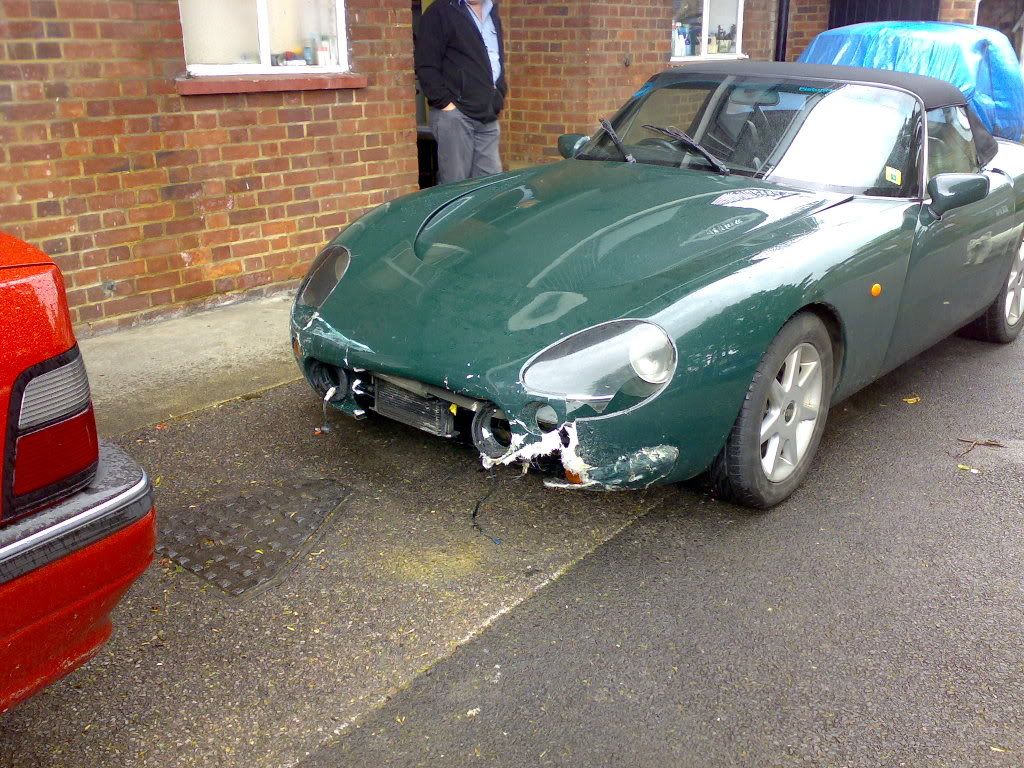
I'm no mechanic, but that doesn't look too badly damaged at all really. Certainly wouldn't have written a metal bodied car off by any means. It would have been a new wing and perhaps one or two new front suspension components and it'd have been back in the road in 3-4 days.
Re the join in the body - the seller tells me you can feel it from the back, but there's no sign of anything when viewing the car normally. I don't know anything about fixing fibreglass, but how do I tell if it's been done well?
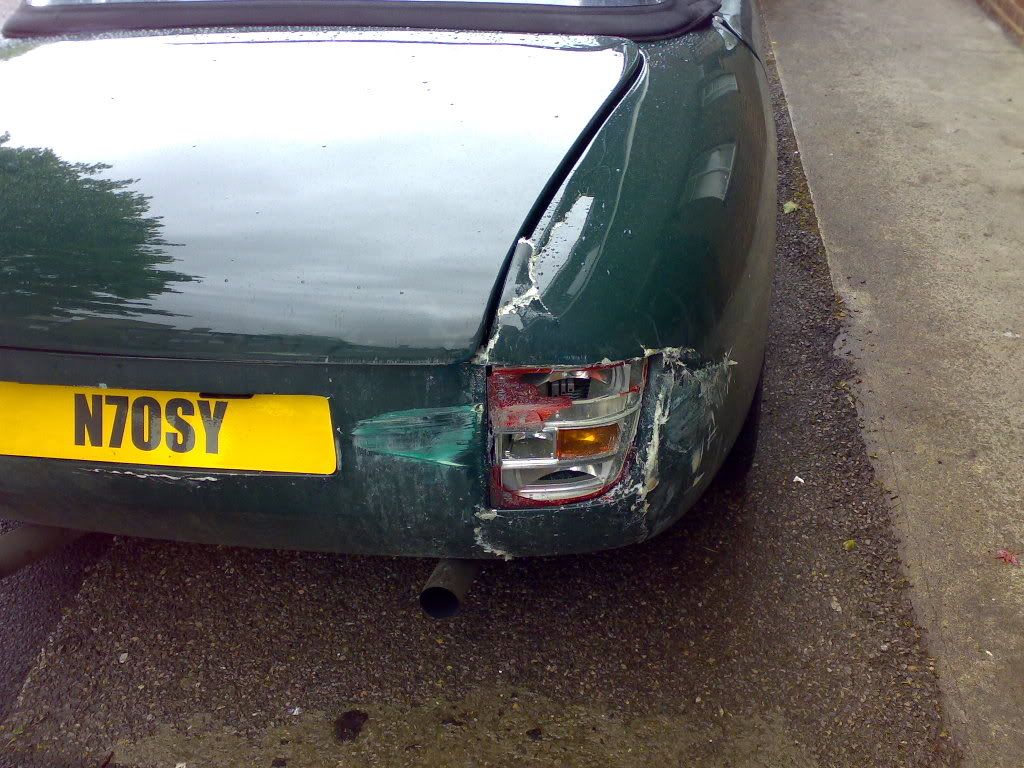
You should see the picture of the damage that caused my Griff to become cat D, it’s basically scraped from front to back, the fibreglass was split under the head light and the wing mirror was taken off. I really don’t see how they got it too Cat D but apparently the owner bought a brand new Cerbera from the dealer who gave the estimate so think that may have played a part in it lol.
willdew said:
how do I tell if it's been done well?
The best way is to see the repair at least 18 months after it was done. Poor repairs can 'sink' over time and then the join becomes visible. Proper preparation and gel coat (not filler) repair is the best technique, then baking before flatting and painting. Another problem is crazing - internal cracking which eventually surfaces. Again, can take years to appear, or at least to break the paint and become visible. Also crazing can appear a long way from the original damage.So:
how long ago was the car repaired?
who did it?
is there any remaining guarantee on the workmanship?
Whether or not its justified, the fact is that cat-D cars sell for less. Thing is, most Griffs (every one I looked at) had had some bodywork. Some will have been minor damage, and some may have been major but undeclared or repaired outside insurance. Remember also that the sane damage to a new Griff (worth £30k) that might not write it off, could write the same car off later when it's worth only £15k.
Cat D are written off based on time and labour - if you have a guaranteed hire car on you cover you are much more likely to end up with a written off CAT D as these costs can be a significant amount of the claim based on the time Glass Fibre takes to repair.
If the Tiv is your P&J and a second/third car never take the hire car option however cheap as in a minor accident you are much more likely to end up with a nice crisp cheque than a repaired car - but turning that cheque back into an equivelent Tiv again (in a colour/interior/specification/condition) is likely to be very difficult)
If the Tiv is your P&J and a second/third car never take the hire car option however cheap as in a minor accident you are much more likely to end up with a nice crisp cheque than a repaired car - but turning that cheque back into an equivelent Tiv again (in a colour/interior/specification/condition) is likely to be very difficult)
ProPlus said:
Stolen off another site:
The categories are as follows:
• Category A. The vehicles under this category are extensively damaged vehicles such as those destroyed by fire, with no salvageable parts and vehicles which can never be re-registered to return to the road.
• Category B. Category B vehicles are vehicles which are extensively damaged but which do have some parts with value, these vehicles can also never be re-registered and returned to road use, or vehicles which require a complete new body shell.
• Category C. Category C vehicles are vehicles where the repair cost exceeds the value of the vehicle, however the extent of the damage is such that the vehicle can be repaired by the use of recycled parts or by using other cost saving measures. With a category C vehicle the buyer needs to apply to the DVLA for a Vehicle Registration Document (VRD) what used to be called a ‘Log Book’
• Category D. Vehicles which fall within D category are vehicles where the cost of repair is less than the value of the vehicle, however for a number of reasons it may not be economically viable to repair the vehicle. This could be for a number of reasons:
The Vehicle Identity Check (VIC) Scheme
Government VCRAT Initiatives V5 and VIC Scheme - cont..
So in simple terms how does the Vehicle Identity Check work?
1. The original Vehicle Registration Document (V5 -- log Book) of any vehicle “with substantial damage to its bodywork” must be destroyed or returned to the DVLA. This usually will mean all Category A, B, and C salvage but not Category D.
2. The DVLA will be notified automatically of any substantially damaged vehicle by a direct link to them from the insurance register, MIAFTR.
3. Insurers should supply a photo copy of the V5 to the salvage operator when they sell the salvage.
4. Any vehicles repaired for road use will need to be taken to the nearest Vehicle Inspectorate testing station for a VIC. There will be no roadworthiness check, however the vehicle should be repaired to a visually roadworthy condition.
5. The VIC will check the identity of the vehicle to confirm it is the vehicle it purports to be and is not a ‘ringer’ or a substitute vehicle.
6. A fee of £26.50 will be charged by the Inspectorate for the VIC, and the DVLA will be notified automatically of the VIC. The Inspectorate will need proof of purchase and also it is advisable to provide receipts for repairs carried out.
7. If the vehicle is to be driven to the Vehicle Inspectorate, then the vehicle must be insured and have a Current MOT, if driven on public highway, otherwise an MOT is not required. You can request that the Vehicle Inspectorate carry out an MOT following the VIC inspection.
8. If the vehicle passes the VIC, the inspector will advise the DVLA that the vehicle has passed the inspection and will issue a certificate confirming the vehicle's identity. Once the vehicle has passed you can either apply for registration yourself or, if selling, pass the certificate onto the new owner enabling them to apply for registration.
9. If the vehicle fails the VIC, the inspection centre will not issue a certificate. They will inform the police and the DVLA. The police will then investigate the identity of the vehicle, and a decision will be made as to what to do with the vehicle. Obviously each case will be treated individually, however at this point the vehicle could be impounded. The owner has the right to appeal against the decision.
10. The Vehicle Registration Document (V5) of any vehicle which has passed a VIC will carry a note showing “Accident damaged and/or substantially repaired; identity checked on (date)”. All subsequent V5s will be endorsed with the same wording.
The categories are as follows:
• Category A. The vehicles under this category are extensively damaged vehicles such as those destroyed by fire, with no salvageable parts and vehicles which can never be re-registered to return to the road.
• Category B. Category B vehicles are vehicles which are extensively damaged but which do have some parts with value, these vehicles can also never be re-registered and returned to road use, or vehicles which require a complete new body shell.
• Category C. Category C vehicles are vehicles where the repair cost exceeds the value of the vehicle, however the extent of the damage is such that the vehicle can be repaired by the use of recycled parts or by using other cost saving measures. With a category C vehicle the buyer needs to apply to the DVLA for a Vehicle Registration Document (VRD) what used to be called a ‘Log Book’
• Category D. Vehicles which fall within D category are vehicles where the cost of repair is less than the value of the vehicle, however for a number of reasons it may not be economically viable to repair the vehicle. This could be for a number of reasons:
===============
The Vehicle Identity Check (VIC) Scheme
Government VCRAT Initiatives V5 and VIC Scheme - cont..
So in simple terms how does the Vehicle Identity Check work?
1. The original Vehicle Registration Document (V5 -- log Book) of any vehicle “with substantial damage to its bodywork” must be destroyed or returned to the DVLA. This usually will mean all Category A, B, and C salvage but not Category D.
2. The DVLA will be notified automatically of any substantially damaged vehicle by a direct link to them from the insurance register, MIAFTR.
3. Insurers should supply a photo copy of the V5 to the salvage operator when they sell the salvage.
4. Any vehicles repaired for road use will need to be taken to the nearest Vehicle Inspectorate testing station for a VIC. There will be no roadworthiness check, however the vehicle should be repaired to a visually roadworthy condition.
5. The VIC will check the identity of the vehicle to confirm it is the vehicle it purports to be and is not a ‘ringer’ or a substitute vehicle.
6. A fee of £26.50 will be charged by the Inspectorate for the VIC, and the DVLA will be notified automatically of the VIC. The Inspectorate will need proof of purchase and also it is advisable to provide receipts for repairs carried out.
7. If the vehicle is to be driven to the Vehicle Inspectorate, then the vehicle must be insured and have a Current MOT, if driven on public highway, otherwise an MOT is not required. You can request that the Vehicle Inspectorate carry out an MOT following the VIC inspection.
8. If the vehicle passes the VIC, the inspector will advise the DVLA that the vehicle has passed the inspection and will issue a certificate confirming the vehicle's identity. Once the vehicle has passed you can either apply for registration yourself or, if selling, pass the certificate onto the new owner enabling them to apply for registration.
9. If the vehicle fails the VIC, the inspection centre will not issue a certificate. They will inform the police and the DVLA. The police will then investigate the identity of the vehicle, and a decision will be made as to what to do with the vehicle. Obviously each case will be treated individually, however at this point the vehicle could be impounded. The owner has the right to appeal against the decision.
10. The Vehicle Registration Document (V5) of any vehicle which has passed a VIC will carry a note showing “Accident damaged and/or substantially repaired; identity checked on (date)”. All subsequent V5s will be endorsed with the same wording.
[quote=ProPlus]Stolen off another site:
The categories are as follows:
• Category A. The vehicles under this category are extensively damaged vehicles such as those destroyed by fire, with no salvageable parts and vehicles which can never be re-registered to return to the road.
• Category B. Category B vehicles are vehicles which are extensively damaged but which do have some parts with value, these vehicles can also never be re-registered and returned to road use, or vehicles which require a complete new body shell.
• Category C. Category C vehicles are vehicles where the repair cost exceeds the value of the vehicle, however the extent of the damage is such that the vehicle can be repaired by the use of recycled parts or by using other cost saving measures. With a category C vehicle the buyer needs to apply to the DVLA for a Vehicle Registration Document (VRD) what used to be called a ‘Log Book’
• Category D. Vehicles which fall within D category are vehicles where the cost of repair is less than the value of the vehicle, however for a number of reasons it may not be economically viable to repair the vehicle. This could be for a number of reasons:
The Vehicle Identity Check (VIC) Scheme
Government VCRAT Initiatives V5 and VIC Scheme - cont..
So in simple terms how does the Vehicle Identity Check work?
1. The original Vehicle Registration Document (V5 -- log Book) of any vehicle “with substantial damage to its bodywork” must be destroyed or returned to the DVLA. This usually will mean all Category A, B, and C salvage but not Category D.
2. The DVLA will be notified automatically of any substantially damaged vehicle by a direct link to them from the insurance register, MIAFTR.
3. Insurers should supply a photo copy of the V5 to the salvage operator when they sell the salvage.
4. Any vehicles repaired for road use will need to be taken to the nearest Vehicle Inspectorate testing station for a VIC. There will be no roadworthiness check, however the vehicle should be repaired to a visually roadworthy condition.
5. The VIC will check the identity of the vehicle to confirm it is the vehicle it purports to be and is not a ‘ringer’ or a substitute vehicle.
6. A fee of £26.50 will be charged by the Inspectorate for the VIC, and the DVLA will be notified automatically of the VIC. The Inspectorate will need proof of purchase and also it is advisable to provide receipts for repairs carried out.
7. If the vehicle is to be driven to the Vehicle Inspectorate, then the vehicle must be insured and have a Current MOT, if driven on public highway, otherwise an MOT is not required. You can request that the Vehicle Inspectorate carry out an MOT following the VIC inspection.
8. If the vehicle passes the VIC, the inspector will advise the DVLA that the vehicle has passed the inspection and will issue a certificate confirming the vehicle's identity. Once the vehicle has passed you can either apply for registration yourself or, if selling, pass the certificate onto the new owner enabling them to apply for registration.
9. If the vehicle fails the VIC, the inspection centre will not issue a certificate. They will inform the police and the DVLA. The police will then investigate the identity of the vehicle, and a decision will be made as to what to do with the vehicle. Obviously each case will be treated individually, however at this point the vehicle could be impounded. The owner has the right to appeal against the decision.
10. The Vehicle Registration Document (V5) of any vehicle which has passed a VIC will carry a note showing “Accident damaged and/or substantially repaired; identity checked on (date)”. All subsequent V5s will be endorsed with the same wording.
[/quot
the category can be really based on what side of the bed the assessor got up in the morning, I have just purchased a cat c vehicle (flood damaged) only thing that I have needed to do was buy an airbag control unit. The car came to me dry no odours and running as sweet as a nut it was one of about 400 cars written off at a rotherham dealers storage compound - there are absolute bargains about if you look hard enough ie brand new (5 miles )chevrolet Kalos 1.4 book price circa 9.5k cat d flood damage went for #3100 - alright it's not everyones cut of tea but someone will have it off your hands for 4k
The categories are as follows:
• Category A. The vehicles under this category are extensively damaged vehicles such as those destroyed by fire, with no salvageable parts and vehicles which can never be re-registered to return to the road.
• Category B. Category B vehicles are vehicles which are extensively damaged but which do have some parts with value, these vehicles can also never be re-registered and returned to road use, or vehicles which require a complete new body shell.
• Category C. Category C vehicles are vehicles where the repair cost exceeds the value of the vehicle, however the extent of the damage is such that the vehicle can be repaired by the use of recycled parts or by using other cost saving measures. With a category C vehicle the buyer needs to apply to the DVLA for a Vehicle Registration Document (VRD) what used to be called a ‘Log Book’
• Category D. Vehicles which fall within D category are vehicles where the cost of repair is less than the value of the vehicle, however for a number of reasons it may not be economically viable to repair the vehicle. This could be for a number of reasons:
===============
The Vehicle Identity Check (VIC) Scheme
Government VCRAT Initiatives V5 and VIC Scheme - cont..
So in simple terms how does the Vehicle Identity Check work?
1. The original Vehicle Registration Document (V5 -- log Book) of any vehicle “with substantial damage to its bodywork” must be destroyed or returned to the DVLA. This usually will mean all Category A, B, and C salvage but not Category D.
2. The DVLA will be notified automatically of any substantially damaged vehicle by a direct link to them from the insurance register, MIAFTR.
3. Insurers should supply a photo copy of the V5 to the salvage operator when they sell the salvage.
4. Any vehicles repaired for road use will need to be taken to the nearest Vehicle Inspectorate testing station for a VIC. There will be no roadworthiness check, however the vehicle should be repaired to a visually roadworthy condition.
5. The VIC will check the identity of the vehicle to confirm it is the vehicle it purports to be and is not a ‘ringer’ or a substitute vehicle.
6. A fee of £26.50 will be charged by the Inspectorate for the VIC, and the DVLA will be notified automatically of the VIC. The Inspectorate will need proof of purchase and also it is advisable to provide receipts for repairs carried out.
7. If the vehicle is to be driven to the Vehicle Inspectorate, then the vehicle must be insured and have a Current MOT, if driven on public highway, otherwise an MOT is not required. You can request that the Vehicle Inspectorate carry out an MOT following the VIC inspection.
8. If the vehicle passes the VIC, the inspector will advise the DVLA that the vehicle has passed the inspection and will issue a certificate confirming the vehicle's identity. Once the vehicle has passed you can either apply for registration yourself or, if selling, pass the certificate onto the new owner enabling them to apply for registration.
9. If the vehicle fails the VIC, the inspection centre will not issue a certificate. They will inform the police and the DVLA. The police will then investigate the identity of the vehicle, and a decision will be made as to what to do with the vehicle. Obviously each case will be treated individually, however at this point the vehicle could be impounded. The owner has the right to appeal against the decision.
10. The Vehicle Registration Document (V5) of any vehicle which has passed a VIC will carry a note showing “Accident damaged and/or substantially repaired; identity checked on (date)”. All subsequent V5s will be endorsed with the same wording.
[/quot
the category can be really based on what side of the bed the assessor got up in the morning, I have just purchased a cat c vehicle (flood damaged) only thing that I have needed to do was buy an airbag control unit. The car came to me dry no odours and running as sweet as a nut it was one of about 400 cars written off at a rotherham dealers storage compound - there are absolute bargains about if you look hard enough ie brand new (5 miles )chevrolet Kalos 1.4 book price circa 9.5k cat d flood damage went for #3100 - alright it's not everyones cut of tea but someone will have it off your hands for 4k
I'm looking to buy a Griff and have not discounted a well repaired Cat D car. However there is a damaged car (front) on AT for £8.5K and it is not Cat D and as it is not listed in anyway it must equate to buyer be where when it is repaired and put up for sale. This is worrying to me, as the car looks to need a lot of work an IMHO is not worth anywhere near the asking price. There was a cheap Cat D on ebay, fully repaired, for around £7.0K which could have been a bargain. Every car I have looked at to date has either had paintwork (some very poor) or needs some doing. The former category is the worry as you are never sure why, unless the owner is honest, rare I guess.
Try Julian @ Fibreon www.damagedtvrs.co.uk for prices as he now offers a full panel fitting service.
Photos are of his latest project which is a Cat D.
FROM THIS...

TO THIS...

Photos are of his latest project which is a Cat D.
FROM THIS...
TO THIS...

I am looking at a cat D now a Ford KA on a 04 very low miles wing bumper, inner wing and suspention damage looking to be a wish bone and at worst a bent leg.
Nothing that a normal car wouldn't be fixed by What makes me laugh is a light damage like this car I am looking at is a weekends work with new and s/h parts New suspention and S/H bumper and wing and the insurance company don't like it.. So what mirrical do the body shop's do that I can't. I restore classic cars oftern having to cut out half the car to rust and repair the car back to standard.. but If I had to do this with a modern car I would be almost dealing with a Cat B car looking at their list
Get a life is all I can say sure the new rules have made it look on the whole to have tightened up the stolen car market, but all it has done is lose some of the cowboys the do at home boys have been hit hard which is a shame be cause they were some of the best ones because time to them was free and they oftern over fixed the car better than new..
then the insurance companies want to then have a go at you when you buy a cat d car because they have paid out once before.. Well you can't have your cake and eat it.. because if they want to play that game any car with ANY damage might as well be a cat D and write them all off you watch the insurance prices rise though the roof after that!!
Insurance companies are their own worst nightmear.. there assesors half the time are good the other half are just a joke they have no idea..I have to stand there and explain more to them that they know and because they didn't come up with the idea they try and stand their own ground ( I normaly at this point offer then a spade so they can dig deaper into their own pit ) they have been ripped off by alot of body shop guys for years Eg My car got a hit on the wing they changed the wing ( different colour their paint match was crap I refused it ) the inner wing and the wheel trim and an aliment check would have been enough...ok ...... THEN THEY changed the lamp ( it was not damaged as I looked ) the whole bumper ( it needed a blow over as the edge was chipped paint wise) A new Wheel !! New Shock ( I said you doing the other side then?? as you can't change one shock and leave a worn other that is dangerous, they did but where not happy ) New hub ( total rip off nothing wrong with the hub ) New drop links ( again just adding to the bill ) and the best bit just to take the piss even more TWO NEW NUMBER PLATES neither the old ones where involved in the accident in any way..prob charged out at £16.99 a pair for every car that goes in not a bad racket..
so on the whole nothing wrong with cat D I have repaired a few and I have photo;s of before and after and I have never had a problem selling a car yet.. be up front do a good job and enjoy cheaper motoring..
Nothing that a normal car wouldn't be fixed by What makes me laugh is a light damage like this car I am looking at is a weekends work with new and s/h parts New suspention and S/H bumper and wing and the insurance company don't like it.. So what mirrical do the body shop's do that I can't. I restore classic cars oftern having to cut out half the car to rust and repair the car back to standard.. but If I had to do this with a modern car I would be almost dealing with a Cat B car looking at their list
Get a life is all I can say sure the new rules have made it look on the whole to have tightened up the stolen car market, but all it has done is lose some of the cowboys the do at home boys have been hit hard which is a shame be cause they were some of the best ones because time to them was free and they oftern over fixed the car better than new..
then the insurance companies want to then have a go at you when you buy a cat d car because they have paid out once before.. Well you can't have your cake and eat it.. because if they want to play that game any car with ANY damage might as well be a cat D and write them all off you watch the insurance prices rise though the roof after that!!
Insurance companies are their own worst nightmear.. there assesors half the time are good the other half are just a joke they have no idea..I have to stand there and explain more to them that they know and because they didn't come up with the idea they try and stand their own ground ( I normaly at this point offer then a spade so they can dig deaper into their own pit ) they have been ripped off by alot of body shop guys for years Eg My car got a hit on the wing they changed the wing ( different colour their paint match was crap I refused it ) the inner wing and the wheel trim and an aliment check would have been enough...ok ...... THEN THEY changed the lamp ( it was not damaged as I looked ) the whole bumper ( it needed a blow over as the edge was chipped paint wise) A new Wheel !! New Shock ( I said you doing the other side then?? as you can't change one shock and leave a worn other that is dangerous, they did but where not happy ) New hub ( total rip off nothing wrong with the hub ) New drop links ( again just adding to the bill ) and the best bit just to take the piss even more TWO NEW NUMBER PLATES neither the old ones where involved in the accident in any way..prob charged out at £16.99 a pair for every car that goes in not a bad racket..
so on the whole nothing wrong with cat D I have repaired a few and I have photo;s of before and after and I have never had a problem selling a car yet.. be up front do a good job and enjoy cheaper motoring..
My 4.0 griff has been previously recorded as an insurance loss way back in june 1993 when the car was 10 months old, there is nothing on the log book it hasnt been re registered, nor does it mention it anywhere, only the hpi details say its a repaired insurance loss.
I understand that little damage was done, but due to the non co-operation of TVR themselves who stopped production for the uk market when it was damaged, so then no other alternative but to total loss it.
It has all its genuine wheels original chassis with no repairs,the only thing i can find is the pass door panels have a different issue number and thats that...............
I paid £6K for it last year,and is way better than some i saw at £16k.
Im well pleased, especially when i put £10k back in the bank,and also had a nice griff in my garage........
I have had written of cars before, some rare very collectable classics and when they get to a certain age the write off issue becomes not important, lets face it most cars at 20/30 years old probably have had more things replaced than it would have if it had been in a bad accident.
I restored a rare 1974 mk1 escort RS2000 nearly everything was replaced inner wings, outer wings, rear panel,front panel,bonnet,boot lid,rear qtr wings,doors,floors,and most sections of the chassis rails,all the interior.........................
It ended up being filmed on BBC TOP GEAR,when i sold it no-one hpi'd it they didnt care it was 30 years old it didnt matter, the car looked perfect and drove perfect probably better than new.
Get one bought write off or not, these things were hand built for gods sake, non are exactly the same just rare and beautiful and sound like god clearing his throat after a night out in a smokey pub.....................
I understand that little damage was done, but due to the non co-operation of TVR themselves who stopped production for the uk market when it was damaged, so then no other alternative but to total loss it.
It has all its genuine wheels original chassis with no repairs,the only thing i can find is the pass door panels have a different issue number and thats that...............
I paid £6K for it last year,and is way better than some i saw at £16k.
Im well pleased, especially when i put £10k back in the bank,and also had a nice griff in my garage........
I have had written of cars before, some rare very collectable classics and when they get to a certain age the write off issue becomes not important, lets face it most cars at 20/30 years old probably have had more things replaced than it would have if it had been in a bad accident.
I restored a rare 1974 mk1 escort RS2000 nearly everything was replaced inner wings, outer wings, rear panel,front panel,bonnet,boot lid,rear qtr wings,doors,floors,and most sections of the chassis rails,all the interior.........................
It ended up being filmed on BBC TOP GEAR,when i sold it no-one hpi'd it they didnt care it was 30 years old it didnt matter, the car looked perfect and drove perfect probably better than new.
Get one bought write off or not, these things were hand built for gods sake, non are exactly the same just rare and beautiful and sound like god clearing his throat after a night out in a smokey pub.....................
Someone bumped my Saab 2 years ago.
rear wing, rear door, front suspension, both near side wheels were scuffed. ( I was hit on the rear side so hard it spun me round and I hit the kerb hard with the front wheel).
Ins assessor reckoned about £4k worth of damage, approx half labour and half parts, and made it a cat D.
I bought it back, new front suspension, all four wheels refurbished (with new tyres), full alignment check, second hand door, new wing, and sprayed for just less than £2k.
After the accident, the car was better than before ( wheels needed refurbing, and paint was not perfect ).
Ran it for another 18 months / 10k miles with no issues.
rear wing, rear door, front suspension, both near side wheels were scuffed. ( I was hit on the rear side so hard it spun me round and I hit the kerb hard with the front wheel).
Ins assessor reckoned about £4k worth of damage, approx half labour and half parts, and made it a cat D.
I bought it back, new front suspension, all four wheels refurbished (with new tyres), full alignment check, second hand door, new wing, and sprayed for just less than £2k.
After the accident, the car was better than before ( wheels needed refurbing, and paint was not perfect ).
Ran it for another 18 months / 10k miles with no issues.
Gassing Station | Griffith | Top of Page | What's New | My Stuff