
At the wheels power
Discussion


12.1-12.2:1 is very rich for full load fuelling. I always set them up for around 12.5:1, although they actually make best power between 12.8-12.7:1. It is best to use the richer value to protect the motor.
This is unusal for a 5.0 Litre which usually runs lean on full load. It is hard to compare power figures between different rollers, but the numbers sound a little bit low. Combining this with the rich mixture, you should definitely get the car properly diagnosed before modifying it. Beware the Emperor's New Clothes.
It may be as simple as your inlet trunk (filter to AFM) collapsing, The trunk is made in two layers, which are glued together on each side of a spiral steel former. The glue breaks down with heat and age, and any leak in the outer layer allows the inner to collapse. Take a look at the ACT Smooth Bore Induction Kit if this is the case.
You could run it again without the trunk attached to the AFM if it looks dodgy. The car will loose mid-range torque, and the idle will be rubbish (due to turbulence in the sensitive AFM) but the full load power numbers should reveal any changes.
There are a load of other possibilies that can cause this. Can you post your RR printout, especially showing torque?
This is unusal for a 5.0 Litre which usually runs lean on full load. It is hard to compare power figures between different rollers, but the numbers sound a little bit low. Combining this with the rich mixture, you should definitely get the car properly diagnosed before modifying it. Beware the Emperor's New Clothes.
It may be as simple as your inlet trunk (filter to AFM) collapsing, The trunk is made in two layers, which are glued together on each side of a spiral steel former. The glue breaks down with heat and age, and any leak in the outer layer allows the inner to collapse. Take a look at the ACT Smooth Bore Induction Kit if this is the case.
You could run it again without the trunk attached to the AFM if it looks dodgy. The car will loose mid-range torque, and the idle will be rubbish (due to turbulence in the sensitive AFM) but the full load power numbers should reveal any changes.
There are a load of other possibilies that can cause this. Can you post your RR printout, especially showing torque?

Thanks for that Wyn!
Looking at the graph, the most obvious thing is the way the torque starts to drop off sharply after 4250 RPM. You'll see that the course of the power line changes at this point too.
Very often this really is caused by the onset of camshaft wear, since this effectively strangles the motor. However there are other things that can strangle the inlet, such as the inlet trunk mentioned previously.
If you would like to bring it to me, then my contact details are in my profile and I would be pleased to see it. In any case I am pleased to have helped.
Looking at the graph, the most obvious thing is the way the torque starts to drop off sharply after 4250 RPM. You'll see that the course of the power line changes at this point too.
Very often this really is caused by the onset of camshaft wear, since this effectively strangles the motor. However there are other things that can strangle the inlet, such as the inlet trunk mentioned previously.
If you would like to bring it to me, then my contact details are in my profile and I would be pleased to see it. In any case I am pleased to have helped.


pwd95 said:
What do healthy 500's put out at the wheels then folks. Mine made 197 today which seems a bit weak to me. What's the avarage for a standard car. 
Planning my stealth cam & Tourqueflow as I type.
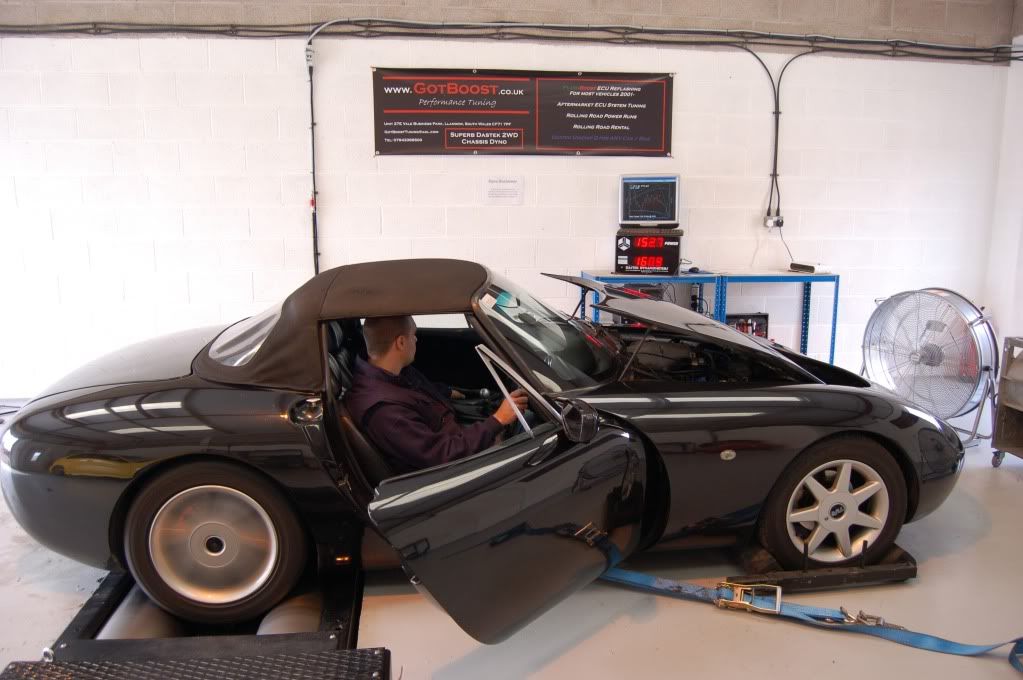
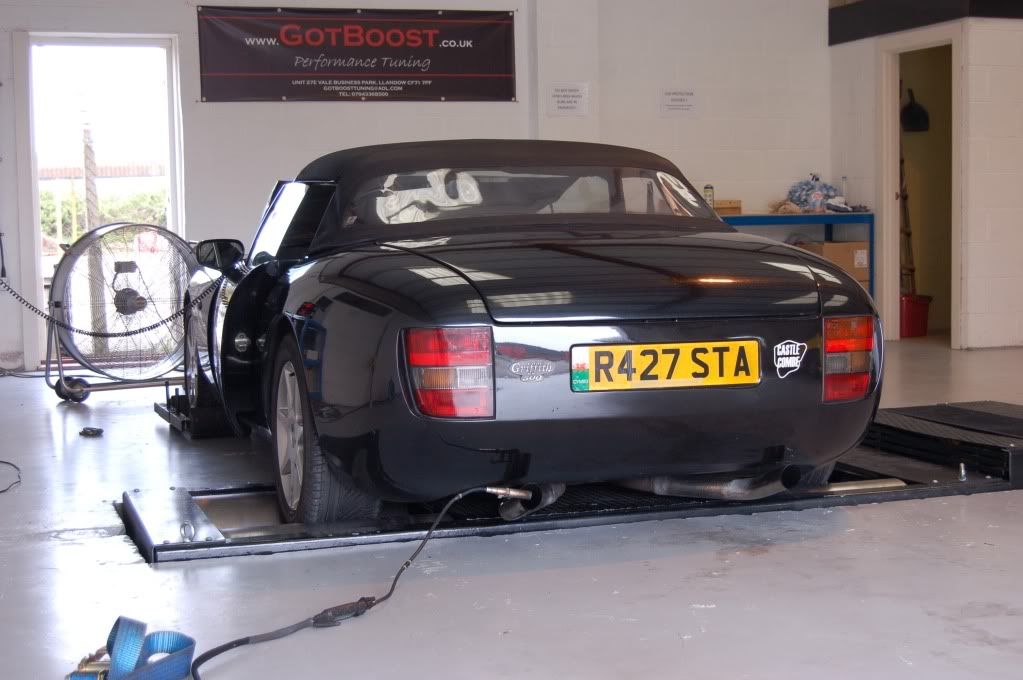
I haven’t read all of the replies so apologies if this has been mentioned already Planning my stealth cam & Tourqueflow as I type.

First off don’t take dyno numbers to be the be all and end all. This is for some key factors. While a dyno itself is very accurate there are a lot of things which can make the numbers vary a great deal.
First off is dyno type. There are several different types of, and while they all work on the same principle they are fundamentally different. This means that even using the same car there will be a difference in numbers from each dyno, up to 20rwhp+ in some cases. This means that you cannot directly compare numbers from one dyno to another.
To make this even worse you then have corrections factors, typically they are STD or SAE, but maybe different. The main essence is one will tell you the HP that the motor is making right now under these conditions (so a hot day would yield worse numbers than a cool day) while the other will correct the numbers to a standard temp, humidity. This means it should then matter how hot or cold it is, the final numbers should end up being almost identical.
The trouble comes that most dyno operators don’t tell you any of this (and often don’t appear to know themselves either). Sometimes it may be printed on your graph but often not. Also some dyno systems allow the user to enter the correction factors, so unless they know what they are doing they can really skew the results.
In addition to these you have things call graph smoothing. Too much and it’ll show lower numbers, too little and you’ll see false high numbers. And to top it all off, in the UK there is a mix of imperial and metric HP units used. While it’ll only affect the numbers a small amount it will have an effect if you don’t know what is being used.
All of this means dyno numbers are for the most part rather flaky to determine all that much. Especially when TVR’s own numbers where anything but accurate.
All that aside, 197rwhp would mean somewhere in the region of 228 – 232bhp flywheel.
Personally I’d say that is rather done from what it should be making. I think TVR claimed 320-340hp which is slightly more than optimistic. I’d have thought 270-290hp would have been nearer the mark.
Assuming everything else seems to be ok (compression, a/f ratio, etc.) then I’d think the cam is the most likely cause. A new cam (a decent one) and follows should make a real difference.

Absolutely not an expert on this but I thought Power in BHP was Torque in FtLb X RPM / 5252, which is why the power and torque lines should cross at 5252rpm. Looking at the plots from 5.0ltr and Grover this seems to work out but from what I can see the plot from Pwd95s car doesn’t 190x4500/5252 = 162 not 230 for example. 5252 is off the graph so it is possible that the lines do cross, perhaps the difference is because of the correction factors that 300 per ton refers to. I can’t get the sums to work out 190x4500/5252 = 162 not 230 for example, or take 130x5000/5252 = 123 not 230.
This is probably because I have misunderstood either the formula or the graph, it would be interesting to know which.
This is probably because I have misunderstood either the formula or the graph, it would be interesting to know which.
JonathanT said:
I think the lines *do* cross, just that the scales are different for power and torque. The torque at 5250rpm looks to be about 220lb/ft which is the same as the power (220bhp) at that revs....
Ah yes, well spotted, different scales left and right, obvious now it is pointed out. Thank you, I stand corrected. 


Not really thought about this before but are the transmission losses directly proportional to the RPM and what are they typically ? Have heard figures of 15-20% talked about but if that is the case something would be getting a bit hot dissipating all that power. I suppose what I am asking really is do all the cogs and drive shafts take a fixed amount of power to get them turning which then remains the same, or as I would think, the loss is proportional to revs and possibly even the drive shaft angles when under test. As a general rule I think a RR power run is usually done in 4th because it is usually closest to 1:1 ratio and presumably has the least loss.
RR plots that I have for my car are calculated back to flywheel by the RR software and don’t reveal what the losses were so without knowing that are not a lot of help to the OP.
RR plots that I have for my car are calculated back to flywheel by the RR software and don’t reveal what the losses were so without knowing that are not a lot of help to the OP.
Dave Baker at Puma Race Engines wrote some very informative articles about this, you can find them from here:
http://www.pumaracing.co.uk/POWER3.htm
He's been seen on PH from time to time, too.
http://www.pumaracing.co.uk/POWER3.htm
He's been seen on PH from time to time, too.


GreenV8S said:
Dave Baker at Puma Race Engines wrote some very informative articles about this, you can find them from here:
http://www.pumaracing.co.uk/POWER3.htm
He's been seen on PH from time to time, too.
A good read that, just his opinion, but interesting. The add 10 / 0.88 seems to give some rather low numbers. http://www.pumaracing.co.uk/POWER3.htm
He's been seen on PH from time to time, too.
Gassing Station | Griffith | Top of Page | What's New | My Stuff