
Plastic Manufacturing Process
Discussion


I've spent quite a while googling and am still unsure of the manufacturing process required to make an item similar to the picture, in bulk. Closest I've got so far is to plastic injection moulding, but this does appear to be more 3D housings etc rather than a flat plate with some holes in it.
The picture does not relate to my intended product use at all but it does look a bit similar.
The product would be about 600 x 300 ish and only needs to be about 5mm thick of solid plastic. Ideally it will be as cheap as possible to make and in large quantities. It's a very basic product so it can be designed around "cheapness" if required.
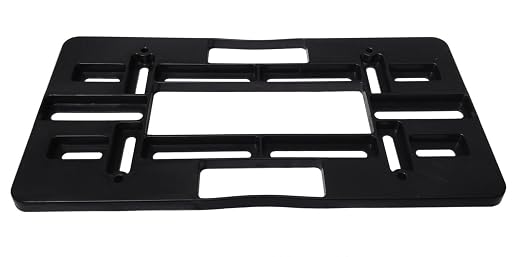
Does anyone here make products like this or have them made for them, any ideas on what sort of costs I should be expecting, MOQ's, is it as simple as sending a CAD file and getting them made? (obviously once prototypes made and tested etc)
I am speaking to a family member who does CNC machining in metals and plastics, but I'm pretty sure CNC machining isn't the way for high volume basic items.
The picture does not relate to my intended product use at all but it does look a bit similar.
The product would be about 600 x 300 ish and only needs to be about 5mm thick of solid plastic. Ideally it will be as cheap as possible to make and in large quantities. It's a very basic product so it can be designed around "cheapness" if required.
Does anyone here make products like this or have them made for them, any ideas on what sort of costs I should be expecting, MOQ's, is it as simple as sending a CAD file and getting them made? (obviously once prototypes made and tested etc)
I am speaking to a family member who does CNC machining in metals and plastics, but I'm pretty sure CNC machining isn't the way for high volume basic items.
Volume is going to the big factor and what material are you looking at using?
A mould that size with be expensive and will require a big machine.
For lower volumes you could get soft tooling made and vacuum cast.
Could you vacuum form two parts that are then fixed together?
Depending on the finish required, if i.e. if stock plate finish was acceptable machining may be economic.
This is all new to me so sorry if what I'm about to say comes across as painfully naive!
The product is to resolve a problem that affects a lot of trades, it's a consumable product that would be used as part of an installation in shops, offices, restaurants etc. Every installation has a a requirement for this product in one way or another so the volumes could be quite high. It would be useful to electricians, alarm installers, CCTV installers, Fire alarm installers, AV installers and I'm sure a few others too.
The product idea has come about because my installation company uses the "home made" item that most other contractors use, which is likely to cost more in materials and hassle, let alone time making by the operative, than my product idea - so if adopted it could sell in quite high quantities at low value. If this product already existed we would probably buy a few thousand or so per year, and we're quite small. It's not UK specific so could be used all over the world and I currently have two designs for four different applications (both designs will feature two cut outs).
The only thing I need to watch for is that other contractors install to the same standards as us and would also want to use this product. I find it hard to believe that we're a cut about everyone else though so I'm sure this issue affects a lot of contractors. I have told a friend at a larger fire alarm company about it and he was positive and said they would use it fairly regularly if the pricing was right.
My aim was to get a design, a prototype and make up an application sheet, an idea of costs and then get the wholesalers involved. I've already spoken to one of the biggest in the UK and they will be interested in the product IF they share the agreement that the product is as good as I say it is (I haven't told them what it is yet, bit paranoid the idea will get stolen by someone who can make it far easier than I can). They have over 100 branches throughout the UK and large marketing power within the industry. Say they took 500 per branch we're looking at at 50,000 units. I guess it might be worth looking at a patent (if it's even patentable) as well.
Because of my installation company I have a lot of contacts with large and small wholesalers etc which I'm willing to leverage as far as possible.
So, how do you judge how much demand there is for a new product? As I say this is extremely new to me!
CubanPete said:
Volume is going to the big factor and what material are you looking at using?
A mould that size with be expensive and will require a big machine.
For lower volumes you could get soft tooling made and vacuum cast.
Could you vacuum form two parts that are then fixed together?
Depending on the finish required, if i.e. if stock plate finish was acceptable machining may be economic.
The picture isn't the best example of my idea unfortunately. Mine is a lot less complex I think.A mould that size with be expensive and will require a big machine.
For lower volumes you could get soft tooling made and vacuum cast.
Could you vacuum form two parts that are then fixed together?
Depending on the finish required, if i.e. if stock plate finish was acceptable machining may be economic.
If you imagine a sheet of plastic about 5mm thick cut to the size. It would only have 2 holes in it and a scored section that can be cut out with a stanley knife to create another hole if required.
There's not a lot to form, it would be easily CNC machined out, but I'm concerned about the cost of machining items in the thousands...
Does this part have to be flexible or can it be made of rigid thermoset plastic, ie washing up bowl plastic or distributor cap material.
You can have parts moulded cheaply in the far east, email them the CAD file and they send you the completed items. Cost will depend on economy of scale, the more you buy the cheaper they will get.
An injection moulding tool for that size part will probably be single impression (one at a time) and cycle time might be fairly low to avoid distortion, meaning fewer parts per hour, increasing cost.
For example you could have a tool that moulds 36 bottle caps every 15 seconds or one that turns out 1 large bin every minute, sixty per hour versus 8000 an hour.
kev b said:
Does this part have to be flexible or can it be made of rigid thermoset plastic, ie washing up bowl plastic or distributor cap material.
You can have parts moulded cheaply in the far east, email them the CAD file and they send you the completed items. Cost will depend on economy of scale, the more you buy the cheaper they will get.
An injection moulding tool for that size part will probably be single impression (one at a time) and cycle time might be fairly low to avoid distortion, meaning fewer parts per hour, increasing cost.
For example you could have a tool that moulds 36 bottle caps every 15 seconds or one that turns out 1 large bin every minute, sixty per hour versus 8000 an hour.
It would need to be rigid. You can have parts moulded cheaply in the far east, email them the CAD file and they send you the completed items. Cost will depend on economy of scale, the more you buy the cheaper they will get.
An injection moulding tool for that size part will probably be single impression (one at a time) and cycle time might be fairly low to avoid distortion, meaning fewer parts per hour, increasing cost.
For example you could have a tool that moulds 36 bottle caps every 15 seconds or one that turns out 1 large bin every minute, sixty per hour versus 8000 an hour.
Quality of the item isn't so important, it's not on show and has no cosmetic value so a few rough edges/imperfections won't be a problem as long as the cut outs are in the right place.
Hi ideally you would want to core this out to take the shot weight down a general wall section of 3mm would be fine with ribs to add strength. As has been suggested a single impression injection mould tool would do the job with a direct feed straight onto the part. I would imagine costs would be circa £5000-6000 pounds depending on the shape of the product. Moulding cost would be more difficult to calculate as it would depend on component weight and material. You may find someone that would add the tooling price into the moulding costs if thevolumes could be guaranteed.
Hope that helps I could get a formal quote done if you can supply a basic sketch of what you want?
cheers Rich
Hope that helps I could get a formal quote done if you can supply a basic sketch of what you want?
cheers Rich
Richjam said:
Hi ideally you would want to core this out to take the shot weight down a general wall section of 3mm would be fine with ribs to add strength. As has been suggested a single impression injection mould tool would do the job with a direct feed straight onto the part. I would imagine costs would be circa £5000-6000 pounds depending on the shape of the product. Moulding cost would be more difficult to calculate as it would depend on component weight and material. You may find someone that would add the tooling price into the moulding costs if thevolumes could be guaranteed.
Hope that helps I could get a formal quote done if you can supply a basic sketch of what you want?
cheers Rich
Whilst I've initially planned the item to be completely flat sheet plastic with the cut outs, there is no reason why it couldn't be cored out to reduce the amount of plastic if that makes it cheaper/easier. I was unsure whether more cutouts = more cost or if less cut outs = more cost. I guess for machining then more cuts = more, but if it's moulded then less plastic = cheaper? Hope that helps I could get a formal quote done if you can supply a basic sketch of what you want?
cheers Rich
Is it worth me getting this 3D printed to prototype? Alternatively I have a family member who could possibly machine it as a one off if I ask him nicely enough.
If I can present a data sheet, prototype and pricing I can probably secure an order to cover the initial tooling costs without too much aggro. Or if the idea isn't for them at least I'd have only spent on the design and prototype. It's not the sort of product that someone would order in less than a few thousand units simply because it's a trade consumable. It'd be a bit like a wholesaler buying only 100 rawl plugs.
Wish I did product design at school now

How rigid? No flex at all like cast iron or slightly flexible, there are many ways to skin a cat with plastics, a rule of thumb with injection moulding is the more rigid the plastic the more it costs.
Back in my plastic moulding days a friend was involved in something similar to your proposal, a lot of time and money was expended tooling up and making the parts, this was the easy bit.
The problem was as soon as the product hit the market, the big players copied it and sold them for far less due to economy of scale and having much better access to the market.
On the other hand my employer at the time went from making bits in his spare room to millionaire in a decade but had to spend hundreds of thousands protecting his copyright from competitors.
Two things on this.
1, my brother had an alarm company in 1979 and his metal bell boxes went rusty, no other option and it was harming his reputation so he grabbed his balls in both hands, remortgaged his house and had two tools made (cover and backplate) in Portugal to run 3mm polycarbonate . At the first trade show (IFSEC) he couldn't get the mould to run it wasn't filling as the moulders press was a 350 and it needed a 500 Anyhoo he said to visitors on the stand they were sectioned mouldings to show the inside - he sold shed loads and built a pretty big company out of it that he sold in 1990 for millions
2, go for it !
dudleybloke said:
If your only making a few hundred I would get them machined.
It would be tens of thousands + or none at all. It all depends on the wholesaler take up which would come before placing an order to manufacturer the item. It's aimed to be a cheap, consumable item which *could* be installed by many trades daily, globally so there would be no point trying to sell it in less than tens of thousands via wholesalers/distributors.DSLiverpool said:
Two things on this.
1, my brother had an alarm company in 1979 and his metal bell boxes went rusty, no other option and it was harming his reputation so he grabbed his balls in both hands, remortgaged his house and had two tools made (cover and backplate) in Portugal to run 3mm polycarbonate . At the first trade show (IFSEC) he couldn't get the mould to run it wasn't filling as the moulders press was a 350 and it needed a 500 Anyhoo he said to visitors on the stand they were sectioned mouldings to show the inside - he sold shed loads and built a pretty big company out of it that he sold in 1990 for millions
2, go for it !
It's these sort of stories that make me want to do it more. It's a simple thing, it could be copied easily. If I get in with the big wholesalers then maybe others won't want to bother copying it, or if they do, then being "in" with the big wholesalers may keep my product viable.1, my brother had an alarm company in 1979 and his metal bell boxes went rusty, no other option and it was harming his reputation so he grabbed his balls in both hands, remortgaged his house and had two tools made (cover and backplate) in Portugal to run 3mm polycarbonate . At the first trade show (IFSEC) he couldn't get the mould to run it wasn't filling as the moulders press was a 350 and it needed a 500 Anyhoo he said to visitors on the stand they were sectioned mouldings to show the inside - he sold shed loads and built a pretty big company out of it that he sold in 1990 for millions
2, go for it !
If it works I have another 2 versions lined up for more specific requirements and I do have a few other product ideas that WOULD work, but will be harder and more costly to explore than this item. Getting the first product off the ground would open the door to the others.
I have a lot of contacts in this industry and already have a direct route to the main buyer of a large wholesaler with 100+ stores throughout the UK. They are keen to take up products by people like me and I've been told of a few other success stories from people who've approached them with their own products. If they order enough they can have it in their colours with their logo on it... (or at least a sticker if it's cheaper!)
I'm unsure if I can patent a piece of plastic!! and even if I did, could I afford/justify to protect it. No!
Would I want to start a new company for this or can I just do it in my current company and if it does take off start another one?
kev b said:
How rigid? No flex at all like cast iron or slightly flexible, there are many ways to skin a cat with plastics, a rule of thumb with injection moulding is the more rigid the plastic the more it costs.
Back in my plastic moulding days a friend was involved in something similar to your proposal, a lot of time and money was expended tooling up and making the parts, this was the easy bit.
The problem was as soon as the product hit the market, the big players copied it and sold them for far less due to economy of scale and having much better access to the market.
On the other hand my employer at the time went from making bits in his spare room to millionaire in a decade but had to spend hundreds of thousands protecting his copyright from competitors.
It doesn't need to be like steel, I think I'll have to get some different thicknesses of plastics and see how they feel and test a few out before deciding. A cored out version may actually make one of the features far easier to design and function. Back in my plastic moulding days a friend was involved in something similar to your proposal, a lot of time and money was expended tooling up and making the parts, this was the easy bit.
The problem was as soon as the product hit the market, the big players copied it and sold them for far less due to economy of scale and having much better access to the market.
On the other hand my employer at the time went from making bits in his spare room to millionaire in a decade but had to spend hundreds of thousands protecting his copyright from competitors.
I'm hoping to get in with the big wholesalers as they would be my best bet at getting it to the right market quickly. I guess they could copy it if they wanted to, but I'm not sure if they would bother if they can just resell mine at a decent margin. It's a low cost item, ideally it wants to be less than £1.00-£1.50 each to the end user. Possibly even cheaper but I can't work out pricing until I know manufacturer costs and I need to work out the material cost of the current "alternative" solution.
You can copyright the hole positions I think, we had a patent on light shining through a alarm box and it was withheld twice we got ownership of the tools .
To customise them you have a engraved insert that the moulder can swap over for different customers. If you go black you can use regrind it's far cheaper than virgin plastic.
Sounds very similar to our project, we grew it with cable and sounders then he sold it (I did the sales for 15 years) if you want a chat call me office hours on the number on my website in my profile
Gassing Station | Business | Top of Page | What's New | My Stuff