
AAA type battery connections - CE approval ?
Discussion


In short I bought two pulse oximeters neither of which were cheap ones. However when I opened the battery compartment for one of them (I bought two different makes (x1 fir home and x1 for my medical pack) it showed two springs at one end even though the batteries top and tail.
I was under the impression that CE approval meant that the spring should be at the negative end of the battery only. Does any one know if this is correct??
Sorry a bit nerdy perhaps. I am sending it back but supplier wants their technical to do an investigation. Does anyone have any technical literature that supports my take on this. I am aware that they will have to refund me anyway but have never come across anyting like this since the early 80s.
Pip
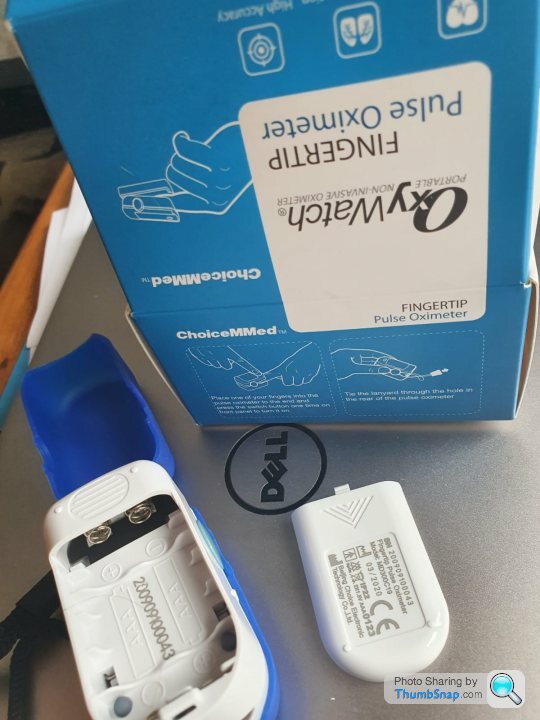
I was under the impression that CE approval meant that the spring should be at the negative end of the battery only. Does any one know if this is correct??
Sorry a bit nerdy perhaps. I am sending it back but supplier wants their technical to do an investigation. Does anyone have any technical literature that supports my take on this. I am aware that they will have to refund me anyway but have never come across anyting like this since the early 80s.
Pip
I understood that for most battery powered products it is only the EMC directive which applies and requires CE marking.
Maybe the EMC directive specifies details of battery connectors.
There are some categories of equipment such as toys which have specific applicable directives and there is a Medical Devices directive so maybe some requirements under that.
Maybe the EMC directive specifies details of battery connectors.
There are some categories of equipment such as toys which have specific applicable directives and there is a Medical Devices directive so maybe some requirements under that.
mmm-five said:
Is it CE as in 'Conformite Europeene', or CE as in the 'China Export' mark?
I'm assuming it's the European Conformity stamp though, as this is a well-known brand.
The two logos look very similar, but the spacing is different. The one pictured is the former; closer together would be the latter.I'm assuming it's the European Conformity stamp though, as this is a well-known brand.
Exceptionally nerdy I'd say.
The model number, and notified body ID checks out on google for CE marking in accordance with applicable medical devices directive. I am not familiar with the technical requirements so cannot comment on that, but the good Germans at TUV have done an appraisal of the technical documentation and seen fit to stamp it, it seems.
The model number, and notified body ID checks out on google for CE marking in accordance with applicable medical devices directive. I am not familiar with the technical requirements so cannot comment on that, but the good Germans at TUV have done an appraisal of the technical documentation and seen fit to stamp it, it seems.
Thank to all but nobody seems to know if they can get away with putting x2 springs at one end but then mark the compartment as +ve one end and -ve the other.
The other oximeter I bought was correctly fitted and marked (as below) with -ve side being the spring and top and tailed as per the 'wrong' one.
Pip

The other oximeter I bought was correctly fitted and marked (as below) with -ve side being the spring and top and tailed as per the 'wrong' one.
Pip
What I would say is that the short spring is recessed, which means the negative terminal can't touch it. As a result, it's a safe design that will pass the LVD part of CE testing (IMHO).
I do not see it being a problem.
Eta: just realised the second picture wasn't a better view of the first. Will have to look closer...
Etata: what is the view from the othet side? As long as one terminal has a method to prevent inadvertent mis-insertion, the there wouldn't be any electrical connection. However, if the negative terminal can touch the positive one we can't see, then it will be a problem.
Edited by tribbles on Thursday 11th February 13:57
Yes indeed the second picture was the other one which has the springs at opposite ends in line with the two batteries being opposed to each other in the compartment.
This is the other end of the compartment in the one that is being sent back (see below). Again x2 plates but one end is for negative and the other is for positive.
Pip

This is the other end of the compartment in the one that is being sent back (see below). Again x2 plates but one end is for negative and the other is for positive.
Pip
CharlesElliott said:
But the positive end is sunk back so would only contact the + end of a battery? If you put the batteries in the wrong way, the circuit wouldn't be completed.

Here's 4 images showing the different battery arrangements:

The top one is the correctly inserted arrangement.
The next two have the bottom battery rotated 180 degrees - this causes a break in the connection, so you won't have any problems no matter what the top battery's orientation is.
The last one is potentially a problem if the battery voltages are different (i.e. you've used a new battery and an old battery). But they always say in the user guide that you shouldn't do this (and I'm pretty sure this is permitted in LVD regulations, although not ideal).
The CE mark on this product, I expect, has been placed under the Medical Devices Directive. This is not a 'self-cert' application of CE, but the product has been inspected and approved by a notified body.
In this case, its TUV Sud who approved the design, the CE has four numbers underneath it, 0123, which tell you that (the notified body used on any medical or IVD device is encoded in these foir numbers).
Its unlikely there is a problem with the design IMO. If you are really really worried then a customer complaint to the manufacturer would be my first step (as its a medical device they will have a iso13485 customer complaints process that will be rigorous), if they cannot satisfy you, then you could speak to TUV Sud and ask them.
Hth
(oh and spot on irateNinja, I was just adding a bit of colour here)
Edited by stuthe on Saturday 13th February 09:07
on Saturday 13th February 09:07Pip1968 said:
Thank you Tribbles. So in effect the set up cannot be correct. The guidelines must surely be to ensure that the batteries cannot be inserted incorrectly and if they are no issues should ensue.
PVD - ??
Pip
Can you clarify why you think there would be an issue if the batteries were inserted incorrectly? Looking at the pictures and also the summary that Tribbles has posted, that's exactly my point. Regardless whether it is via a spring or raised metal, the protrusion or not of those terminals looks correctly setup so that if the batteries were inserted incorrectly, there would NOT be an issue. In your picture, if the top battery was positioned incorrectly (with the negative end to the right), it would not make contact with the metal plate. It will only make contact if it is correctly inserted with the positive end of the battery to the right. PVD - ??
Pip
Edited by CharlesElliott on Saturday 13th February 09:47
Gassing Station | Computers, Gadgets & Stuff | Top of Page | What's New | My Stuff