
Electronic Tools
Discussion


I love his channel!
I mend my own stuff and stuff for mates - usually invilves replacing electrolytic caps - recently a welder (aluminium film caps) and 2 x subs (both Elec caps on the power side), oh and another film cap in one of the subs. Plus loads of other things - ear buds (new batteries) - flip phone - new bendy screen.
Been doing it since I was a kid really. I'm certainly no expert. I build electronic projects here and there.
Your basics:
Solder station (doesn't have to be spendy - I use an old Maplins one)
Solder pump
Solder wick
Rework station (hot air)
Proper leaded solder
Magnifier on an arm with light thingy (I also have a cheap electronic microscope).
Decent 12-20v PSU
Good multimeter with thin tips and clip tips (brandless Amazon ones are just great)
Handfull of small croc clip cables / test leads, and some beefier ones (for power)
Good radio and hot tea :-)
Its very satisfying being able to mend stuff and really doesn't require much knowledge to do the basics. Google and AI will often point to the common components that fail. So you don't need Marks knowledge from the start!
I've done a tiny bit of SMD rework but just be aware its way harder than the videos make it out to be - requires some deft touch with the heat, and you'll need flux too. There is a guy on YT that repais loads of Xboxes and PSs worth a watch - he is mr SMD!
Mended my £1000 B&W sub that was "whistling" all the time. One metal film transistor and that was it. 30p maybe. I found it by opening it up and literally listening, plus, the internet told me to look at those film caps 1st as they are prone to it.
Years ago mended a £4500 projector. One 12p cap. That was it.
A lot of the fun is narrowing down and matching components on Farnell-CPC / Mouser. Especially obsolete ones.
I mend my own stuff and stuff for mates - usually invilves replacing electrolytic caps - recently a welder (aluminium film caps) and 2 x subs (both Elec caps on the power side), oh and another film cap in one of the subs. Plus loads of other things - ear buds (new batteries) - flip phone - new bendy screen.
Been doing it since I was a kid really. I'm certainly no expert. I build electronic projects here and there.
Your basics:
Solder station (doesn't have to be spendy - I use an old Maplins one)
Solder pump
Solder wick
Rework station (hot air)
Proper leaded solder
Magnifier on an arm with light thingy (I also have a cheap electronic microscope).
Decent 12-20v PSU
Good multimeter with thin tips and clip tips (brandless Amazon ones are just great)
Handfull of small croc clip cables / test leads, and some beefier ones (for power)
Good radio and hot tea :-)
Its very satisfying being able to mend stuff and really doesn't require much knowledge to do the basics. Google and AI will often point to the common components that fail. So you don't need Marks knowledge from the start!
I've done a tiny bit of SMD rework but just be aware its way harder than the videos make it out to be - requires some deft touch with the heat, and you'll need flux too. There is a guy on YT that repais loads of Xboxes and PSs worth a watch - he is mr SMD!
Mended my £1000 B&W sub that was "whistling" all the time. One metal film transistor and that was it. 30p maybe. I found it by opening it up and literally listening, plus, the internet told me to look at those film caps 1st as they are prone to it.
Years ago mended a £4500 projector. One 12p cap. That was it.
A lot of the fun is narrowing down and matching components on Farnell-CPC / Mouser. Especially obsolete ones.
Edited by Griffith4ever on Thursday 11th June 07:08
I have x2 of these, I paid nowhere near £30 each - worth checking Aliexpress. They are Fluke copies
https://www.bimblesolar.com/multimeter?srsltid=Afm...
Random soldering station - there are LOADS out there, just aim for something with a digital temp display and easily available replacement tips of varying sizes. You'll be using a flat angled one mostly
https://www.amazon.co.uk/Lytool-Professional-Tempe...
That one even comes with a solder sucker
Rework hot air:
https://www.amazon.co.uk/YIHUA-858D-desoldering-Ad...
You can get combos but I'm not a fan of tying everything to one place / block for no good reason.
Solder - look for something like 60/40 (sn/pb)
https://uk.rs-online.com/web/p/solder/1796669
Size? get some <1mm and some maybe 1.2mm for bigger stuff.
Leaded solder melts at a lower temp and flows nicer. Its also VERY helpful to add to old existing PCB solder to mix with the existing lead free solder and make it easier to melt, and then pump away with the solder sucker
https://www.bimblesolar.com/multimeter?srsltid=Afm...
Random soldering station - there are LOADS out there, just aim for something with a digital temp display and easily available replacement tips of varying sizes. You'll be using a flat angled one mostly
https://www.amazon.co.uk/Lytool-Professional-Tempe...
That one even comes with a solder sucker
Rework hot air:
https://www.amazon.co.uk/YIHUA-858D-desoldering-Ad...
You can get combos but I'm not a fan of tying everything to one place / block for no good reason.
Solder - look for something like 60/40 (sn/pb)
https://uk.rs-online.com/web/p/solder/1796669
Size? get some <1mm and some maybe 1.2mm for bigger stuff.
Leaded solder melts at a lower temp and flows nicer. Its also VERY helpful to add to old existing PCB solder to mix with the existing lead free solder and make it easier to melt, and then pump away with the solder sucker
Griffith4ever said:
I have x2 of these, I paid nowhere near £30 each - worth checking Aliexpress. They are Fluke copies
https://www.bimblesolar.com/multimeter?srsltid=Afm...
Random soldering station - there are LOADS out there, just aim for something with a digital temp display and easily available replacement tips of varying sizes. You'll be using a flat angled one mostly
https://www.amazon.co.uk/Lytool-Professional-Tempe...
That one even comes with a solder sucker
Rework hot air:
https://www.amazon.co.uk/YIHUA-858D-desoldering-Ad...
You can get combos but I'm not a fan of tying everything to one place / block for no good reason.
Solder - look for something like 60/40 (sn/pb)
https://uk.rs-online.com/web/p/solder/1796669
Size? get some <1mm and some maybe 1.2mm for bigger stuff.
Leaded solder melts at a lower temp and flows nicer. Its also VERY helpful to add to old existing PCB solder to mix with the existing lead free solder and make it easier to melt, and then pump away with the solder sucker
Thanks I will have a look. Looking at some of the kit Mark has I have seen these on eBay;https://www.bimblesolar.com/multimeter?srsltid=Afm...
Random soldering station - there are LOADS out there, just aim for something with a digital temp display and easily available replacement tips of varying sizes. You'll be using a flat angled one mostly
https://www.amazon.co.uk/Lytool-Professional-Tempe...
That one even comes with a solder sucker
Rework hot air:
https://www.amazon.co.uk/YIHUA-858D-desoldering-Ad...
You can get combos but I'm not a fan of tying everything to one place / block for no good reason.
Solder - look for something like 60/40 (sn/pb)
https://uk.rs-online.com/web/p/solder/1796669
Size? get some <1mm and some maybe 1.2mm for bigger stuff.
Leaded solder melts at a lower temp and flows nicer. Its also VERY helpful to add to old existing PCB solder to mix with the existing lead free solder and make it easier to melt, and then pump away with the solder sucker
https://ebay.io/m/P8m64c
https://ebay.io/m/odURin
Griffith4ever said:
Your call but that's a s t tonne of money for what is a very simple thing. And I like a digital temp display.
Its just a hot metal stick at the end of the day
Absolutely.t tonne of money for what is a very simple thing. And I like a digital temp display.Its just a hot metal stick at the end of the day
For hobby use, a "936" soldering station would probably be fine. They're assorted clones of a Hakko model, can can be had for about £30.
eg, https://www.ebay.co.uk/itm/127807620873 currently £35. You can get cheaper, more basic ones.
(you can get combined hot air/solder stations, but I've no knowledge of those)
Mend it Mark and the likes will get gifted a lot of very top end / expensive kit that they'd never normally buy. You have to really really want a specific soldering iron to pay £200, used!
To put it in perspective, I'm still using the same Antex iron (small 15w(ish) jobby) I've had since I was 15 for tiny stuff. My main iron is the £30 Maplin soldering station - you can get a great assortment of bits for small money. For big stuff I've got an 80Watter which gets dragged out rarely. That cost around £30 - A Weller - I've had issues with Wellers eating tips quickly too.
I find fixed temp irons vapourise the flux on leaded solder. They are set for lead free.
On my workbench for my small "factory" I have a 40w Weller but run through a voltage dropper to knock teh temp down a bit. Tips last forever this way.
To put it in perspective, I'm still using the same Antex iron (small 15w(ish) jobby) I've had since I was 15 for tiny stuff. My main iron is the £30 Maplin soldering station - you can get a great assortment of bits for small money. For big stuff I've got an 80Watter which gets dragged out rarely. That cost around £30 - A Weller - I've had issues with Wellers eating tips quickly too.
I find fixed temp irons vapourise the flux on leaded solder. They are set for lead free.
On my workbench for my small "factory" I have a 40w Weller but run through a voltage dropper to knock teh temp down a bit. Tips last forever this way.
Griffith4ever said:
Mend it Mark and the likes will get gifted a lot of very top end / expensive kit that they'd never normally buy. You have to really really want a specific soldering iron to pay £200, used!
To put it in perspective, I'm still using the same Antex iron (small 15w(ish) jobby) I've had since I was 15 for tiny stuff. My main iron is the £30 Maplin soldering station - you can get a great assortment of bits for small money. For big stuff I've got an 80Watter which gets dragged out rarely. That cost around £30 - A Weller - I've had issues with Wellers eating tips quickly too.
I find fixed temp irons vapourise the flux on leaded solder. They are set for lead free.
On my workbench for my small "factory" I have a 40w Weller but run through a voltage dropper to knock teh temp down a bit. Tips last forever this way.
I understand what you are saying. They probably do get gifted a lot of tools. I could always adopt Adam Savage approach. Of buy the cheapest tool. To put it in perspective, I'm still using the same Antex iron (small 15w(ish) jobby) I've had since I was 15 for tiny stuff. My main iron is the £30 Maplin soldering station - you can get a great assortment of bits for small money. For big stuff I've got an 80Watter which gets dragged out rarely. That cost around £30 - A Weller - I've had issues with Wellers eating tips quickly too.
I find fixed temp irons vapourise the flux on leaded solder. They are set for lead free.
On my workbench for my small "factory" I have a 40w Weller but run through a voltage dropper to knock teh temp down a bit. Tips last forever this way.
Something like this: https://ebay.io/m/xcEP43
Multimeter: https://amzn.eu/d/0e3AwcTR
Edited by Justadreamer on Thursday 11th June 17:34
Although I'm an electronics engineer, I grew up messing around with electronics and so I know what's possible with basic equipment. Don't get sucked into the expensive gear. That just ends up being a hobby where you collect more and more expensive equipment and never use it. Look around a professional workshop, and most of the gear is relatively basic stuff.
Any of the inexpensive temperature controlled soldering irons (not hot air) are probably fine. 90% of the time I use a 45W uncontrolled Antex, so...
Metcal are made for professional rework and production environments.
Yeah oldschool lead solder with flux core is preferable. Its just nicer all round. Don't lick your fingers and you'll be fine. DON'T get it from Chinese sites, Ebay or Amazon. DO get it from RS, Rapid Electronics, CPC/Farnell or similar professional site. Don't be surprised if it is hard to get, they can sometimes insist on only selling lead solder to business users.
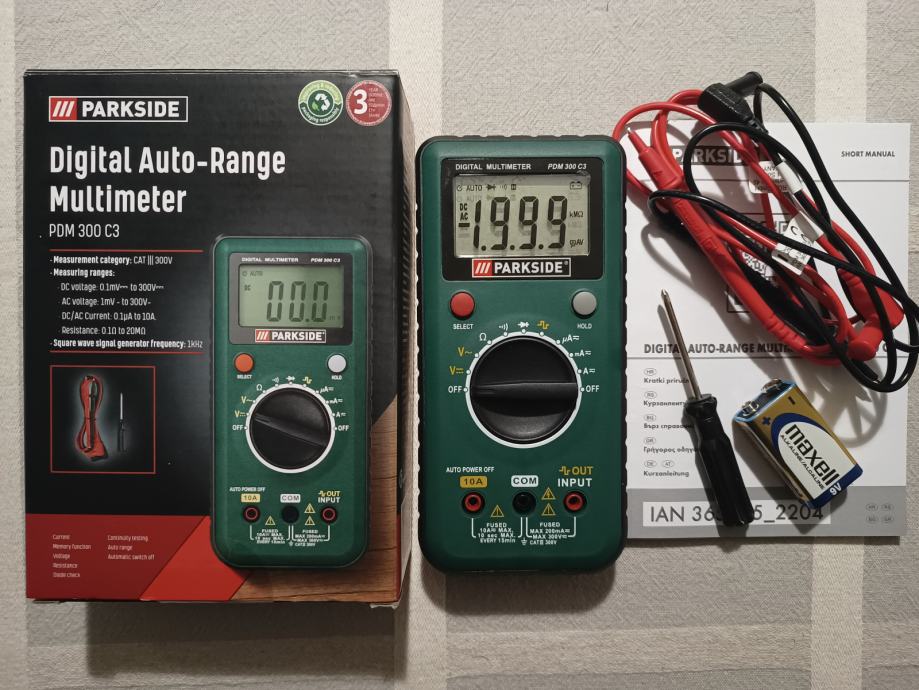
I have a 5.5 digit bench multimeter, and a couple of Fluke meters (and some old AVOs). What do I use most of the time? This from Lidl. Decent build quality, very close to my Flukes in terms of measurement. Invest in a set of really nice probes with silicone leads though. Most cheap meters are surprisingly accurate. But I wouldn't go testing mains voltages with them.
Really don't worry about getting an oscilloscope at this point. They look sexy, but are rarely needed.
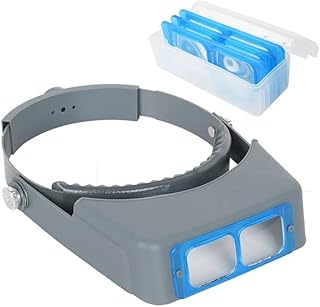
If you are over 30 and don't have really good close-up vision, something like these magnifying visors are great. Very cheap now on Amazon etc. Which reminds me a really good white light or 2 on your bench is really good to have.
A decent power supply can be had for under £50, even from a big retailer: https://cpc.farnell.com/duratool/d03234/power-supp...
Any of the inexpensive temperature controlled soldering irons (not hot air) are probably fine. 90% of the time I use a 45W uncontrolled Antex, so...
Metcal are made for professional rework and production environments.
Yeah oldschool lead solder with flux core is preferable. Its just nicer all round. Don't lick your fingers and you'll be fine. DON'T get it from Chinese sites, Ebay or Amazon. DO get it from RS, Rapid Electronics, CPC/Farnell or similar professional site. Don't be surprised if it is hard to get, they can sometimes insist on only selling lead solder to business users.
I have a 5.5 digit bench multimeter, and a couple of Fluke meters (and some old AVOs). What do I use most of the time? This from Lidl. Decent build quality, very close to my Flukes in terms of measurement. Invest in a set of really nice probes with silicone leads though. Most cheap meters are surprisingly accurate. But I wouldn't go testing mains voltages with them.
Really don't worry about getting an oscilloscope at this point. They look sexy, but are rarely needed.
If you are over 30 and don't have really good close-up vision, something like these magnifying visors are great. Very cheap now on Amazon etc. Which reminds me a really good white light or 2 on your bench is really good to have.
A decent power supply can be had for under £50, even from a big retailer: https://cpc.farnell.com/duratool/d03234/power-supp...
Zad said:
Although I'm an electronics engineer, I grew up messing around with electronics and so I know what's possible with basic equipment. Don't get sucked into the expensive gear. That just ends up being a hobby where you collect more and more expensive equipment and never use it. Look around a professional workshop, and most of the gear is relatively basic stuff.
Any of the inexpensive temperature controlled soldering irons (not hot air) are probably fine. 90% of the time I use a 45W uncontrolled Antex, so...
Metcal are made for professional rework and production environments.
Yeah oldschool lead solder with flux core is preferable. Its just nicer all round. Don't lick your fingers and you'll be fine. DON'T get it from Chinese sites, Ebay or Amazon. DO get it from RS, Rapid Electronics, CPC/Farnell or similar professional site. Don't be surprised if it is hard to get, they can sometimes insist on only selling lead solder to business users.
I have a 5.5 digit bench multimeter, and a couple of Fluke meters (and some old AVOs). What do I use most of the time? This from Lidl. Decent build quality, very close to my Flukes in terms of measurement. Invest in a set of really nice probes with silicone leads though. Most cheap meters are surprisingly accurate. But I wouldn't go testing mains voltages with them.
Really don't worry about getting an oscilloscope at this point. They look sexy, but are rarely needed.
If you are over 30 and don't have really good close-up vision, something like these magnifying visors are great. Very cheap now on Amazon etc. Which reminds me a really good white light or 2 on your bench is really good to have.
A decent power supply can be had for under £50, even from a big retailer: https://cpc.farnell.com/duratool/d03234/power-supp...
Would you say an isolation transformer would be okay? I’ve also seen this: https://cpc.farnell.com/multicomp-pro/mp730424-eu-...Any of the inexpensive temperature controlled soldering irons (not hot air) are probably fine. 90% of the time I use a 45W uncontrolled Antex, so...
Metcal are made for professional rework and production environments.
Yeah oldschool lead solder with flux core is preferable. Its just nicer all round. Don't lick your fingers and you'll be fine. DON'T get it from Chinese sites, Ebay or Amazon. DO get it from RS, Rapid Electronics, CPC/Farnell or similar professional site. Don't be surprised if it is hard to get, they can sometimes insist on only selling lead solder to business users.
I have a 5.5 digit bench multimeter, and a couple of Fluke meters (and some old AVOs). What do I use most of the time? This from Lidl. Decent build quality, very close to my Flukes in terms of measurement. Invest in a set of really nice probes with silicone leads though. Most cheap meters are surprisingly accurate. But I wouldn't go testing mains voltages with them.
Really don't worry about getting an oscilloscope at this point. They look sexy, but are rarely needed.
If you are over 30 and don't have really good close-up vision, something like these magnifying visors are great. Very cheap now on Amazon etc. Which reminds me a really good white light or 2 on your bench is really good to have.
A decent power supply can be had for under £50, even from a big retailer: https://cpc.farnell.com/duratool/d03234/power-supp...
As others have said, you can do a lot with just a basic soldering iron and multimeter.
Random thoughts:
I don't bother with an isolation transformer. Even using one, you still need to be properly careful putting your hand anywhere near power supply input voltages. The only time I ever gave myself a proper mains jolt was when I shorted the live and neutral terminals on a transformer with the side of my hand. An isolator wouldn't have helped with that one :-)
Mend it Mark's mains set up includes an ammeter, which I think is a good idea. I use an extension cable with a programmable circuit breaker I got on AliExpress. As well as measuring current and power, you can programme it to trip if the load tries to draw more than some threshold current. It's quite a useful bit of kit. As well as using it to protect me and things I'm trying to fix, I've used it to measure exactly how much power our fridges, freezers and bore hole pump really use, amongst other stuff.
One of my old (cheap) rugged Android phones had a thermal imaging camera. That was quite handy for spotting chips and transistors that failed into a short. Also quite handy for trying to insulate an old house.
A bench power supply is fundamental if you're going to build your own circuits. They can be helpful for fixing stuff, e.g. if you're going to test a board unplugged from some bigger piece of kit, but if you're going to do that, you're probably also going to need to feed the board with an input signal and measure its output, so you'd probably then need a function generator and an oscilloscope as well. These are also very useful if you're going to build your own circuits from scratch.
You can do a heck of a lot without power supplies, function generators and scopes. You can do even more with them. I wouldn't buy them straight away, but, come the time, they don't have to cost that much. Loads of good secondhand scopes come up on eBay. You can build your own function generator adequate for trouble-shooting audio equipment very inexpensively. And bench supplies can be had new on eBay or Amazon for not very much.
But just to repeat, you can get a long way with just a soldering iron and a basic multimeter.
Random thoughts:
I don't bother with an isolation transformer. Even using one, you still need to be properly careful putting your hand anywhere near power supply input voltages. The only time I ever gave myself a proper mains jolt was when I shorted the live and neutral terminals on a transformer with the side of my hand. An isolator wouldn't have helped with that one :-)
Mend it Mark's mains set up includes an ammeter, which I think is a good idea. I use an extension cable with a programmable circuit breaker I got on AliExpress. As well as measuring current and power, you can programme it to trip if the load tries to draw more than some threshold current. It's quite a useful bit of kit. As well as using it to protect me and things I'm trying to fix, I've used it to measure exactly how much power our fridges, freezers and bore hole pump really use, amongst other stuff.
One of my old (cheap) rugged Android phones had a thermal imaging camera. That was quite handy for spotting chips and transistors that failed into a short. Also quite handy for trying to insulate an old house.
A bench power supply is fundamental if you're going to build your own circuits. They can be helpful for fixing stuff, e.g. if you're going to test a board unplugged from some bigger piece of kit, but if you're going to do that, you're probably also going to need to feed the board with an input signal and measure its output, so you'd probably then need a function generator and an oscilloscope as well. These are also very useful if you're going to build your own circuits from scratch.
You can do a heck of a lot without power supplies, function generators and scopes. You can do even more with them. I wouldn't buy them straight away, but, come the time, they don't have to cost that much. Loads of good secondhand scopes come up on eBay. You can build your own function generator adequate for trouble-shooting audio equipment very inexpensively. And bench supplies can be had new on eBay or Amazon for not very much.
But just to repeat, you can get a long way with just a soldering iron and a basic multimeter.
Also, bear in mind, Mend it Mark is from an audio electronic background ( I believe) - his knowledge is quite something. When you watch him generate signals and analyse them he knows what ALL the components should be doing.
I watched him mend a Speccy and he was analyzing the ouput of ICs, working out the logic, and using that to pinpoint the problems. The guy knows way more than most people.
Joe does tech is well worth watching. He does NOT have any of the background knowledge Mark does, he is completely self taught and some of his videos explain how he got to his current level. (!). He is much more "man on the street" and uses a lto of help from others to diagnose his repairs. He's also a joy to watch and listen to.
I watched him mend a Speccy and he was analyzing the ouput of ICs, working out the logic, and using that to pinpoint the problems. The guy knows way more than most people.
Joe does tech is well worth watching. He does NOT have any of the background knowledge Mark does, he is completely self taught and some of his videos explain how he got to his current level. (!). He is much more "man on the street" and uses a lto of help from others to diagnose his repairs. He's also a joy to watch and listen to.
You don't need an isolation transformer unless you are working on "live" mains voltage equipment. Generally this means CRT TVs and directly on mains power supplies. Not something you should be going anywhere near to begin with. All low voltage power supplies should be isolated anyway.
Learn to walk before you learn to run.
The Zoyi Multimeters with integrated oscilloscope are surprisingly competent for the price (under £90). Have a look on YouTube to see what people think of them.
Maybe make yourself a signal generator from a kit to start with?
Learn to walk before you learn to run.
The Zoyi Multimeters with integrated oscilloscope are surprisingly competent for the price (under £90). Have a look on YouTube to see what people think of them.
Maybe make yourself a signal generator from a kit to start with?
Edited by Zad on Friday 12th June 04:05
Justadreamer said:
Thanks I will have a look. Looking at some of the kit Mark has I have seen these on eBay;
https://ebay.io/m/P8m64c
https://ebay.io/m/odURin
I've got a pair of the older version of those. Great if you want to solder 0201 surface mount resistors, (half a mm long, a quarter of a mm wide) using unleaded solder but overkill for what you require.https://ebay.io/m/P8m64c
https://ebay.io/m/odURin
I spend all day at work designing electronics, its only when it's essential that I'll go near it at home
Metcal gear is pretty rare in the UK, almost all the professional workshops and labs that I know, use Weller soldering stations. And none of the engineers use that sort of gear at home unless they have a special project on. I mean, your money, your call, but I can think of better things to spend that money on.
Good side cutters
Needle nose pliers
Good quality breadboards
Good quality single core hookup wire (Ebay stuff is usually copper coated steel or aluminium)
I would say just make stuff, cheap through-hole kits to start with, because you will f*** it up. And un-f***ing it will teach you a huge amount about electronics. If you build stuff and it just works then you will probably learn a bit about the mechanics of assembly, but nothing about how it actually works.
Have a look at https://www.worldradiohistory.com
It has a huge archive of magazines from not long after Marconi invented radio. I would suggest Everyday Electronics, Practical Electronics, Electronics Today International and Elektor. Many many projects and educational articles.
Good side cutters
Needle nose pliers
Good quality breadboards
Good quality single core hookup wire (Ebay stuff is usually copper coated steel or aluminium)
I would say just make stuff, cheap through-hole kits to start with, because you will f*** it up. And un-f***ing it will teach you a huge amount about electronics. If you build stuff and it just works then you will probably learn a bit about the mechanics of assembly, but nothing about how it actually works.
Have a look at https://www.worldradiohistory.com
It has a huge archive of magazines from not long after Marconi invented radio. I would suggest Everyday Electronics, Practical Electronics, Electronics Today International and Elektor. Many many projects and educational articles.
If you look at ‘my mate Vince’ on YouTube he manages to fix a lot of stuff without much test equipment and doesn’t have a repair background. He’s enthusiastic and doesn’t edit out his mistakes
Also take a look at ‘buy it fix it’ - excellent repair skills
‘Stez Stix Fix’ amusing channel where he fixes things (and incorporates a rap for all his patreon subscribers). Again no repair background and limited test kit
For a signal generator you can always use a phone. Plenty of sig gen apps
Use a cheap Bluetooth board if you haven’t got a headphone jack.
Also take a look at ‘buy it fix it’ - excellent repair skills
‘Stez Stix Fix’ amusing channel where he fixes things (and incorporates a rap for all his patreon subscribers). Again no repair background and limited test kit
For a signal generator you can always use a phone. Plenty of sig gen apps
Use a cheap Bluetooth board if you haven’t got a headphone jack.
Gassing Station | Computers, Gadgets & Stuff | Top of Page | What's New | My Stuff