
Goodwood Revival Honours The Spitfire
Revival to mark Spitfire's 75th Birthday with massive fly-past
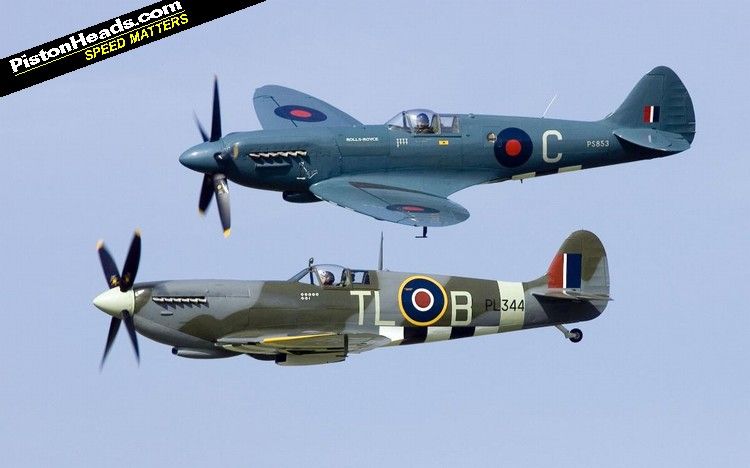
The Spitfire fly-pasts and displays will be the largest collection of the legendary aircraft in the skies above Goodwood since the Second World War, when the aerodrome was known as RAF Westhampnett and was a fighter base for Hurricanes and Spitfires.
The Supermarine Spitfire took its maiden flight in March 1936, and was a key front line fighter during the war. Mostly assembled less than 30 miles away from Goodwood in Southampton, the Spitfire was produced in greater numbers than any other British aircraft, with over 20,000 examples being built.
There's even more of a Goodwood connection to the Spit, too, it seems: during the war, carpenters working for the Goodwood Estate helped to make the Spitfire's wooden propellers, using trees felled in the Goodwood forests. The grandfather of the Goodwood Revival's founder Lord March - Freddie March, the 9th Duke of Richmond - was a keen aviator and aircraft engineer, and established a partnership with test pilot friend Edmund Hordern to manufacture high-density wood laminate propellers using a pioneering new process known as 'Hydulignum'.
Sniff, etc. Makes you proud to be British... (cue the patriotic orchestral music...)


Last time one of these drove up the track at Goodwood there were very few elders like me with a dry eye!
16 Spitfires took to the air for their Battle of Britain display last year. I think they managed 30 at one Legends.
This will be great to see, the Spitfire is totally iconic and their cant be many real ones left.
This will be great to see, the Spitfire is totally iconic and their cant be many real ones left.
There are over twice as many Spitfirs flying today as there are Hurricanes.
Hurricanes were easier to build, initially, because in 1938 the British aircraft industry was still geting to grips with how to build stressed skin monocoque aircframes. The Hurricane was built from triangulated steel tubing with fabric covering - in essence, the same as biplanes had been built since the early 1920s.
Within a couple of years of 1938, however, stressed skin production was the norm and the industry was coping much better.
The Hurricane was becoming obsolete as an air superiority fighter by 1940/41 and it was imperative that production concentrated on more advanced designs, such as the Spitfire.
Hurricanes still had their uses and they faught extensively throughout the war - especially in North Africa and the Far East.
However, once WW2 was over, Hurricanes disappeared rapidly from the inventory. Spitfires and Seafires, on the other hand, continued in service - in some cases right up to the 1960s (the Irish Air Corps retired theirs in 1962).
Gassing Station | Boats, Planes & Trains | Top of Page | What's New | My Stuff