
Update for all you crayfish hunters !
Discussion


m3jappa said:
Stupid question time.
When i go and buy 'crayfish tails' exactly what part is it. Really like them.
You're right, it is. Clue is in the name - crayfish tails are the tails of crayfish.When i go and buy 'crayfish tails' exactly what part is it. Really like them.
The pic below is actually of a lobster tail, but it should give you the idea:

Personally, i favour cat food as the bait of choice.

Om nom nom.
Edited by mistergixer on Monday 19th September 22:24
We used a cylinder net trap & the bait pouch was loaded with ham from a sandwich.....they'll eat anything. From previous experience the trap left overnight was the most successful, bacon & fish have been used before.
Don't take only the biggest as they're cannibals & the large ones will eat the smaller ones helping to keep the population down. Although I doubt that this will actually make much difference.
happy hunting
Don't take only the biggest as they're cannibals & the large ones will eat the smaller ones helping to keep the population down. Although I doubt that this will actually make much difference.
happy hunting
Apologies for being thick about these things, I am a none eating, none fishing person! But how do you know where to go to catch crayfish? Are they river, canal things? I thought they were sea things, although I do remember seeing a program about crayfish in the Thames. Think one of them was causing a problem and was being actively encouraged to trap and remove them.
mrsxllifts said:
Are they river, canal things? I thought they were sea things, although I do remember seeing a program about crayfish in the Thames. Think one of them was causing a problem and was being actively encouraged to trap and remove them.
There are different kinds of crayfish, some native some foreign, and some live in rivers.
LooneyTunes said:
Saw an online map a couple of years ago showing where they'd spread to.
Forgot to bookmark it though and can't find it... does anyone happen to know where it lives? (think it was one of the official agencies?)
It was an Environment Agency one, but they've removed it, and put up links to permits, and licences etc.Forgot to bookmark it though and can't find it... does anyone happen to know where it lives? (think it was one of the official agencies?)
This one still works mind... http://www.searchnbn.net/imt/?mode=SPECIES&spe...
randlemarcus said:
It was an Environment Agency one, but they've removed it, and put up links to permits, and licences etc.
This one still works mind... http://www.searchnbn.net/imt/?mode=SPECIES&spe...
Thanks!This one still works mind... http://www.searchnbn.net/imt/?mode=SPECIES&spe...
Looking at the datasets, it seems like our area hasn't been updated for a while. But we seem surrounded, so good chance the tasty little blighters have moved in... are they easy enough to spot without the aid of traps?
^^ That'll depend mostly on the clarity of the water, although they do burrow into banks and you might be able to spot the burrow entrances close to the water's edge:
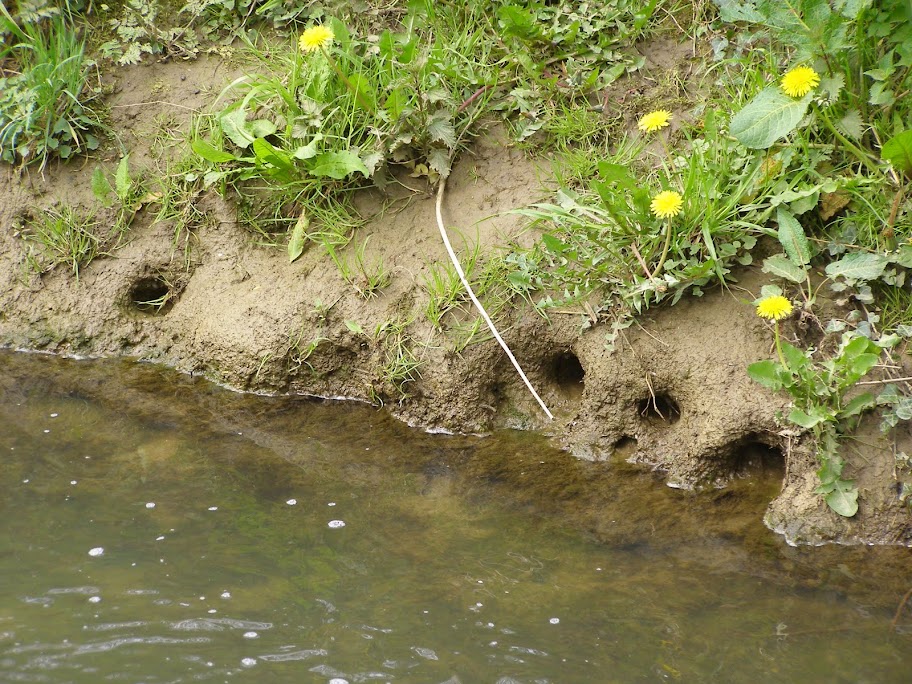
If the water is shallow and clear enough, have a wade in and look under any rocks etc and see if you can see any. If it's deeper or muddied, there's nothing much to be lost in baiting up a trap and having a go.
I've seen people have good results with a drop net type trap (see here), but i prefer the collapsible mesh tunnel type (like this) - setting the trap prior to dusk, and collecting a little after dawn seems to give the best results (coincides with their most active times). But, make sure you don't leave traps unattended for longer periods of time, as other wildlife may become trapped too (water voles etc). Where i mostly go, the trap is fully submerged in about 4 foot of water(so less of a risk to voles etc), but this is certainly a risk in shallower water.
Also, if an unattended trap is visible, someone else may spot it and help themselves to either the contents or the trap itself.
If the water is shallow and clear enough, have a wade in and look under any rocks etc and see if you can see any. If it's deeper or muddied, there's nothing much to be lost in baiting up a trap and having a go.
I've seen people have good results with a drop net type trap (see here), but i prefer the collapsible mesh tunnel type (like this) - setting the trap prior to dusk, and collecting a little after dawn seems to give the best results (coincides with their most active times). But, make sure you don't leave traps unattended for longer periods of time, as other wildlife may become trapped too (water voles etc). Where i mostly go, the trap is fully submerged in about 4 foot of water(so less of a risk to voles etc), but this is certainly a risk in shallower water.
Also, if an unattended trap is visible, someone else may spot it and help themselves to either the contents or the trap itself.
mistergixer said:
A load of crayfish chucked in a bathtub with a bin-bag over them is probably not the most scientific of methods to be used for making detailed and reliable observations of their natural behaviour.

If it were the case that crayfish are most active at night, why do EA-sanctioned traps have yellow 'ends', moreover yellow bait boxes so that the crayfish can see them? Do they have night goggles? I suspect not...
Gassing Station | Food, Drink & Restaurants | Top of Page | What's New | My Stuff