
The problem with buying classic cars is . . .
Discussion


. . . you never know what the previous owners did to it 
Spent the morning flushing out the cooling system on the hillman and though i might aswell check the thermostat while i was at it. Took the cover off and what do i see:

No thermostat
At least the head doesn't seem to be at all corroded

Now the million dollar question is; will any thermostat of the right diameter and temperature be ok the put back in? I need the car up and running but i doubt the local halfords stock thermostats for 53 year old Minxes
Spent the morning flushing out the cooling system on the hillman and though i might aswell check the thermostat while i was at it. Took the cover off and what do i see:
No thermostat
At least the head doesn't seem to be at all corroded
Now the million dollar question is; will any thermostat of the right diameter and temperature be ok the put back in? I need the car up and running but i doubt the local halfords stock thermostats for 53 year old Minxes
Hammer67 said:
Yeah I would think any old suitable stat would do for a test run up to temperature. You will almost certainly find it overheats. Stat removal is a classic bodge to avoid a proper repair, as you probably know.
Well i have been running with collant system flush for a couple of days (as stated on the packet) and have now removed the rad, flushed it through until running clear, and flushed through the block until running clear, so i will put it back together with a stat and hopefully it will not overheat lewis s said:
Well i have been running with collant system flush for a couple of days (as stated on the packet) and have now removed the rad, flushed it through until running clear, and flushed through the block until running clear, so i will put it back together with a stat and hopefully it will not overheat
Good luck, I hope you`re right. Has the block got a drain tap in it? If it has then take it out and see if any coolant comes out. If it does then great you could be OK, if not then the block is silted up. I had a Spitfire once that had a silted up block and the only way I managed to clear was to take the head off and dig it out, literally half the height of the water jacket was solid muck.All back together and no leaks thankfully. Got a thermostat from Halfords that fitted perfectly. Took it for a run and the temp guage stays at max (which it was doing before anyways) which is a bit worrying but it didn't pop the cap. I have a new temp sender on order anyways because before today the temp guage was at max when the engine was running and the rad cap off and the water was not anywhere near boiling so i am pretty sure it is fubar.
Ah well i will keep this thread updated with any pogress. Any tips or pointers welcome
Ah well i will keep this thread updated with any pogress. Any tips or pointers welcome
lewis s said:
All back together and no leaks thankfully. Got a thermostat from Halfords that fitted perfectly. Took it for a run and the temp guage stays at max (which it was doing before anyways) which is a bit worrying but it didn't pop the cap. I have a new temp sender on order anyways because before today the temp guage was at max when the engine was running and the rad cap off and the water was not anywhere near boiling so i am pretty sure it is fubar.
Ah well i will keep this thread updated with any pogress. Any tips or pointers welcome
Try turning the ignition on without starting the engine. If the temp gauge goes to max then you know you the sender/gauge is at fault. Could be there is a faulty earth in the circuit.Ah well i will keep this thread updated with any pogress. Any tips or pointers welcome
1954etype said:
lewis s said:
All back together and no leaks thankfully. Got a thermostat from Halfords that fitted perfectly. Took it for a run and the temp guage stays at max (which it was doing before anyways) which is a bit worrying but it didn't pop the cap. I have a new temp sender on order anyways because before today the temp guage was at max when the engine was running and the rad cap off and the water was not anywhere near boiling so i am pretty sure it is fubar.
Ah well i will keep this thread updated with any pogress. Any tips or pointers welcome
Try turning the ignition on without starting the engine. If the temp gauge goes to max then you know you the sender/gauge is at fault. Could be there is a faulty earth in the circuit.Ah well i will keep this thread updated with any pogress. Any tips or pointers welcome

No thermostat might not be a bodge but just a car that’s only used in summer, hopefully with coolant rather than just tap water
Clean and flush out the coolant system on a classic that’s what I always suggest anyway, same as first oil/filter change
(don’t forget to also include the heater matrix)
if you can also have the rad and matrix out of the car when you flush and back flush them so that you can also shake them about all the better
I’d also suggest changing the pressure cap for new and making sure it’s the correct fit and pressure for your model
Temp gauge – it’s always worth checking condition of electric wire, connectors and earths, and all should be clean, secure and protected
Instrument voltage stabilizer – is it fully earthed, fitted level and all connections clean, secure and protected
As it’s out of sight you could replace it with a modern substitute -
Semiconductor voltage stabiliser:
http://classicstabilizers.webs.com/information.htm
http://www.ebay.co.uk/itm/Semiconductor-Voltage-St...
Solid state voltage stabilizer:
http://shop.ebay.co.uk/i.html?_nkw=solid+state+vol...
I think you may have seen my full list of advice for when you first get a classic new to you but if not I can post it for you
Clean and flush out the coolant system on a classic that’s what I always suggest anyway, same as first oil/filter change
(don’t forget to also include the heater matrix)
if you can also have the rad and matrix out of the car when you flush and back flush them so that you can also shake them about all the better
I’d also suggest changing the pressure cap for new and making sure it’s the correct fit and pressure for your model
Temp gauge – it’s always worth checking condition of electric wire, connectors and earths, and all should be clean, secure and protected
Instrument voltage stabilizer – is it fully earthed, fitted level and all connections clean, secure and protected
As it’s out of sight you could replace it with a modern substitute -
Semiconductor voltage stabiliser:
http://classicstabilizers.webs.com/information.htm
http://www.ebay.co.uk/itm/Semiconductor-Voltage-St...
Solid state voltage stabilizer:
http://shop.ebay.co.uk/i.html?_nkw=solid+state+vol...
I think you may have seen my full list of advice for when you first get a classic new to you but if not I can post it for you
na, if you could post your list that would be very helpful
I have made a bit of progress in that i drove the car the 25 miles to work this morning, and it drove faultlessly, i pulled out of the drive and did my usual 'tap the fuel guage and temp guage' to get them working and as expected the needle on the temp guage wiggled but did'nt move up. 2 miles down the road and tapped again and shot straight to max (230 degrees). The temperature sat there the whole journey and as i pulled up i opened the bonnet and took of the rad cap. No steam and i could put my finger in the water for a second or two. It felt about the same temperature as a cup of tea if that is any help This says to me that the guage is not accurate as it was definately not 230 degrees!
I have not flushed the heater matrix through yet, i will do that tonight as it is certainly not pumping out any heat. I will update with any more progress
I have made a bit of progress in that i drove the car the 25 miles to work this morning, and it drove faultlessly, i pulled out of the drive and did my usual 'tap the fuel guage and temp guage' to get them working and as expected the needle on the temp guage wiggled but did'nt move up. 2 miles down the road and tapped again and shot straight to max (230 degrees). The temperature sat there the whole journey and as i pulled up i opened the bonnet and took of the rad cap. No steam and i could put my finger in the water for a second or two. It felt about the same temperature as a cup of tea if that is any help
This says to me that the guage is not accurate as it was definately not 230 degrees!I have not flushed the heater matrix through yet, i will do that tonight as it is certainly not pumping out any heat. I will update with any more progress
Hi,
as there’s quite a lot to note here it’s probably best to keep a copy of this information to read and refer to now and later -
My advice to new owners –
Buy an owners Handbook (even before even looking for the car) and read it thoroughly as it tells you so much you need to know to own, drive, service and maintain your car and it’s very useful to have, it’s workshop manuals for repairs but owners Handbooks for prevention
Allow in your purchase budget at least a £200 for servicing, maintenance and repairs in the first year, £500 would be better if you can afford as if you don’t use it all it can go forward to the next year – you have to budget for insurance, possibly road tax, certainly petrol so why not budget for servicing, maintenance and repairs which will decrease in cost the more you do of them
When you have the car;
always have the battery and connections in good condition as this will obviously help with starting the car and running the electrical items but also it will help with problem solving many items whereas a battery and/or connections in poor condition will create problems or not help with other problems
Also have all battery leads and connections, other earth leads and all connections - clean, secure and protected - as this will also help with starting of the engine and all electric circuits, same applies to all electrical wiring and connections too
As soon as possible after purchase do a full and proper 36,000-mile service only missing out items that you know for certain have already been done very recently – this service and the following work can be done in stages and in between driving, enjoying and learning your car
check brakes and tyres(see below)
consider using engine flushing oil on first engine oil change
change g/box and back axle oils
change brake and clutch fluids
change coolant
change radiator/expansion tank pressure cap
change fan belt
change dissy cap, rotor arm and leads (buy good quality ones) - http://www.distributordoctor.com/rotor_arms.html
Don’t assume the parts and components fitted to the car are necessarily the original or correct type
For a coolant change first clean with something like Bars Flush Cooling System Cleaner then drain the whole system - engine block, rad and heater matrix, if you can get any of these out to give them a good shake at the same time as flushing and back flushing then all the better - the sequence is use cleaner as per its instructions then flush, back flush and flush and continue this until water runs clear, refill with the correct coolant mixture but bear in mind in tap water isn’t always the best water to use (buy distilled)
Follow the refill instructions from the owners Handbook to avoid get air locks or ‘hotspots’ that could cause overheating of the engine and check the (radiator) pressure cap is correct and not faulty
If you clean the whole of the coolant system and also renew the seals and foam around the heater matrix you will find the heaters can get (very?) hot
As new rubber cooling hoses tend to be poor quality if yours are in good condition leave them on, if they’re in poor condition be careful with new stock or find NOS or consider having a silicone set made and rounded-edge clips - http://www.classicsiliconehoses.com/
Be aware that brand new parts can sometimes be faulty, especially electrical bits (see above) so don’t discount them when problem solving just because they are new, buy good quality parts
Check the age of your tyres if they are 6 years old or more replace ASAP regardless of tread depth, this will improve the braking, steering, ride, handling and possibly noise and safety of the car greatly
Also change very old brake pads as soon as practical as they may well hard gone off with age, as can the hydraulic seals if the car has been standing still for many years and the clutch may be stuck on, tyres squared, bushes stiff, if facts lots of potential problems with a car that hasn’t been used much or at all for many years
Use the car regularly - to get used to it, sort out any wrinkles and prevent the problems that occur with lack of use, and to enjoy it
Every few weeks check your horn, wipers and all switches work and heater valve turns on and off (all no problem if you use the car regularly)
Follow regular checks, servicing and maintenance as per owners Handbook
Drive in all weathers, the car was design to do just that, if the door and window seals are in good condition and the heater working correctly then the heater should be adequate
Do not do any cosmetic or improvement work for at least 12 months of regular use, unless you need to replace parts or components, as you may need to use the money elsewhere on the car
John Twist gives great, clear advice on serving and repairs (mainly Mgs) in his videos – http://www.youtube.com/user/Universitymotorsltd#g/...
Cheers, enjoy your car
as there’s quite a lot to note here it’s probably best to keep a copy of this information to read and refer to now and later -
My advice to new owners –
Buy an owners Handbook (even before even looking for the car) and read it thoroughly as it tells you so much you need to know to own, drive, service and maintain your car and it’s very useful to have, it’s workshop manuals for repairs but owners Handbooks for prevention
Allow in your purchase budget at least a £200 for servicing, maintenance and repairs in the first year, £500 would be better if you can afford as if you don’t use it all it can go forward to the next year – you have to budget for insurance, possibly road tax, certainly petrol so why not budget for servicing, maintenance and repairs which will decrease in cost the more you do of them
When you have the car;
always have the battery and connections in good condition as this will obviously help with starting the car and running the electrical items but also it will help with problem solving many items whereas a battery and/or connections in poor condition will create problems or not help with other problems
Also have all battery leads and connections, other earth leads and all connections - clean, secure and protected - as this will also help with starting of the engine and all electric circuits, same applies to all electrical wiring and connections too
As soon as possible after purchase do a full and proper 36,000-mile service only missing out items that you know for certain have already been done very recently – this service and the following work can be done in stages and in between driving, enjoying and learning your car
check brakes and tyres(see below)
consider using engine flushing oil on first engine oil change
change g/box and back axle oils
change brake and clutch fluids
change coolant
change radiator/expansion tank pressure cap
change fan belt
change dissy cap, rotor arm and leads (buy good quality ones) - http://www.distributordoctor.com/rotor_arms.html
Don’t assume the parts and components fitted to the car are necessarily the original or correct type
For a coolant change first clean with something like Bars Flush Cooling System Cleaner then drain the whole system - engine block, rad and heater matrix, if you can get any of these out to give them a good shake at the same time as flushing and back flushing then all the better - the sequence is use cleaner as per its instructions then flush, back flush and flush and continue this until water runs clear, refill with the correct coolant mixture but bear in mind in tap water isn’t always the best water to use (buy distilled)
Follow the refill instructions from the owners Handbook to avoid get air locks or ‘hotspots’ that could cause overheating of the engine and check the (radiator) pressure cap is correct and not faulty
If you clean the whole of the coolant system and also renew the seals and foam around the heater matrix you will find the heaters can get (very?) hot
As new rubber cooling hoses tend to be poor quality if yours are in good condition leave them on, if they’re in poor condition be careful with new stock or find NOS or consider having a silicone set made and rounded-edge clips - http://www.classicsiliconehoses.com/
Be aware that brand new parts can sometimes be faulty, especially electrical bits (see above) so don’t discount them when problem solving just because they are new, buy good quality parts
Check the age of your tyres if they are 6 years old or more replace ASAP regardless of tread depth, this will improve the braking, steering, ride, handling and possibly noise and safety of the car greatly
Also change very old brake pads as soon as practical as they may well hard gone off with age, as can the hydraulic seals if the car has been standing still for many years and the clutch may be stuck on, tyres squared, bushes stiff, if facts lots of potential problems with a car that hasn’t been used much or at all for many years
Use the car regularly - to get used to it, sort out any wrinkles and prevent the problems that occur with lack of use, and to enjoy it
Every few weeks check your horn, wipers and all switches work and heater valve turns on and off (all no problem if you use the car regularly)
Follow regular checks, servicing and maintenance as per owners Handbook
Drive in all weathers, the car was design to do just that, if the door and window seals are in good condition and the heater working correctly then the heater should be adequate
Do not do any cosmetic or improvement work for at least 12 months of regular use, unless you need to replace parts or components, as you may need to use the money elsewhere on the car
John Twist gives great, clear advice on serving and repairs (mainly Mgs) in his videos – http://www.youtube.com/user/Universitymotorsltd#g/...
Cheers, enjoy your car
Just be aware of the type of thermstat you are looking for. I could be wrong since Hillman's aren't my thing, but here is an example of a modern thermostat available on Fleabay:-
http://www.ebay.co.uk/itm/HILLMAN-MINX-HUSKY-HAWK-...
Here is an example of the older shielded type of thermstat:-
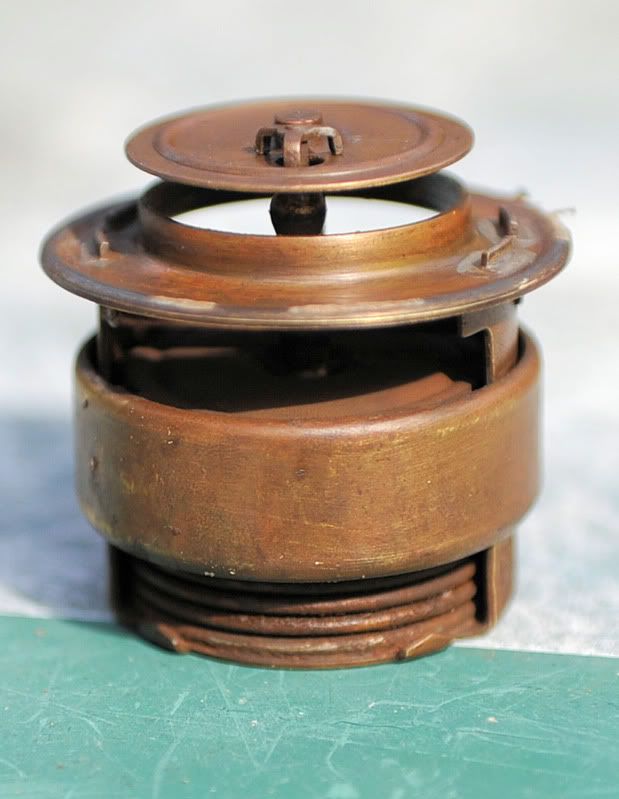
The shield is to force the water flow where it should go, but the main difference is that the newer unshielded type fail shut whereas the older type fail open. I've changed a few in my time, and it is a lot easier to put a bit of cardboard over the radiator than to limp home with the engine boiling.
http://www.ebay.co.uk/itm/HILLMAN-MINX-HUSKY-HAWK-...
Here is an example of the older shielded type of thermstat:-
The shield is to force the water flow where it should go, but the main difference is that the newer unshielded type fail shut whereas the older type fail open. I've changed a few in my time, and it is a lot easier to put a bit of cardboard over the radiator than to limp home with the engine boiling.
Getting a proper thermostat and a few other goodies ordered from a Rootes supplier tomorrow 
On a more positive note, i borrowed a gadget today from a kind gent at work to do some detective work:
After my 25 mile drive home, the temperature on the guage (rose to this and stayed there after half a mile):

And the actual water temperature:

This makes me feel much better
I also replaced the temperature sender which made absolutely no difference.
The plot thickens
On a more positive note, i borrowed a gadget today from a kind gent at work to do some detective work:
After my 25 mile drive home, the temperature on the guage (rose to this and stayed there after half a mile):
And the actual water temperature:
This makes me feel much better
I also replaced the temperature sender which made absolutely no difference.
The plot thickens
lewis s said:
Getting a proper thermostat and a few other goodies ordered from a Rootes supplier tomorrow
On a more positive note, i borrowed a gadget today from a kind gent at work to do some detective work:
After my 25 mile drive home, the temperature on the guage (rose to this and stayed there after half a mile):
And the actual water temperature:
This makes me feel much better
I also replaced the temperature sender which made absolutely no difference.
The plot thickens
Not statin the bleedin obvious but gauge is Farenheit and probe is Celcius, assuming gauge reads a bit out 85 celcius is about 190 F i think ?On a more positive note, i borrowed a gadget today from a kind gent at work to do some detective work:
After my 25 mile drive home, the temperature on the guage (rose to this and stayed there after half a mile):
And the actual water temperature:
This makes me feel much better
I also replaced the temperature sender which made absolutely no difference.
The plot thickens
AceOfHearts said:
lesstatt said:
Not statin the bleedin obvious but gauge is Farenheit and probe is Celcius, assuming gauge reads a bit out 85 celcius is about 190 F i think ?
85 Celcius is 185 Farenheit, so in the middle of the gauge which is what i am happy with I'll be honest I haven't bothered reading the whole thread.
But from the looks of it hot engine according to gauge but cold(ish) rad.
Could be allsorts especially gauge, but it's also perfectly possible for an engine to be boiling and the rad cold as generally the temp sender is in the head.
Don't be too happy the rad is cool till you know the engine is too.
But from the looks of it hot engine according to gauge but cold(ish) rad.
Could be allsorts especially gauge, but it's also perfectly possible for an engine to be boiling and the rad cold as generally the temp sender is in the head.
Don't be too happy the rad is cool till you know the engine is too.
Gassing Station | Classic Cars and Yesterday's Heroes | Top of Page | What's New | My Stuff