
Tyre experts, chime in!
Discussion


I'm thinking of buying some new wheels for my MR2 soon - but I'm still deciding wheel and tyre sizes.
The car (hereafter referred to as "the red one") for the last year has been running 18x7s with 215/35 front and 225/40 rear tyres (Falken 452s all round). I fitted these at the same time as stiffer dampers and the ride has always been a little harsh. I liked the way these looked, and was thinking about trading to some softer suspension when the time came to make the ride a bit nicer.
However the complicating factor is that I have another MR2 ("the green one") which was wearing standard 205/55/15 on 15x6 at the front, and 225/50/15 on 15x7 at the back, with standard dampers. I yesterday swapped the wheels for the 18s from the red car. Having driven the green car immediately before and after the swap, with no other suspension changes, I really noticed the decline in ride quality (which I had previously ascribed to the different dampers on the red one). I have noticed the slightly more responsive nature of these tyres, due to the shorter sidewall. But the main feeling is that of a heavier car, that responds better to steering input but is much rockier and less able to cope with the road undulations it needs to face in the local area.
So I should just go with a bigger sidewall on a smaller, lighter wheel and be done with it then?
The counterpoint to this, though, is our family wagon, an Audi A6. When we bought it it was wearing 225/40/18 winters on 18x7s all round and felt fun to drive, twitchy and responsive but a little crashy (did bloody well in the snow too). When we got a crack in one wheel I decided to follow the standard advice of fitting OEM wheels and tyres and went for some from a new A5. 18x8s wearing 245/40/18 with, I believe, Michelin SportContact 3s.
Though the wheels look great, I deeply regret the tyre choice. The car now rolls about like a bloody boat on the fat sidewalls, drifting laterally on the contact patches in cornering, and has a significantly crashier ride than before! What was the point?!
So now I'm stuck in the middle and I don't know what to draw from both experiences for the next set of wheels. At the moment I'm leaning toward 17s to have a slightly taller sidewall and therefore a little more bump absorption, but I'm wary of what happened with the Audi. I'd likely be going for a pretty wide set of tyres, more Falken 452s if I can get them, that I wouldn't be able to re-use on anything else if they turned out to be rubbish. I know from experience that the slim sidewalled 18s were crashy, but I got used to them after a while; the chunky tyres on the Audi I still hate today. But is that because the Audi's sidewalls are 8mm taller (being 245 width rather than 225), or because they're on slightly narrow rims for the width; or purely because of the particular tyre they are?
Help!
The car (hereafter referred to as "the red one") for the last year has been running 18x7s with 215/35 front and 225/40 rear tyres (Falken 452s all round). I fitted these at the same time as stiffer dampers and the ride has always been a little harsh. I liked the way these looked, and was thinking about trading to some softer suspension when the time came to make the ride a bit nicer.
However the complicating factor is that I have another MR2 ("the green one") which was wearing standard 205/55/15 on 15x6 at the front, and 225/50/15 on 15x7 at the back, with standard dampers. I yesterday swapped the wheels for the 18s from the red car. Having driven the green car immediately before and after the swap, with no other suspension changes, I really noticed the decline in ride quality (which I had previously ascribed to the different dampers on the red one). I have noticed the slightly more responsive nature of these tyres, due to the shorter sidewall. But the main feeling is that of a heavier car, that responds better to steering input but is much rockier and less able to cope with the road undulations it needs to face in the local area.
So I should just go with a bigger sidewall on a smaller, lighter wheel and be done with it then?
The counterpoint to this, though, is our family wagon, an Audi A6. When we bought it it was wearing 225/40/18 winters on 18x7s all round and felt fun to drive, twitchy and responsive but a little crashy (did bloody well in the snow too). When we got a crack in one wheel I decided to follow the standard advice of fitting OEM wheels and tyres and went for some from a new A5. 18x8s wearing 245/40/18 with, I believe, Michelin SportContact 3s.
Though the wheels look great, I deeply regret the tyre choice. The car now rolls about like a bloody boat on the fat sidewalls, drifting laterally on the contact patches in cornering, and has a significantly crashier ride than before! What was the point?!
So now I'm stuck in the middle and I don't know what to draw from both experiences for the next set of wheels. At the moment I'm leaning toward 17s to have a slightly taller sidewall and therefore a little more bump absorption, but I'm wary of what happened with the Audi. I'd likely be going for a pretty wide set of tyres, more Falken 452s if I can get them, that I wouldn't be able to re-use on anything else if they turned out to be rubbish. I know from experience that the slim sidewalled 18s were crashy, but I got used to them after a while; the chunky tyres on the Audi I still hate today. But is that because the Audi's sidewalls are 8mm taller (being 245 width rather than 225), or because they're on slightly narrow rims for the width; or purely because of the particular tyre they are?
Help!
All of the above is true.
Problem with asking the owner's clubs is there only tends to be a few standard accepted sizes. I'm contemplating a TRD 2000GT widebody conversion and the prospective new wheel/tyre setup would be for that - which allows fitting of much wider tyres than standard bodywork does. IMOC and MR2OC don't have much info on this - the guys running TRD widebodies don't tend to drive them very hard, it seems.
Problem with asking the owner's clubs is there only tends to be a few standard accepted sizes. I'm contemplating a TRD 2000GT widebody conversion and the prospective new wheel/tyre setup would be for that - which allows fitting of much wider tyres than standard bodywork does. IMOC and MR2OC don't have much info on this - the guys running TRD widebodies don't tend to drive them very hard, it seems.
If you went on an MR2 forum you might find someone local to you who would let you borrow a set of wheels and tyres. I ran a wheel fitting day for my local chapter of the MX5OC (Hell's Barbers) with some success.
Also I had my mk2 rev2 MR2 for 7 years and tried it on the standard wheels, 16x7 and 16x8 (the last two with 205 and 225 tyres with side profiles to match the OEM diameter - can't remember exactly and my tyre chart thingy is now full of Elise and MX5 sizes) and with the 16s the ride seemed unchanged but steering and chassis feel improved. I tried it on AO48s and it was very grippy, but only after being scary on every corner for the fiirst mile or two of each journey. On Marangoni Zetas it was grippy wet or dry, summer or winter and also very predictable to slide around. Tyres didn't last that long though.
If you were local, and if I could find the perculiar Sparco wheel nuts (which I can't, and also I'm having trouble finding spares anywhere), you could try my 16x8 MR2 wheels.
Also I had my mk2 rev2 MR2 for 7 years and tried it on the standard wheels, 16x7 and 16x8 (the last two with 205 and 225 tyres with side profiles to match the OEM diameter - can't remember exactly and my tyre chart thingy is now full of Elise and MX5 sizes) and with the 16s the ride seemed unchanged but steering and chassis feel improved. I tried it on AO48s and it was very grippy, but only after being scary on every corner for the fiirst mile or two of each journey. On Marangoni Zetas it was grippy wet or dry, summer or winter and also very predictable to slide around. Tyres didn't last that long though.
If you were local, and if I could find the perculiar Sparco wheel nuts (which I can't, and also I'm having trouble finding spares anywhere), you could try my 16x8 MR2 wheels.
Ozzie Osmond said:
Have you tried fiddling with tyre pressures?
Excellent point; the difference that can be made with tyre pressures on any car is substantial. - Up for sharpness.
- Down for ride quality.
You need to think about the 'starting point' for the calculations tho' - the 'recommended' pressure (from the manufacturer) is almost always too low. As a rule of thumb, I look at the 'maximum' pressure (as written on the tyre wall) and go down 10% from there. So if the maximum is 45psi, head for about 40 and try +/- 2 or 3 from there. (Yes, I know this sounds high but you'd be surprised at the improvement.)
Oli.
zcacogp said:
Excellent point; the difference that can be made with tyre pressures on any car is substantial.
You need to think about the 'starting point' for the calculations tho' - the 'recommended' pressure (from the manufacturer) is almost always too low. As a rule of thumb, I look at the 'maximum' pressure (as written on the tyre wall) and go down 10% from there. So if the maximum is 45psi, head for about 40 and try +/- 2 or 3 from there. (Yes, I know this sounds high but you'd be surprised at the improvement.)
Oli.
I used to adjust tyre pressures a lot when I was drifting (I know, not a real motorsport, but it really makes you focus on grip when you have 300bhp less than the other competitiors). There is a huge reduction of grip between 28psi (standard on an MX5) and 40 psi (what I used in the rears for high speed corners where lack of power was an issue). Some of the tyres had a marked maximum pressure of 60psi, and at those pressures grip was dangeroulsy low, even for skidding around an airfeild on.You need to think about the 'starting point' for the calculations tho' - the 'recommended' pressure (from the manufacturer) is almost always too low. As a rule of thumb, I look at the 'maximum' pressure (as written on the tyre wall) and go down 10% from there. So if the maximum is 45psi, head for about 40 and try +/- 2 or 3 from there. (Yes, I know this sounds high but you'd be surprised at the improvement.)
Oli.
Mucking about with tyre pressure so far away from manufacturer's recommendations is a game best played somewhere private where you can test if you still have grip without risking clipping a kerb. Mk2 MR2s can be horrible if badly set up.
I'm amazed that you think the car manufacturer gets the pressure wrong but the people who make universal fit tyres get the pressure nearly correct for every application.
CM,
Good discussion - thanks for your reply.
I played around with tyre pressures on cars I owned for many years (although on the road and not anything as motorsport-related as drifting!) I always thought that the 'listed' tyre pressures were low, and that things could be improved by slightly over-inflating them, but never got further than that. I then came across Chris Longhurst's excellent Tyre Bible ( here) where it essentially says the same thing but suggests a metric of 10% less than the manufacturer's stated maximum pressure (half-way down the page). Having tried it, it seems to work well for me. Having said that, I've never seen a tyre with a maximum pressure of 60PSI, so maybe this is the exception that proves the rule ...
Should you trust the manufacturer of the car or the manufacturer of the tyre for the pressure? Given that the car manufacturer will give ratings that will ensure the safest and most comfortable set-up for the biggest number of people (i.e. erring on the soft side), whereas the tyre manufacturer will give a maximum inflation pressure (i.e. maximum possible hardness), I'd suggest neither. Choose whatever works best for you, within the stated safety parameters.
Oli.
ETA: Porsche changed their recommendation for the tyre pressures on the 944S2 from 32 to 38PSI over the three years it was manufactured, realising that this helped the handling significantly; and I suspect they are not the only ones to do this. On that basis, I'd hesitate to see car manufacturers' recommendations as being anything more than that - a loose recommendation.
Good discussion - thanks for your reply.
I played around with tyre pressures on cars I owned for many years (although on the road and not anything as motorsport-related as drifting!) I always thought that the 'listed' tyre pressures were low, and that things could be improved by slightly over-inflating them, but never got further than that. I then came across Chris Longhurst's excellent Tyre Bible ( here) where it essentially says the same thing but suggests a metric of 10% less than the manufacturer's stated maximum pressure (half-way down the page). Having tried it, it seems to work well for me. Having said that, I've never seen a tyre with a maximum pressure of 60PSI, so maybe this is the exception that proves the rule ...
Should you trust the manufacturer of the car or the manufacturer of the tyre for the pressure? Given that the car manufacturer will give ratings that will ensure the safest and most comfortable set-up for the biggest number of people (i.e. erring on the soft side), whereas the tyre manufacturer will give a maximum inflation pressure (i.e. maximum possible hardness), I'd suggest neither. Choose whatever works best for you, within the stated safety parameters.
Oli.
ETA: Porsche changed their recommendation for the tyre pressures on the 944S2 from 32 to 38PSI over the three years it was manufactured, realising that this helped the handling significantly; and I suspect they are not the only ones to do this. On that basis, I'd hesitate to see car manufacturers' recommendations as being anything more than that - a loose recommendation.
Edited by zcacogp on Tuesday 18th September 10:44
zcacogp said:
CM,
Good discussion - thanks for your reply.
I played around with tyre pressures on cars I owned for many years (although on the road and not anything as motorsport-related as drifting!) I always thought that the 'listed' tyre pressures were low, and that things could be improved by slightly over-inflating them, but never got further than that. I then came across Chris Longhurst's excellent Tyre Bible ( here) where it essentially says the same thing but suggests a metric of 10% less than the manufacturer's stated maximum pressure (half-way down the page). Having tried it, it seems to work well for me. Having said that, I've never seen a tyre with a maximum pressure of 60PSI, so maybe this is the exception that proves the rule ...
Should you trust the manufacturer of the car or the manufacturer of the tyre for the pressure? Given that the car manufacturer will give ratings that will ensure the safest and most comfortable set-up for the biggest number of people (i.e. erring on the soft side), whereas the tyre manufacturer will give a maximum inflation pressure (i.e. maximum possible hardness), I'd suggest neither. Choose whatever works best for you, within the stated safety parameters.
Oli.
Oh goody, that link again.Good discussion - thanks for your reply.
I played around with tyre pressures on cars I owned for many years (although on the road and not anything as motorsport-related as drifting!) I always thought that the 'listed' tyre pressures were low, and that things could be improved by slightly over-inflating them, but never got further than that. I then came across Chris Longhurst's excellent Tyre Bible ( here) where it essentially says the same thing but suggests a metric of 10% less than the manufacturer's stated maximum pressure (half-way down the page). Having tried it, it seems to work well for me. Having said that, I've never seen a tyre with a maximum pressure of 60PSI, so maybe this is the exception that proves the rule ...
Should you trust the manufacturer of the car or the manufacturer of the tyre for the pressure? Given that the car manufacturer will give ratings that will ensure the safest and most comfortable set-up for the biggest number of people (i.e. erring on the soft side), whereas the tyre manufacturer will give a maximum inflation pressure (i.e. maximum possible hardness), I'd suggest neither. Choose whatever works best for you, within the stated safety parameters.
Oli.
I wouldn't trust tyre pressure advice from a chap who thinks Pressure=weight/area is a viable equation for tyre contact patches. It's rediculously wrong, the man is an idiot.
Thanks for the thought out responses chaps.
So in summary of the thread so far, to fix the Audi I should tinker with the pressures a bit (I've already done so but will change them a bit more), however I'm not sure how changing the pressure could manage to make it less floppy AND more comfortable?
My question really is, where do you start when trying to spec a tyre size that's slightly unusual for the car - where you can't draw on the experiences of others?
Can you work on the assumption that a narrow tyre with a 50mm high sidewall will wallow approximately the same as a very wide tyre with a 50mm sidewall (when pressures are identical), just the wide tyre will have more grip? Does it hold true if the wheel diameter is different but the sidewall height is the same?
Presumably sidewall construction remains largely independant of the width of the tread?
I don't think I'm likely to find anyone that local running the widths I'm thinking of - don't think they would fit under standard bodywork. The only folk likely to have the same kind of setup are 70s/80s Ferraris and the like, and I don't know if I can take their experiences as a guide - their suspension setup is different to the MR's, and the car is from an earlier time. The tyres themselves may be horribly wallowy but the suspension designed to work with it, for example.
So in summary of the thread so far, to fix the Audi I should tinker with the pressures a bit (I've already done so but will change them a bit more), however I'm not sure how changing the pressure could manage to make it less floppy AND more comfortable?
My question really is, where do you start when trying to spec a tyre size that's slightly unusual for the car - where you can't draw on the experiences of others?
Can you work on the assumption that a narrow tyre with a 50mm high sidewall will wallow approximately the same as a very wide tyre with a 50mm sidewall (when pressures are identical), just the wide tyre will have more grip? Does it hold true if the wheel diameter is different but the sidewall height is the same?
Presumably sidewall construction remains largely independant of the width of the tread?
I don't think I'm likely to find anyone that local running the widths I'm thinking of - don't think they would fit under standard bodywork. The only folk likely to have the same kind of setup are 70s/80s Ferraris and the like, and I don't know if I can take their experiences as a guide - their suspension setup is different to the MR's, and the car is from an earlier time. The tyres themselves may be horribly wallowy but the suspension designed to work with it, for example.
zcacogp said:
Should you trust the manufacturer of the car or the manufacturer of the tyre for the pressure? Given that the car manufacturer will give ratings that will ensure the safest and most comfortable set-up for the biggest number of people (i.e. erring on the soft side), whereas the tyre manufacturer will give a maximum inflation pressure (i.e. maximum possible hardness), I'd suggest neither. Choose whatever works best for you, within the stated safety parameters.
Nail, head. One is giving you a compromise based on what they think the general public want, one is giving you a maximum pressure the tyre is designed to work at. Neither necessarily suit your intended application.Tyre pressures are one of the most underrated forms of vehicle tuning! I bet half of pistonheads never even experiment!
Captain Muppet said:
Oh goody, that link again.
I wouldn't trust tyre pressure advice from a chap who thinks Pressure=weight/area is a viable equation for tyre contact patches. It's rediculously wrong, the man is an idiot.
OK, fair enough. I think the stuff he writes is pretty good, but each to their own! I wouldn't trust tyre pressure advice from a chap who thinks Pressure=weight/area is a viable equation for tyre contact patches. It's rediculously wrong, the man is an idiot.

Oli.
jon- said:
Nail, head. One is giving you a compromise based on what they think the general public want, one is giving you a maximum pressure the tyre is designed to work at. Neither necessarily suit your intended application.
Tyre pressures are one of the most underrated forms of vehicle tuning! I bet half of pistonheads never even experiment!
I've heard (although only anecdotally) that cars on press release drives are often supplied with mildly over-inflated tyres. I can't vouch for how true this is, but suggests a degree of chicanery goes on between 'recommended' and 'practiced'. Tyre pressures are one of the most underrated forms of vehicle tuning! I bet half of pistonheads never even experiment!
Oli.
zcacogp said:
Captain Muppet said:
Oh goody, that link again.
I wouldn't trust tyre pressure advice from a chap who thinks Pressure=weight/area is a viable equation for tyre contact patches. It's rediculously wrong, the man is an idiot.
OK, fair enough. I think the stuff he writes is pretty good, but each to their own! I wouldn't trust tyre pressure advice from a chap who thinks Pressure=weight/area is a viable equation for tyre contact patches. It's rediculously wrong, the man is an idiot.
Oli.
All that stuff about wider tyres having the same contact patch as narrow tyres is bunk, becuase the maths he uses to prove it also proves that flat tyres are infinitely huge (and he has to fudge in a comment about how wider tyres actually give more grip because they are softer than narrow tyres). He ignores the steel belts to get his maths to work, then uses them to explain why over and under inflated tyres might not have the traditional wear patterns of over and under inflated tyres (and yet explains that the traditional signs of over inflation may just be caused by wider tyres on high performance vehicles, and not the over inflation). His grip model ignores chemical adhesion. His tyre pressure selection criteria have more to do with mpg than ride or handling.
He's happy to admit his opinions are annecdotal, but unfortunately people people believe anything in a bible. Even his 10% rule is based on two cars how he drives them. I like the paragraph just after the 10% rule were he says standard pressures might be best after all, because using more pressure can reduce grip.
Like the other bible bits of it are right, bits of it are wrong and most of it can cause trouble when used out of context.
zcacogp said:
jon- said:
Nail, head. One is giving you a compromise based on what they think the general public want, one is giving you a maximum pressure the tyre is designed to work at. Neither necessarily suit your intended application.
Tyre pressures are one of the most underrated forms of vehicle tuning! I bet half of pistonheads never even experiment!
I've heard (although only anecdotally) that cars on press release drives are often supplied with mildly over-inflated tyres. I can't vouch for how true this is, but suggests a degree of chicanery goes on between 'recommended' and 'practiced'. Tyre pressures are one of the most underrated forms of vehicle tuning! I bet half of pistonheads never even experiment!
Oli.
Captain Muppet said:
zcacogp said:
jon- said:
Nail, head. One is giving you a compromise based on what they think the general public want, one is giving you a maximum pressure the tyre is designed to work at. Neither necessarily suit your intended application.
Tyre pressures are one of the most underrated forms of vehicle tuning! I bet half of pistonheads never even experiment!
I've heard (although only anecdotally) that cars on press release drives are often supplied with mildly over-inflated tyres. I can't vouch for how true this is, but suggests a degree of chicanery goes on between 'recommended' and 'practiced'. Tyre pressures are one of the most underrated forms of vehicle tuning! I bet half of pistonheads never even experiment!
Oli.
Go smaller wheel larger sidewall. My post on the subject from IMOC.
Also don't skimp on tyres, I run AD08s and if I had my way they would be the control tyre for the MR2.
Also don't skimp on tyres, I run AD08s and if I had my way they would be the control tyre for the MR2.
Marf said:
Having run 15, 16 and 17 I prefer a 16 inch wheel
They give the best trade off between looks, handling, feedback and comfort in my view.
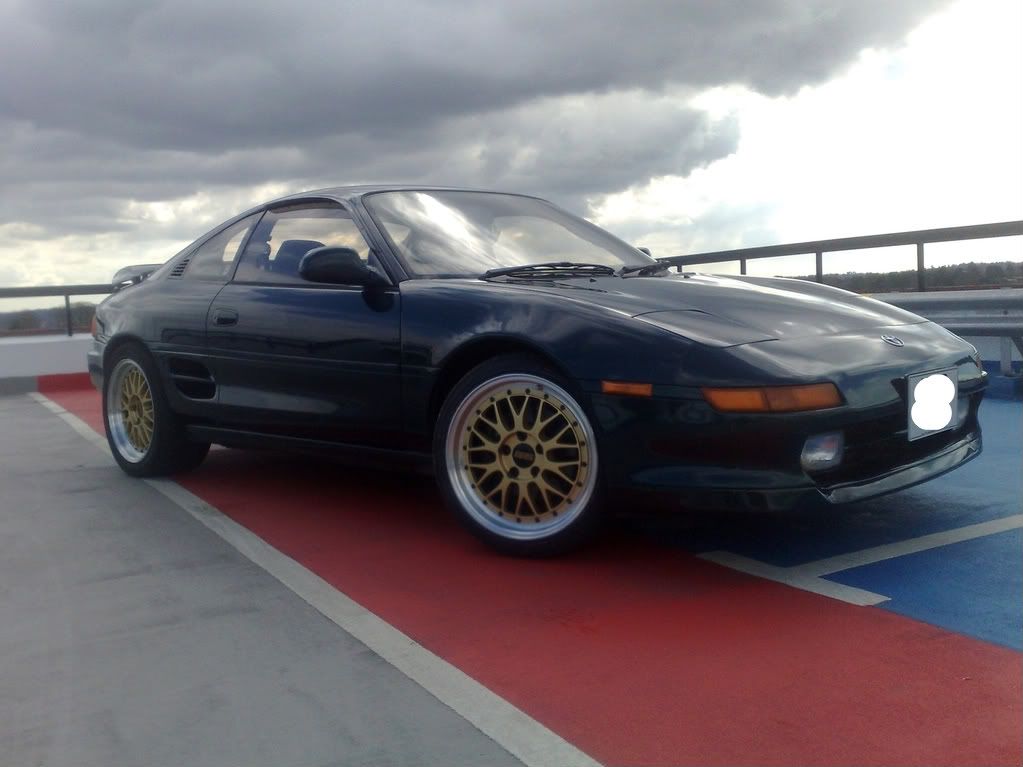
My car with 17x8/9 215/40 and 255/40
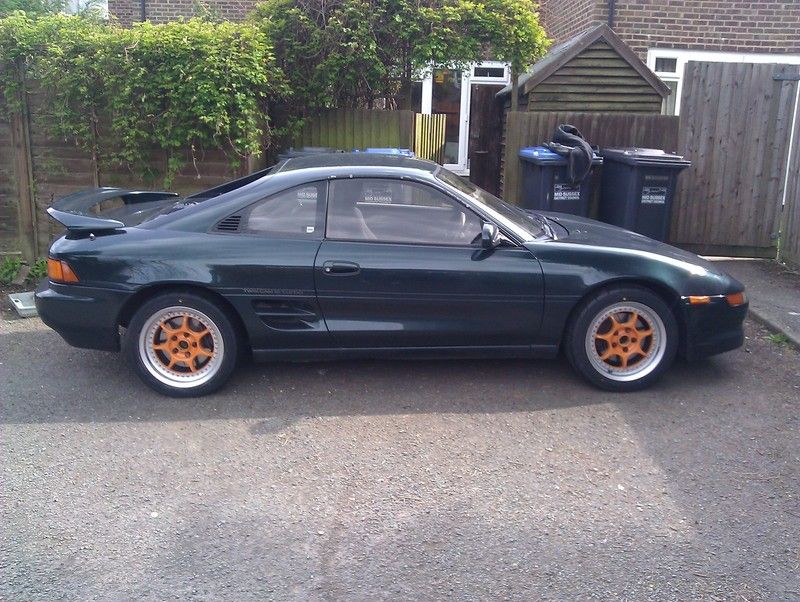
16x7/8 with 205/50 and 225/45
I think it looked better with the 17s on there, but it feels better to drive with the 16s and given I drive it more than look at it, the 16s win
They give the best trade off between looks, handling, feedback and comfort in my view.
My car with 17x8/9 215/40 and 255/40
16x7/8 with 205/50 and 225/45
I think it looked better with the 17s on there, but it feels better to drive with the 16s and given I drive it more than look at it, the 16s win
Gassing Station | General Gassing | Top of Page | What's New | My Stuff