
Stiff suspension, whats the physics behind it being faster?
Discussion


When driven at competition pace my Mk1 standard-suspension Golf rolls sufficiently to lift the inside wheel at least 6 inches of the ground. Look at films of cars in competition from the 60's and they'll be lifting wheels all over the shop if production-based and moving about (squating, rolling etc) even for single seaters. Modern cars and old production-based cars that are being raced today, are vastly more stiffly sprung.
I understand the need for stiff suspension if you are generating downforce and know that excessive roll can be uncomfortable on the road, but is it faster to be stiffer?
My Golf moves its weight to the outside wheels, particularly the outside front. Since this tyre is doing the hardest work and friction is dependent on weight, this is a good thing, isn't it? Or would it be better to get more grip from the inside tyres? Softer suspension gives better traction too.
Is it about getting the geometry to work properly?
Why didn't the people who engineered Jim Clarke's Lotus Conrtina fit stiffer suspension?
Thanks
I understand the need for stiff suspension if you are generating downforce and know that excessive roll can be uncomfortable on the road, but is it faster to be stiffer?
My Golf moves its weight to the outside wheels, particularly the outside front. Since this tyre is doing the hardest work and friction is dependent on weight, this is a good thing, isn't it? Or would it be better to get more grip from the inside tyres? Softer suspension gives better traction too.
Is it about getting the geometry to work properly?
Why didn't the people who engineered Jim Clarke's Lotus Conrtina fit stiffer suspension?
Thanks
Because the Bodyshells were not very torsionally rigid.
The works (and other) Cortinas racing in those days had spherical joints hidden in the rubber bushes as rose jointed suspension was not allowed in the class they were racing in.
The modern rollcages/ shell stiffeners are far stronger than the 60's ones. As a bonus the drivers are far safer as well.
Remember that grip levels were far lower on the tyres available then, still fantastic racing though!
The works (and other) Cortinas racing in those days had spherical joints hidden in the rubber bushes as rose jointed suspension was not allowed in the class they were racing in.
The modern rollcages/ shell stiffeners are far stronger than the 60's ones. As a bonus the drivers are far safer as well.
Remember that grip levels were far lower on the tyres available then, still fantastic racing though!
I'm going with less roll means less weight transfer. More grip is possible with 4 tyres with some weight on them than 3. Plus less roll means less changes to camber etc. All adding up to more rubber on the track, with more evenly distributed weight, and better control.
I don't believe more weight = more grip is a linear thing in the real world. It also involves more heat, and wear happening.
I don't believe more weight = more grip is a linear thing in the real world. It also involves more heat, and wear happening.
Munter sort of beat me to it - we won't get started on the "less weight" subject as thats not what the OP has asked - but a stiffer suspension system *increases the speed* of weight transfer caused by the inertia from the weight rolling from one side to the other, in a chicane/slalom situation or similar. The weight transfer is not caused by the stiffness of the suspension itself, it is determined by the weight/wheelbase of the car, centre of gravity.
Shoestringracer said:
ok, good detailed answer. thanks. Except it says, in effect, they now run stiff suspension becuase they can and they couldn't before. My question is: why is stiffer faster?
Correct, there is no sense in having really stiff suspension if the shell/chassis is flexing enough to transfer the weight with softer suspension eg Nascar racers. The ideal chassis would have zero flexing ,thus allowing the suspension to do the job it is designed to do.In answer to "why is stiffer faster?", - well is it?. The subject of chassis dynamics is very complex, with a myriad of variables coming in to play, camber control being just one of them. I suggest reading some of the books on the subject, should keep you engrossed for a while!
It's all to do with keeping c of g low and as much rubber on the road as possible.
Imagine that whatever lean angle the car is at alters the angle of the wheel and ultimately the angle of the tyre on the road. This is overcome by suspension angles and camber but you have to take into account that what you do to keep the outside wheels in contact with the ground when the suspension is compressed has a negative effect on the inside wheels which are being lifted.
It's all very clever stuff and stiffer suspension makes the geometry not as important. In very basic terms.
Have you heard of roll centres?
Imagine that whatever lean angle the car is at alters the angle of the wheel and ultimately the angle of the tyre on the road. This is overcome by suspension angles and camber but you have to take into account that what you do to keep the outside wheels in contact with the ground when the suspension is compressed has a negative effect on the inside wheels which are being lifted.
It's all very clever stuff and stiffer suspension makes the geometry not as important. In very basic terms.
Have you heard of roll centres?
Greensleeves started to answer, so may I continue? Stiffness is needed for downforce cars, to stop them scraping the floor, but that's incidental (Was it Lotus who put in progressive springs, so that their F1 cars had legal ride height in the paddock, but were millimeters from the floor on the track, for max down force?)
Suspensions seek to keep the tread flat on the road at all times, but movement is required to damp out vibration. Any movement will induce camber change, so any geometry is a compromise. One way of reducing camber change is to make the springing as stiff as possible, so it doesn't move!
And roll centres? You can look this up, but the position of the roll centre in relation to the Centre of Garvity and the ground, influences how much body roll will occur. The roll axis is a line between the front and back roll centres, and if those are very different in height, then the car may 'cock a leg' in cornering. A high rear roll cnetre will raise the inner rear wheel and vice versa.
The late Alan Staniforth's books are an excellent way into suspension geometry design and tuning.
John
Suspensions seek to keep the tread flat on the road at all times, but movement is required to damp out vibration. Any movement will induce camber change, so any geometry is a compromise. One way of reducing camber change is to make the springing as stiff as possible, so it doesn't move!
And roll centres? You can look this up, but the position of the roll centre in relation to the Centre of Garvity and the ground, influences how much body roll will occur. The roll axis is a line between the front and back roll centres, and if those are very different in height, then the car may 'cock a leg' in cornering. A high rear roll cnetre will raise the inner rear wheel and vice versa.
The late Alan Staniforth's books are an excellent way into suspension geometry design and tuning.
John
Edited by tapkaJohnD on Sunday 8th December 11:45
Auntieroll said:
Correct, there is no sense in having really stiff suspension if the shell/chassis is flexing enough to transfer the weight with softer suspension eg Nascar racers. The ideal chassis would have zero flexing ,thus allowing the suspension to do the job it is designed to do.
In answer to "why is stiffer faster?", - well is it?. The subject of chassis dynamics is very complex, with a myriad of variables coming in to play, camber control being just one of them. I suggest reading some of the books on the subject, should keep you engrossed for a while!
Is it faster? - the main reason I asked was that I don't get the feeling that it would be on my particular car. Better damping yes, but it feels (and it is "feel", nothing scientific, as if stiffer springs would result in sideways force, in this case causing understeer, where as the car feels like there is lots of downward forceon the front outside tyre. In answer to "why is stiffer faster?", - well is it?. The subject of chassis dynamics is very complex, with a myriad of variables coming in to play, camber control being just one of them. I suggest reading some of the books on the subject, should keep you engrossed for a while!
If i had very stiff springs and therefore virtually no roll would the same cornerering speed lead to the same weight on that outsdie front? Is the car is still pushing down onto that corner, its just meeting more resistance, in which case I'd have as much grip from the front plus the extra grip form the other tyres which are now more in contact with the ground?
Shoestring,
In a corner, the wheels have the same weight and the same side forces on them whatever the suspension settings, when the cornering speed is the same. But stiffer springs mean the suspension will move less, which means it will move less away from the optimum for grip, flat or only slightly into negative camber to allow for tyre flex. So if more grip, you can take the corner faster, without losing control.
The inside tyres always have little weight on them, so little grip, but a wheel in the air has none at all, and on a drive axle, without an LSD, the outside wheel will loose power, too.
It's for a reason that race regs say, "the suspension shall be moveable". A rigid setup would have most grip, and with 1200lb/in springs they are almost rigid. But then the car becomes uncontrollable as it darts about the track on any little bump, and dangerous in less then expert hands. That's why F1 drivers are paid so much!
John
In a corner, the wheels have the same weight and the same side forces on them whatever the suspension settings, when the cornering speed is the same. But stiffer springs mean the suspension will move less, which means it will move less away from the optimum for grip, flat or only slightly into negative camber to allow for tyre flex. So if more grip, you can take the corner faster, without losing control.
The inside tyres always have little weight on them, so little grip, but a wheel in the air has none at all, and on a drive axle, without an LSD, the outside wheel will loose power, too.
It's for a reason that race regs say, "the suspension shall be moveable". A rigid setup would have most grip, and with 1200lb/in springs they are almost rigid. But then the car becomes uncontrollable as it darts about the track on any little bump, and dangerous in less then expert hands. That's why F1 drivers are paid so much!
John
I find this topic interesting and am in the same situation.
I raced my noble m400 this year and the dynamics shocks are factory units, rather than fit cheap adjustable shocks, I sent the standard (very good) shocks to dynamics and asked them to fit 100lb stiffer springs all round. Then they slowed down the rebound damping to compensate. The car lost its road 'role' and I felt like I could corner faster and got better feedback from the car.
Now I'm racing bigger and faster tracks, using slicks and creating 1.4g at 120mph through craner curves at Donny. Brilliant for factory 'road' units. But in pictures of the car I've noticed as I'm getting faster the car is now starting to role more and I too want to know how I should proceed. Problem is in a recent wet race the role allowed me to pull away from all the solid spring racers. As it started to dry out, they're lap times dropped faster than my times.
So what should I do? Try and fit a stiffer anti role bar? Get 100lb stiffer springs and re-damped again, or shell out ££££ for proper adjustable racing shocks on stiff ass springs???
I raced my noble m400 this year and the dynamics shocks are factory units, rather than fit cheap adjustable shocks, I sent the standard (very good) shocks to dynamics and asked them to fit 100lb stiffer springs all round. Then they slowed down the rebound damping to compensate. The car lost its road 'role' and I felt like I could corner faster and got better feedback from the car.
Now I'm racing bigger and faster tracks, using slicks and creating 1.4g at 120mph through craner curves at Donny. Brilliant for factory 'road' units. But in pictures of the car I've noticed as I'm getting faster the car is now starting to role more and I too want to know how I should proceed. Problem is in a recent wet race the role allowed me to pull away from all the solid spring racers. As it started to dry out, they're lap times dropped faster than my times.
So what should I do? Try and fit a stiffer anti role bar? Get 100lb stiffer springs and re-damped again, or shell out ££££ for proper adjustable racing shocks on stiff ass springs???
HP,
The usula advice is to soften the dampers in rain to maintain grip, so if you were going faster in the rain than others, maybe you should go stiffer still for dry use. What poundage are the springs now?
Were they originally as I managed to dig out of the 'Net:
Front 686lbs/in
Rear 571lbs/in?
In which case 100lbs/in stiffer is pretty stiff, for a car weighing about a ton (1060 kg/2337 lbs)but stiffer still might help.
But Noble provided their own trick, front only, ARB, and if you stiffen the springs you should stiffen the ARB too. I doubt if a rear ARB will help.
John
The usula advice is to soften the dampers in rain to maintain grip, so if you were going faster in the rain than others, maybe you should go stiffer still for dry use. What poundage are the springs now?
Were they originally as I managed to dig out of the 'Net:
Front 686lbs/in
Rear 571lbs/in?
In which case 100lbs/in stiffer is pretty stiff, for a car weighing about a ton (1060 kg/2337 lbs)but stiffer still might help.
But Noble provided their own trick, front only, ARB, and if you stiffen the springs you should stiffen the ARB too. I doubt if a rear ARB will help.
John
Hi John,
The standard M400 spring rates are as you say (but reversed) 571lb front and 686lb rear. (Rear end is heavier)
I have already gone to roughly 670lb front and 780lb rear and the cars were actually about 1200KG out the factory, now my one is down to 1035KG.
I've not touched the standard anti roll bar though, someone is developing a rear ARB for them but from what I've seen it's the front rolling more than the rear.
I do believe there was a Noble years ago racing with 900lb front and 1000lb rear but still to confirm.
Maybe tightening the ARB a bit might do the trick.
The standard M400 spring rates are as you say (but reversed) 571lb front and 686lb rear. (Rear end is heavier)
I have already gone to roughly 670lb front and 780lb rear and the cars were actually about 1200KG out the factory, now my one is down to 1035KG.
I've not touched the standard anti roll bar though, someone is developing a rear ARB for them but from what I've seen it's the front rolling more than the rear.
I do believe there was a Noble years ago racing with 900lb front and 1000lb rear but still to confirm.
Maybe tightening the ARB a bit might do the trick.
Hollowpockets said:
I've not touched the standard anti roll bar though, someone is developing a rear ARB for them but from what I've seen it's the front rolling more than the rear.
Rear anti roll bar controls front roll. (And how does the front roll more than the rear? Is it articulated? I'd guess that the rear is diving (due to no ARB) and lifting the opposite front. Dropping the rear ARB off when you have one is a wet set up tweek, along with removing front strut brace.
( I'm being deliberately vague here because people like Alan Stanniforth spent years developing suspension and writing about it, all cars are different as are all circuits and surfaces. For example, we run stiff ARB on the rear at Mallory but remove or completely for Cadwell, it is pretty much down to personal preference as well.)
How does that work then? Never heard that before.
I guess roll is maybe the wrong word, it's almost as if the front inside wheel goes light in low speed corners, it's fine and balanced in high speed corners though.
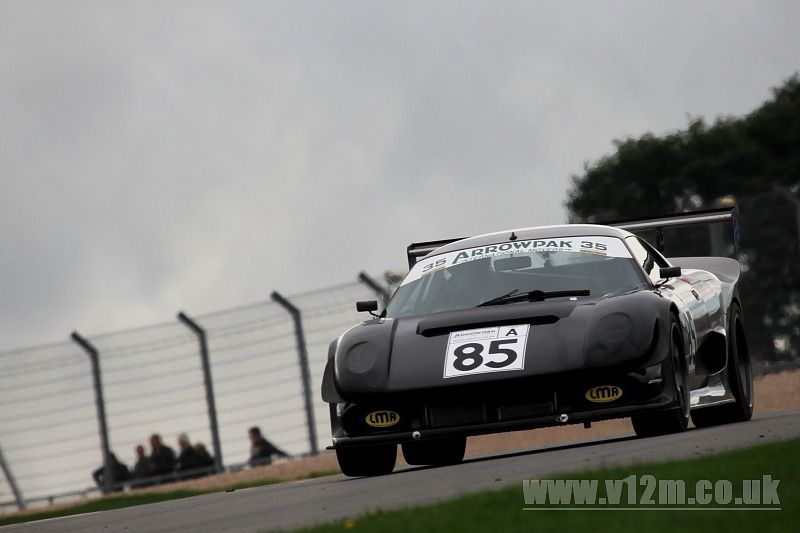
Here's a pic from Donny. See the inside wheels both lifting the outer edge.
I guess roll is maybe the wrong word, it's almost as if the front inside wheel goes light in low speed corners, it's fine and balanced in high speed corners though.
Here's a pic from Donny. See the inside wheels both lifting the outer edge.

Hollowpockets said:
How does that work then? Never heard that before.
I guess roll is maybe the wrong word, it's almost as if the front inside wheel goes light in low speed corners, it's fine and balanced in high speed corners though.
Here's a pic from Donny. See the inside wheels both lifting the outer edge.
those wheels lifting at low speed corners is due to the car generating 'lift' (im guessing you have the car throttled there and it squats down at the rear to lift the front - kinda like a drag car does - in exaggerated for) I guess roll is maybe the wrong word, it's almost as if the front inside wheel goes light in low speed corners, it's fine and balanced in high speed corners though.
Here's a pic from Donny. See the inside wheels both lifting the outer edge.
and the reason your car doesn't do it at high speed corners is due to 2 things, 'squatting force/tourque' (I made that up) being lesser at high speeds and at high speeds your aero comes into play also.
having watched your noble on track I think that your aero is doing its trick properly from around 80+ mph? so at knockhill that's duffus and clarks?
Probably the 2 corners that's its most stable too right?
I have just ordered up a set of adjustable ARB's for the M3 to reduce the roll, but stiffer front springs are on the list too for this winter as its way too soft now that im getting faster in it/pushing the car harder.
hope that makes some sort of sense G!
and here is a squat picture for demonstration!

squats by Home Gym Body, on Flickr

I think she squats by KulJP, on Flickr
ClarkyboyS said:
those wheels lifting at low speed corners is due to the car generating 'lift' (im guessing you have the car throttled there and it squats down at the rear to lift the front - kinda like a drag car does - in exaggerated for)
and the reason your car doesn't do it at high speed corners is due to 2 things, 'squatting force/tourque' (I made that up) being lesser at high speeds and at high speeds your aero comes into play also.
having watched your noble on track I think that your aero is doing its trick properly from around 80+ mph? so at knockhill that's duffus and clarks?
I think she squats by KulJP, on Flickr
What on earth? and the reason your car doesn't do it at high speed corners is due to 2 things, 'squatting force/tourque' (I made that up) being lesser at high speeds and at high speeds your aero comes into play also.
having watched your noble on track I think that your aero is doing its trick properly from around 80+ mph? so at knockhill that's duffus and clarks?
I think she squats by KulJP, on Flickr
 I left the photo in because its the best thing you said.
 That pic shows both inner wheels lifting equally, so probably front and rear of the car are working without dive, squat or a non-level roll axis.
The outer wheels look to be in a relatively normal position within the wheel arch - only you can tell for sure - so maybe the body is rolling outwards, rather than aero-lifting. A HP says, the amount of antiroll to apply is a black art, so I'd consider designing an ARB that you can adjust in stiffness and try that.
John
The outer wheels look to be in a relatively normal position within the wheel arch - only you can tell for sure - so maybe the body is rolling outwards, rather than aero-lifting. A HP says, the amount of antiroll to apply is a black art, so I'd consider designing an ARB that you can adjust in stiffness and try that.
John
Gassing Station | UK Club Motorsport | Top of Page | What's New | My Stuff