
Spark plug resistance
Discussion


I know the issue of plugs may have been done to death but there is nothing discussed regarding their resistance.
I decided to check mine with a multimeter while they were out. They are NGK B7ECS that have done 2000 miles since March 2013:
From left to right, the resistances from the connecting tip to the electrode are 0.6 ohms, 5 ohms, 7, 10, 21, 29, 146 and 528.
Now I know they're unlikely to be identical but is this significant? After all, there's a 5k ohm resistance cap as well as the HT leads themselves.
All of them are the same colour, although the gaps seem a bit low (about 30 thou instead of the recommended 35).

I decided to check mine with a multimeter while they were out. They are NGK B7ECS that have done 2000 miles since March 2013:
From left to right, the resistances from the connecting tip to the electrode are 0.6 ohms, 5 ohms, 7, 10, 21, 29, 146 and 528.
Now I know they're unlikely to be identical but is this significant? After all, there's a 5k ohm resistance cap as well as the HT leads themselves.
All of them are the same colour, although the gaps seem a bit low (about 30 thou instead of the recommended 35).
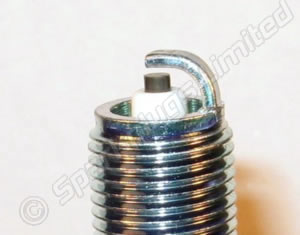
As I said, I don't want to discuss the choice of plug, it's been done ad nauseam. 6s and 7s with and without shroud both get recommended depending on your point of view. They were in the car when I bought it so they'll do for me.
I'm just curious about the wide range of resistances and whether it matters.
I'm just curious about the wide range of resistances and whether it matters.
I don't think the variations in resistance you have measured at the plugs is going to be an issue (although I'm not sure what range is acceptable having never measured plug resistance before)when the resistance in the leads varies so much anyway.
As a rule of thumb we allow 4k ohms per foot of lead which means your longer leads might have 12k ohms and the shorter ones might be around 5k ohms. A few hundred ohms only equates to an inch or so of lead length.
As a rule of thumb we allow 4k ohms per foot of lead which means your longer leads might have 12k ohms and the shorter ones might be around 5k ohms. A few hundred ohms only equates to an inch or so of lead length.
Totally agree with the lead resistance as stated above, therefore the plugs will make little difference.
I did an experiment a few years ago with a Formula 2 stockcar, I made some solid copper leads, non resistor type plugs, and was able to open the plug gap to nearly 20mm, which gave a bigger bang, more power, however played havoc with radios, tvs and ECUs of modern cars! Used to have hours of fun with it, lol
I did an experiment a few years ago with a Formula 2 stockcar, I made some solid copper leads, non resistor type plugs, and was able to open the plug gap to nearly 20mm, which gave a bigger bang, more power, however played havoc with radios, tvs and ECUs of modern cars! Used to have hours of fun with it, lol
NZ fan said:
I don't think the variations in resistance you have measured at the plugs is going to be an issue (although I'm not sure what range is acceptable having never measured plug resistance before)when the resistance in the leads varies so much anyway.
As a rule of thumb we allow 4k ohms per foot of lead which means your longer leads might have 12k ohms and the shorter ones might be around 5k ohms. A few hundred ohms only equates to an inch or so of lead length.
Thanks for that. My next step was to measure the resistance of the ht leads. As a rule of thumb we allow 4k ohms per foot of lead which means your longer leads might have 12k ohms and the shorter ones might be around 5k ohms. A few hundred ohms only equates to an inch or so of lead length.
I had a feeling the variance I measured would have little significant effect but it's good to hear it backed up.

If any of the plugs were exceeding about 2k ohms, it would be time to change it probably. That said, I'll put the higher resistance plugs on the shorter ht leads I think.
Gassing Station | Chimaera | Top of Page | What's New | My Stuff