
Frog - Gloster Meteor 4 1/72
Discussion


Keeping with the "Gloster" and "Frog" themes I decided that my next project would be another venerable old classic - the 1970ish Frog Gloster Meteor 4.
Like most kits of that era it is crude but reasonably accurate in outline. All the panel lines are raised, of course.
Unlike the E28/39 model, which was a later Novo issue of the old Frog model, this is a bona fide Frog original. However, I picked it up for a measly £1 at a model show and it came without instructions or decals. I found a set of instructions on the net so that's not a problem and I now have a set of Xtradecal decals which will provide me with the necessary markings.
As you can see, it's pretty basic. The wings aren't attached yet - they were just slotted into the fuselage to gauge what kind of gaps I'll need to sort out. It looks worse than I expect it will turn out to be.
I've added a bit of extra detail in the cockpit and in the engine facings.
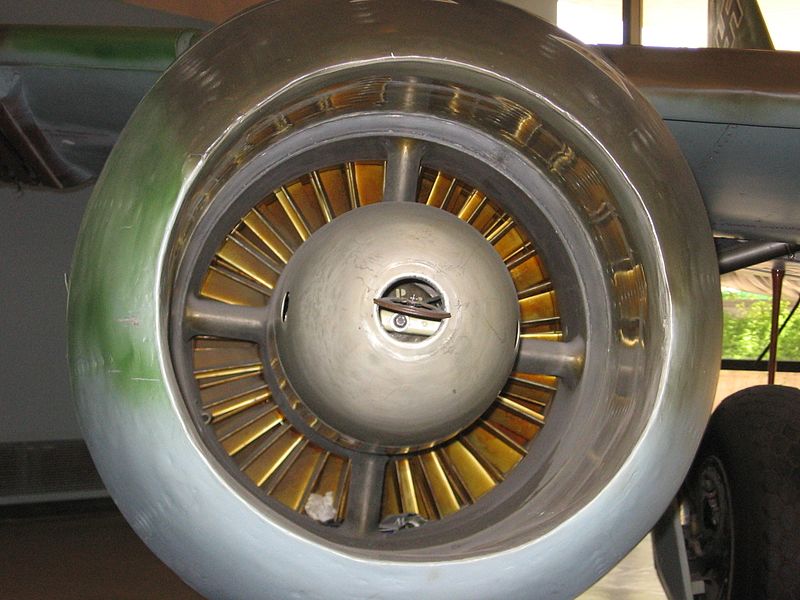
When you look directly into a Meteor engine nacelle, what you see is quite unlike a more modern jet - with no indication of turbines, compressors etc. All you see are pipes and other assorted "gubbins".
The shot of the engine interior is from the recently restored T7 which I got a good look at when it was being repainted at RAF Odiham in 2012. You can see what I mean by how odd it looks.


Like most kits of that era it is crude but reasonably accurate in outline. All the panel lines are raised, of course.
Unlike the E28/39 model, which was a later Novo issue of the old Frog model, this is a bona fide Frog original. However, I picked it up for a measly £1 at a model show and it came without instructions or decals. I found a set of instructions on the net so that's not a problem and I now have a set of Xtradecal decals which will provide me with the necessary markings.
As you can see, it's pretty basic. The wings aren't attached yet - they were just slotted into the fuselage to gauge what kind of gaps I'll need to sort out. It looks worse than I expect it will turn out to be.
I've added a bit of extra detail in the cockpit and in the engine facings.
When you look directly into a Meteor engine nacelle, what you see is quite unlike a more modern jet - with no indication of turbines, compressors etc. All you see are pipes and other assorted "gubbins".
The shot of the engine interior is from the recently restored T7 which I got a good look at when it was being repainted at RAF Odiham in 2012. You can see what I mean by how odd it looks.
I thought I'd seen one somewhere Eric but to be honest, there's a model in my box needing making.
I'm never going to finish all of the ones I have unless I get on with them, so this one might as well get the treatment.
I don't expect to buy a new one.
And lufbramatt is soon to release his Super Tiffie, if I buy a new model soon it will be that one.
I'm never going to finish all of the ones I have unless I get on with them, so this one might as well get the treatment.
I don't expect to buy a new one.
And lufbramatt is soon to release his Super Tiffie, if I buy a new model soon it will be that one.

After a number of week's of a gap - due to performing in a show and then suffering from lurgy - it's finished.
Built almost completely straight from the box - or in my case, the plastic bag. As there were no decals with the kit when I bought it, I purchased a set of 1 Sqdn decals from Hannants and the model now depicts a 1 Sqdn Mk 4 as it was in 1948.
The Airframe/High Speed Silver is Alclad White Aluminium over grey primer. It was then dulled down using thinned Xtracylix Matt Varnish. I think it looks OK. Airframe Silver was never that shiny or metallic looking and I wanted to make sure that the final finish had that muted look.


Built almost completely straight from the box - or in my case, the plastic bag. As there were no decals with the kit when I bought it, I purchased a set of 1 Sqdn decals from Hannants and the model now depicts a 1 Sqdn Mk 4 as it was in 1948.
The Airframe/High Speed Silver is Alclad White Aluminium over grey primer. It was then dulled down using thinned Xtracylix Matt Varnish. I think it looks OK. Airframe Silver was never that shiny or metallic looking and I wanted to make sure that the final finish had that muted look.
I originally built this model way back in 1974 - in the Dutch markings supplied with the kit. In fact, in rummaging through my accumulated collection of old, unused decals, I found the unused RAF decals from that original kit. Needles to say, I didn't use them on this build as they were pretty crude and badly yellowed with age.
The kit was originally issued in 1970 - which is also the year Airfix released their slightly better Mk.III.
The kit was originally issued in 1970 - which is also the year Airfix released their slightly better Mk.III.


This is from wiki re the engine, it is quite a short power unit.
Design of the engine was carried out by Frank Halford at his London consulting firm starting in April 1941.[2] It was based on the basic design pioneered by Frank Whittle, using a centrifugal compressor providing compressed air to sixteen individual flame cans, from which the exhaust powered a single-stage axial turbine. Compared to Whittle designs, the H-1 was "cleaned up" in that it used a single-sided compressor with the inlet at the front, and a "straight through" layout with the flame cans exhausting straight onto the turbine.Whittle's designs used a "reverse flow" layout that piped the hot air back to the middle of the engine, in order to "fold" it and reduce its length. Halford's changes made his engine somewhat simpler than Whittle's designs, notably allowing one of the main bearings to be removed. Nevertheless it was a fairly compact design, even without the Whittle-style "folding".
The air went in "round the back" of the machinery packed front plate but I cannot remember what was mounted there but to me it looks like fuel pumps and compressor pipes and such from this diagram, all mounted across the front spar with the power unit drawing air from around the casing.

Design of the engine was carried out by Frank Halford at his London consulting firm starting in April 1941.[2] It was based on the basic design pioneered by Frank Whittle, using a centrifugal compressor providing compressed air to sixteen individual flame cans, from which the exhaust powered a single-stage axial turbine. Compared to Whittle designs, the H-1 was "cleaned up" in that it used a single-sided compressor with the inlet at the front, and a "straight through" layout with the flame cans exhausting straight onto the turbine.Whittle's designs used a "reverse flow" layout that piped the hot air back to the middle of the engine, in order to "fold" it and reduce its length. Halford's changes made his engine somewhat simpler than Whittle's designs, notably allowing one of the main bearings to be removed. Nevertheless it was a fairly compact design, even without the Whittle-style "folding".
The air went in "round the back" of the machinery packed front plate but I cannot remember what was mounted there but to me it looks like fuel pumps and compressor pipes and such from this diagram, all mounted across the front spar with the power unit drawing air from around the casing.
HereBeMonsters said:
I've been googling around, but can't seem to find why no compressor is visible in the engines on these, as per your photo Eric.
Is it just the case with all turbojets? As opposed to modern planes having turbofans?
No, as Perdu mentioned, it is because of the specific way in which the airflow into the centrifugal compressor was directed.Is it just the case with all turbojets? As opposed to modern planes having turbofans?
Axial airflow turbojets have a more direct airflow into the compressor section of the engine so when you look down the front of an axial flow jet (turbojet OR turbofan) you will see the compressor blades inside the engine.
Axial flow engines have become the norm for most gas turbine installations although centrifugal flow engines are still used for certain applications.
Here is a head on shot into the Junkers Jumo axial flow turbojet fitted to the Messerschmitt Me262 -
Gassing Station | Scale Models | Top of Page | What's New | My Stuff