
RE: Lamborghini Huracan LP610-4 preview
Wednesday 30th April 2014
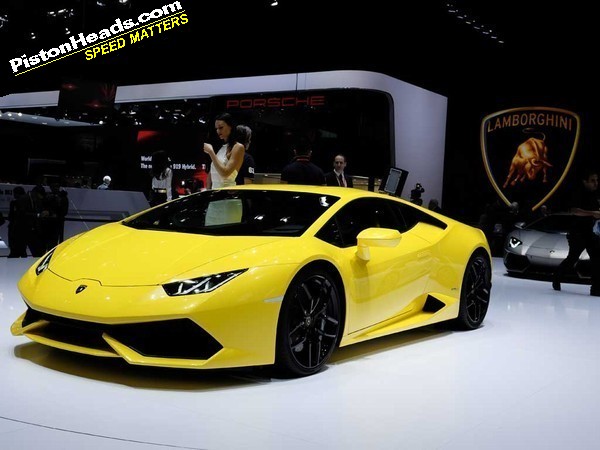
So we're shortly to drive the Lamborghini Huracan LP610-4. This, clearly, is something to anticipate very eagerly. Before we get to the flowery prose about raging bulls and symphonic V10 crescendos let's do a bit of homework. After our extensive preview feature following the tech launch and subsequent blogs and other musings we've come up with a 10-point guide as to why we're looking forward to getting behind the wheel.

Run-out Gallardo - its time was up10 - Because the Gallardo had had its day
Over 14,000 sales and a decade in the market mean the Gallardo more than achieved its objectives. Four-wheel drive or two-wheel drive, the Gallardo offered many differentflavours of the same basic dish but by the time we drove the final facelifted edition it was clear the competition had moved the game on. Every bull has its day and the Gallardo's had passed. It's still a cracking used purchase of course - a full PH buying guide here if you're tempted.
Aero tuned through underbody, not big wings9 - They've not gone turbo
McLaren 650S. Honda Civic Type R. BMW M3. From hot hatches to supercars, the turbo trend is here to stay too. But someone has to keep it real. And while Lambo boss Stephan Winkelmann accepts that a turbocharged Lamborghini may well happen he's going to hold out as long as possible. Hence the wonderfully named Iniezione Diretta Stratificata parallel fuel injection system that uses both direct and indirect injection to massage the emissions of the 5.2-litre normally aspirated V10 and allow the Huracan to bellow in a way no turbo car can. It's a Lamborghini. It's got to make a good noise. How does it work? In Lamborghini's words "on start-up and under higher loads and revs, a common-rail system injects fuel at a pressure of up to 180 bar directly into the combustion chambers. This results in intense swirl, which has the effect of cooling the cylinder walls and permits a higher compression ratio of 12.7:1. At lower loads, fuel is injected indirectly into the manifold, which reduces fuel consumption and particulate emissions. At medium loads and revs, both injection systems work together." So now you know.
Here's hoping those exhausts aren't all show...8 - It's a big boys' toy and it's not ashamed
Modesty and humility have no place in the Lamborghini sphere; from Ferruccio's cocky 'right, I'll start my own supercar company then' response to Enzo's snub to bagging the prettiest girls for its motor show stands this is an unashamedly old fashioned and masculine brand. Even when it does scent. For men, obviously. Rrrr. For all these macho overtones there's also a childish glee to the detail in the Huracan that betrays the reality - we're all just big kids and want grown-up toys that make loads of noise, go really fast and have lots of cool gadgets. Fine. Ferrari can try and make its owners believe they're just one step along the genetic chain from Alonso and Kimi. McLaren does the space age technology. Lamborghini does big toys for big kids. Which is why the start button is hidden beneath a red flap, as if it's really for launching a nuclear missile. Daft. But fun. If a Lamborghini doesn't make both small boys and grown men point and grin it's failed, which is why your Huracan needs to be painted in a lairy colour and dominate the room.
Looks a million times better in loud paint7 - Because it looks ace
The white Huracans on standard silver wheels at the tech preview left a few wondering if Lamborghini had lost its bottle on the styling front. On reflection, and having seen it under the show lights in some bolder colour schemes, the Huracan's taut and edgy styling has that essential Lamboness and power to thrill even stationary. Never knowingly nostalgic in design terms, stylist Filippo Perini and his team have indulged themselves with a couple of Miura references including the sill-mounted oil cooler intake and the standard slatted engine deck. And the lineage from the Gallardo is clear. In the flesh it looks chiselled and compact, angry and unashamedly aggressive. In fact it leaves the 458 and 650S looking, respectively, fussy and a bit, well, melty.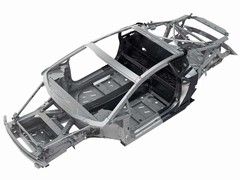
Hybrid carbon/aluminium chassis - best of both?6 - It's clever
An injection of Vorsprung Durch Technik means the Huracan can hold its head up alongside the 458 and 650S while maintaining core values like that engine. The designers didn't want pop-up aero spoiling the lines so the Huracan gets its downforce from beneath, channelled through a rear diffuser that's a design feature in its own right. Hidden NACA ducts feed radiators and other cooling needs. The intriguing sounding Lamborghini Piattaforma Inerziale claims a sector first with gyros and accelerometers close to the car's centre of gravity communicating real-time information to the gearbox, stability control, dampers and steering. This is coordinated by the cheesy sounding ANIMA system, both Italian for 'soul' and an acronym of Adaptive Network Intelligent Management and controlled by a mode switch on the wheel. A fully active diff replaces the Gallardo's central viscous coupling, test driver Giorgio Sanna telling us this is the biggest dynamic difference between the two cars. OK, so the 'hybrid' carbon/aluminium chassis is an Audi platform but, in theory, offers the best of both worlds at a more cost effective price. Certainly a dry weight of 1,422kg is impressive given that (also dry) a 458 Italia weighs 1,380kg with optional forged wheels and fixed 'racing' seats; circa 20-30kg extra for four-wheel drive and two extra cylinders seems a small price to pay.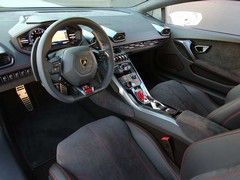
You start it with a fire button; cool, obviously5 - Because e.gear is no more
Generously you'd describe the old e.gear in the Gallardo as characterful, in so much as your head battering into the seat back every time you changed gear was charismatic. Manual Gallardos with clickety-clack open gates were available until the end and are apparently in demand among purists on the used market but were so rarely optioned on later cars each request needed board approval to make sure the dealer hadn't accidentally ticked the wrong box. In that context little surprise it's a dual-clutch or nowt for the Huracan but whoever makes it (Lambo says 'a supplier', Audi says that 'supplier' is ... Audi) it's been given a cool name - Lamborghini Doppia Frizione - and brings the baby Lambo into line with its competitors. Better late than never and all that.
Was someone saying it looked a bit sensible?4 - Gearbox aside you can still have a purist spec
OK, so no manual. But the Huracan comes as standard with passive dampers, the multi-setting MagnaRide magneto-rheological units available as an optional upgrade. So there's one box (un)ticked for those who prefer an unadulterated communication with the chassis. Where do we stand on the multi-ratio Lamborghini Dynamic Steering that varies the rack from 9:1 to 17:1 and becomes "intentionally indirect" to inspire confidence at speed? Sceptical, especially with the knowledge it can also automatically counter-steer if it thinks you're understeering or oversteering beyond the black boxes' parameters. Thankfully that's also optional and you can stick with the fixed-rate 16.2:1 passive rack. We'll follow Giorgio Sanna's advice on this one - he told us on the tech day the LDS is a nice gimmick but he'd have the standard set-up for its more predictable feel at the limits of grip. The temptation must have been there to load the Huracan up with the tech; good to know you can have it on passive dampers and with 'proper' steering if that's what you prefer.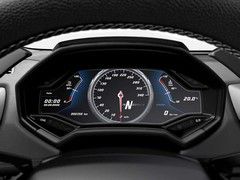
Multi-function display is super cool tech3 - Sugar daddy Audi's been generous with the toy box
There was a big fuss when Audi chose to reveal the new TT's fancy new instrument display before the rest of the car. But the Huracan is the first car on sale to get the 12.3-inch TFT display and, ref. our previous point about cool gizmos, is exciting for both its functional and design possibilities. First of all it frees up space on the dash usually reserved for a big ugly screen. Second it can mix and match navigation, infotainment and regular instrumentation according to need. In Full Drive mode you get a big rev counter and digital speed read out, Mixed downsizes the traditional instruments and puts a smaller nav/infotainment readout to the right while Full Navi and Infotainment modes mean the whole screen is taken up with the map or entertainment info, flanked by basic digital readouts for speed, revs and the rest.
Hard-edged look stands out from crowd2 - Because it's a golden age for supercars
'Junior' or not, the 458 Italia, 650S and Huracan represent a rare moment in supercar history when three iconic brands are at the top of their respective games. We've never had it so good; the 458 Italia, 650S and Huracan are all true to their brand values and each offer something subtly but distinctively different to the other. Superficially similar they're also defiantly individualistic and each offers something unique to set it apart from the rivals. There are no losers in this game. Well, unless the Huracan turns out to be complete rubbish when we drive it of course.
Lamborghini Huracan LP610-4 preview
10 reasons we're really rather excited about driving the new Huracan this week...
Meaning that, by the time we do, we'll all be up to speed on how and why it does what it does.
Right, let's kick off.

Run-out Gallardo - its time was up
Over 14,000 sales and a decade in the market mean the Gallardo more than achieved its objectives. Four-wheel drive or two-wheel drive, the Gallardo offered many differentflavours of the same basic dish but by the time we drove the final facelifted edition it was clear the competition had moved the game on. Every bull has its day and the Gallardo's had passed. It's still a cracking used purchase of course - a full PH buying guide here if you're tempted.
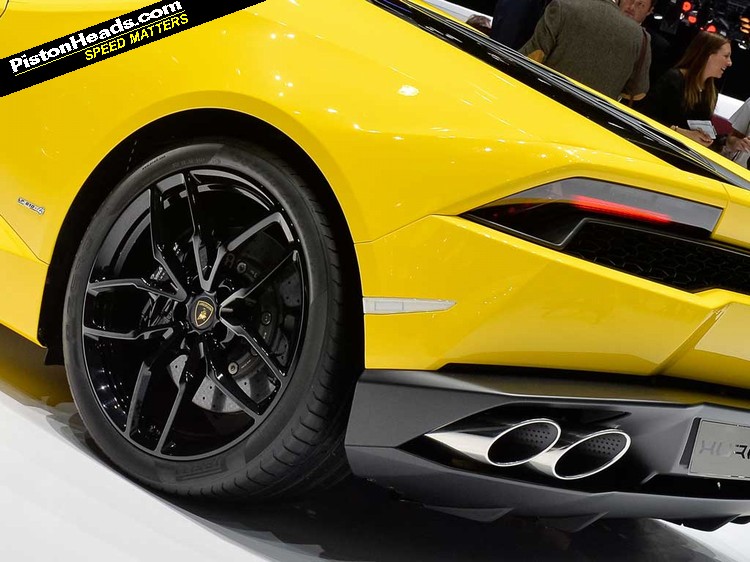
Aero tuned through underbody, not big wings
McLaren 650S. Honda Civic Type R. BMW M3. From hot hatches to supercars, the turbo trend is here to stay too. But someone has to keep it real. And while Lambo boss Stephan Winkelmann accepts that a turbocharged Lamborghini may well happen he's going to hold out as long as possible. Hence the wonderfully named Iniezione Diretta Stratificata parallel fuel injection system that uses both direct and indirect injection to massage the emissions of the 5.2-litre normally aspirated V10 and allow the Huracan to bellow in a way no turbo car can. It's a Lamborghini. It's got to make a good noise. How does it work? In Lamborghini's words "on start-up and under higher loads and revs, a common-rail system injects fuel at a pressure of up to 180 bar directly into the combustion chambers. This results in intense swirl, which has the effect of cooling the cylinder walls and permits a higher compression ratio of 12.7:1. At lower loads, fuel is injected indirectly into the manifold, which reduces fuel consumption and particulate emissions. At medium loads and revs, both injection systems work together." So now you know.
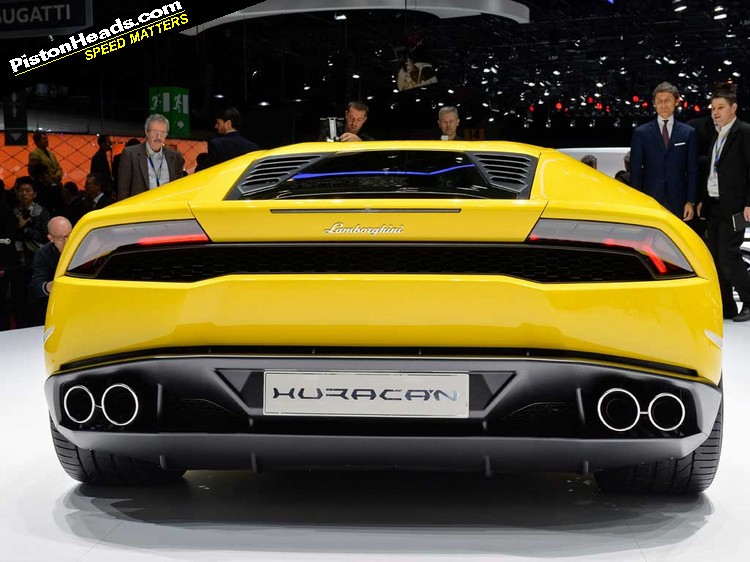
Here's hoping those exhausts aren't all show...
Modesty and humility have no place in the Lamborghini sphere; from Ferruccio's cocky 'right, I'll start my own supercar company then' response to Enzo's snub to bagging the prettiest girls for its motor show stands this is an unashamedly old fashioned and masculine brand. Even when it does scent. For men, obviously. Rrrr. For all these macho overtones there's also a childish glee to the detail in the Huracan that betrays the reality - we're all just big kids and want grown-up toys that make loads of noise, go really fast and have lots of cool gadgets. Fine. Ferrari can try and make its owners believe they're just one step along the genetic chain from Alonso and Kimi. McLaren does the space age technology. Lamborghini does big toys for big kids. Which is why the start button is hidden beneath a red flap, as if it's really for launching a nuclear missile. Daft. But fun. If a Lamborghini doesn't make both small boys and grown men point and grin it's failed, which is why your Huracan needs to be painted in a lairy colour and dominate the room.
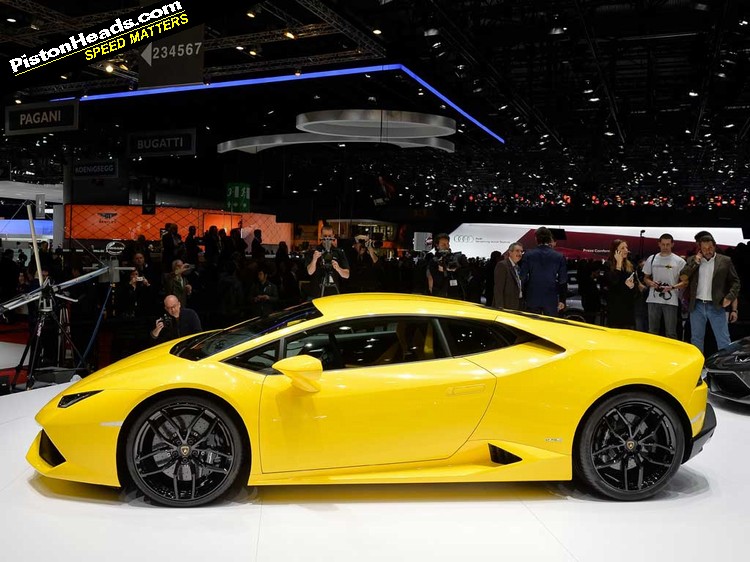
Looks a million times better in loud paint
The white Huracans on standard silver wheels at the tech preview left a few wondering if Lamborghini had lost its bottle on the styling front. On reflection, and having seen it under the show lights in some bolder colour schemes, the Huracan's taut and edgy styling has that essential Lamboness and power to thrill even stationary. Never knowingly nostalgic in design terms, stylist Filippo Perini and his team have indulged themselves with a couple of Miura references including the sill-mounted oil cooler intake and the standard slatted engine deck. And the lineage from the Gallardo is clear. In the flesh it looks chiselled and compact, angry and unashamedly aggressive. In fact it leaves the 458 and 650S looking, respectively, fussy and a bit, well, melty.
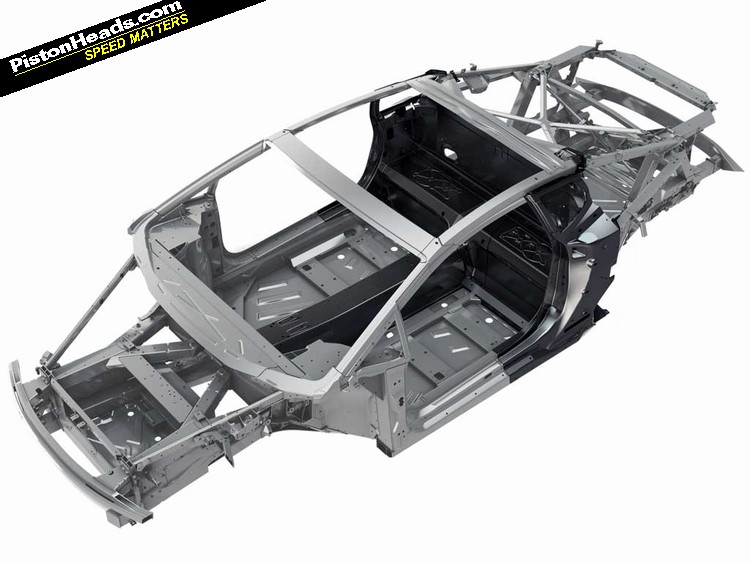
Hybrid carbon/aluminium chassis - best of both?
An injection of Vorsprung Durch Technik means the Huracan can hold its head up alongside the 458 and 650S while maintaining core values like that engine. The designers didn't want pop-up aero spoiling the lines so the Huracan gets its downforce from beneath, channelled through a rear diffuser that's a design feature in its own right. Hidden NACA ducts feed radiators and other cooling needs. The intriguing sounding Lamborghini Piattaforma Inerziale claims a sector first with gyros and accelerometers close to the car's centre of gravity communicating real-time information to the gearbox, stability control, dampers and steering. This is coordinated by the cheesy sounding ANIMA system, both Italian for 'soul' and an acronym of Adaptive Network Intelligent Management and controlled by a mode switch on the wheel. A fully active diff replaces the Gallardo's central viscous coupling, test driver Giorgio Sanna telling us this is the biggest dynamic difference between the two cars. OK, so the 'hybrid' carbon/aluminium chassis is an Audi platform but, in theory, offers the best of both worlds at a more cost effective price. Certainly a dry weight of 1,422kg is impressive given that (also dry) a 458 Italia weighs 1,380kg with optional forged wheels and fixed 'racing' seats; circa 20-30kg extra for four-wheel drive and two extra cylinders seems a small price to pay.
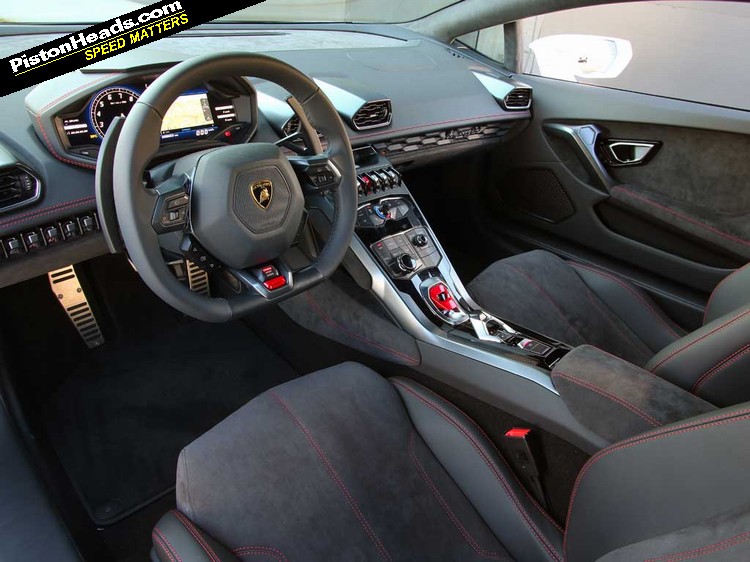
You start it with a fire button; cool, obviously
Generously you'd describe the old e.gear in the Gallardo as characterful, in so much as your head battering into the seat back every time you changed gear was charismatic. Manual Gallardos with clickety-clack open gates were available until the end and are apparently in demand among purists on the used market but were so rarely optioned on later cars each request needed board approval to make sure the dealer hadn't accidentally ticked the wrong box. In that context little surprise it's a dual-clutch or nowt for the Huracan but whoever makes it (Lambo says 'a supplier', Audi says that 'supplier' is ... Audi) it's been given a cool name - Lamborghini Doppia Frizione - and brings the baby Lambo into line with its competitors. Better late than never and all that.
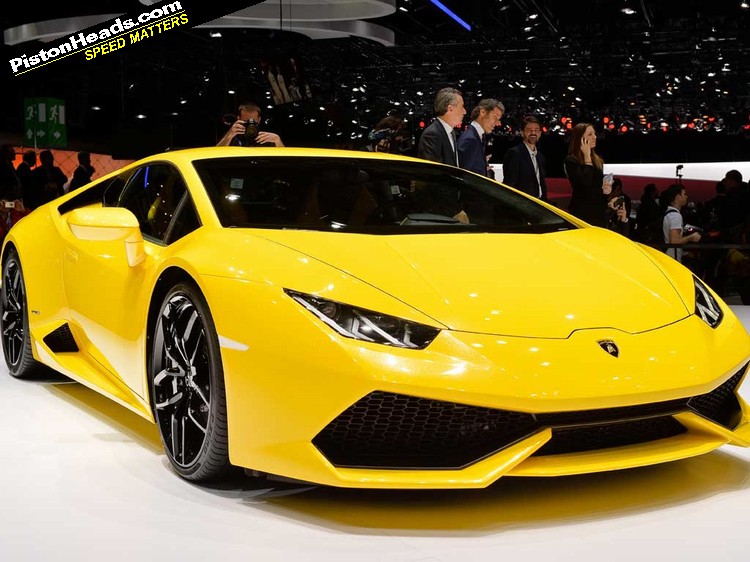
Was someone saying it looked a bit sensible?
OK, so no manual. But the Huracan comes as standard with passive dampers, the multi-setting MagnaRide magneto-rheological units available as an optional upgrade. So there's one box (un)ticked for those who prefer an unadulterated communication with the chassis. Where do we stand on the multi-ratio Lamborghini Dynamic Steering that varies the rack from 9:1 to 17:1 and becomes "intentionally indirect" to inspire confidence at speed? Sceptical, especially with the knowledge it can also automatically counter-steer if it thinks you're understeering or oversteering beyond the black boxes' parameters. Thankfully that's also optional and you can stick with the fixed-rate 16.2:1 passive rack. We'll follow Giorgio Sanna's advice on this one - he told us on the tech day the LDS is a nice gimmick but he'd have the standard set-up for its more predictable feel at the limits of grip. The temptation must have been there to load the Huracan up with the tech; good to know you can have it on passive dampers and with 'proper' steering if that's what you prefer.
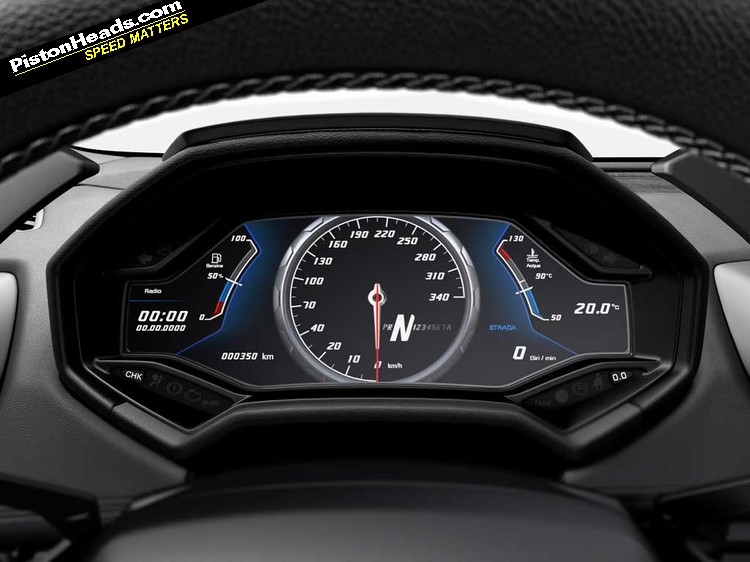
Multi-function display is super cool tech
There was a big fuss when Audi chose to reveal the new TT's fancy new instrument display before the rest of the car. But the Huracan is the first car on sale to get the 12.3-inch TFT display and, ref. our previous point about cool gizmos, is exciting for both its functional and design possibilities. First of all it frees up space on the dash usually reserved for a big ugly screen. Second it can mix and match navigation, infotainment and regular instrumentation according to need. In Full Drive mode you get a big rev counter and digital speed read out, Mixed downsizes the traditional instruments and puts a smaller nav/infotainment readout to the right while Full Navi and Infotainment modes mean the whole screen is taken up with the map or entertainment info, flanked by basic digital readouts for speed, revs and the rest.
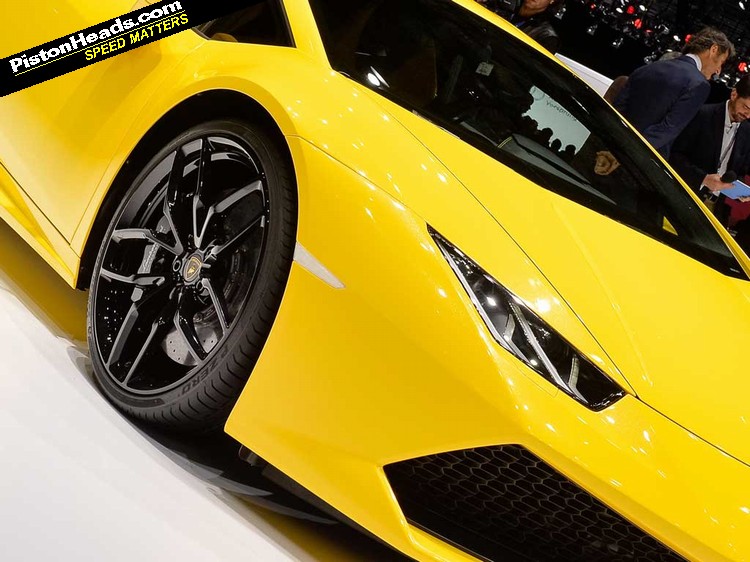
Hard-edged look stands out from crowd
'Junior' or not, the 458 Italia, 650S and Huracan represent a rare moment in supercar history when three iconic brands are at the top of their respective games. We've never had it so good; the 458 Italia, 650S and Huracan are all true to their brand values and each offer something subtly but distinctively different to the other. Superficially similar they're also defiantly individualistic and each offers something unique to set it apart from the rivals. There are no losers in this game. Well, unless the Huracan turns out to be complete rubbish when we drive it of course.
1 - Because it's an all-new Lamborghini!
And if that doesn't get you just a little bit excited you're in the wrong place.
Still need more? Read the full Huracan press pack here.
Discussion


Pistonheads said:
1,422kg is impressive given that (also dry) a 458 Italia weighs 1,380kg with optional forged wheels and fixed 'racing' seats; circa 20-30kg extra for four-wheel drive and two extra cylinders seems a small price to pay.
1,422 kg - 1380 kg = 42 kg, not 20 kg. You give the figures, then you type a false statement on the very next line contradicting yourself in order to make the Huracan seem lighter than it really is. You also don't mention that the Ferrari was unleashed in 2009 compared to 2014 for the Huracan. "Circa 20-30kg lighter for two-wheel drive and 17 years older seems a small price to pay"..... oh wait.
The Huracan has grown on me massively now. Wasn't a huge fan on the look initially, few little bits that grated on me, however, after seeing it in the Bright bold Yellow, it has transformed the look and made me like it a lot more. The few little bits that annoyed me before are now seemingly less annoying. Strange what a colour scheme can do.
blasos said:
Pistonheads said:
1,422kg is impressive given that (also dry) a 458 Italia weighs 1,380kg with optional forged wheels and fixed 'racing' seats; circa 20-30kg extra for four-wheel drive and two extra cylinders seems a small price to pay.
1,422 kg - 1380 kg = 42 kg, not 20 kg. You give the figures, then you type a false statement on the very next line contradicting yourself in order to make the Huracan seem lighter than it really is. You also don't mention that the Ferrari was unleashed in 2009 compared to 2014 for the Huracan. "Circa 20-30kg lighter for two-wheel drive and 17 years older seems a small price to pay"..... oh wait.J8 SVG said:
The Forged alloys and Lightweight racing seats made up for the rest of the weight difference - stop trying to be so clever and just enjoy the articles. FFS.
Took the words out of my mouth  I reckon the seats probably make more difference than that too given the Lambo ones are fully powered
steveb8189 said:
J8 SVG said:
The Forged alloys and Lightweight racing seats made up for the rest of the weight difference - stop trying to be so clever and just enjoy the articles. FFS.
Took the words out of my mouth I reckon the seats probably make more difference than that too given the Lambo ones are fully poweredblasos said:
1,422 kg - 1380 kg = 42 kg, not 20 kg. You give the
figures, then you type a false statement on the very next line
contradicting yourself in order to make the Huracan seem lighter than
it really is. You also don't mention that the Ferrari was unleashed in
2009 compared to 2014 for the Huracan. "Circa 20-30kg lighter for
two-wheel drive and 17 years older seems a small price to pay"..... oh
wait.
Ferrari's officially quoted dry weight of 1,380kg is ONLY achievedfigures, then you type a false statement on the very next line
contradicting yourself in order to make the Huracan seem lighter than
it really is. You also don't mention that the Ferrari was unleashed in
2009 compared to 2014 for the Huracan. "Circa 20-30kg lighter for
two-wheel drive and 17 years older seems a small price to pay"..... oh
wait.
with optional fixed back seats and lightweight forged wheels. Being
generous that's a circa 20kg saving off a stock car with standard
seats and wheels (unless Ferrari wants to clarify!) hence my pitching
the actual weight difference (dry) between stock 458 and Huracan at c.
20kg. Hope that's fair/clear.
Cheers,
Dan
Anyone else think that (in yellow) and from the front it looks like an angry pokemon feeding itself with little spindly arms?
In this car I get the beautiful screen for the driver showing all the dials, infotainment etc. With no other cabin screen is anyone really going to want to entertain the "Can you change the song, CD, radio station from disgruntled passengers over and over as you try and navigate your favourite in out corner on a sleepy B road.Having owned a Gallardo, all of these functions WERE the passengers job when you're trying to keep the thing pointing the right way at any kind of speed. Passengers need buttons too. In this car the screen will be cool, when it appears in the new TT I reckon it is just going to make your passenger feel like they are in a taxi. Both hands on knees and looking dead ahead. Passengers need to feel involved too and passengers love pressing buttons, especially if they don't know what it does.
In this car I get the beautiful screen for the driver showing all the dials, infotainment etc. With no other cabin screen is anyone really going to want to entertain the "Can you change the song, CD, radio station from disgruntled passengers over and over as you try and navigate your favourite in out corner on a sleepy B road.Having owned a Gallardo, all of these functions WERE the passengers job when you're trying to keep the thing pointing the right way at any kind of speed. Passengers need buttons too. In this car the screen will be cool, when it appears in the new TT I reckon it is just going to make your passenger feel like they are in a taxi. Both hands on knees and looking dead ahead. Passengers need to feel involved too and passengers love pressing buttons, especially if they don't know what it does.
Good article. I'm looking forward to hearing and seeing this on Topgear, Drive, etc. 
I'm not really a fan of yellow but on a Lambo why not?! Saw a yellow facelifted S2000 in a similar colour the other day it looked great in the sunshine and if you want to stand out bright colours are an easy way to do it.
I like metallic purples and orange. Green/Pink/Yellow not so much but it suits the outrageous nature of the car.
I'm looking forward to hearing and seeing this on Topgear, Drive, etc. I'm not really a fan of yellow but on a Lambo why not?! Saw a yellow facelifted S2000 in a similar colour the other day it looked great in the sunshine and if you want to stand out bright colours are an easy way to do it.
I like metallic purples and orange. Green/Pink/Yellow not so much but it suits the outrageous nature of the car.
Gassing Station | General Gassing | Top of Page | What's New | My Stuff