
Discussion


On a normal aircraft wing, what is the difference in pressure between the airflow underneath to that flowing over the top?
E.g. if normal atmospheric pressure is 14.7psi 'pushing up', what is pushing down?
Although real high tech answers would be helpful
Depends on altitude,speed,design of wing etc, it needs to be put ins way a seven yr old would understand,( he is at the why stage now) and whilst I have got him just about grasping steam loco boiler pressure, this one was thrown at me.
Thanks
E.g. if normal atmospheric pressure is 14.7psi 'pushing up', what is pushing down?
Although real high tech answers would be helpful
Depends on altitude,speed,design of wing etc, it needs to be put ins way a seven yr old would understand,( he is at the why stage now) and whilst I have got him just about grasping steam loco boiler pressure, this one was thrown at me.
Thanks
MartG said:
Take the weight of the aircraft and divide by the area of the wing - should get you fairly close 
At a basic level yes, but modern aircraft use supercritical wing profiles that gain a larger percentage of their lift from a change in momentum of the air, as opposed to pure pressure lift (they effectively divert a large volume of air downwards, resulting in a lift force (and a more rewards CoP)Added to which, you need to include the lift generated by the bodyform and the horizontal stabiliser surfaces too!
Also, whilst lift = weight in a static condition, planes are not static devices..... ;-)
The only way the aircraft can change the momentum of the air is by applying pressure to it though, Max.
Mass * acceleration / wing area is a good estimate of the net differential pressure between the upper and lower surfaces. In reality the pressure distribution is not uniform by any stretch.
Mass * acceleration / wing area is a good estimate of the net differential pressure between the upper and lower surfaces. In reality the pressure distribution is not uniform by any stretch.
AER said:
The only way the aircraft can change the momentum of the air is by applying pressure to it though, Max.
Mass * acceleration / wing area is a good estimate of the net differential pressure between the upper and lower surfaces. In reality the pressure distribution is not uniform by any stretch.
Indeed. The point i was trying to get to, and somewhat poorly ;-) was exactly your point about non uniform distribution. The classic text books basically say, assume the upper surface of the wing has pressure x, and the lower surface pressure y, where x<y. In reality, that's a long way from the true "average" pressure distribution probablyMass * acceleration / wing area is a good estimate of the net differential pressure between the upper and lower surfaces. In reality the pressure distribution is not uniform by any stretch.
Max_Torque said:
The classic text books basically say, assume the upper surface of the wing has pressure x, and the lower surface pressure y, where x<y.
Classic text books ignore the differential pressure entirely and rely on dynamic pressure and a fiddle-factor called lift coefficient, C_LAER said:
Max_Torque said:
The classic text books basically say, assume the upper surface of the wing has pressure x, and the lower surface pressure y, where x<y.
Classic text books ignore the differential pressure entirely and rely on dynamic pressure and a fiddle-factor called lift coefficient, C_L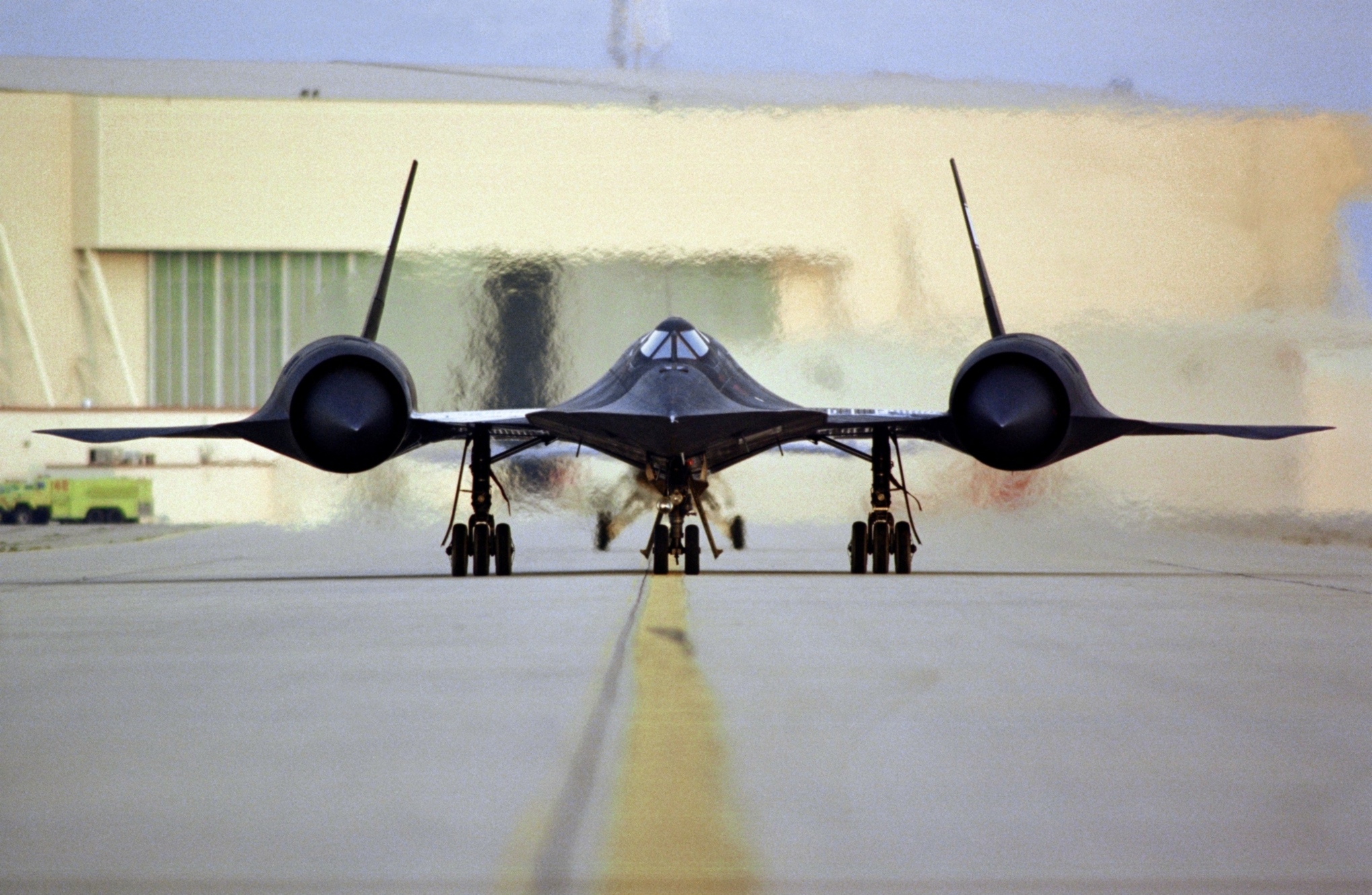
with slide rules and basic maths (and fiddle factors!) ;-)
Gassing Station | Boats, Planes & Trains | Top of Page | What's New | My Stuff