
What am I doing wrong?
Discussion


Hi guys,
I am a noob with SLRs and I just want to know whats going on here.
My first shot is with my 70-300mm lens which has no auto focus

The second shot is with my 18-55mm lens which has auto focus.
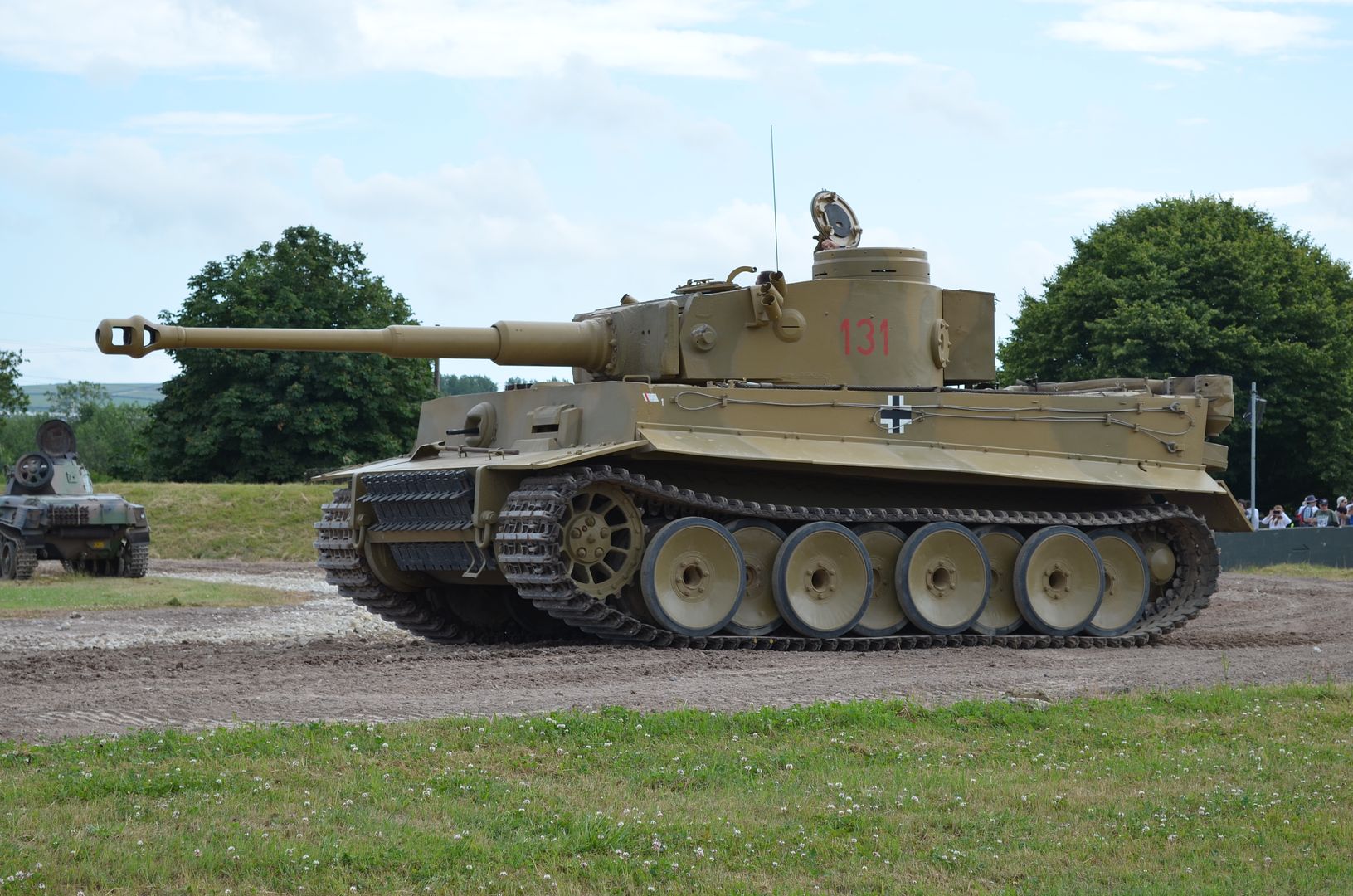
ISO is set to auto and yet my photos with the 70-300mm lens always look a bit washed out
I am a noob with SLRs and I just want to know whats going on here.
My first shot is with my 70-300mm lens which has no auto focus

The second shot is with my 18-55mm lens which has auto focus.

ISO is set to auto and yet my photos with the 70-300mm lens always look a bit washed out
Are these raw or jpeg? Have you processed them at all in lightroom etc?
The first shot seems to have a combination of issues. Could you post up the exact settings for that one? It also does not look in focus. There is a lot of abberation too. You can decrease this effect by using a lower aperture.
The first shot seems to have a combination of issues. Could you post up the exact settings for that one? It also does not look in focus. There is a lot of abberation too. You can decrease this effect by using a lower aperture.
Sorry guys,
The lens is for an older body so the auto focus doesn't work (was cheap on ebay). The camera was set to auto and is a Nikon D5100 shooting in JPEG
The photo properties are this
F-stop f/6.3
Exposure time 1/640 sec
ISO 200
Exposure Bias 0 step
Focal Length 78mm
Max Aperture 4
No Flash
35mm Focal length 117
Contrast Normal
Saturation Normal
Sharpness Normal
White Balance Auto
The lens is for an older body so the auto focus doesn't work (was cheap on ebay). The camera was set to auto and is a Nikon D5100 shooting in JPEG
The photo properties are this
F-stop f/6.3
Exposure time 1/640 sec
ISO 200
Exposure Bias 0 step
Focal Length 78mm
Max Aperture 4
No Flash
35mm Focal length 117
Contrast Normal
Saturation Normal
Sharpness Normal
White Balance Auto
Lots to work on there starting with taking the camera off Auto and using one that requires a manual input and the camera light meter.
I started like you did but took advantage of the myriad of free tutorials out there in interweb land. A good place might be the free short video clips from the likes of Karl Taylor and others. These will at lease give you the theory behind how the camera measures light etc and why using the auto exposure is not a good idea if you want good photos.
Now it's manual setting for me using the inbuilt light meter, and you can build on your ability from there. Best of luck with it, it's quite a steep learning curve ( and I've just moved off the bottom myself!) but lots on here are at the top of that curve and their advice is generally excellent.
I started like you did but took advantage of the myriad of free tutorials out there in interweb land. A good place might be the free short video clips from the likes of Karl Taylor and others. These will at lease give you the theory behind how the camera measures light etc and why using the auto exposure is not a good idea if you want good photos.
Now it's manual setting for me using the inbuilt light meter, and you can build on your ability from there. Best of luck with it, it's quite a steep learning curve ( and I've just moved off the bottom myself!) but lots on here are at the top of that curve and their advice is generally excellent.
steveatesh said:
Lots to work on there starting with taking the camera off Auto and using one that requires a manual input and the camera light meter.
I started like you did but took advantage of the myriad of free tutorials out there in interweb land. A good place might be the free short video clips from the likes of Karl Taylor and others. These will at lease give you the theory behind how the camera measures light etc and why using the auto exposure is not a good idea if you want good photos.
Now it's manual setting for me using the inbuilt light meter, and you can build on your ability from there. Best of luck with it, it's quite a steep learning curve ( and I've just moved off the bottom myself!) but lots on here are at the top of that curve and their advice is generally excellent.
Cool will do some googling I started like you did but took advantage of the myriad of free tutorials out there in interweb land. A good place might be the free short video clips from the likes of Karl Taylor and others. These will at lease give you the theory behind how the camera measures light etc and why using the auto exposure is not a good idea if you want good photos.
Now it's manual setting for me using the inbuilt light meter, and you can build on your ability from there. Best of luck with it, it's quite a steep learning curve ( and I've just moved off the bottom myself!) but lots on here are at the top of that curve and their advice is generally excellent.
 Want to get some good shots at Silverstone so got a lot to learn it seems
 I would have thought the main issue is he is having to manually focus every shot, hence not all the shots being in focus.
There is nothing wrong with auto exposure mode to get the shots he wants.
For an active event like TankFest with lots going on and changing shots/angles all the time, AutoFocus should be a must I would have thought.
There is nothing wrong with auto exposure mode to get the shots he wants.
For an active event like TankFest with lots going on and changing shots/angles all the time, AutoFocus should be a must I would have thought.
I use a few manual focus Nikon lenses. Most of them don't auto meter either with my camera body.
Here is my advice, it's not easy, but then it wouldn't be any fun if it was, but it is very doable.
Shoot in RAW and use a proper RAW converter, you have 4 stops of dynamic range to play with.
You need to learn to read the histogram(s) on the image review, and adjust exposure based on that. In that shot you would see the histogram far to the right, with a big peak representing the sky being cut off on the right hand edge. You can also use go to movie settings and set "manual movie mode" this will show the actual exposure based on current settings on the rear LCD. It's not as accurate as the histogram but it gives a good starting place.
I would suspect that the lens has a "sticky aperture" - ie you have set to 6.3, the nikon system works by moving the spring loaded aperture just before the shutter fires, to retain a bright viewfinder image. If the aperure doesn't move then the images will be consistently overexposed. Try shooting with lens set to maximum apertuure and see if that fixes the problem. If not, use exposure compensation set to minus 0.5 to 1.0 stop when using that lens.
Shoot in manual mode, with manual ISO. The best quality shots will be taken with ISO 100 ( least noise ) , shutter speed at 1/1000 ( stops motion and camera shake ) , and F8 ( almost all classic nikon lenses are sharpest, with least cromatic abberation and best contrast at f8, and with manual focus depth of view is key to nailing shots ) . When you don't have the light for those settings, compromise on shutter speed first ( down to 1/300 ) Then ISO ( up to 800 ) then move aperture from f8 down to f5.6. I tend to work out what I can get away with regarding ISO and aperture and adjust shutter speed from 1/500 to 1/1600 based on changing light.
Focus tricks :
When you are shooting manual focus lens, use the optical viewfinder, try to pick a point of high contrast, and focus on getting that right. I would have picked the edge of the turret as that has a high contrast between black and tan and it would easiest to see focus there.
Go into focus, then keep turning till you are out of focus, then dial back exactly halfway to the first out of focus point. You will find this more accurate than the focus visible in the viewfinder.
Get focus, then shoot a burst of images, moving the focus slowly and constantly little everytime to focus stack the images.
Pre-focus - pick a point you know you are going to shoot at, focus on it, take a shot, use the camera to zoom in the pic and see if it is focus. Do a few test shots and get it dialled in exactly.
I would also reccomend not using the 70-300. I would pick one of the 300mm AIS F 4.5 ED-IF Prime lenses ( avoid the non ED and non IF 300mmm ) . This will be a lot sharper, it's much faster glass and easier to focus than the 70-300. Should set you back about £150. If you are feeling flush, the modern 300mm f4 will focus and meter on your body and is one of the sharpest lenses Nikon make and perfect for photgraphing millitary hardware ( look up llhoydh on here he uses one for fast jets ) The modern 55-200 is also well worth a look - its not a pefect lens but for the price and stopped down to f8 it very good and the autofocus and VR actually work well. It's also very small and light which is useful when carrying it all day.
Hope this helps, manual focus Nikons are a lot of fun once you get it right, and very very cheap compared to the modern lenses.
Here is my advice, it's not easy, but then it wouldn't be any fun if it was, but it is very doable.
Shoot in RAW and use a proper RAW converter, you have 4 stops of dynamic range to play with.
You need to learn to read the histogram(s) on the image review, and adjust exposure based on that. In that shot you would see the histogram far to the right, with a big peak representing the sky being cut off on the right hand edge. You can also use go to movie settings and set "manual movie mode" this will show the actual exposure based on current settings on the rear LCD. It's not as accurate as the histogram but it gives a good starting place.
I would suspect that the lens has a "sticky aperture" - ie you have set to 6.3, the nikon system works by moving the spring loaded aperture just before the shutter fires, to retain a bright viewfinder image. If the aperure doesn't move then the images will be consistently overexposed. Try shooting with lens set to maximum apertuure and see if that fixes the problem. If not, use exposure compensation set to minus 0.5 to 1.0 stop when using that lens.
Shoot in manual mode, with manual ISO. The best quality shots will be taken with ISO 100 ( least noise ) , shutter speed at 1/1000 ( stops motion and camera shake ) , and F8 ( almost all classic nikon lenses are sharpest, with least cromatic abberation and best contrast at f8, and with manual focus depth of view is key to nailing shots ) . When you don't have the light for those settings, compromise on shutter speed first ( down to 1/300 ) Then ISO ( up to 800 ) then move aperture from f8 down to f5.6. I tend to work out what I can get away with regarding ISO and aperture and adjust shutter speed from 1/500 to 1/1600 based on changing light.
Focus tricks :
When you are shooting manual focus lens, use the optical viewfinder, try to pick a point of high contrast, and focus on getting that right. I would have picked the edge of the turret as that has a high contrast between black and tan and it would easiest to see focus there.
Go into focus, then keep turning till you are out of focus, then dial back exactly halfway to the first out of focus point. You will find this more accurate than the focus visible in the viewfinder.
Get focus, then shoot a burst of images, moving the focus slowly and constantly little everytime to focus stack the images.
Pre-focus - pick a point you know you are going to shoot at, focus on it, take a shot, use the camera to zoom in the pic and see if it is focus. Do a few test shots and get it dialled in exactly.
I would also reccomend not using the 70-300. I would pick one of the 300mm AIS F 4.5 ED-IF Prime lenses ( avoid the non ED and non IF 300mmm ) . This will be a lot sharper, it's much faster glass and easier to focus than the 70-300. Should set you back about £150. If you are feeling flush, the modern 300mm f4 will focus and meter on your body and is one of the sharpest lenses Nikon make and perfect for photgraphing millitary hardware ( look up llhoydh on here he uses one for fast jets ) The modern 55-200 is also well worth a look - its not a pefect lens but for the price and stopped down to f8 it very good and the autofocus and VR actually work well. It's also very small and light which is useful when carrying it all day.
Hope this helps, manual focus Nikons are a lot of fun once you get it right, and very very cheap compared to the modern lenses.
Edited by ExPat2B on Monday 30th June 09:58
ExPat2B said:
I use a few manual focus Nikon lenses. Most of them don't auto meter either with my camera body.
Here is my advice, it's not easy, but then it wouldn't be any fun if it was, but it is very doable.
Shoot in RAW and use a proper RAW converter, you have 4 stops of dynamic range to play with.
You need to learn to read the histogram(s) on the image review, and adjust exposure based on that. In that shot you would see the histogram far to the right, with a big peak representing the sky being cut off on the right hand edge. You can also use go to movie settings and set "manual movie mode" this will show the actual exposure based on current settings on the rear LCD. It's not as accurate as the histogram but it gives a good starting place.
I would suspect that the lens has a "sticky aperture" - ie you have set to 6.3, the nikon system works by moving the spring loaded aperture just before the shutter fires, to retain a bright viewfinder image. If the aperure doesn't move then the images will be consistently overexposed. Try shooting with lens set to maximum apertuure and see if that fixes the problem. If not, use exposure compensation set to minus 0.5 to 1.0 stop when using that lens.
Shoot in manual mode, with manual ISO. The best quality shots will be taken with ISO 100 ( least noise ) , shutter speed at 1/1000 ( stops motion and camera shake ) , and F8 ( almost all classic nikon lenses are sharpest, with least cromatic abberation and best contrast at f8, and with manual focus depth of view is key to nailing shots ) . When you don't have the light for those settings, compromise on shutter speed first ( down to 1/300 ) Then ISO ( up to 800 ) then move aperture from f8 down to f5.6. I tend to work out what I can get away with regarding ISO and aperture and adjust shutter speed from 1/500 to 1/1600 based on changing light.
Focus tricks :
When you are shooting manual focus lens, use the optical viewfinder, try to pick a point of high contrast, and focus on getting that right. I would have picked the edge of the turret as that has a high contrast between black and tan and it would easiest to see focus there.
Go into focus, then keep turning till you are out of focus, then dial back exactly halfway to the first out of focus point. You will find this more accurate than the focus visible in the viewfinder.
Get focus, then shoot a burst of images, moving the focus slowly and constantly little everytime to focus stack the images.
Pre-focus - pick a point you know you are going to shoot at, focus on it, take a shot, use the camera to zoom in the pic and see if it is focus. Do a few test shots and get it dialled in exactly.
I would also reccomend not using the 70-300. I would pick one of the 300mm AIS F 4.5 ED-IF Prime lenses ( avoid the non ED and non IF 300mmm ) . This will be a lot sharper, it's much faster glass and easier to focus than the 70-300. Should set you back about £150. If you are feeling flush, the modern 300mm f4 will focus and meter on your body and is one of the sharpest lenses Nikon make and perfect for photgraphing millitary hardware ( look up llhoydh on here he uses one for fast jets ) The modern 55-200 is also well worth a look - its not a pefect lens but for the price and stopped down to f8 it very good and the autofocus and VR actually work well. It's also very small and light which is useful when carrying it all day.
Hope this helps, manual focus Nikons are a lot of fun once you get it right, and very very cheap compared to the modern lenses.
Wow thats for all that I will try and take as much of that in as I can! I will be turning auto mode off and will be trying some shots this week before we head to Silverstone.Here is my advice, it's not easy, but then it wouldn't be any fun if it was, but it is very doable.
Shoot in RAW and use a proper RAW converter, you have 4 stops of dynamic range to play with.
You need to learn to read the histogram(s) on the image review, and adjust exposure based on that. In that shot you would see the histogram far to the right, with a big peak representing the sky being cut off on the right hand edge. You can also use go to movie settings and set "manual movie mode" this will show the actual exposure based on current settings on the rear LCD. It's not as accurate as the histogram but it gives a good starting place.
I would suspect that the lens has a "sticky aperture" - ie you have set to 6.3, the nikon system works by moving the spring loaded aperture just before the shutter fires, to retain a bright viewfinder image. If the aperure doesn't move then the images will be consistently overexposed. Try shooting with lens set to maximum apertuure and see if that fixes the problem. If not, use exposure compensation set to minus 0.5 to 1.0 stop when using that lens.
Shoot in manual mode, with manual ISO. The best quality shots will be taken with ISO 100 ( least noise ) , shutter speed at 1/1000 ( stops motion and camera shake ) , and F8 ( almost all classic nikon lenses are sharpest, with least cromatic abberation and best contrast at f8, and with manual focus depth of view is key to nailing shots ) . When you don't have the light for those settings, compromise on shutter speed first ( down to 1/300 ) Then ISO ( up to 800 ) then move aperture from f8 down to f5.6. I tend to work out what I can get away with regarding ISO and aperture and adjust shutter speed from 1/500 to 1/1600 based on changing light.
Focus tricks :
When you are shooting manual focus lens, use the optical viewfinder, try to pick a point of high contrast, and focus on getting that right. I would have picked the edge of the turret as that has a high contrast between black and tan and it would easiest to see focus there.
Go into focus, then keep turning till you are out of focus, then dial back exactly halfway to the first out of focus point. You will find this more accurate than the focus visible in the viewfinder.
Get focus, then shoot a burst of images, moving the focus slowly and constantly little everytime to focus stack the images.
Pre-focus - pick a point you know you are going to shoot at, focus on it, take a shot, use the camera to zoom in the pic and see if it is focus. Do a few test shots and get it dialled in exactly.
I would also reccomend not using the 70-300. I would pick one of the 300mm AIS F 4.5 ED-IF Prime lenses ( avoid the non ED and non IF 300mmm ) . This will be a lot sharper, it's much faster glass and easier to focus than the 70-300. Should set you back about £150. If you are feeling flush, the modern 300mm f4 will focus and meter on your body and is one of the sharpest lenses Nikon make and perfect for photgraphing millitary hardware ( look up llhoydh on here he uses one for fast jets ) The modern 55-200 is also well worth a look - its not a pefect lens but for the price and stopped down to f8 it very good and the autofocus and VR actually work well. It's also very small and light which is useful when carrying it all day.
Hope this helps, manual focus Nikons are a lot of fun once you get it right, and very very cheap compared to the modern lenses.
Edited by ExPat2B on Monday 30th June 09:58
I think some on here are overcomplicating things for you a bit.
Using auto settings in most situations won't give you any worse photo's then using manual settings. Manual control is only necessary when you want to take control of what the camera is doing, ensuring a high shutter speed to freeze motion, a wide aperture for shallow depth of field etc.
The top image is a little out of focus, which will contribute to the 'washed out' look. An old 70-300mm lens is likely to have poorer contrast and sharpness then a half decent kit lens, which also helps to explain the washed out look.
EDIT: Its also pretty easy to bring it back a bit, this took literally 10 seconds.

Using auto settings in most situations won't give you any worse photo's then using manual settings. Manual control is only necessary when you want to take control of what the camera is doing, ensuring a high shutter speed to freeze motion, a wide aperture for shallow depth of field etc.
The top image is a little out of focus, which will contribute to the 'washed out' look. An old 70-300mm lens is likely to have poorer contrast and sharpness then a half decent kit lens, which also helps to explain the washed out look.
EDIT: Its also pretty easy to bring it back a bit, this took literally 10 seconds.
Edited by jimmy156 on Wednesday 2nd July 16:06
Edited by jimmy156 on Wednesday 2nd July 16:07
noell35 said:
Thanks ExPat2B. Just read your post and it is very clear and informative. I've got a couple of manual focus Nikon lenses too. Glad I stumbled on your post.
Yes I love my old Nikon lenses ! bought a few from ebay and got a few from my Dad from years ago. There are some advantages. You can use cheap extenders to turn them into big macro lenses. You can put teleconvertors on them and get cheap ( but dark ) telephotos.
The manual focus lenses tend to get best results in manual mode - they work best in a narrow operating range of :
100-800 ISO,
1/second per mm of lens ( IE for 300mm lens 1/300 second minimum shutter speed )
F8 is usually a must, or you get purple fringing, and poor contrast. Most also have quite a lot of spherochromatism which means red/green fringing of out of focus areas, which means you want to maximise depth of field.
The D7000 and D7100 have a non cpu lens mode which means you can enter the lens paramters and it will meter properly ( and the infocus dot indicator in the viewfinder will be accurate ) . However D5xxx or 3xxxx does not have this option.
If you put them in Aperture mode locked to F8 the camera tends to pick 1/60th to 1/200 as shutter speed, and pushes the auto ISO down to around 100-400 which is no good for telephoto lenses as it will blur the images from hand shake.
ExPat2B said:
I would also reccomend not using the 70-300. I would pick one of the 300mm AIS F 4.5 ED-IF Prime lenses ( avoid the non ED and non IF 300mmm )
I would recommend the Nikon 70-300VR. It's only moderate speed but will give the OP decent zoom range AND autofocus since it's an AF-S lens. Problems solved.Gassing Station | Photography & Video | Top of Page | What's New | My Stuff