
Italian coachbuilding is dead: Tell Me I'm Wrong
Is it the end for Italian style?
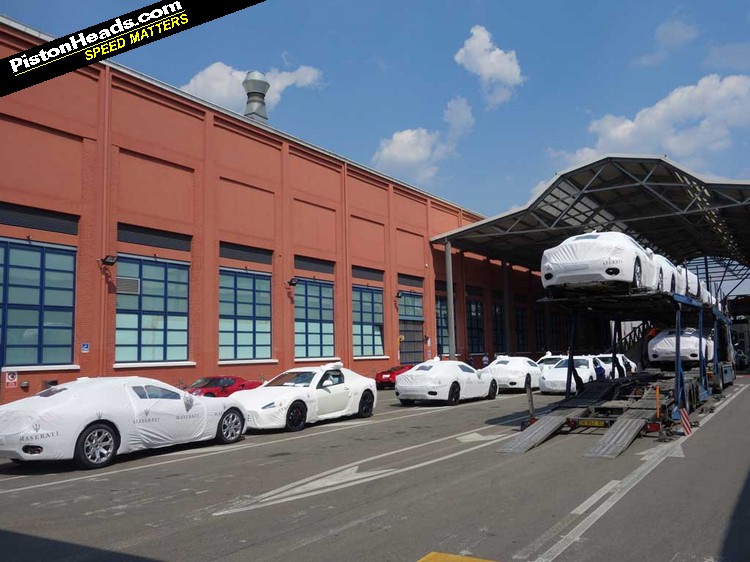
GranTurismo will, literally, be last of the line
Makers like Ferrari, Lamborghini, Alfa Romeo have a long and rich history with the north Italian carrozzerie, or coachbuilders, with names like Vignale, Pininfarina and Bertone for ever associated with some of the most beautiful cars in the world. But no maker has a stronger connection with them than Maserati.
Getting a man in
The roll-call of coachbuilders who designed and often built the bodies for cars bearing the Trident badge is long. We saw it in their signatures prominent on cars within the stunning museum display at the Museo Enzo Ferrari recently. The Pininfarina 'F' (oddly close to the Facebook F) the Touring Superleggera wings, the futuristic 'by Michelotti' flourish. Maserati courted them all, and fittingly the brand is the last in the region to hang onto the old methods.
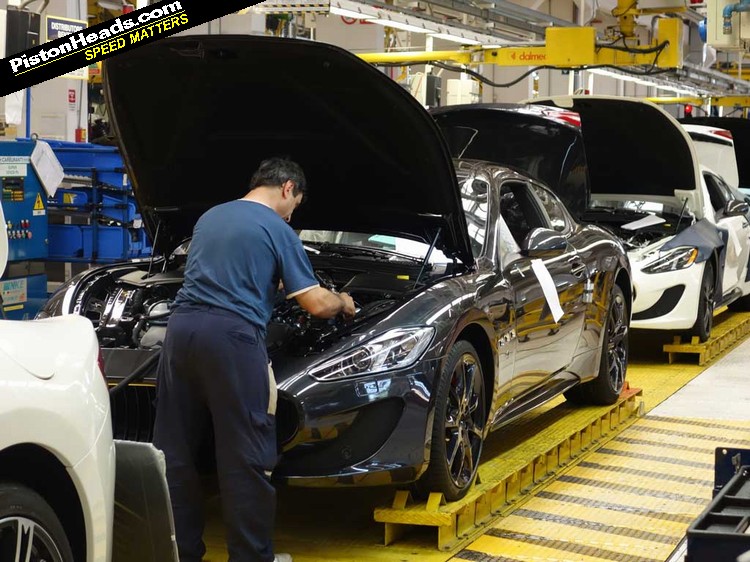
There's only one robot in the whole place
As in the old days, those gorgeous GranTurismo and GranCabrio bodies are shipped in from Turin, but not before taking a 10-mile detour via Maranello to the Ferrari factory where they get painted. Ferrari of course also supplies the V8 engines, something that the engineering-savvy Maserati brothers would be shocked by, but they would have been entirely comfortable with the bodies arriving by lorry.
Clean sheet metal
"Up to a few models ago Maserati didn't have a coachbuilding factory," Lorenzo Ramaciotti, head of global design for Fiat and the man responsible for the stunning Alfieri concept, tells PistonHeads. The coachbuilders started out life as highly skilled panel beaters and Modena was famous for them. Local race addicts like the Maserati brothers, Enzo Ferrari and Vittorio Stanguellini turned to them to create slippery, lightweight racecar bodies from the 30s onward. At the forefront was Touring Superleggera, whose complex tube frames overlaid with thin alloy panels became the standard for racing bodies.
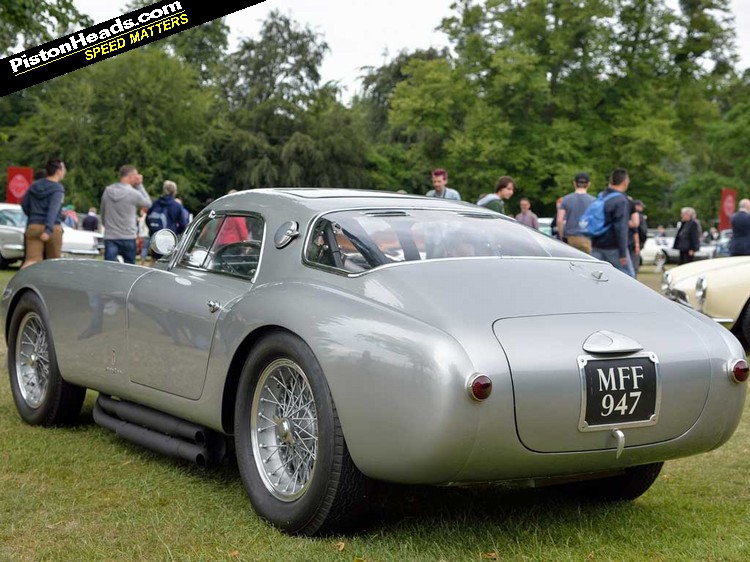
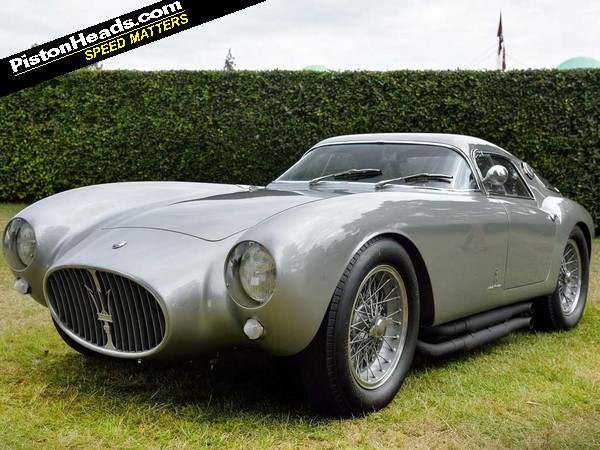
Pininfarina A6 GCS typical of early collaborations
Turin, a couple hundred miles northeast of Modena, became the coachbuilder/designers heartland. The city was home to the likes of Vignale, Bertone, Italdesign, Pininfarina and Ghia and they expanded their customer base far beyond the Modena racers. In fact some turned car producers in their own right - fastening their own elegantly turned coupe or cabrio bodies onto a more prosaic chassis and drivetrain combination supplied by manufacturers not just in Italy, but all over the globe.
Local knowledge
The world swooned over cars like the Pininfarina-bodied Maserati A6 GCS/53 Berlinetta, but the real money was coming from making more accessible cars like the 1200-1600 Coupe and Cabriolet for Fiat in the late 50s, early 60s, a model line that Pininfarina made in their thousands. This continued until quite recently with cars like the Ford Focus CC, Alfa Romeo Brera, and Volvo C70 made by the company.
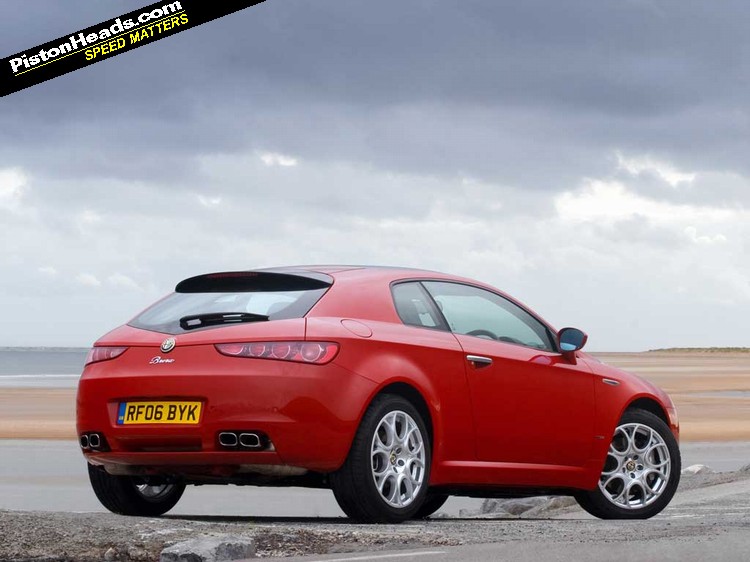
Pininfarina/Alfa link typical of mainstream efforts
Earlier this year Bertone entered bankruptcy proceedings while the courts looked for a buyer. Judging by the dead phone numbers on the firm's website, that hasn't gone well.
Pininfarina meanwhile is now largely owned by its creditors and the most recent company report declared a financial loss for the design house for 2013. A body blow came last year when Ferrari chairman Luca di Montezemolo revealed that the LaFerrari wasn't designed by Pininfarina, only the second production car from the firm not to be since 1951 (the Dino 308 GT4 was designed and built by Bertone).
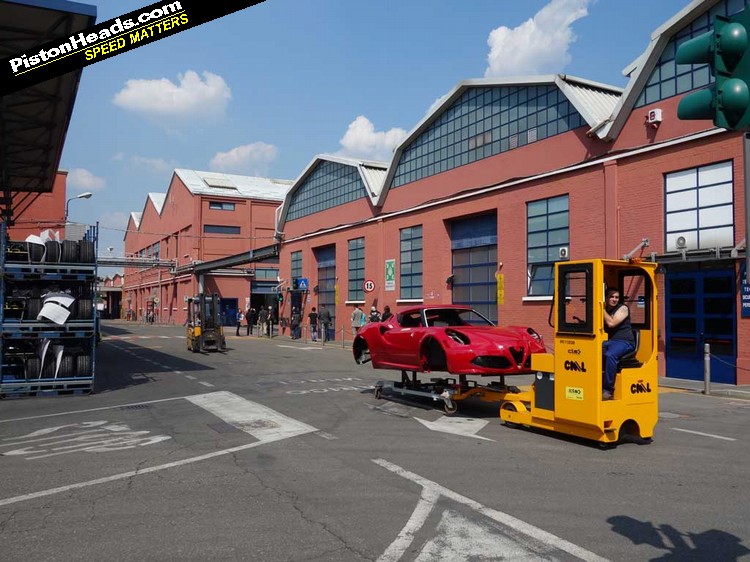
4C bodies are finished at the Maser factory
The reality is that the car makers can now do what they couldn't before: cost-effectively build low-volume on flexible production lines. "Having a cabrio or a special version built at a carrozzeria is an expensive exercise for OEMs, due to lack of scale economies, fixed costs, mark-up the coach builder etc," Matteo Fini, principle analyst at IHS Automotive, told PH.
Now even the luxury and sports brands like Maserati are making entire cars in-house. "Today the Quattroporte and Ghibli come out of a factory that has been vertically integrated from the stamped metal to the assembled vehicle at the completed end," says Ramaciotti. Less romantic for sure, but more precise and more cost effective.
He says it's "not decided" where the Alfieri 2+2 will be built from 2016, but given it's based on Ghibli parts it looks a dead cert to come out of the same Turin plant, rather than fill the space of the Modena factory left by the exit of the GranTurismo.

Newly ambitious Maserati last to ditch old ways
The days of highly skilled craftsmen building bodies elsewhere is not entirely dead. In the same Modena plant but on a separate line we watched the Alfa Romeo 4C being assembled around the carbon fibre monocoque that starts out life in Nottingham (of all places) before being baked in southern Italy and being shipped up. Which is as expensive it as it sounds.
Life has definitely moved on from when Maserati's Modena factory was first built, as Giuseppe di Coste, product manager for the GranTurismo and our tour guide round the factory, laments. "This place was in the countryside in 1937 - now it's in the middle of town. It's very difficult to stay here."
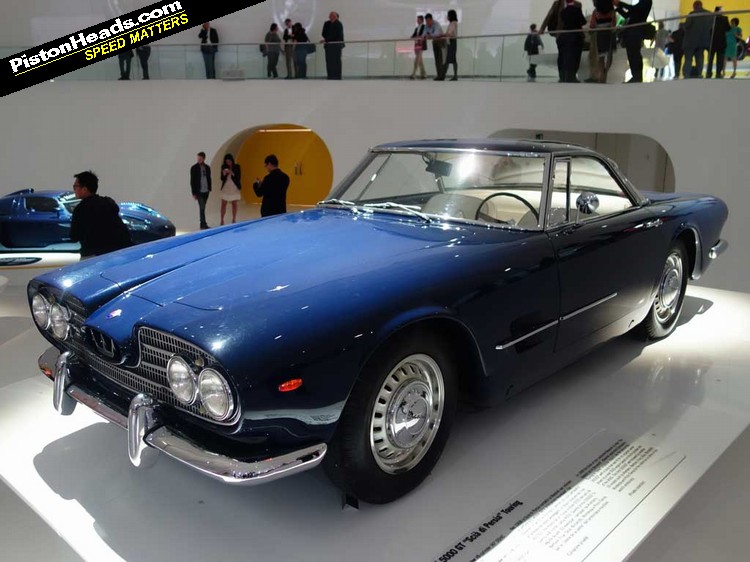 |
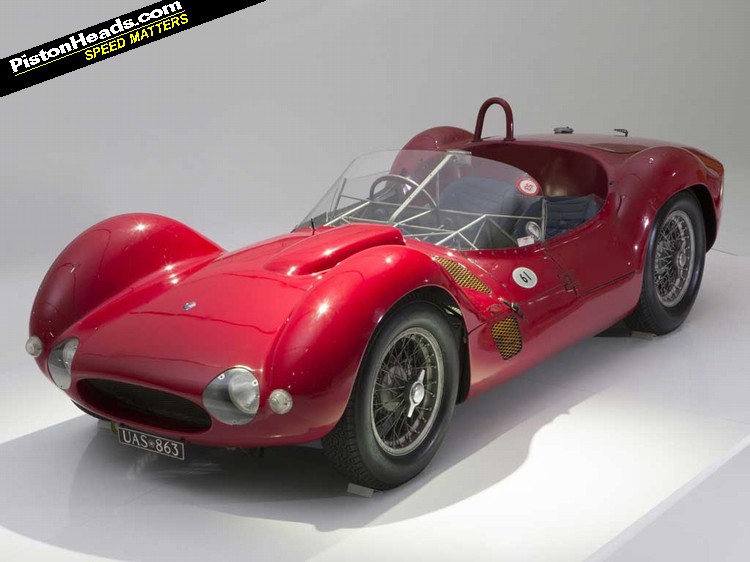 |


I didn't get that Disco Volante at all, when Clarkson was drooling all over it. And I suppose that's the issue, isn't it? No room in this world for low-volume specials that induce love/hate views from the buying public. If you can't sell 5,000 of them, there's no money in it.
What makes the 60s Ferraris, Alfas and Maseratis just so beautiful is the 'dainty' design. They are small cars with very fine details that follow from the roofline right to the bottom of the bumper. The incorporation of ghastly bumpers has removed these nuances and wrecked the two most important parts of a car's style. We will never see such beautiful vehicles again.
The F-type is widely hailed as the best looking car of recent years - but has anyone noticed the size of it? It's bloody enormous and that completely ruins it for me.
Best article on PH for many months now. Nice to see it's been properly subbed as well. Keep up the good work.
It doesn't surprise me that the likes of Bertone have gone bust. Looks are subjective but even the most hardened Bertone fan must surely admit that their designs of the last 20 years have been no where near as good or influential as the ones that came before it. They aren't alone either, I think Zagato are in a similar position to this.
Given the family have taken possession of the Bertone trademark, and the heritage that comes with it is intact, I doubt it is truly the end for them.
It doesn't surprise me that the likes of Bertone have gone bust. Looks are subjective but even the most hardened Bertone fan must surely admit that their designs of the last 20 years have been no where near as good or influential as the ones that came before it. They aren't alone either, I think Zagato are in a similar position to this.
Given the family have taken possession of the Bertone trademark, and the heritage that comes with it is intact, I doubt it is truly the end for them.
You say that the large plastic bumpers came before impact bumper/crumple zone safety legislation. What do you think caused the change from small metal bumpers to larger plastic ones, if not safety regs? I'm genuinely interested to know.
The main design houses were cutting edge back in the 60s and I'm sure those designs looked quite extreme back then, but I do agree that some of their more recent efforts haven't been quite as good.
But the advancement in Rapid prototypingn and CAD data make it even easier today to create a bespoke vehicle in a relatively short period of time. Also the showcars are now able to be far more useable running vehicles than they use to be.
So coachbuilding is not dead just in a renaissance, hence all the special vehicle operations that are springing up all over the place.
What makes the 60s Ferraris, Alfas and Maseratis just so beautiful is the 'dainty' design. They are small cars with very fine details that follow from the roofline right to the bottom of the bumper. The incorporation of ghastly bumpers has removed these nuances and wrecked the two most important parts of a car's style. We will never see such beautiful vehicles again.
The F-type is widely hailed as the best looking car of recent years - but has anyone noticed the size of it? It's bloody enormous and that completely ruins it for me.
Best article on PH for many months now. Nice to see it's been properly subbed as well. Keep up the good work.


Gassing Station | General Gassing | Top of Page | What's New | My Stuff