
Would you buy a digital Leica?
Discussion


Not that I can afford either, but was pondering this the other day.
I'd love to have a Leica someday but something about them makes me think they *should* be film.
Digital seems to transient somehow, with technology changing all the time and I'd feel a bit like buying a Leica is like buying a classic guitar or something. You'd want to keep it forever. Not like a cheap ( er!) modern body that's effectively easily replaceable as technology improves.
So film seems right, somehow.
On the other hand, it's a bit of a faff, and you almost certainly wouldn't use it as much as if you had a digital M9 about you all the time. So I many ways it would seem much smarter. But is a digital Leica better than any other digital body?
I dunno. Would utility trump the desirability?
Which would you go for?
I'd love to have a Leica someday but something about them makes me think they *should* be film.
Digital seems to transient somehow, with technology changing all the time and I'd feel a bit like buying a Leica is like buying a classic guitar or something. You'd want to keep it forever. Not like a cheap ( er!) modern body that's effectively easily replaceable as technology improves.
So film seems right, somehow.
On the other hand, it's a bit of a faff, and you almost certainly wouldn't use it as much as if you had a digital M9 about you all the time. So I many ways it would seem much smarter. But is a digital Leica better than any other digital body?
I dunno. Would utility trump the desirability?
Which would you go for?
If I had the cash spare I would in a heartbeat. I love shooting with a rangefinder and love the look and feel of a Leica M.
Thing is, if I had the spare cash for a digital Leica, I'd almost certainly have enough spare to get "cheap" M6 (or M3/M4) to use alongside it when I fancied shooting film. I agree with you that it feels more right.
Thing is, if I had the spare cash for a digital Leica, I'd almost certainly have enough spare to get "cheap" M6 (or M3/M4) to use alongside it when I fancied shooting film. I agree with you that it feels more right.
HereBeMonsters said:
I've got two.
Compact:

Bridge:

The D-Lux 5 is more than good enough to not need an SLR. I'm aware that they're probably both made in Japan, but they feel so much better quality than a Panasonic.
I know I'm being a snob here, but they are a world away from a proper Leica. Good little cameras (as are the Panasonics they are based on) but not really what we're talking about here.Compact:
Bridge:
The D-Lux 5 is more than good enough to not need an SLR. I'm aware that they're probably both made in Japan, but they feel so much better quality than a Panasonic.
Without going into a film vs digital debate I kind of hear what you are saying. eg An M3 from 1953 in 2003 was still similar to a 2003 M6TTL, and fully supported by the factory. Made it easier to justify their prices if you knew you'd get a lifetime of use. Leica were unique in this respect, and struggling financially around the turn of this century.
Whereas nowadays the M8 of 2008 is no longer supported by the factory, so if the screen/ sensor failed you'd have an expensive paperweight. The used prices reflect this. You can get a used M8 for similar money to an M6. ( circa £800?)
Lifecycles of electronic goods are inevitably shorter than their analogue counterparts. It's a fact of life. The M6 had more in common with a cuckoo clock than a Nikon F5 in terms of electronics.
Personally i've always seen the reason for using a Leica M to be their excellent lenses & compact form factor.
If you have no M lenses and are going to start from scratch, you'd really need to try one out and see if rangefinders are for you. If you develop & print your own B&W then a fil M would make an excellent choice.
If you've been using film M for years and have a few lenses, you'd be crazy not to try a digital M.
The factory have pledged support to the MM for 10 years, so while hardly the same as an M3 the savings you'll make in film/development costs should cover the initial outlay.
Whereas nowadays the M8 of 2008 is no longer supported by the factory, so if the screen/ sensor failed you'd have an expensive paperweight. The used prices reflect this. You can get a used M8 for similar money to an M6. ( circa £800?)
Lifecycles of electronic goods are inevitably shorter than their analogue counterparts. It's a fact of life. The M6 had more in common with a cuckoo clock than a Nikon F5 in terms of electronics.
Personally i've always seen the reason for using a Leica M to be their excellent lenses & compact form factor.
If you have no M lenses and are going to start from scratch, you'd really need to try one out and see if rangefinders are for you. If you develop & print your own B&W then a fil M would make an excellent choice.
If you've been using film M for years and have a few lenses, you'd be crazy not to try a digital M.
The factory have pledged support to the MM for 10 years, so while hardly the same as an M3 the savings you'll make in film/development costs should cover the initial outlay.
Disastrous said:
Wow! Did not know that:
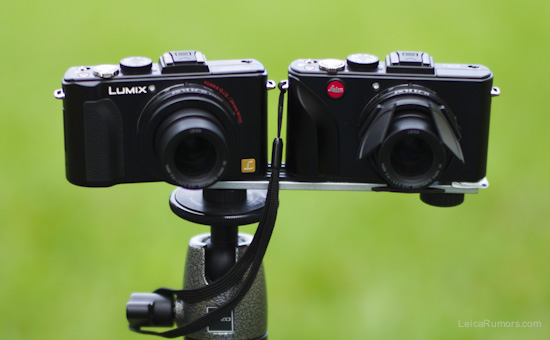
Do the Leica badged ones bring anything else to the table?
Different software and firmware, they get the pick of the crop of sensors, and the residuals are much better. Fundamentally the same (neither a patch on the Sony RX100 mind - I own both).Do the Leica badged ones bring anything else to the table?
Jollyclub said:
Whereas nowadays the M8 of 2008 is no longer supported by the factory, so if the screen/ sensor failed you'd have an expensive paperweight. The used prices reflect this. You can get a used M8 for similar money to an M6. ( circa £800?)
There is another factor in this - the M8 is the only M to have ever used a crop sensor which makes things more awkward with lens selection (especially if you already have a film M and lenses). Coupled with the IR/UV sensitivity issues it is very much less desirable than the later M9.It's also very indicative of the pace of technology at the moment. There is more difference between the 8 year old M8 and the latest digital M than there is between the 1954 M3 and the last M6 produced 45 years later.
Mr Will said:
Jollyclub said:
Whereas nowadays the M8 of 2008 is no longer supported by the factory, so if the screen/ sensor failed you'd have an expensive paperweight. The used prices reflect this. You can get a used M8 for similar money to an M6. ( circa £800?)
There is another factor in this - the M8 is the only M to have ever used a crop sensor which makes things more awkward with lens selection (especially if you already have a film M and lenses). Coupled with the IR/UV sensitivity issues it is very much less desirable than the later M9.It's also very indicative of the pace of technology at the moment. There is more difference between the 8 year old M8 and the latest digital M than there is between the 1954 M3 and the last M6 produced 45 years later.
The difference between the M9 and the current M (typ 240 with video & live view & EVF) is greater than the difference between the M3 & M6. Electronic goods have short life cycles. Photokina in September may even show the world the new updated M (M-P 240) so the M8-M9-M240mk1 will all keep getting cheaper.
The reason to own an M is so you can use the M lenses. People will soon start to see the bodies as consumables.
That makes sense, but there's something a bit sad about that somehow. I hugely see the appeal of coveting a beautiful Leica body that will last forever.
Also, surely they'd have to knock the price down a bit to compete with other bodies?
Supplemental question - if the bodies become consumable, why would you not just buy M lenses and adapters for your non-Leica body and save a fortune?
Also, surely they'd have to knock the price down a bit to compete with other bodies?
Supplemental question - if the bodies become consumable, why would you not just buy M lenses and adapters for your non-Leica body and save a fortune?
Disastrous said:
That makes sense, but there's something a bit sad about that somehow. I hugely see the appeal of coveting a beautiful Leica body that will last forever.
Also, surely they'd have to knock the price down a bit to compete with other bodies?
Supplemental question - if the bodies become consumable, why would you not just buy M lenses and adapters for your non-Leica body and save a fortune?
Even if the bodies do become consumable, that doesn't stop them from being a luxury item. People are quite happy to spend tens of thousands upgrading their german "luxury" rep-mobile every three years and compared to that a Leica every decade is pocket change.Also, surely they'd have to knock the price down a bit to compete with other bodies?
Supplemental question - if the bodies become consumable, why would you not just buy M lenses and adapters for your non-Leica body and save a fortune?
The question of adapting bodies is an interesting one. Until recently it hasn't really been an option due to the lack of full-frame mirrorless cameras to mount them on. Obviously Sony have changed this with the new A7 range, but it's still to early to tell what effect this will have.
Obsolete bodies becoming cheaper is the way of every other manufacturer. Nikon D4 circa £4k Used Nikon D3 £800.
Arguably it was the fact the M3-M7 bodies were so durable, that pushed Leica Camera Ag to the brink in the early 2000's.
If you're happy with film get an M-P and it'll outlast you.
Using M lenses on adapters is feasible with the current Fuji X-Pro , but some people argue the Fuji lens designed for the body is better than an M lens on an adapter on a body it wasn't designed for. You could also get an Epson RD1 and use M lenses.
But if it's a Leica itch you need to scratch, is an RD1 going to hit the spot?
Arguably it was the fact the M3-M7 bodies were so durable, that pushed Leica Camera Ag to the brink in the early 2000's.
If you're happy with film get an M-P and it'll outlast you.
Using M lenses on adapters is feasible with the current Fuji X-Pro , but some people argue the Fuji lens designed for the body is better than an M lens on an adapter on a body it wasn't designed for. You could also get an Epson RD1 and use M lenses.
But if it's a Leica itch you need to scratch, is an RD1 going to hit the spot?
Disastrous said:
Also, surely they'd have to knock the price down a bit to compete with other bodies?
They don't want to compete with other bodies though, they have their own niche, the wealthier enthusiast, who would rather spend more money on a Leica than on even a higher spec body from another manufacturer.It is like comparing a Nissan GTR with a Porsche 911. The GTR will go very very quickly and handle very well for a lot less than the 911. Does that mean people don't buy the 911? No, because there is a lot of cachet in the brand. Leicas are no different.
markmullen said:
Disastrous said:
Also, surely they'd have to knock the price down a bit to compete with other bodies?
They don't want to compete with other bodies though, they have their own niche, the wealthier enthusiast, who would rather spend more money on a Leica than on even a higher spec body from another manufacturer.It is like comparing a Nissan GTR with a Porsche 911. The GTR will go very very quickly and handle very well for a lot less than the 911. Does that mean people don't buy the 911? No, because there is a lot of cachet in the brand. Leicas are no different.
I totally get what you mean, but to me a large part of the cachet in the brand is down to its longevity. It's a treat, a luxury good but also somehow an investment. Equivalent to a nice watch I guess.
I'd use a Canon/Nikon for work (Seiko) but would treat myself to a Leica (Patek or whatever your taste is). If Leica made it so I had to upgrade the body every few years for thousands of quid, I think I'd be more inclined to buy a cheaper Canon body that fitted the lenses. And buy a film Leica as a treat.
You're probably right though, and they'd sell anyway.
GetCarter said:
Different software and firmware, they get the pick of the crop of sensors, and the residuals are much better. Fundamentally the same (neither a patch on the Sony RX100 mind - I own both).
This link is a couple of years old but absolutely worth a look, especially as they photos are really quite nice!Leica M9 plus a selection of lenses vs the mk1 RX100:
http://www.fredmiranda.com/forum/topic/1143342
Quite an eye opener to see how they compare come considering the price difference.
I really like Leica, but strangely the only one that interests me is the M Monochrom.
Edited by NinjaPower on Friday 8th August 00:37
NinjaPower said:
GetCarter said:
Different software and firmware, they get the pick of the crop of sensors, and the residuals are much better. Fundamentally the same (neither a patch on the Sony RX100 mind - I own both).
This link is a couple of years old but absolutely worth a look, especially as they photos are really quite nice!Leica M9 plus a selection of lenses vs the mk1 RX100:
http://www.fredmiranda.com/forum/topic/1143342
Quite an eye opener to see how they compare come considering the price difference.
I really like Leica, but strangely the only one that interests me is the M Monochrom.
To draw a car analogy I see a digital Leica as a bit like a Morgan Aero 8 vs the BMW M5 of the Nikon. The M5 undoubtedly wins on every measurable factor. Practicality, Speed, Handling - it wins them all and yet despite this, I think you'd get a lot more pleasure out of owning the Morgan (assuming you can live with the compromises!).
Gassing Station | Photography & Video | Top of Page | What's New | My Stuff