
Porsche 918 Spyder (not) recalled
Memo reveals truth behind headlines of apparent safety recall for faulty suspension components

This week the National Highway Traffic Safety Administration (NHTSA) in America issued what it calls a recall notice for defective rear axle control arms on the 918 Spyder.
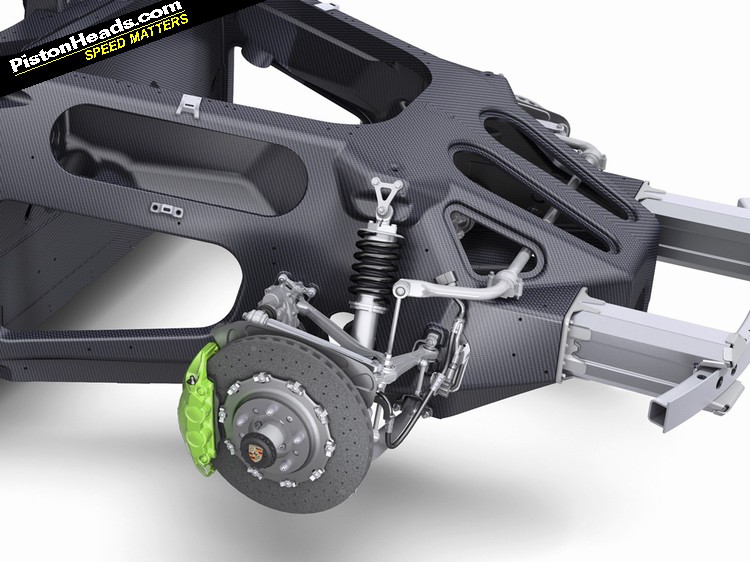
Faulty components found in rear suspension linkage
Thing is, it was Porsche who found the problem itself. In the note it submitted to the NHTSA (it's a requirement for manufacturers to keep them updated), Porsche stated, "Internal tests have shown that the rear axle longitudinal and transverse control arms from a certain production batch do not meet the required specifications and may have been installed on some vehicles."
Handily, it also submitted a timeline of events, viewable here and summed up as follows:
"June 26 2014: Failure of component during heavy-duty durability testing (extreme race conditions) on the Porsche AG race track and testing facility in Nardo, Italy.
"June 27 2014: Contact with supplier via telephone informing them of failure.
"July 18 2014: Decision for worldwide recall and stop sale notification followed by directcustomer telephone contact informing them not to operate vehicles on the race track."

Never any question of failures in normal road use
Naturally, PH spoke to a Porsche spokesperson to find out if any European or UK cars were affected (the answer was none) who told us, "The problem was spotted and resolved in production, with any vehicles in transit immediately remedied before delivery."
Yes, it could have been a safety issue, but the defect only reared its head under extreme testing conditions. Don't forget, the 918 relentlessly pounded around the Nordschleife for weeks - hammering kerbs and eventually setting that 6min 57sec lap record - without any real problems. There's procedure and then there's procedure. It seems here Porsche has been a victim of a mix of its own transparency and thoroughness, and US institutional legislation here.
A few now ex-Porsche customers might not take that view following singed backsides, but don't believe the hype. Porsche seems to have had it in hand all along.
[Sources: NHTSA]


Since when was the USA called "Stateside" all the time?
Sounds like a non-story really. Car breaks under hard testing on track... surely if you give any car enough grief it'll break.
Great to know Porsche actually do this testing and tell you, and then rectify it. Just use any normal road car and they break parts like this eventually just doing normal road work!
Dave
The components were tested and failed because they did not meet the spec laid down by Porsche. The spec is designed to ensure the car is capable. Presumably some 918 owners will take their cars to the track on several or perhaps many occasions, thus there is a risk that this component would fail now or in the future. It is afterall a very high performence sports car costing £650,000.
The fact that they have identified the cars affected is what should or would be expected, especially when the level of production is 918. This fault affects @0.5% of total production. If this was on the the Ford Focus 2013 model, 18,000 cars would have to be recalled.
The fact that the US authorities have issued this is likely to cover their arses. The cars will still need to be recalled unless unsold.

So when Porsche then discovered a part wasn't to spec after it failed in arduous conditions, and realised a batch wasn't correct, they are now rectifying it.
NHTSA simply repeat information to owners so they know to go get their car fixed by the manufacturer?
Great story if so.
It proves Porsche do lots of testing, and pro-actively fix customer cars.
It also shows the NHTSA works too which is no bad thing if they do the same for manufacturers who are less forthcoming about car faults to their owners.


Gassing Station | General Gassing | Top of Page | What's New | My Stuff