
Motorsport On Monday: 3/11/2014
The final round of the WRC beckons; Sean turns his gaze towards the Welsh valleys in anticipation
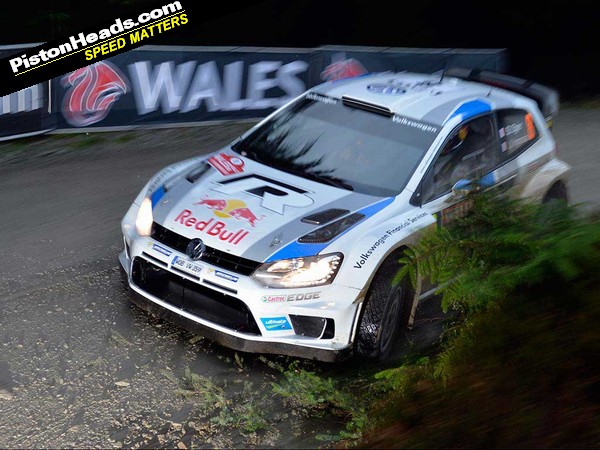
Trudging through an icy-cold forest, backfires piercing the still air like small arms fire, the moment you first see a rally car – whether it’s a proper WRC car complete with clever diffs and dampers that cost more than the average family motor, a WRC-lite R5 contender or an R1 proddy racer, little more than a road car with number boards – the squawking from organisers and the media over TV rights, rally formats and shaky manufacturer involvement doesn’t matter.
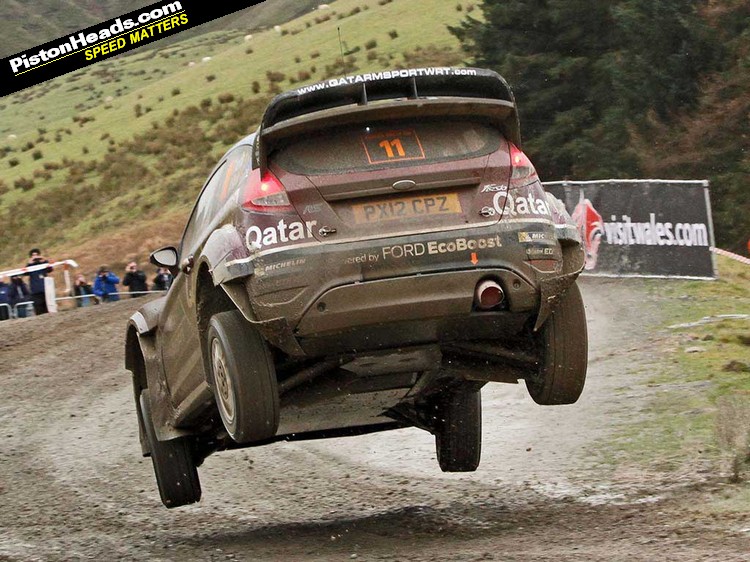
In Wales it's not just the mud that flies
Of course, TV matters – as does manufacturer involvement – because it brings money, and like in all high-profile motorsport series, money matters. Cash brings sustainability . Sustainability brings longevity to the sport.
Two to tango
But I’m not here to talk about the accountancy side of motorsport – or the political side of how things get thrashed out. Whatever the stage format, it’s nice to shut out the constant agonising and just watch some cars being flogged as hard as their crews dare.
Crews is the important word, too, because nowhere else in motorsport do you really get two people in the car at the same time.
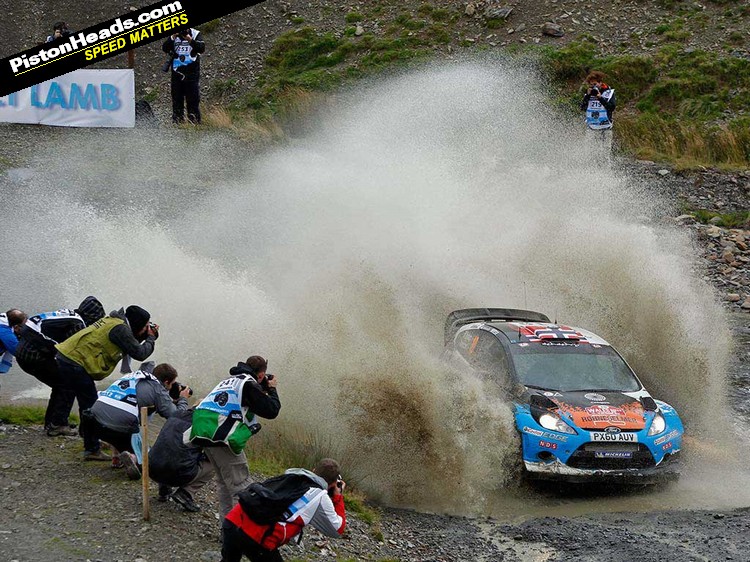
A different world from F1's manicured hospitality
While it takes a well-drilled crew of two to extract pace from a rally car, it’s ultimately the driver that we’ll look to watch at this year’s Rally GB . I’ve talked about the phenomenon that is Sebastien Loeb before in this column and that rally drivers could be the most skilled and versatile across all forms of motorsport.
A quick look at the Race of Champions victory roster seems to confirm that, with eight out of the last 14 winners liking a bit of loose.
Landmark moment
This is why people will flock to stages like Sweet Lamb and Brenig in a little over a week’s time, and they’ll be treated to a bumper entry list, too. For the first time in the 15 years it’s been held in Wales, Rally GB has a full field of 160 cars to offer fans.
There’ll be the usual all-singing all-dancing WRC entries, but for me, one of the great attractions will be the slightly more curio vehicles.
Jimmy McRae is on the list, bringing one of the most famous rallying names ever back to the sport. He’ll be in a Vauxhall Firenza and no doubt very sideways. Steve Perez’s Lancia Stratos will light up the natural amphitheatre at Sweet Lamb with sheet flame, Stuart Larbey’s Metro 6R4 will redefine the word fear, while a barking BDA chorus from the legion of Escorts entered should provide a suitably retro soundtrack. Richard Tuthill’s gorgeous 997 GT3 will be howling its way around Wales, too.
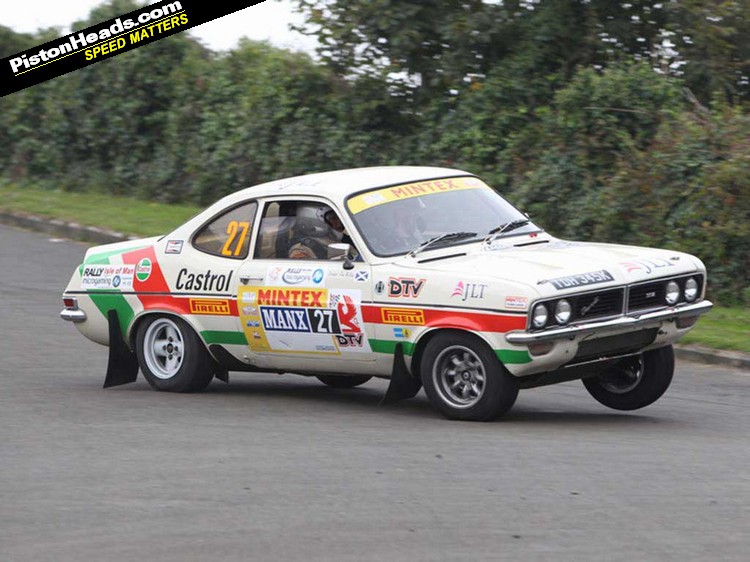
Jimmy McRae's Firenza will add to the spectacle
Earlier this year I was lucky enough to ride shotgun on a snowy forest stage with none other than Stig Blomqvist in his Audi S1 Sport Quattro. His opinion on rallying today is that it’s a doddle compared to the Group B era – stages are comparatively short in distance and number, and are re-run. “Back then you had to do it totally blind, so you needed very good pace notes,” he says. I refer you to my aforementioned point.
But while Stig lived and raced through a golden age, we should celebrate what we’ve got today. It just so happens that gearbox, differential and suspension technology has evolved at such a rate that with around 300hp a WRC car today can muller a 500hp-plus Group B car from 30 years ago. Tyre technology has helped, too, but that’s progress for you.
Multi-faceted
The core of the sport is still there, though. It’s the variables in rallying that I like so much, which is why I think it’s such a compelling sport to watch – apart from the skill, bravery, technology etc.
No other form of motorsport races on a mix of surfaces in such varied conditions at completely different times of the day. Things have got in the way of the fundamental aspects of rallying over recent times: proposed format changes for the power stage and even the future of the sport have been brought into question this year – champion Ogier admitting the latter actually caused a big loss of motivation for him this year.
But we shouldn’t lose sight of what rallying is about and why that blend of attraction, from driver skill to cars we can all relate to – and even driving on surfaces that we can’t relate to – makes it so addictive. Rally GB is set to be a fitting end to what’s actually been quite a tight year, despite another Ogier win.
Want to enjoy a VIP Wales Rally GB experience? See our competition here!


Well, a decent entry is at least a good start as is the greater variety of cars - albeit running further down the field. That was always the great attraction of the old RAC rallies - the fact that the amateur rally driver (in virtually any car providing it was homologated) was able to compete in the same rally as twenty or so of the world's greatest rallying names and compare their stage times against those of the aforementioned best. This continually gave the RAC Rally far and away the best competitor entry list of any rally in the world (including the Monte) throughout the 1960's, 70's, 80's and 90's.
A major percentage of the challenge of those old events was the endurance element which faced the cars and the crews (and that included service crews), what with 36-hour non-stop 'loops' etc plus a welter of mega-long special stages of between 20 and 30 miles in length - not just the odd long stage thrown in as per today.
Sadly, today's Health & Safety culture mitigates against the endurance element on the grounds of 'tiredness can kill' etc and yet, in 30-plus years of Motoring News rally report reading, I've never encountered coverage of a rally crew falling asleep on the public highway mid-event and causing an accident (and, let's face it, it was never going to happen on the stages themselves either, was it). It's amazing how adrenalin overpowers tiredness to keep you going, isn't it!
Still, maybe the current crop of rally organisers are finally waking up to what made rallying so great. It kind of reminds me of how Cubby Broccoli always said to his daughter Barbara, once she'd taken over the reins of the family's Bond franchise; "If you ever get creatively stuck or lost then go back to the original Fleming novels and pick up the thread again". Maybe the WRC ought to do the same and go back to the old rallying templates. What goes around, comes around, so to speak...
Repeated stages around a central service park does not make a world class event; and having 10-13 of these type of events throughout the year is were WRC is.
However, get out and watch, and enjoy. No other Motorsport allow such close access.
Gassing Station | General Gassing | Top of Page | What's New | My Stuff