
Crack on the valve stem seal guide, what now!?
Discussion


I have been changing the valve stem seals on my CLK 270 CDI today, after taking off all the valve stems seals I realised one was cracked! I've put one of the old stem seals back on to see if it would seal the gap which it does by a few millimetres, however I think under pressure it will start to let oil in. So what do I do now? - Alex
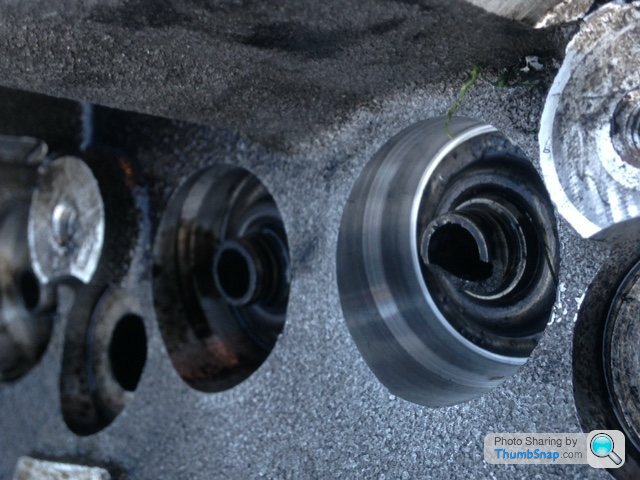
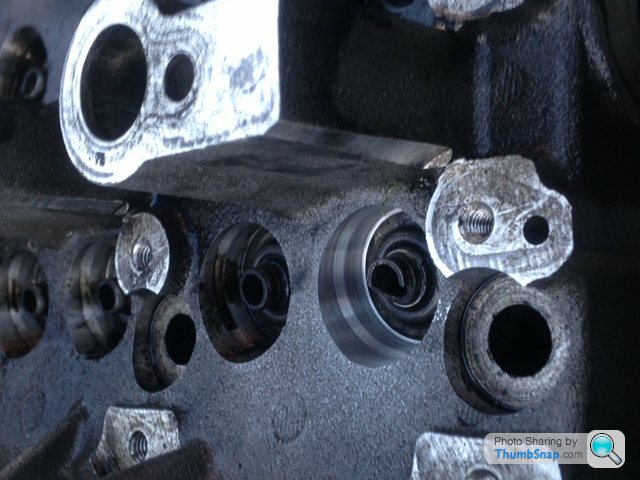
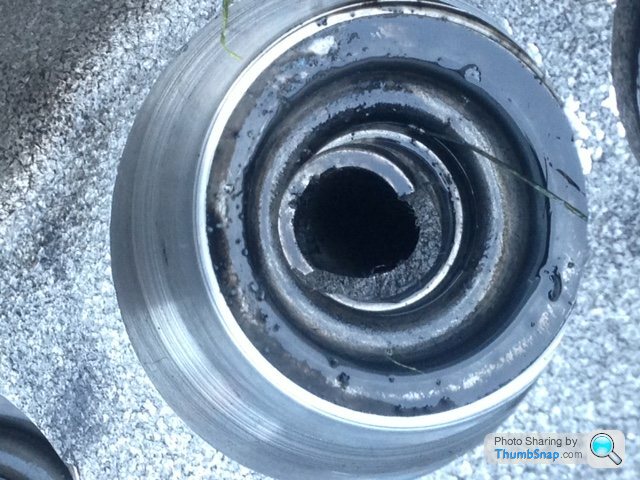
Looks like its new guide time... As its an alloy head the guided will be cast iron/steel so they should drift out. Replacement can be tricky if they are a very tight interference fit. you will need a mandrel to press (preferably) or drift the new guide into place. I usually make a stepped mandrel so that the new guide can be press into place with the step acting as a stop to get the correct depth. if you do that you will need one to knock the old guide out, and another to put the new one in.
once the old guide is out, make sure you clean the hole in the head out and remove ANY burr from the top of the hole where you will be drifting the new guide in. make sure the guide itself is also burr free (they are usually tapered, but sometimes there is a step, in which case I tend to gently relive the edge to make it slide in easier. I also use a machinery adhesive for two reasons. Firstly, its an insurance that its going to help retain it, but more importantly for me, it acts as a lubricant until it goes off (its an Anaerobic) and I find they go in easier.
By nature of the material they are very brittle, and easily cracked. If I am building a specialist engine I tend to use guides made out of Calsibro, which is a copper alloy, these are much easier to put in, and last forever. You have to buy them pre made though as Calsibro is simply not machinable by normal methods.
Some people say that you should pre heat the head, and chill the guide, but in my experience, it make bugger all difference on such small components, and tends to make you try and rush the job.
once the old guide is out, make sure you clean the hole in the head out and remove ANY burr from the top of the hole where you will be drifting the new guide in. make sure the guide itself is also burr free (they are usually tapered, but sometimes there is a step, in which case I tend to gently relive the edge to make it slide in easier. I also use a machinery adhesive for two reasons. Firstly, its an insurance that its going to help retain it, but more importantly for me, it acts as a lubricant until it goes off (its an Anaerobic) and I find they go in easier.
By nature of the material they are very brittle, and easily cracked. If I am building a specialist engine I tend to use guides made out of Calsibro, which is a copper alloy, these are much easier to put in, and last forever. You have to buy them pre made though as Calsibro is simply not machinable by normal methods.
Some people say that you should pre heat the head, and chill the guide, but in my experience, it make bugger all difference on such small components, and tends to make you try and rush the job.
Great, thank you for the detailed information! I've never had to deal with the valve guides before so had no idea! I just need to find a local engineering firm to press it out now. When I come to buy a new Guide pin, are they specific to cylinder head I have? so for instance will I have to go to Mercedes or an after market company to buy a guide pin for a 2.7 cdi engine? Or can I find a universal guide pin that is the right length and inner/outer diameter?
AlexTatar said:
Great, thank you for the detailed information! I've never had to deal with the valve guides before so had no idea! I just need to find a local engineering firm to press it out now. When I come to buy a new Guide pin, are they specific to cylinder head I have? so for instance will I have to go to Mercedes or an after market company to buy a guide pin for a 2.7 cdi engine? Or can I find a universal guide pin that is the right length and inner/outer diameter?
Just checked with my supplier... he does not stock guides for this engine so it may be best to go to Mercedes for the part...As for fitting it, if it were me, I would drift it out with a suitable punch, and drift a new one in with a suitable mandrel. The problem with pressing them in is that unless they are 90 degrees to the head face (sorry, I don't know that engine...) its very difficult to mount the head on the press... it has to be bang on the right angle, or you get into serious problems. Knocking them in and out is actually not that difficult with a 2LB hammer!
Here is the mandrel I use to replace Ford Cross flow guides, which I do press into place as they are easy...

Also, the stem seals are actually quite delicate... easy to damage the lip as they go over the collet groves. Quality seals now come with some neat little protectors to prevent this. Not essential, but go easy as you push the new seal over the valve, and use some oil!

If you don't adhere to proper engineering principles you could crack the head. DO NOT hit it with a drift cold. You need to heat the head in an oven and then press the old guide out. To fit the new one heat the head again and put the guide in the freezer. It will press into place with the minimum of effort without damaging anything.
You will then need to cut the valve seat to ensure it is concentric with the new guide.
If you are not absolutely confident about this get an engine shop to fit it for you.
J
You will then need to cut the valve seat to ensure it is concentric with the new guide.
If you are not absolutely confident about this get an engine shop to fit it for you.
J
jith said:
If you don't adhere to proper engineering principles you could crack the head. DO NOT hit it with a drift cold. You need to heat the head in an oven and then press the old guide out. To fit the new one heat the head again and put the guide in the freezer. It will press into place with the minimum of effort without damaging anything.
You will then need to cut the valve seat to ensure it is concentric with the new guide.
If you are not absolutely confident about this get an engine shop to fit it for you.
J
I guess we all have our opinions on these things. Sometimes it comes down to theory and application Vs practicality. If you calculate the Linear temperature expansion (or contraction in the case of the guide) using the coefficients for each of the materials, you will find that given the small diameter of the guide and the hole in the head, the interference change is minute. You will then need to cut the valve seat to ensure it is concentric with the new guide.
If you are not absolutely confident about this get an engine shop to fit it for you.
J
In 45 years of knocking guides in and out of heads I have never had a head crack... I guess there is always a first time though :-)
Gassing Station | Mercedes | Top of Page | What's New | My Stuff