
Polish and Paint, reaction ?
Discussion


Can one of our resident experts confirm my fears that the effect in the attached photo is a reaction between paint and polish?.
I have resprayed a boot lid for my Car, filled it to take out undulations in the panel, then primed it with high build acrylic and then top coated with cellulose, completing it with a good polish using autoglym super resin polish. The over all finish was Ok (ish). But then I damaged an area and had to take it back to metal, fill it, sand it back and prime it. When i did this I am getting this horrible cracking of the primer as it oversprays the top coat. I suspect it's a reaction with the polish, but I just cannot get rid of it, no matter ho much I sand and clean. I've used Panel wipe, Cellulose thinners, hard graft...... it just keeps coming back.
My big worry now is will it keep doing this with the top coat too?. I intend to repaint the whole boot lid again after sanding it back, but if I get this reaction everywhere it will be disaster.
How can I get get rid of all the polish?, or am I barking up the wrong tree?.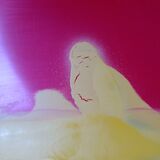
I have resprayed a boot lid for my Car, filled it to take out undulations in the panel, then primed it with high build acrylic and then top coated with cellulose, completing it with a good polish using autoglym super resin polish. The over all finish was Ok (ish). But then I damaged an area and had to take it back to metal, fill it, sand it back and prime it. When i did this I am getting this horrible cracking of the primer as it oversprays the top coat. I suspect it's a reaction with the polish, but I just cannot get rid of it, no matter ho much I sand and clean. I've used Panel wipe, Cellulose thinners, hard graft...... it just keeps coming back.
My big worry now is will it keep doing this with the top coat too?. I intend to repaint the whole boot lid again after sanding it back, but if I get this reaction everywhere it will be disaster.
How can I get get rid of all the polish?, or am I barking up the wrong tree?.
Usually a wax problem will result in- fish eyes - in the primer or top coat, however, this also looks like a wax problem. There is a product called Flo Rite, a little dropper bottle , a few drops of which helps the paint adhere to the panel.
Problems can also arise if the substrate is not properly dry . With air drying, using a combo of two pack primer and cellulose paint, there are two different drying rates, which could take months to cure enough not to cause a reaction in new paint if disturbed. In this case the disturbance will be restricted to the paint that has been rubbed through, ie directly around the repaired area. A possible soution to this is to -dry- spray the area with primer, using a lot of air from the gun and very little paint, leaving a finnish like sandpaper! Wash the whole panel with soapy water, panel wipe it, then wet flat with more soapy water, panel wipe, flo-rite in paint, and top coat.
You would have to weigh this technique with stripping the panel and starting again!
Good luck.
Problems can also arise if the substrate is not properly dry . With air drying, using a combo of two pack primer and cellulose paint, there are two different drying rates, which could take months to cure enough not to cause a reaction in new paint if disturbed. In this case the disturbance will be restricted to the paint that has been rubbed through, ie directly around the repaired area. A possible soution to this is to -dry- spray the area with primer, using a lot of air from the gun and very little paint, leaving a finnish like sandpaper! Wash the whole panel with soapy water, panel wipe it, then wet flat with more soapy water, panel wipe, flo-rite in paint, and top coat.
You would have to weigh this technique with stripping the panel and starting again!
Good luck.
If you've sanded, used panel wipe, and the celly thinners, I don't see that there will much polish left.
But the photo intrigues me. It looks so thick and gloopy, as if you've just held the aerosol on one spot until it runs off. It's so thick that the solvent evaporating from the solids is what is giving you the "reaction". Have you sprayed before?
But the photo intrigues me. It looks so thick and gloopy, as if you've just held the aerosol on one spot until it runs off. It's so thick that the solvent evaporating from the solids is what is giving you the "reaction". Have you sprayed before?
Hamish Finn said:
If you've sanded, used panel wipe, and the celly thinners, I don't see that there will much polish left.
But the photo intrigues me. It looks so thick and gloopy, as if you've just held the aerosol on one spot until it runs off. It's so thick that the solvent evaporating from the solids is what is giving you the "reaction". Have you sprayed before?
I'm not the worlds best I must admit..... This is actually as much a practice for a different car as a pukka job.But the photo intrigues me. It looks so thick and gloopy, as if you've just held the aerosol on one spot until it runs off. It's so thick that the solvent evaporating from the solids is what is giving you the "reaction". Have you sprayed before?
I suppose an excuse is that I was just touching in a small area of filler and bare metal, so couldn't use the aerosol like I should have. Lazily working on the principle I could sand off the gloopines. I hadn't realised that the solvent and solids would separate like that.
If your diagnosis is correct, then it's not really an issue as I have sanded the problems off, it's just they are recurring on the prime every time I try again. I wouldn't do the top coat like that anyway, I would be doing the whole panel, so would use a better technique, hopefully the problem wouldn't occur?.
Hamish Finn said:
If you've sanded, used panel wipe, and the celly thinners, I don't see that there will much polish left.
But the photo intrigues me. It looks so thick and gloopy, as if you've just held the aerosol on one spot until it runs off. It's so thick that the solvent evaporating from the solids is what is giving you the "reaction". Have you sprayed before?
I'm not the worlds best I must admit..... This is actually as much a practice for a different car as a pukka job.But the photo intrigues me. It looks so thick and gloopy, as if you've just held the aerosol on one spot until it runs off. It's so thick that the solvent evaporating from the solids is what is giving you the "reaction". Have you sprayed before?
I suppose an excuse is that I was just touching in a small area of filler and bare metal, so couldn't use the aerosol like I should have. Lazily working on the principle I could sand off the gloopines. I hadn't realised that the solvent and solids would separate like that.
If your diagnosis is correct, then it's not really an issue as I have sanded the problems off, it's just they are recurring on the prime every time I try again. I wouldn't do the top coat like that anyway, I would be doing the whole panel, so would use a better technique, hopefully the problem wouldn't occur?.
I suggested using a dry spray technique , assuming you had a gun, however, this is achievable with a rattle can, just keep the can about a foot away and just ghost the primer on leaving plenty of time between coats to dry, use plenty of heat. It is the build up of solvents that cause the problem.
You cannot use Flo Rite in a rattle can.
You cannot use Flo Rite in a rattle can.
velocemitch said:
so couldn't use the aerosol like I should have. Lazily working on the principle I could sand off the gloopines.
Don't really understand this; you've already successfully repaired, filled, profiled, primed, painted and finished the panel, so presumably you have some experience of a spraygun or aerosol can?Then you do this "repair" and just hold the aerosol can of primer still and splodge on primer until it all runs off? And you say it keeps doing this? I'm not surprised.
Do as Dryden suggests, very dry, quick passes of the aerosol can, not letting it get wet enough for the solvent to react. After ten or so coats, you should have a coating thick enough to wet sand and then put top coat on.
When you put the top coat on, don't just hold the can in one place until all the paint runs off....
Yes your barking up the rong tree,its got nothing to do with any polish.as you can see it srinkage due to the primer not adhering to the paint under neath.cellulose paint never goes hard so if your putting fresh paint on to new paint this will happen.take of all that cellulose rubbish and use only 2 pack paints from start to finish end of problem.
Have a word with a bodyshop. I'm not too sure which way round is the problem, but I think there is a good chance you've got a paint reaction. Either the putting of acrylic on top of cellulose, or the reverse is a major no no.
There is nothing wrong with cellulose paint but it's a very different beast to acrylic.
There is nothing wrong with cellulose paint but it's a very different beast to acrylic.


Gassing Station | Classic Cars and Yesterday's Heroes | Top of Page | What's New | My Stuff