
Sake or Shochu? Can you read Japanese?
Discussion


Can anyone here read Japanese? I'm having a bit of a tidy up of the depths of my booze cupboard, and among the weird and not-so-wonderful things hiding there (lychee liqueur anyone?) there is a bottle of shochu a friend brought me from Japan, and this, which I am not sure what it is or how it came to me.


There's a bit of sediment, which makes me think it might be sake, but it does mention 50% on the label, which is too strong for sake. However that is also pretty strong for shochu too I think, so it may not be referring to the ABV of the contents.
It's not open yet and I'd like to know what is before doing so, but if no luck finding out I'll get stuck in and let you know
There's a bit of sediment, which makes me think it might be sake, but it does mention 50% on the label, which is too strong for sake. However that is also pretty strong for shochu too I think, so it may not be referring to the ABV of the contents.
It's not open yet and I'd like to know what is before doing so, but if no luck finding out I'll get stuck in and let you know
Still not sure what it is, but OCR > JP > English translation gives:
Sakeroku Shuzo Co., Ltd.
http://www.sakaroku-syuzo.co.jp/ which has the same telephone number as your bottle.
It also says 'Gin'
Sakeroku Shuzo Co., Ltd.
http://www.sakaroku-syuzo.co.jp/ which has the same telephone number as your bottle.
It also says 'Gin'
Edited by dbryder on Wednesday 15th July 12:17
dbryder said:
Still not sure what it is, but OCR > JP > English translation gives:
Sakeroku Shuzo Co., Ltd.
http://www.sakaroku-syuzo.co.jp/ which has the same telephone number as your bottle.
It also says 'Gin'
Excellent, thank you! That link says Sakaroku Sake Brewing Co. at the bottom of the page, and Google translate suggests they are indeed sake makers, so I think that must be it. The 'gin' is confusing however. A tasting may be in order later.Sakeroku Shuzo Co., Ltd.
http://www.sakaroku-syuzo.co.jp/ which has the same telephone number as your bottle.
It also says 'Gin'
Edited by dbryder on Wednesday 15th July 12:17
I was given some sake (I think) on one of my previous trips to Japan, 3 bottles in a nice presentation box, but all the writing in Japanese.
Eventually I managed to get the paper in the box translated - it was a guide to the local attractions on the bottles, so I still don't know what they are and if I need to drink them warmed up etc.
Eventually I managed to get the paper in the box translated - it was a guide to the local attractions on the bottles, so I still don't know what they are and if I need to drink them warmed up etc.
I'll try and remember to get my notes out. I suspect one of the 50% is the grind rate of the rice, making it a daiginjo (cheapest sake would have the outer 30% of the rice grain removed and show 70% on the bottle). The +5 means it's on the dryer side, which again matches a daiginjo - these can be slightly flowery (my prefernce).
Serving wise you should chill it like a white wine and serve it in the square boxes (masu - 180ml) or wine glasses.
Serving wise you should chill it like a white wine and serve it in the square boxes (masu - 180ml) or wine glasses.

dapprman said:
I'll try and remember to get my notes out. I suspect one of the 50% is the grind rate of the rice, making it a daiginjo (cheapest sake would have the outer 30% of the rice grain removed and show 70% on the bottle). The +5 means it's on the dryer side, which again matches a daiginjo - these can be slightly flowery (my prefernce).
Serving wise you should chill it like a white wine and serve it in the square boxes (masu - 180ml) or wine glasses.
Thanks, very interesting. I know very little about sake, though have a cheapo bottle in the cupboard for cooking with. Although the label says 1.8l, it is a just a normal 750ml bottle. I have no recollection how it came into my possession, so am not sure how old it is. Possibly left by a lodger or my ex, (making it 7-12 years old) or brought by a visitor more recently. It's unlikely to be less than 5 years old. There is some sediment.Serving wise you should chill it like a white wine and serve it in the square boxes (masu - 180ml) or wine glasses.
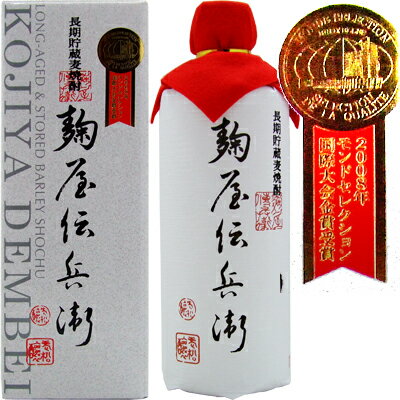
I also refound a bottle of shochu like this, which I knew was there and is quite nice. Makes a change from whisky sometimes
craigjm said:
Sake needs to be consumed within 12 months of release and 2 years max for premium stuff. Usually they will have a date on the bottle. If its 7-12 years old then it will be grim
That's worth knowing. We've got a bottle that was given to us last year, might be the time to open it then spitfire-ian said:
craigjm said:
Sake needs to be consumed within 12 months of release and 2 years max for premium stuff. Usually they will have a date on the bottle. If its 7-12 years old then it will be grim
That's worth knowing. We've got a bottle that was given to us last year, might be the time to open it then 
tog said:
Can anyone here read Japanese? I'm having a bit of a tidy up of the depths of my booze cupboard, and among the weird and not-so-wonderful things hiding there (lychee liqueur anyone?)
Nice and cold, that stuff is surprisingly addictive.....If its a cheap sake have it warm, if its half decent, nice and cold will be good. 50% is a bit odd though!
Gassing Station | Food, Drink & Restaurants | Top of Page | What's New | My Stuff