
New to photography - how long to master the basics?
Discussion


I know, how long is a piece of string etc.
I'm an avid drone flyer with a P3P, but I can't seem to take decent pictures on it as I just don't know what I am doing. I am also off travelling with the missus in two weeks around Thailand (our mini-moon / first holiday in 10 years without the kids) and I want to be able to take some decent pictures.
With the above in mind, I've just purchased a Nikon D3300 with an AF VR-P 18-55mm lens after reading reviews on the starter dSLRs.
I'm a complete novice, so what would you recommend I study up on as a priority in the next two weeks to get the most out of my travelling?
I plan to spend as much time as possible with the camera before I go, taking pictures in all sorts of settings and conditions and try my best to learn through trial and error.
Thanks chaps.
I'm an avid drone flyer with a P3P, but I can't seem to take decent pictures on it as I just don't know what I am doing. I am also off travelling with the missus in two weeks around Thailand (our mini-moon / first holiday in 10 years without the kids) and I want to be able to take some decent pictures.
With the above in mind, I've just purchased a Nikon D3300 with an AF VR-P 18-55mm lens after reading reviews on the starter dSLRs.
I'm a complete novice, so what would you recommend I study up on as a priority in the next two weeks to get the most out of my travelling?
I plan to spend as much time as possible with the camera before I go, taking pictures in all sorts of settings and conditions and try my best to learn through trial and error.
Thanks chaps.
A lifetime.
First thing to learn is what ISO, Aperture and Shutter speed do to your photos.
https://fstoppers.com/education/exposure-triangle-...
First thing to learn is what ISO, Aperture and Shutter speed do to your photos.
https://fstoppers.com/education/exposure-triangle-...
HorneyMX5 said:
A lifetime.
First thing to learn is what ISO, Aperture and Shutter speed do to your photos.
https://fstoppers.com/education/exposure-triangle-...
As above. I have the exact same camera biggest thing I did was to learn to shoot in manual in my opinion it's the best way to learn the relationship between ISO aperture and shutter speed. Probably taken me the best part of a year to understand it properly but once it all clicks life becomes a hit easier....First thing to learn is what ISO, Aperture and Shutter speed do to your photos.
https://fstoppers.com/education/exposure-triangle-...
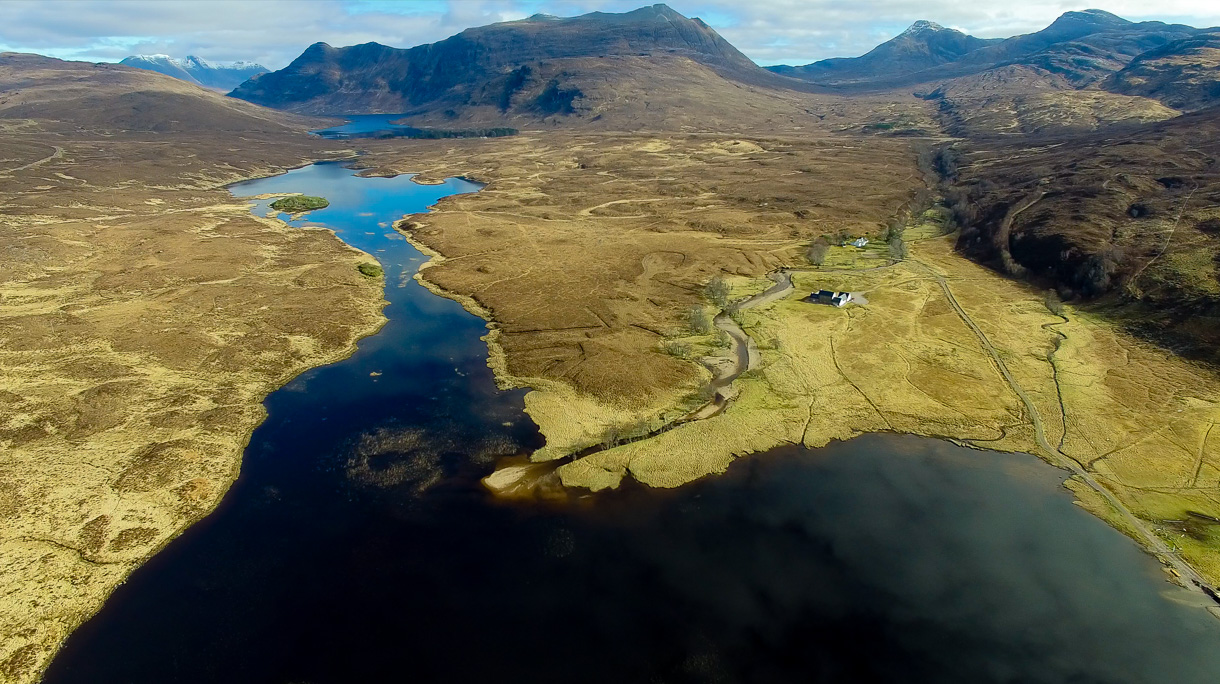
O/P - Regarding the P3P. I have one and the camera doesn't have as high a dynamic range as DSLRs, also it takes time for the brain in the camera to adjust when moving from dark to light scenes. This will often result in burnt out highlights (white skies!)
I assume you have some sort of editing software (elements, lightroom, etc?). If so, then when you are flying, try changing the 'Ev' so that not as much light is let into the camera - intentionally under exposing a little. (This is done in the camera menu of the DJI Go software - right hand side of the screen - set it to a minus number).
Then once downloaded to your computer you can bring back some of the under exposed area. It won't take long to work out how to do that in any half decent software.
Here's one of mine using said technique:
Of course pointing directly down will make life easier for the camera!
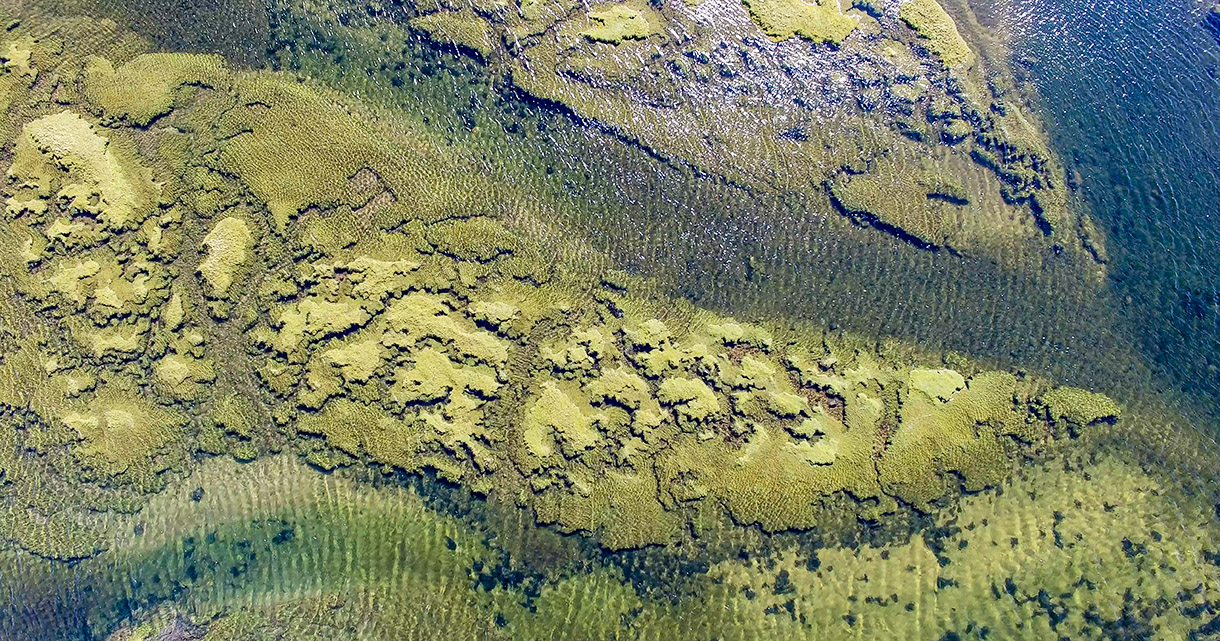
HTH
As for 'proper' cameras... what they said above /\
I assume you have some sort of editing software (elements, lightroom, etc?). If so, then when you are flying, try changing the 'Ev' so that not as much light is let into the camera - intentionally under exposing a little. (This is done in the camera menu of the DJI Go software - right hand side of the screen - set it to a minus number).
Then once downloaded to your computer you can bring back some of the under exposed area. It won't take long to work out how to do that in any half decent software.
Here's one of mine using said technique:
Of course pointing directly down will make life easier for the camera!
HTH
As for 'proper' cameras... what they said above /\
Edited by GetCarter on Monday 11th April 14:14
Beyond the technical operation of your camera, I'd also pay some attention to composition; what you are actually shooting as you want to avoid a perfectly exposed shot of a dull subject.
Have a scan through shots of the places you're going to see what's been captured and how to get inspiration.
For a lot of travel photography, I keep it set on auto (I use a D7200) as the best shots are often the ones you need to take quick and the auto settings on modern cameras is pretty good. Set the image to RAW and you can do a great deal later if anything isn't right or to your liking (sorry to the perfectionists! :-), so I'd learn post-production editing in LightRoom or similar using RAW. Just take plenty of Memory Cards or a few bigg'uns!
Have a scan through shots of the places you're going to see what's been captured and how to get inspiration.
For a lot of travel photography, I keep it set on auto (I use a D7200) as the best shots are often the ones you need to take quick and the auto settings on modern cameras is pretty good. Set the image to RAW and you can do a great deal later if anything isn't right or to your liking (sorry to the perfectionists! :-), so I'd learn post-production editing in LightRoom or similar using RAW. Just take plenty of Memory Cards or a few bigg'uns!
StevieBee said:
Beyond the technical operation of your camera, I'd also pay some attention to composition; what you are actually shooting as you want to avoid a perfectly exposed shot of a dull subject.
Have a scan through shots of the places you're going to see what's been captured and how to get inspiration.
For a lot of travel photography, I keep it set on auto (I use a D7200) as the best shots are often the ones you need to take quick and the auto settings on modern cameras is pretty good. Set the image to RAW and you can do a great deal later if anything isn't right or to your liking (sorry to the perfectionists! :-), so I'd learn post-production editing in LightRoom or similar using RAW. Just take plenty of Memory Cards or a few bigg'uns!
I agree with you about composition being the key element and what separates a great shot from an average shot, however, I have to say that for several years I relied on 'Auto' and the results were perfectly acceptable for me, until one fateful day I attended a wedding and took a few photos on the day, and was then emailed a few photos taken by the brother in law which totally eclipsed my average efforts and made me realise that there was considerable scope for improvements, most notably being switching the camera out of 'Auto' mode and selecting 'A' for aperture. Have a scan through shots of the places you're going to see what's been captured and how to get inspiration.
For a lot of travel photography, I keep it set on auto (I use a D7200) as the best shots are often the ones you need to take quick and the auto settings on modern cameras is pretty good. Set the image to RAW and you can do a great deal later if anything isn't right or to your liking (sorry to the perfectionists! :-), so I'd learn post-production editing in LightRoom or similar using RAW. Just take plenty of Memory Cards or a few bigg'uns!
The penny finally dropped as to what could be achieved, and now I realise why lenses with f1.8 or f2 are raved about, and why the 50mm or 85mm prime lenses are so popular. I was lazy with the AUTO mode, but by selecting 'A' I was able to fix the aperture at a low number such as f1.8 which allowed more light in and achieve that blurry background or Bokeh. Try it out and you might actually be pleased with the results.
As for memory cards, well they are so damn cheap nowadays that there is no reason to skimp, 32GB class 10 should take over 5000 photos, just don't go and buy a fake from fleabay. For what it costs, just go and buy one from the likes of PC World, or perhaps Amazon, just so long as it is stated it is supplied AND fulfilled by Amazon, and not a reseller.
Many users on here swear blind that it is better to invest in a good lens and certainly the prime lenses are relatively inexpensive to buy and can produce excellent results, though I do wonder where is the best place to buy used lenses rather than shelling out for brand new. I've heard of Wex Photographic and MPB Photographic who sell new and used cameras and lenses, but seem to recollect that several other photography sites have been mentioned that have a reputation for selling decent used kit, though can't remember their names!
Might also be worthwhile buying a second battery because there is nothing worse than being mid-shot miles from home when the camera shuts down abruptly with the low battery message... been there, done it!!!
rich888 said:
though I do wonder where is the best place to buy used lenses rather than shelling out for brand new. I've heard of Wex Photographic and MPB Photographic who sell new and used cameras and lenses, but seem to recollect that several other photography sites have been mentioned that have a reputation for selling decent used kit, though can't remember their names!
eBay works for me. My 70-200mm f2.8 came s/h from there and has done many weddings. Much other kit has been and gone that way.rich888 said:
Might also be worthwhile buying a second battery because there is nothing worse than being mid-shot miles from home when the camera shuts down abruptly with the low battery message... been there, done it!!!
Running out of power is a tog's biggest and most avoidable fail. I have done it once - on holiday fotunately - at the Calgary Stampede, armed only with a tiny Lumix compact because for once I couldn't face lugging the DSLR kit around all day in blazing sun! photography is a combination of light, timing, composition and creativity.
the mechanics are easy to learn but much harder to understand and apply to a situation.
So go find out about the exposure triangle, focus and depth of field.
Once you have an idea on that then start looking at photographs from a technical point of view.
And also an artistic pov. if its good why?
the mechanics are easy to learn but much harder to understand and apply to a situation.
So go find out about the exposure triangle, focus and depth of field.
Once you have an idea on that then start looking at photographs from a technical point of view.
And also an artistic pov. if its good why?
Kind of related - is there a reason that some choose to hide EXIF data on Flickr?
I'm in a similar boat to the OP - understand the mechanics of shutter, aperture, ISO and am trying to learn through experimentation, but it is frustrating to see a stunning photo on here or browsing Flickr but with no clues how it was taken.
I think it tends to be hidden for anything with a lot of editing done, but a lot of the best images look straight out of the camera (I appreciate this may not be the case) but still don't show it.
To those that don't display it - is it a conscious decision?
I'm in a similar boat to the OP - understand the mechanics of shutter, aperture, ISO and am trying to learn through experimentation, but it is frustrating to see a stunning photo on here or browsing Flickr but with no clues how it was taken.
I think it tends to be hidden for anything with a lot of editing done, but a lot of the best images look straight out of the camera (I appreciate this may not be the case) but still don't show it.
To those that don't display it - is it a conscious decision?
SWAT78 said:
Kind of related - is there a reason that some choose to hide EXIF data on Flickr?
I'm in a similar boat to the OP - understand the mechanics of shutter, aperture, ISO and am trying to learn through experimentation, but it is frustrating to see a stunning photo on here or browsing Flickr but with no clues how it was taken.
I think it tends to be hidden for anything with a lot of editing done, but a lot of the best images look straight out of the camera (I appreciate this may not be the case) but still don't show it.
To those that don't display it - is it a conscious decision?
Yeh, I'm not quite sure why people do this either, its one thing i find odd too...I'm in a similar boat to the OP - understand the mechanics of shutter, aperture, ISO and am trying to learn through experimentation, but it is frustrating to see a stunning photo on here or browsing Flickr but with no clues how it was taken.
I think it tends to be hidden for anything with a lot of editing done, but a lot of the best images look straight out of the camera (I appreciate this may not be the case) but still don't show it.
To those that don't display it - is it a conscious decision?
you're welcome to look through my stream all with exif intact! (mainly motorsport) https://www.flickr.com/photos/lynchie999/
SWAT78 said:
I'm in a similar boat to the OP - understand the mechanics of shutter, aperture, ISO and am trying to learn through experimentation, but it is frustrating to see a stunning photo on here or browsing Flickr but with no clues how it was taken.
I have never understood the 'what settings' thing. If you see a stunning photo, then even if the shutter speed, aperture and ISO are given as 1/60th, f5.6 and 400, it doesn't mean you can recreate it by setting your camera the same. That photo was found by someone who could see the photo before they took it, the settings are secondary and don't take much knowledge (you know it already). It's much better to find your own way from your own understanding than copy others 
It can help a little bit to know the exposure details. It can't tell you how to shoot the same but would give you an idea of aperture for the dof, shutter speed for motion etc, but as said you can't just dial in the same settings and expect the same results.
Light is always different and it changes rapidly in golden hour etc
I think it's not added because that's the default export option from lightroom and photoshop.
Light is always different and it changes rapidly in golden hour etc
I think it's not added because that's the default export option from lightroom and photoshop.
HorneyMX5 said:
A lifetime.
Not really sure this is true for the basics... A couple of years maybe, but IMO photography isn't complicated. After a few years you should be able to have all the settings sorted without even thinking so you can focus on the stuff which actually matters like composition and creating a scene to tell a storyThanks everyone, I appreciate the input. I've been doing lots of reading.
My camera still hasn't arrived, despite being promised it would be delivered today. By the looks of it, it's not dispatched either :'(.
That said, I spoke to a couple of colleagues in the office today who are keen photographers (not pro's) and they have me worried that the 18-55MM lens I have ordered would not be good enough. I was under the impression from online reading that this would be fine for point of shoot and master the basics. I've been told to look at something like a Sigma 18-200MM lens as this would give me better coverage. Thoughts? Is what I have ordered really not good enough for basic usage (non-distant stuff anyway)?
Thanks,
Matt
My camera still hasn't arrived, despite being promised it would be delivered today. By the looks of it, it's not dispatched either :'(.
That said, I spoke to a couple of colleagues in the office today who are keen photographers (not pro's) and they have me worried that the 18-55MM lens I have ordered would not be good enough. I was under the impression from online reading that this would be fine for point of shoot and master the basics. I've been told to look at something like a Sigma 18-200MM lens as this would give me better coverage. Thoughts? Is what I have ordered really not good enough for basic usage (non-distant stuff anyway)?
Thanks,
Matt
The exif data can be largely irrelevant if you are using raw files. Or combining from several shots.
The "best" images are very unlikely to be straight from the camera.
The "best" images are very unlikely to be straight from the camera.
SWAT78 said:
Kind of related - is there a reason that some choose to hide EXIF data on Flickr?
I'm in a similar boat to the OP - understand the mechanics of shutter, aperture, ISO and am trying to learn through experimentation, but it is frustrating to see a stunning photo on here or browsing Flickr but with no clues how it was taken.
I think it tends to be hidden for anything with a lot of editing done, but a lot of the best images look straight out of the camera (I appreciate this may not be the case) but still don't show it.
To those that don't display it - is it a conscious decision?
I'm in a similar boat to the OP - understand the mechanics of shutter, aperture, ISO and am trying to learn through experimentation, but it is frustrating to see a stunning photo on here or browsing Flickr but with no clues how it was taken.
I think it tends to be hidden for anything with a lot of editing done, but a lot of the best images look straight out of the camera (I appreciate this may not be the case) but still don't show it.
To those that don't display it - is it a conscious decision?
Edited by Lucas CAV on Tuesday 12th April 18:01
Stupeo said:
Thanks everyone, I appreciate the input. I've been doing lots of reading.
My camera still hasn't arrived, despite being promised it would be delivered today. By the looks of it, it's not dispatched either :'(.
That said, I spoke to a couple of colleagues in the office today who are keen photographers (not pro's) and they have me worried that the 18-55MM lens I have ordered would not be good enough. I was under the impression from online reading that this would be fine for point of shoot and master the basics. I've been told to look at something like a Sigma 18-200MM lens as this would give me better coverage. Thoughts? Is what I have ordered really not good enough for basic usage (non-distant stuff anyway)?
Thanks,
Matt
I doubt the 18-200mm will offer any increase in quality over the 18-55mm.My camera still hasn't arrived, despite being promised it would be delivered today. By the looks of it, it's not dispatched either :'(.
That said, I spoke to a couple of colleagues in the office today who are keen photographers (not pro's) and they have me worried that the 18-55MM lens I have ordered would not be good enough. I was under the impression from online reading that this would be fine for point of shoot and master the basics. I've been told to look at something like a Sigma 18-200MM lens as this would give me better coverage. Thoughts? Is what I have ordered really not good enough for basic usage (non-distant stuff anyway)?
Thanks,
Matt
Gassing Station | Photography & Video | Top of Page | What's New | My Stuff