
3.9 EFI idling issue 500-1000rpm
Discussion


I have a 3.9 EFI engine which was originally from a 1996 Discovery. The internals of the engine are completely standard. It has a 14CUX ECU with a green tune resistor. It does not run O2 sensors or catalytic convertors; it also does not have a Road speed input (wire 6)
I am experiencing a very unsettled idle, the engine goes from 1000rpm and suddenly drops to 500rpm it does this repeatedly every 20 seconds. The engine has good throttle response when at 1000rpm but is unresponsive to a throttle application at 500rpm. Looking at RoverGauge at this low RPM the ECU is running at the richest position on the MAP
Interestingly I cannot set base idle, with the idle control valve bypassed the engine does not get enough air and will only run with a slight bit of throttle. I have never been able to run the engine between 500-1000rpm, it jumps between the two even when the throttle is slowly closed.
Things I have checked/changed
• I have replaced the idle control valve with one from tvr-parts. I have tested the two idle control value circuits at the ECU Plug
• Ignition time set to 6 degrees BTDC (TDC confirmed before timing was set)
• Rotor arm, cap and magnecor plug leads checked
• New NGK BP6ES plugs
• Air flow meter cleaned. Loom tested back to ECU. Air flow values checked with multimeter and RoverGauge. CO mixture set to 1 volt
• Thottle position, coolant temperature, fuel temperature all checked with RoverGauge
• Engine has the same symptoms with the tune resistor unplugged (engine in limp home mode)
• Inlet plenum and trumpets removed, inspected, sealing faces cleaned, resealed and re fitted
• Engine run with no filter or hoses pre air flow meter
• Fuel pressure regulator hose checked
As you can see I’m running out of options. I would really appreciate some input before I pull all my hair out! I have ordered both a Red and Yellow tune resistors to see if a different map will help. After that I guess my next port of call will be to swap the ECU and then check the cam timing.
Regards
Tom
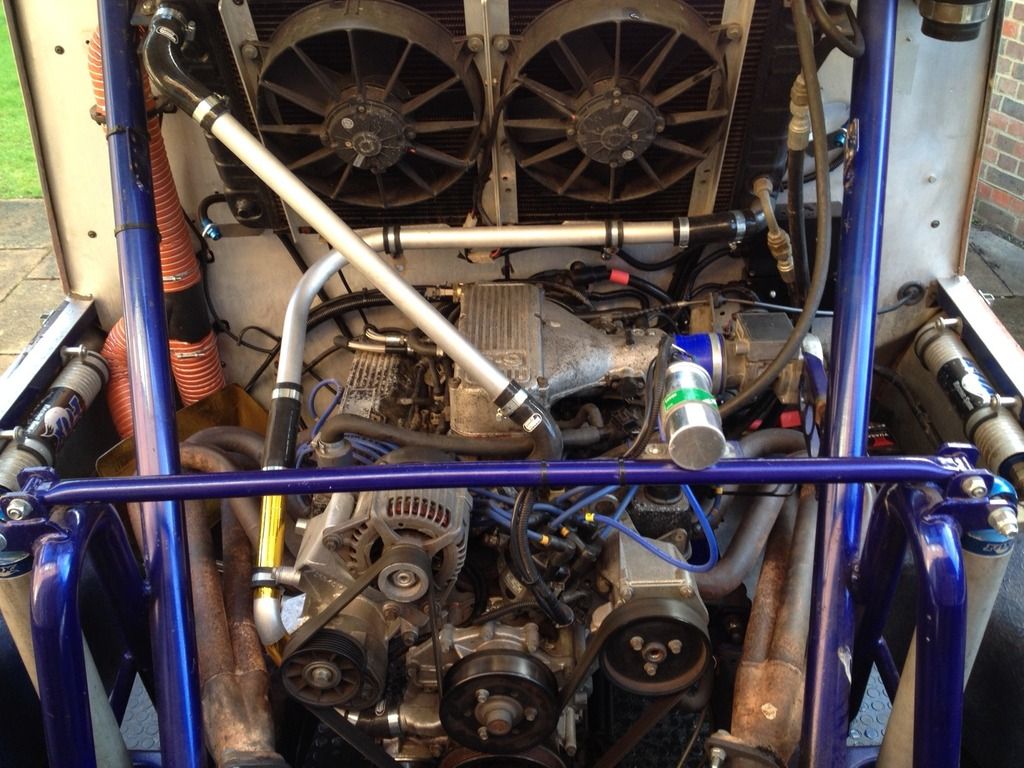
I am experiencing a very unsettled idle, the engine goes from 1000rpm and suddenly drops to 500rpm it does this repeatedly every 20 seconds. The engine has good throttle response when at 1000rpm but is unresponsive to a throttle application at 500rpm. Looking at RoverGauge at this low RPM the ECU is running at the richest position on the MAP
Interestingly I cannot set base idle, with the idle control valve bypassed the engine does not get enough air and will only run with a slight bit of throttle. I have never been able to run the engine between 500-1000rpm, it jumps between the two even when the throttle is slowly closed.
Things I have checked/changed
• I have replaced the idle control valve with one from tvr-parts. I have tested the two idle control value circuits at the ECU Plug
• Ignition time set to 6 degrees BTDC (TDC confirmed before timing was set)
• Rotor arm, cap and magnecor plug leads checked
• New NGK BP6ES plugs
• Air flow meter cleaned. Loom tested back to ECU. Air flow values checked with multimeter and RoverGauge. CO mixture set to 1 volt
• Thottle position, coolant temperature, fuel temperature all checked with RoverGauge
• Engine has the same symptoms with the tune resistor unplugged (engine in limp home mode)
• Inlet plenum and trumpets removed, inspected, sealing faces cleaned, resealed and re fitted
• Engine run with no filter or hoses pre air flow meter
• Fuel pressure regulator hose checked
As you can see I’m running out of options. I would really appreciate some input before I pull all my hair out! I have ordered both a Red and Yellow tune resistors to see if a different map will help. After that I guess my next port of call will be to swap the ECU and then check the cam timing.
Regards
Tom

The target RPM on RoverGauge is 700RPM. On RoverGauge the percentage reading for idle bypass position constantly changes. These changes coincide with the increase/decrease in RPM.
Thanks, fuel pressure is one item I have not tested. Once I get the correct gauge to test it I will report back.
Thanks, fuel pressure is one item I have not tested. Once I get the correct gauge to test it I will report back.
My understanding is that the correct tune resistor allows the ECU to cater for different systems.
Cat and O2 sensors
Non-cat and O2 sensors
Non-cat and no O2 sensors
Quote from RPI:
Early EFi system with no CAT or Lambda sensors.
The Green tune resistor is needed here otherwise the ECU will show a fault code indicating faulty Lambda sensors, because it would be looking for them. Unfortunately, in this case the ECU loses its ability to be adaptive (to make adjustments to its fuel trim), and its diagnostic system will be compromised due to the inability to see what effect adjustments are having on the engine.
http://www.v8engines.com/faq-inj.htm#tuneresistor
I also believe that all 14CUX Range Rover and Discoveries sold in Australia have the same setup as my vehicle (Non-cat and no O2 sensor systems). They run a red 180ohm resistor. I have ordered one of these resistors and hope to try it next week.
Cat and O2 sensors
Non-cat and O2 sensors
Non-cat and no O2 sensors
Quote from RPI:
Early EFi system with no CAT or Lambda sensors.
The Green tune resistor is needed here otherwise the ECU will show a fault code indicating faulty Lambda sensors, because it would be looking for them. Unfortunately, in this case the ECU loses its ability to be adaptive (to make adjustments to its fuel trim), and its diagnostic system will be compromised due to the inability to see what effect adjustments are having on the engine.
http://www.v8engines.com/faq-inj.htm#tuneresistor
I also believe that all 14CUX Range Rover and Discoveries sold in Australia have the same setup as my vehicle (Non-cat and no O2 sensor systems). They run a red 180ohm resistor. I have ordered one of these resistors and hope to try it next week.
Tom114 said:
My understanding is that the correct tune resistor allows the ECU to cater for different systems.
Cat and O2 sensors
Non-cat and O2 sensors
Non-cat and no O2 sensors
Quote from RPI:
Early EFi system with no CAT or Lambda sensors.
The Green tune resistor is needed here otherwise the ECU will show a fault code indicating faulty Lambda sensors, because it would be looking for them. Unfortunately, in this case the ECU loses its ability to be adaptive (to make adjustments to its fuel trim), and its diagnostic system will be compromised due to the inability to see what effect adjustments are having on the engine.
http://www.v8engines.com/faq-inj.htm#tuneresistor
I also believe that all 14CUX Range Rover and Discoveries sold in Australia have the same setup as my vehicle (Non-cat and no O2 sensor systems). They run a red 180ohm resistor. I have ordered one of these resistors and hope to try it next week.
Stick to the white tune with or without catalysts as it will trim the mixture constantly. Green tune is fine and offers more scope for tuning, but as there is no feed back the mixture wont auto correct, so you need to have the car mapped to get it accurate if the engine is non stock. The other tunes are for the low compression engines so ignore them. The tune resistor wont be the cause of you issues however. The reason the idle cycles is something is outside tolerance with the way the software in the ECU expects the engine to respond as it closes the stepper to bring the idle down, Typically the idle falls too quickly over a narrow rpm, so it drops below target, so the ecu opens the stepper, but then the idle raises too quickly and overshoots, and the cycle repeats. To get the idle to behave as it should, you need the correct base idle, a stable mixture (ie no small air leaks in the plenum that will throw it out as the throttle plate is closed) and the correct timing. If you run the green tune you must set the CO trim on the side of the AFM to get the mixture correct, doing a fixed voltage is not ideal as its only a factory setting. You also need to find out why the base idle wont work- its nothing more than air bleed screw, so you should be able to get the engine to idle on this alone with the stepper blocked of. You also mention the "richest setting on the map"- where is this and whats the values? Idle is normally around the first two rows vertically down on the map at whatever RPM. A richest setting is 255 hex. Basic engine faults like dropping a plug as the RPM drops will prevent the ECU ever doing its stuff. Worth checking the manifold headers to see if they are all the same temp- you can do this by putting a cable tie on each one and see if it melts, a non firing one will be significantly cooler.Cat and O2 sensors
Non-cat and O2 sensors
Non-cat and no O2 sensors
Quote from RPI:
Early EFi system with no CAT or Lambda sensors.
The Green tune resistor is needed here otherwise the ECU will show a fault code indicating faulty Lambda sensors, because it would be looking for them. Unfortunately, in this case the ECU loses its ability to be adaptive (to make adjustments to its fuel trim), and its diagnostic system will be compromised due to the inability to see what effect adjustments are having on the engine.
http://www.v8engines.com/faq-inj.htm#tuneresistor
I also believe that all 14CUX Range Rover and Discoveries sold in Australia have the same setup as my vehicle (Non-cat and no O2 sensor systems). They run a red 180ohm resistor. I have ordered one of these resistors and hope to try it next week.
Edited by blitzracing on Sunday 2nd October 09:47
The fact the base idle will not set has to be a start point. Sounds like a blockage somewhere in the air passage if, as the OP says, it will only run with a little throttle when the idle valve is blanked out.
After that is sorted I would fit O2 sensors but get them as high up in the system as possible as it looks to be an off road vehicle and the sensors do not like being under water. Even if you can only fit them in one branch of each manifold it would work better than not having them at all.
Steve
After that is sorted I would fit O2 sensors but get them as high up in the system as possible as it looks to be an off road vehicle and the sensors do not like being under water. Even if you can only fit them in one branch of each manifold it would work better than not having them at all.
Steve
I would fit O2 sensors but get them as high up in the system as possible as it looks to be an off road vehicle and the sensors do not like being under water. Even if you can only fit them in one branch of each manifold it would work better than not having them at all.
Steve
[/quote]
i believe the sensors on these engines are the less common "titania" type [hence the smaller thread so the wrong sensors can't be fitted by mistake} which don't have a hole to communicate with the atmosphere like more common o2 sensors. making them submersible which i believe is why land rover chose to use them. they are supposed to be faster to respond but more expensive to produce so weren't widely used.
NZ fan said:
i believe the sensors on these engines are the less common "titania" type [hence the smaller thread so the wrong sensors can't be fitted by mistake} which don't have a hole to communicate with the atmosphere like more common o2 sensors. making them submersible which i believe is why land rover chose to use them. they are supposed to be faster to respond but more expensive to produce so weren't widely used.
The original Land Rover ones are about £200 a pop. Aftermarket are about £50. ERR6729 is the LR part number; 
Mind you before we get too carried away, it wont be the lack of lambda feedback causing the issue as you can tweak the mixture with the CO trim anyway to get a stable mixture and idle. There is something much more fundamental going on here if it wont idle below 1000 rpm, either ignition related, fundamental engine issue, or a sharp shift in mixture once the throttle plate is shut and the plenum vacuum is at maximum. This is when small air leaks have a big effect.
Thanks for all the replies and helpful advice.
I’ve resolved the wandering idle! It turned out to be a problem with the ignition system. I changed the amplifier and adjusted the gap between the trigger wheel and Hall Effect sensors inside the distributor. I suspect it was adjusting the air gap which resolved the issue; the gap was twice what it should have been.
Since then I have re adjusted the base idle and ignition timing and the engine now idles perfectly.
I will look into fitting o2 sensors in the near future. As it’s a competition vehicle I’m not worried about fuel consumption but I do like the idea of the ECU knowing the air fuel ratio on each bank, I’m sure there is some performance to be gained in doing so as well.
I’ve resolved the wandering idle! It turned out to be a problem with the ignition system. I changed the amplifier and adjusted the gap between the trigger wheel and Hall Effect sensors inside the distributor. I suspect it was adjusting the air gap which resolved the issue; the gap was twice what it should have been.
Since then I have re adjusted the base idle and ignition timing and the engine now idles perfectly.
I will look into fitting o2 sensors in the near future. As it’s a competition vehicle I’m not worried about fuel consumption but I do like the idea of the ECU knowing the air fuel ratio on each bank, I’m sure there is some performance to be gained in doing so as well.
Gassing Station | Chimaera | Top of Page | What's New | My Stuff