
Subaru Forester (SG): PH Used Buying Guide
Looking for that elusive automotive Swiss Army knife? A Subaru Forester could be just the ticket

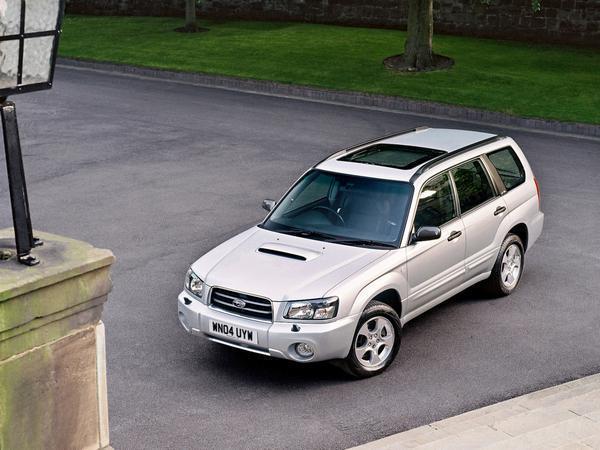
There is one potential candidate that can fulfil many those requirements though - the Subaru Forester. The first-generation Forester, dubbed the SF, was launched in 1997. It proved a dependable, comfortable and pleasant car to drive; in turbocharged form, known as S-Turbo for UK models, it was also surprisingly quick.
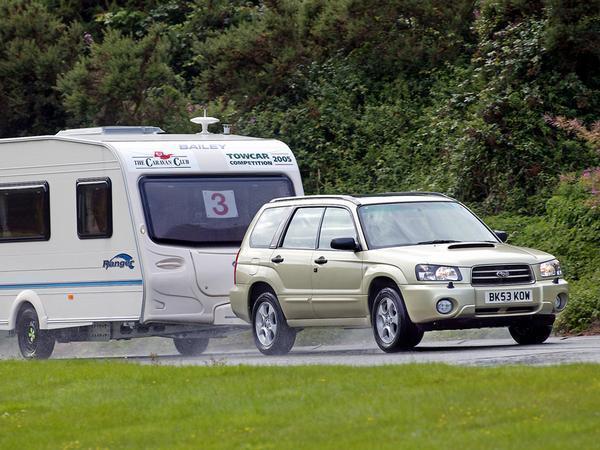
A wide range of UK variants were offered, from the naturally aspirated 2.0-litre X to the turbocharged 2.5-litre XTEn. All used Subaru's endearing low-slung boxer engine, coupled to either a five-speed manual or a four-speed automatic, depending on version - and, in all cases, power was sent to all four wheels.
It's the turbocharged 2.0-litre and 2.5-litre models that rightly draw the most attention, though, delivering suitably swift performance. These also benefit from extensive aftermarket support - as does the Forester platform itself - so are ideal candidates for further tuning.

While this buying guide focuses primarily on the SG, many of the details here also apply to the preceding SF generation - as well as imported high-performance STi variants of the SG.
Search for Subaru Foresters here
Bodywork and interior
The Forester's exterior panels are about as resilient to damage as a sheet of tinfoil. Consequently, have a good look along its flanks for damage, including pin dents caused by the corner of casually flung doors in car parks. These can be fixed, but it's worth clocking them first so you can account for the potential cost of repairs.
Rust, however, is the real nemesis of Subarus of this era. It creeps into the front and rear subframes, and areas regularly exposed to mud and moisture, and can quickly take hold. Besides looking at the MOT history for evidence of past corrosion-related issues, look carefully at the ends of the sills, the strut top mounts and the visible elements of the front and rear structure.
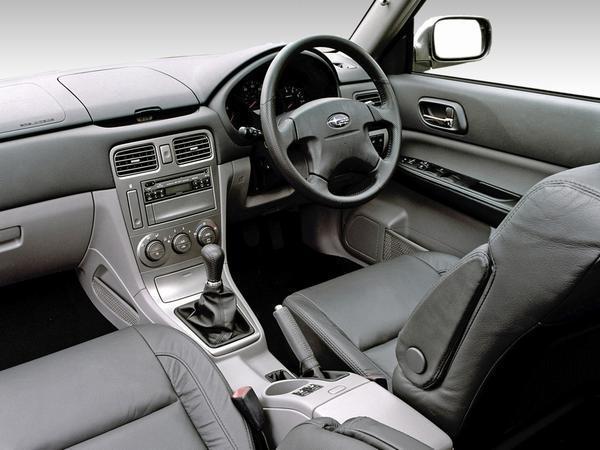
Fortunately, inside, Foresters are resilient to wear and tear. Just check that everything works, including the dash illumination if possible - and, if a sunroof is fitted, make sure there's no sign of water getting in.
Wind noise is a common problem due to the frameless design of the doors. You can replace the seals, but often simply padding them out to provide a tighter fit to the glass will quieten them down considerably.
One other common issue is a failure of the rear wiper. Moisture seeps into the spindle and causes corrosion, which jams the mechanism. You can get a usable assembly from a breakers for around £35, however, and cobble together a perfectly functioning set-up. It's not tricky to replace, either, but you will need a small puller to do the job.
The plastic headlight lenses are also prone to going hazy. These can easily be cleared up with a £20 restoration kit.
Engine and transmission
Foresters, if properly maintained, are reliable machines. Try and find an example that has been owned by someone who understands the car - an owner that takes time to warm it up and cool it off, doesn't boost it hard from cold and uses top-quality fluids and filters.
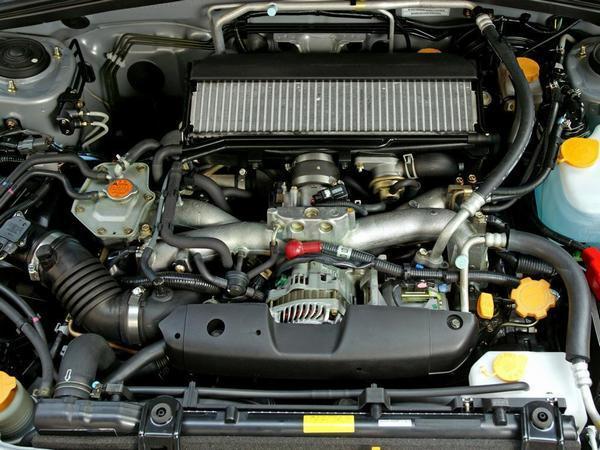
Servicing and regular fluid checks are essential to ensure the lifespan of the boxer engine, even more so in turbocharged form. The cambelt should be changed every 50,000 miles or five years and it's worth doing the tensioners and water pump at the same time. Kits cost around £180, excluding the £40 water pump. A garage will usually charge around £400 all in.
Generally, both 2.0 and 2.5 flavours of the Forester are regarded as being durable - although the 2.5 can be more prone to problems when tuned. In any case check for signs of leaks or cross-contamination of oil and coolant. Higher mileage examples may exhibit some piston slap when cold; as long as it fades when the engine is up to temperature, it shouldn't prove a problem.
Manual transmissions are usually durable but you may find some unwilling to shift gears when cold, particularly if you're trying to change down into first when approaching junctions. This is sometimes due to the wrong grade of oil in the transmission. Refilling it with a blend of Motul Gear 300 and Red Line Lightweight Shockproof can reinstate a silky-smooth shift.
A leak from the rear diff may not be from a seal but the differential cover itself, as they are prone to cracking if the fill or drain plugs are done up too tight. Liquid metal or similar may be just enough to seal the crack.
Suspension and steering
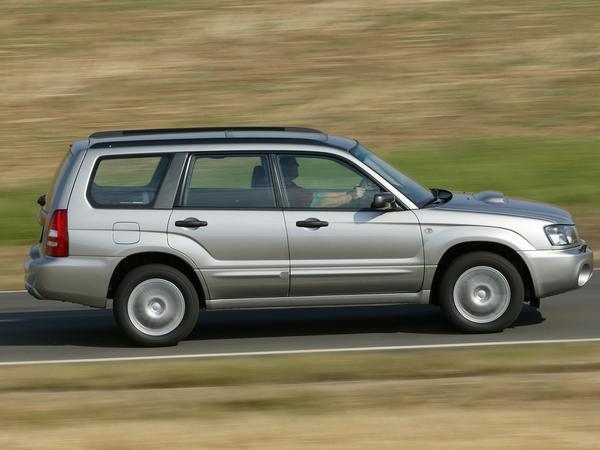
Check to make sure that the Subaru sits level. Turbocharged Foresters have self-levelling rear suspension which, over time, ceases to function - resulting in a sad-looking sagging tail. Original replacements are expensive so the best solution is to opt for aftermarket conventional damper and spring assemblies. These can be had for around £350 but you'll typically have to budget for replacement rear strut bolts, too, a complete set of which will cost some £40.
Anti-roll bar bushes and drop links can wear, resulting in odd creaks and rattles; neither is difficult to replace and spare parts are inexpensive. Similarly, wheel bearings and CV joint boots are common issues. Listen to any grumbles while driving, indicating a bearing issue, and visually inspect the rubber CV boots to make sure they're not torn or split.
Countless upgrades are available should you wish to improve the cornering capabilities of a Forester. Front and rear Whiteline heavy-duty anti-roll bars, for example, can be had for around £400.
Wheels, tyres and brakes
You've little to worry about on the tyre front. Models with the stock 17-inch wheel, for example, use a common 215/55 tyre. A premium tyre will cost around £110 but less expensive alternatives are available.
Some may find that the Forester's brake pedal is numb and initially unresponsive. This is caused by the bulkhead flexing, which is an inherent trait. Aftermarket master cylinder stoppers can reduce this flex and provide improved pedal feel.
Braking components are easy to come by and inexpensive. Expect to pay around £50 a disc, from a known brand, and around £50 for a complete set of pads.
Search for Subaru Foresters here
Search for Subarus here
SPECIFICATION - Subaru Forester SG 2.0/2.0 Turbo/2.5 Turbo
Engine: 1,994/1,994/2,457cc four-cylinder boxer
Transmission: 5-speed manual/4-speed automatic
Power (hp): 123/174/208-226@5,600rpm
Torque (lb ft): 137/181/236@3,600/3,200/3,600rpm
MPG: 33/29/26
CO2: 204/232/261g/km
Price new: £16,680/£20,835/£24,535
Price now: £2,000 upwards


Genuine question: the lead image shows it wading some reasonably deep water - how well do they cope with this, what with all their important bits quite low down? (Thinking plugs, etc).
It had done 120k and it’s service and MOT history was impeccable, in fact the thr only blemish was a re-painted rear bumper which didn’t quite match (silver isn’t always the easiest to be fair).
The thing ran without fault over that winter and my only expenditure other than fuel was a set of winter tyres which got me everywhere in the snow and ice we had that year.
I loved it and would have another in a flash if I needed a cheap, all-weather bolide.

Or if you don't like the idea of imports there are a few XTEN Prodrives which are a half-way house between the XTEN and the STI in terms of power. Only the STI has a six speed box though.
Otherwise, though, I think they're happy wading through that kind of depth provided you keep them moving – but I must stress I've not done it that often, so others may provide a better steer. They have a substantial plastic undertray that presumably keeps enough water away from the key components if you keep it moving, mind, and it didn't otherwise seem phased.
At least the turbocharger's up relatively high; you'd be in pretty serious trouble if that was surrounded by water.

I'd like to upgrade to one at some point but I think my XT's gonna keep me happy for a long while yet.
Ours had the NA 2.5 litre engine, not sure you got that in the UK. Usefully torquey with about 170bhp, and easy going with the 5-sp manual, averaged around 28mpg for the urban run, and up to about 35 on the motorway. Not sparkling nubers, but consistent on 91RON, and nothing went wrong.
But the idea of one of these as a Swiss Army type is about right. Its perfect for the urban jungle and more than capable on a B or A road. Not too wide, but big enough for four, five adults at a squeeze, yet easy to place and flick around. Ours had 205/60R16 wheels, so ride was great compared to others marketed for the city. Permanent AWD in a hilly place where the rain comes in torrential buckets is useful. Used it on several family road trips of 2000+km with no problems.
So why sell it? Well, boredom and the fact it was starting to look scruffy. It has done well to handle three young kids in those ten years - we bought it just before our first was born - and whilst everything still works and was rattle-free, there were numerous scratches and dings all over the place. Would have happily bought a new one, and XT this time, but they're auto-only and that doesn't work for us.
Bloke who bought it was running an 03 Forester with the same engine, that was on 425,000km and still going. He was doing about 200km a day commuting and reckoned the Forester was the best and most-reliable tool for his money. I got about 30% of the purchase price back when I sold it at 10 years and 100,000km.
I would have bought one.
I also used to wonder why Subaru never developed a flat-6 diesel for these although now I can see that would have been a waste of time.
This one is my favourite at the moment. A 2.5 turbo with a stated 256BHP, an output not mentioned in the buyers guide. Looks a lovely car for £3k before haggle and I guess people perhaps aren't queuing up to buy these?
https://www.autotrader.co.uk/classified/advert/201...
This one is my favourite at the moment. A 2.5 turbo with a stated 256BHP, an output not mentioned in the buyers guide. Looks a lovely car for £3k before haggle and I guess people perhaps aren't queuing up to buy these?
https://www.autotrader.co.uk/classified/advert/201...
The standard Subaru airbox system, as found on all this generation of Impreza, Forester and Legacy is as follows. At the front edge of the bonnet, just above the grill there is a plastic air intake/ducting, which routes clean cold air from the front. This is directed into the left side wing. Inside the wing is a large plastic resonator box which stands almost full height within the wing, in front of the wheel well. From this resonator there is a feed into the bottom of the airbox on the left side of the engine. From there, via the filter element, into the engine.
As such, in theory, the engine should be ok up until water comes up over the bonnet. There are some drain holes in the resonator box though so it may not be a leak tight system, and it would be a brave person that waded much more than a few feet of water.
Note that it's a common mod to remove the resonator and turn the wing into a ghetto "cold air feed" by sealing the air box to the hole into the wing. It increases induction noise noticeably and is reputed to offer a cleaner / larger air path resulting in possible power gains (your results my vary on that one...)
It's softer, higher, wider. It's much more comfortable but has lost a certain amount of the edge. The XT shifts pretty well, though the CVT gearbox takes some getting used to, but when I was test driving I found the lower spec models with the non-turbo 2.0 to be unbearably sluggish. Suggest you try driving one, they are nice but a slightly different proposition.
Gassing Station | General Gassing | Top of Page | What's New | My Stuff