
Alfa Romeo Brera: PH Used Buying Guide
Correctly specced, the Brera can be excellent; here's what you need to know before taking the plunge...

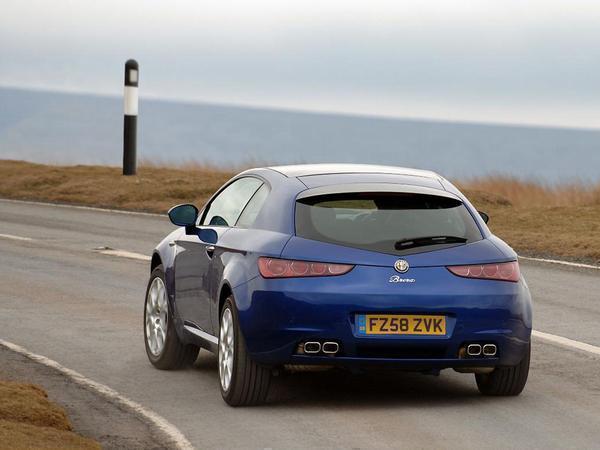
When talk turns to concept cars that made it into production relatively unscathed, the usual candidates are the Audi TT and Porsche Boxster. Yet the Alfa Romeo Brera arrived in 2005 with few exterior visual changes from the 2002 concept other than normal doors in place of the show car's scissor items.
The Brera caused quite a stir thanks to its looks, promising all of the Alfa pizzazz with seating for four. It might have been a bit later to the coupe market than the likes of the Mazda RX-8 and TT, but you couldn't fault its style. It was also keenly priced from a shade under £25,000 for the entry-point 2.2-litre petrol engine with 185hp.
Keener drivers would be more drawn to the 3.2-litre V6 version that boasted 260hp and four-wheel drive as standard. A 0-60mph time of 6.8 seconds wasn't quite as exciting as the appearance of the car or the noise from under the bonnet, but there was some compensation in the Brera being better built than previous Alfas. While some will scoff that isn't very hard to achieve, specialists reckon the Brera is very durable.
Recognising the need to attract company car drivers, Alfa Romeo also offered its new coupe with a turbodiesel engine, though it couldn't help itself but fit the five-cylinder 2.4-litre JTD unit. With 200hp and 295lb ft of torque, it was brisk rather than outright fast, though 41.5mpg combined economy was decidedly average next to a BMW 320d coupe.
To answer some complaints about the handling being too staid, Alfa Romeo turned to Prodrive for help and launched the S versions in 2008. With lighter, stiffer suspension, sports exhaust and 19-inch alloy wheels as standard, it turned the Brera into the car it should have been from launch. These models remain the most sought after now.
2010 rung the changes for the Brera range when Alfa introduced a front-wheel drive V6 model. However, the big news lay elsewhere with the arrival of the 1750 TBi engine. It came with 200hp, direct injection and a turbo to take the Brera from 0-60mph in 7.5 seconds and without the nose-heavy handling of the V6. It could even turn in an average of 34.9mpg to make it the best of the bunch then and now.

At the same time, the 2.4 diesel was dropped in favour of the 2.0-litre JTD M with 170hp and 266lb ft of torque, which was more than the V6 could muster. The 51.4mpg fuel economy made the Brera much more appealing as an everyday prospect, while in-gear performance was also strong enough to live with the sporty looks.
The 2.4-litre turbodiesel is the least desirable Brera in today's market and you can find reasonable examples from £3,000. Following that is the 2.2-litre petrol that starts at around £3,500, while a well cared for V6 is likely to cost from £6,000. Finding a 1750 TBi or 2.0 JTD M will be your biggest problem as few were sold and owners now tend to hang on to them. Expect to pay from £6,000 for either.
Search for Alfa Romeo Breras here

Alfa Romeo Brera: Common Problems and Faults
Bodywork and interior
Cars painted red seem more prone to stone chips than other hues, so inspect the bonnet, front bumper and wings.
Look for signs of rust on the front subframe where the undertray sits close to it.
Electric windows can become erratic, but can be reset by holding the button for 10 seconds, winding the window up and then holding the button for another 10 seconds.Rear seats are cramped, but later cars have front seats with a reprofiled back to give more space for rear occupants' knees.
Dash trim is easily scratched by other keys on the ignition key's fob.
Engine and transmission
Diesel engine has a cambelt that Alfa says should be changed at 90,000 miles, However, the water pump can seize before that, so best to change belt and pump at 60,000 miles.
Timing chains in the petrol engines can stretch, so budget between £750 and £1,000 for a replacement.
Diesel engine's inlet manifold valve cans stick.
The oil filter on the 2.2 JTS engine can become clogged with sludge that causes it to collapse. Specialists recommend changing the filter at 12,000-mile intervals.
Bearings fail in the petrol cars' GM-sourced manual gearbox.
Suspension and steering
Steering racks fail, so check front tyres for uneven wear and listen for knocks from the front end. These symptoms could also point to worn ball joints or front wishbones bushes, which are a cheaper and easier fix.
Broken springs are common. Rear wheel lower hub bushes wear, so look for uneven tread wear on the tyres.
Wheels, tyres and brakes
Check for uneven tyre wear that points to worn suspension bushes. A full geometry set-up is worthwhile on any Brera you buy.
Search for Alfa Romeo Breras here
Search for Alfa Romeos here

| Specification: Alfa Romeo Brera | |
|---|---|
| Engine | 1,742/2,198/3,195/1,956/2,387cc 4/5 inline/V6 |
| Transmission | 6-speed man/auto |
| Power (hp) | 200/185/260/170/200@5,000/6,500 /6,200/4,000/4,000rpm |
| Torque (lb ft) | 236/170/237/266/295@1,400/4,500 /4,500/1,750/2,000rpm |
| MPG | 34.9/30.1/24.6/51.4/41.5 |
| CO2 | 189/218/266/145/197g/km |
| Price new: | from £24,995 |
| Price now: | £3,000 upwards |


A pity, as a decently specified Spider is still a stunning looking car, more so than the Brera IMHO, which always looked a bit bulky from the rear 3/4 angle.
One very peculiar problem I had with it - there had to be at least one didn't there?! The exhausts got unbelievably hot when they did a DPF regeneration and it melted the plastic valance under the tailpipes. I had an interesting discussion with Alfa who "weren't sure if it was a warranty job".

As with the Scirocco, it's stretching the description of a coupe when in truth it's a 2-box hatchback with a slightly lower roofline. They should've made it a 2-seater like the Spider, and styled it as a proper coupe.


I did 105k miles in my 2.2S and it was great, very solidly built with so squeaks or rattles, very reliable and a lot of fun to drive.
It was not enormously quick in a straight line but the cornering was superb and it was loads of fun to drive down the twisty Perthshire roads.
This is my car at 105k miles, I traded it for a (rubbish) Honda Civic type S and Amari bought it from the auction.
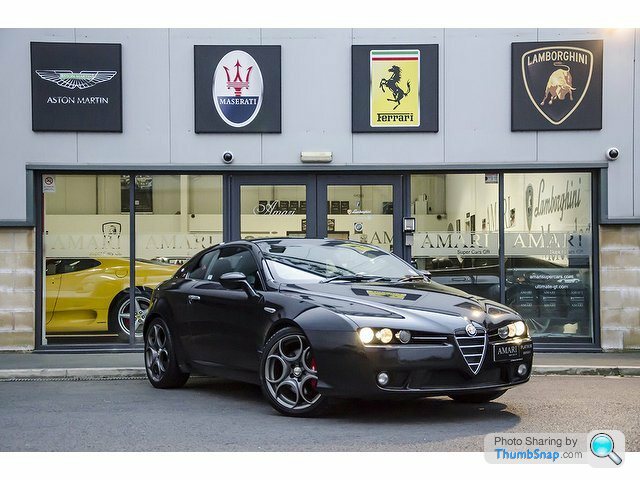
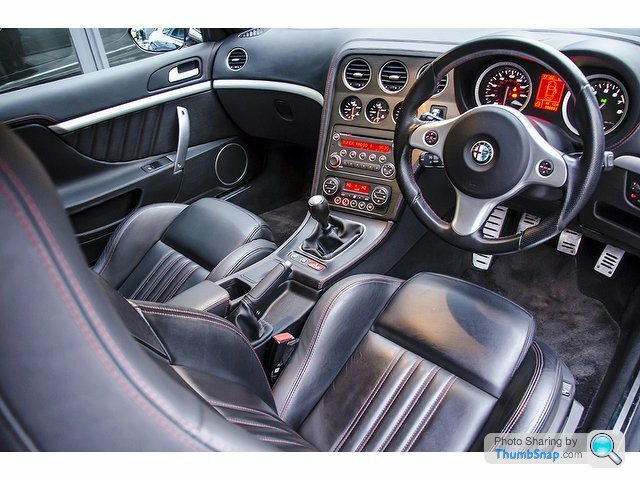


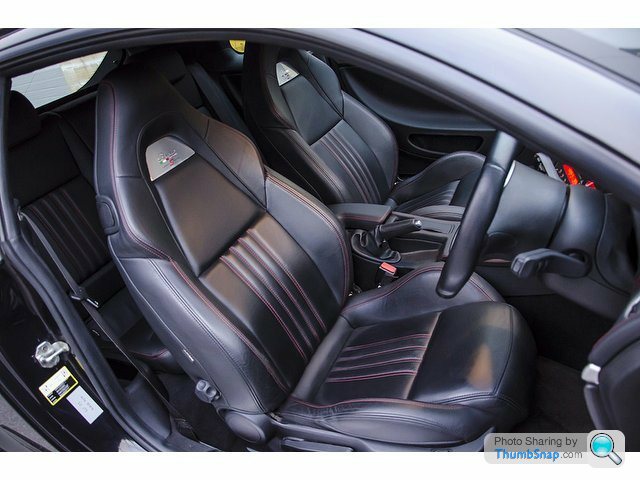
So, objectively, it was pretty poor, but subjectively... I actually quite liked it. It was cheap, rare, and I just loved the look of the thing (mine was in black, with dark red leather and the 18" wheels, which was a lovely combination). Which is probably why I kept it longer than most cars I've owned. I love Italian cars, and have had several Alfas, but sadly I think this will be my last. I toyed briefly with the idea of replacing it with a Prodrive version or a later V6, but couldn't justify it. I'm a great apologist for Alfas, but I finally had a sense of humour failure when it blew a radiator hose whilst the wife was driving it, leaving her stranded. I replaced it with something German. Do I miss the Brera? Not really, but my head is still turned whenever I see one on the road...
Just a selection of quotes
Diesel engine - the water pump can seize
Bearings fail in the petrol cars' GM-sourced manual gearbox.
Steering racks fail
Broken springs are common.
Bearings can go on the M32 gearbox but I think it's about £500 to fix if it does occur
Steering racks are a weaker point but I think the ends that fail can now be replaced instead of the whole rack
Broken springs are common to all modern cars
Compare that to a 996 for example
IMS bearing failure
Cracked cylinder heads / liners
RMS
Pretty much all modern cars have their issues, but the Brera is sturdy if a little Audi like to drive.
Just a selection of quotes
Diesel engine - the water pump can seize
Bearings fail in the petrol cars' GM-sourced manual gearbox.
Steering racks fail
Broken springs are common.
It had most of the front suspension replaced, 2 timing chains, and a few other niggly things. The worst thing was the hesitation at low revs, but you learned to drive around it.
The Tyres on the 18 inch wheels are an odd size, and seem to remember Bridgestone's were around £180 each.
But, it always felt special, had people come up and talk about the car, and when I see one now my head is always turned, and would have another one!

- The limited rear seats. I do occasionally need to fit 4 adults in the car, and having 2 rear seats that are for people with no legs seems like too big of a compromise. If I did have another car though, this wouldn't be such an issue.
- Rather bulky and heavy. I know it's a GT car, not a sportscar, but I don't think I'd enjoy the feeling of driving an elephant everywhere, which should go much quicker with the available power, but doesn't.
That's why I somehow feel more drawn to the older GT. If only they could combine the looks of the Brera and the mechanics of the GT...
Gassing Station | Car Buying | Top of Page | What's New | My Stuff