
2008 Astra H oil level rising & smells of petrol
Discussion


Please can someone help with a problem on my wifes car. It is a 2008 Astra H 1.8L petrol (engine code Z18XER), 93K on the clock.
At the start of June I changed the oil and topped it up to 3/4 full on the dipstick. One month later the oil is off the top of the scale and stinks of petrol. We do not have any history on this car so do not know if it is a recent problem. I believe that there are only two potential causes for petrol getting into the oil:
1) If the car is running rich.
2) If the injector seals are weak allowing fuel from the rail to seep into the cylinders whenever the engine is switched off.
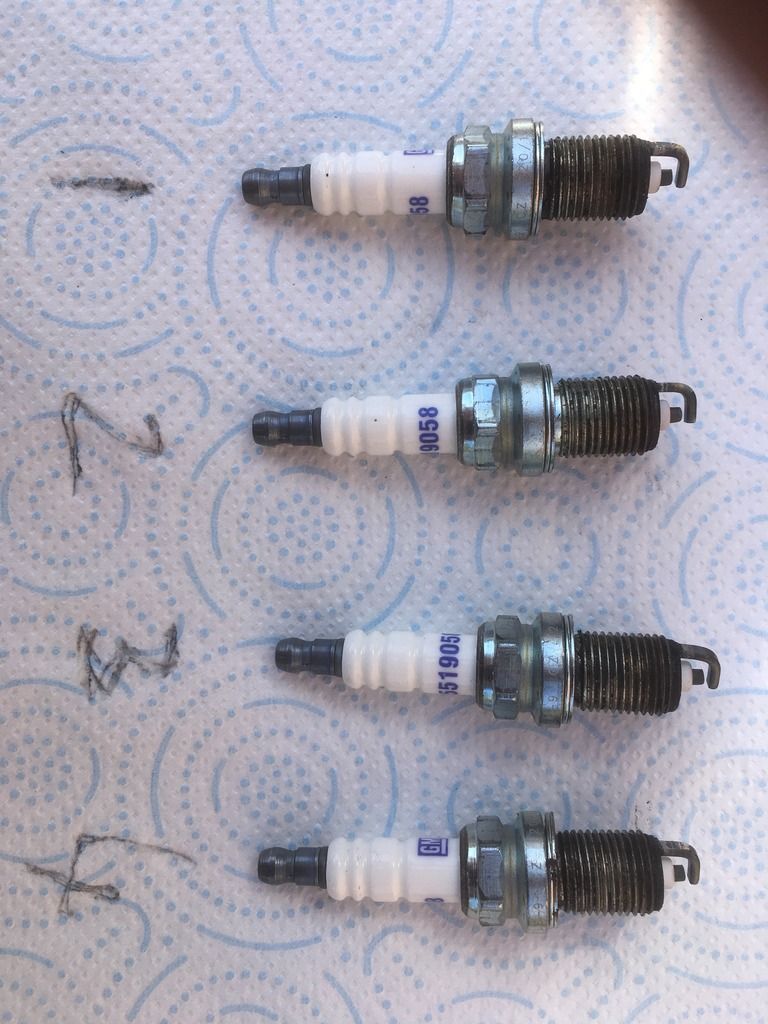
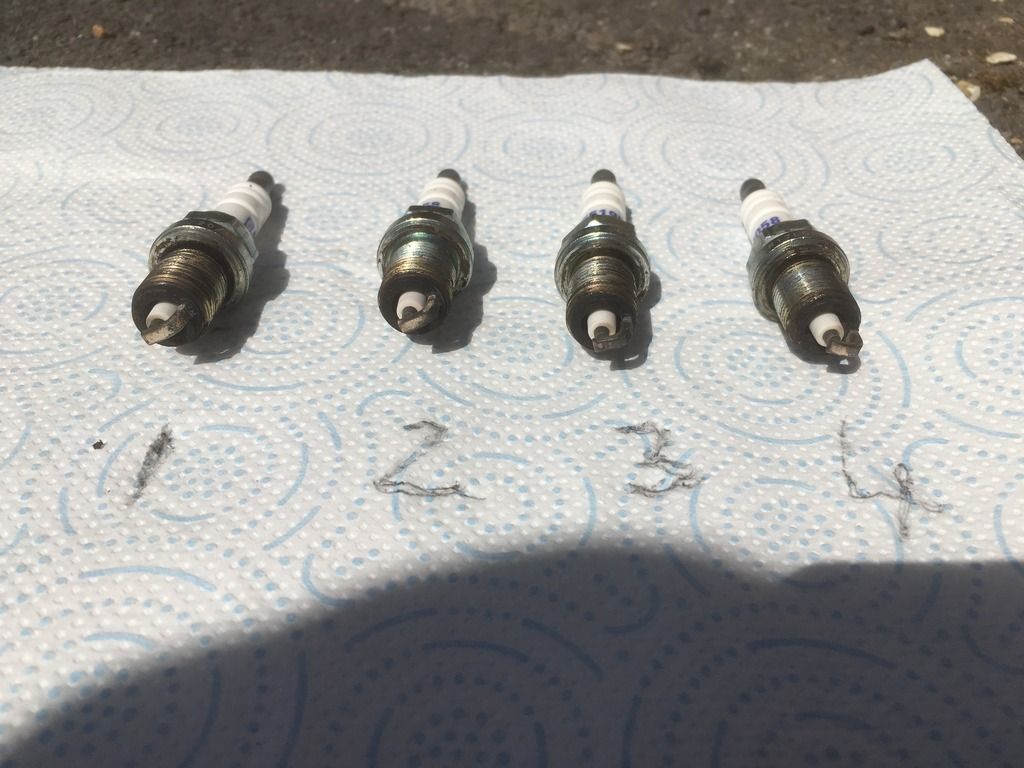
We have checked if the car is running rich by pulling the plugs. See pictures below. I think these look OK and show the car is not running rich...what do others think? On a recent 120 mile round trip of mixed driving the car returned 43mpg. Fault codes have been read as follows:
1) Engine, 1 fault, U0009-70/N, Not present, High speed CAN communications bus (-) shorted to (+).
2) Steering, 0 codes.
3) ABS/TC/ESP, 0 codes (however, when integrated further shows U2100-00/P, resent, No communications with can bus high speed).
4) Steering column module, 1 fault, U2100-00/N, Not present, No communication with can bus high speed.
5) Instrument control unit, 0 codes
6) SDM (airbag), 0 codes
7) Underhood electronic control unit, 0 codes
To check if the injector seals are weak I took the car for a good run, left it 20 min, pulled the plugs and gave them a sniff. 1 definitely did not smell of petrol, 2 3, and 4 had a slight whiff of petrol. Based on this I'd replace the injectors, but should I have left the car to stand for longer and should I expect a stronger petrol smell if the injectors were leaking?
In summary any help with the following questions would be much appreciated:
1) Do the plugs confirm the car is running OK?
2) Are the fault codes relevant?
3) Should I have left the car to stand for longer before doing the start plug sniff test?
4) Should I expect a strong smell of petrol when doing the spark plug sniff test?
5) Is 43mpg what we should expect from a petrol engine of this size and age (we have only owned diesels or performance cars before)?
Thanks in advance.
At the start of June I changed the oil and topped it up to 3/4 full on the dipstick. One month later the oil is off the top of the scale and stinks of petrol. We do not have any history on this car so do not know if it is a recent problem. I believe that there are only two potential causes for petrol getting into the oil:
1) If the car is running rich.
2) If the injector seals are weak allowing fuel from the rail to seep into the cylinders whenever the engine is switched off.
We have checked if the car is running rich by pulling the plugs. See pictures below. I think these look OK and show the car is not running rich...what do others think? On a recent 120 mile round trip of mixed driving the car returned 43mpg. Fault codes have been read as follows:
1) Engine, 1 fault, U0009-70/N, Not present, High speed CAN communications bus (-) shorted to (+).
2) Steering, 0 codes.
3) ABS/TC/ESP, 0 codes (however, when integrated further shows U2100-00/P, resent, No communications with can bus high speed).
4) Steering column module, 1 fault, U2100-00/N, Not present, No communication with can bus high speed.
5) Instrument control unit, 0 codes
6) SDM (airbag), 0 codes
7) Underhood electronic control unit, 0 codes
To check if the injector seals are weak I took the car for a good run, left it 20 min, pulled the plugs and gave them a sniff. 1 definitely did not smell of petrol, 2 3, and 4 had a slight whiff of petrol. Based on this I'd replace the injectors, but should I have left the car to stand for longer and should I expect a stronger petrol smell if the injectors were leaking?


In summary any help with the following questions would be much appreciated:
1) Do the plugs confirm the car is running OK?
2) Are the fault codes relevant?
3) Should I have left the car to stand for longer before doing the start plug sniff test?
4) Should I expect a strong smell of petrol when doing the spark plug sniff test?
5) Is 43mpg what we should expect from a petrol engine of this size and age (we have only owned diesels or performance cars before)?
Thanks in advance.

You are damaging your bearing driving it with fuel in the oil - you need to replace it.
Are you able to monitor the fuel pressure when the engine is off? I would expect it to hold pressure - if it doesn’t that might suggest a bad injector.
I wouldn’t expect the plugs to smell of fuel if they were leaking - they are at the highest point in the chamber and a leaking injector isn’t going to flow up hill.
Are you able to monitor the fuel pressure when the engine is off? I would expect it to hold pressure - if it doesn’t that might suggest a bad injector.
I wouldn’t expect the plugs to smell of fuel if they were leaking - they are at the highest point in the chamber and a leaking injector isn’t going to flow up hill.
eliot said:
You are damaging your bearing driving it with fuel in the oil - you need to replace it.
Are you able to monitor the fuel pressure when the engine is off? I would expect it to hold pressure - if it doesn’t that might suggest a bad injector.
I wouldn’t expect the plugs to smell of fuel if they were leaking - they are at the highest point in the chamber and a leaking injector isn’t going to flow up hill.
If fuel is leaking into the cylinder which is mostly sealed , then on removing the plugs I would expect them to smell as it’s been sitting in a cylinder of petrol fumes Are you able to monitor the fuel pressure when the engine is off? I would expect it to hold pressure - if it doesn’t that might suggest a bad injector.
I wouldn’t expect the plugs to smell of fuel if they were leaking - they are at the highest point in the chamber and a leaking injector isn’t going to flow up hill.
A quick look at lambda sensor output would tell you if it is running rich or not.
Certainly nothing on those plugs would indicate that it is.
As to how petrol would get into the oil en mass.....good question.
I've seen similar before but it was diesel related to a degree. Very long time ago a friend got some fuel from a guy who had put diesel in his petrol car by mistake but not a huge amount. He drained tank for him and decided to throw it into his junker as it wasnt worth anything anyway
After a while oil light started to come on, checked oil and level was very high. So it was not petrol pollution as such, but the diesel that was still in the petrol was finding its way into the sump, obviously not burning in the cylinder.
Sooo.....are you sure you've always been filling up with good clean petrol ?
Certainly nothing on those plugs would indicate that it is.
As to how petrol would get into the oil en mass.....good question.
I've seen similar before but it was diesel related to a degree. Very long time ago a friend got some fuel from a guy who had put diesel in his petrol car by mistake but not a huge amount. He drained tank for him and decided to throw it into his junker as it wasnt worth anything anyway
After a while oil light started to come on, checked oil and level was very high. So it was not petrol pollution as such, but the diesel that was still in the petrol was finding its way into the sump, obviously not burning in the cylinder.
Sooo.....are you sure you've always been filling up with good clean petrol ?
Thanks for the replies. On the basis of these I have removed the injectors and will send them off for testing/cleaning. I’ll report back once done.
My wife is a cheap petrol user (supermarket), however, we have n’t had the car long so I would n’t have expected this to make a difference yet.
Whilst the injectors are out i’ll change the oil and filter.
As a side note: after going for a run on Saturday I pressed the valve stem to release the fuel pressure in the rail and it almost shot out over my head! Yesterday, I manoeuvred the car into the garage (engine running - 2 mins) and pressed the valve again prior to removing the injectors - barely a tickle of fuel came out.
My wife is a cheap petrol user (supermarket), however, we have n’t had the car long so I would n’t have expected this to make a difference yet.
Whilst the injectors are out i’ll change the oil and filter.
As a side note: after going for a run on Saturday I pressed the valve stem to release the fuel pressure in the rail and it almost shot out over my head! Yesterday, I manoeuvred the car into the garage (engine running - 2 mins) and pressed the valve again prior to removing the injectors - barely a tickle of fuel came out.
Sounds like you may have found the culprit.
Ask whoever it is testing them to look into this particularly.
WOW when you do the oil change you WILL have petrol contaminated oil everywhere in the engine & it will compromise the lubrication properties of the oil.
I would do an oil change, run it up to temperature & then do another oil & filter change & HOPEFULLY that is bullet dodged.
Ask whoever it is testing them to look into this particularly.
WOW when you do the oil change you WILL have petrol contaminated oil everywhere in the engine & it will compromise the lubrication properties of the oil.
I would do an oil change, run it up to temperature & then do another oil & filter change & HOPEFULLY that is bullet dodged.
Very doubtful it is the injectors unless they are leaking after shutdown.
And you would expect a lot of fuel to piss out of a rail at 40-50psi. It would be odd however for nothing to come out, or a dribble.
But if there was fuel leaking from an injector after shutdown, especially to the extend of causing such a problem as fuel in the oil, there would be very obvious symptoms when you start the engine of poor running until the excess fuel is burnt off.
And you would expect a lot of fuel to piss out of a rail at 40-50psi. It would be odd however for nothing to come out, or a dribble.
But if there was fuel leaking from an injector after shutdown, especially to the extend of causing such a problem as fuel in the oil, there would be very obvious symptoms when you start the engine of poor running until the excess fuel is burnt off.
So I sent the injectors off to the Fuel Injector Clinic, Patrick tested them and reported that they were in excellent condition. Held pressure at 3bar without leaking and also all passed the flow tests (very consistent flow). They were cleaned as a precaution. Great service and I would use again.
I then refitted all electrical components back to the car, refitted the injectors to the fuel rail (but did not insert them into the engine) and connected the fuel hose. By putting bits of clear hose over the injectors I was able to see that they still had good spray pattern when my wife turned the engine over. They did n't leak in 18 hours when left over night.
I changed the oil and filter and topped up to the 1st graduation on the dipstick. Nice 35 mile drive down some flowing roads...and the oil is now up to the 2nd graduation! Smells of petrol again as well.
I'm visiting the auto-electrician tomorrow so will ask their advice (and may book it in) - in the meantime if anyone has any tests I can do with voltmeter or live data I'd be glad to hear it.
I have noted the comment about lambda above - what value should I be looking for?
Thanks in advance.
I then refitted all electrical components back to the car, refitted the injectors to the fuel rail (but did not insert them into the engine) and connected the fuel hose. By putting bits of clear hose over the injectors I was able to see that they still had good spray pattern when my wife turned the engine over. They did n't leak in 18 hours when left over night.
I changed the oil and filter and topped up to the 1st graduation on the dipstick. Nice 35 mile drive down some flowing roads...and the oil is now up to the 2nd graduation! Smells of petrol again as well.
I'm visiting the auto-electrician tomorrow so will ask their advice (and may book it in) - in the meantime if anyone has any tests I can do with voltmeter or live data I'd be glad to hear it.
I have noted the comment about lambda above - what value should I be looking for?
Thanks in advance.
You're barking up the wrong tree with an auto electrician. This has nothing to do with injectors leaking or how the car is fueled by the ecu. If that amount of petrol is getting into the oil in a 35 mile drive then fuel is somehow entering the crankcase directly. I can't imagine why any fuel line would go near the engine block unless someone has misrouted a hose, maybe the fuel return line to the fuel tank after the pressure regulator.
The logical alternative is that fuel is not getting into the oil at all and you are getting confused about oil levels on the dipstick and chasing a problem which does not exist.
The logical alternative is that fuel is not getting into the oil at all and you are getting confused about oil levels on the dipstick and chasing a problem which does not exist.
Well obviously for the most part when driving, light and easy lambda should be 1.0
But as Mig says, there is simply no possible way petrol could be getting into the crankcase in the quantities you are suggesting without some major f k up caused by someone as there is no means for the fuel to get in there.
Something is clearly wrong somewhere though
But as Mig says, there is simply no possible way petrol could be getting into the crankcase in the quantities you are suggesting without some major f
k up caused by someone as there is no means for the fuel to get in there.Something is clearly wrong somewhere though
Gassing Station | Engines & Drivetrain | Top of Page | What's New | My Stuff