
Boeing 737 Max 8 - MCAS and accidents
Discussion


Surprised we haven't got a thread on this already...
Reading around on MCAS, it seems that although it's possibly a slightly poor design (only ever using one of the AoA sensors and not both), it sounds like both the Lion Air and Ethiopian Air crashes were both caused by the same thing.
The question is, to my mind at least, why didn't the pilots of both flights just disengage the system - in the case of the Lion Air flight the crew who'd flown it the previous day encountered the same issue and simply switched the system off. The solution is also in the QRH for all of the newish 737s for at least 10 years.
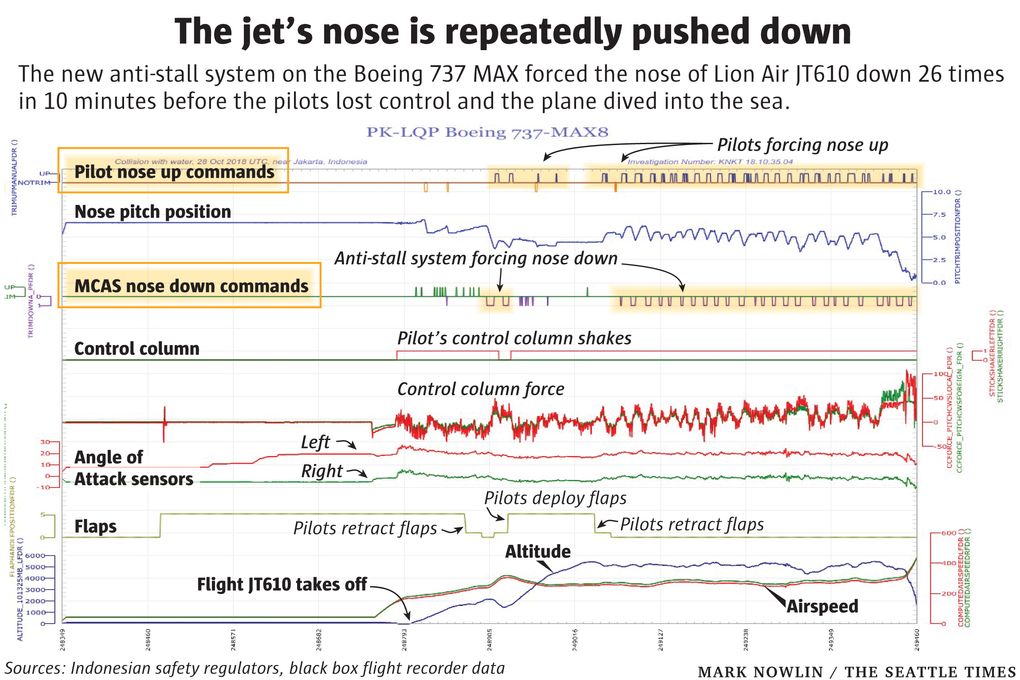
From the analysis of the flight data the Lion Air crew didn't do this at all, and not only flew through 26 iterations of the MCAS activation pushing the nose down, but the last two weren't even countered by the co-pilot.
I know the blame has been pushed towards Boeing for adding a system without specifically informing the pilots, but it sounds like it was included in the flight manuals.
Now that the various aviation authorities have grounded the aircraft it leaves Boeing in a pretty pickle - not only will it have soured the reputation of the new 737 MAX forever more, but the onus is now on them to "fix" the issue with a software update.
Reading around on MCAS, it seems that although it's possibly a slightly poor design (only ever using one of the AoA sensors and not both), it sounds like both the Lion Air and Ethiopian Air crashes were both caused by the same thing.
The question is, to my mind at least, why didn't the pilots of both flights just disengage the system - in the case of the Lion Air flight the crew who'd flown it the previous day encountered the same issue and simply switched the system off. The solution is also in the QRH for all of the newish 737s for at least 10 years.
From the analysis of the flight data the Lion Air crew didn't do this at all, and not only flew through 26 iterations of the MCAS activation pushing the nose down, but the last two weren't even countered by the co-pilot.
I know the blame has been pushed towards Boeing for adding a system without specifically informing the pilots, but it sounds like it was included in the flight manuals.
Now that the various aviation authorities have grounded the aircraft it leaves Boeing in a pretty pickle - not only will it have soured the reputation of the new 737 MAX forever more, but the onus is now on them to "fix" the issue with a software update.


That's a good piece, I don't agree with everything, but this is absolutely hitting the nail on the head for me:
Article said:
That no one who wrote the MCAS software for the 737 MAX seems to have even raised the issue of using multiple inputs, including the opposite angle of attack sensor, in the computer’s determination of an impending stall is mind-blowing. As a lifetime member of the software development fraternity, I don’t know what toxic combination of inexperience, hubris, or lack of cultural understanding led to
this.
But I do know that it’s indicative of a much deeper and much more troubling problem. The people who wrote the code for the original MCAS system were obviously terribly far out of their league and did not know it. How can we possibly think they can implement a software fix, much less give us any comfort whatsoever that the rest of the flight management software, which is ultimately in ultimate control of the aircraft, has any fidelity at all?
this.
But I do know that it’s indicative of a much deeper and much more troubling problem. The people who wrote the code for the original MCAS system were obviously terribly far out of their league and did not know it. How can we possibly think they can implement a software fix, much less give us any comfort whatsoever that the rest of the flight management software, which is ultimately in ultimate control of the aircraft, has any fidelity at all?
Interesting information from today's Guardian.
https://www.theguardian.com/business/2019/mar/21/d...
Apparently, there were 2 options which were not ordered by either LionAir or Ethiopian. First, is an AOA (Angle of Attack) indicator which displays each angle of attack and the second option was an AOA disagree light.
https://www.theguardian.com/business/2019/mar/21/d...
Apparently, there were 2 options which were not ordered by either LionAir or Ethiopian. First, is an AOA (Angle of Attack) indicator which displays each angle of attack and the second option was an AOA disagree light.
phil squares said:
Interesting information from today's Guardian.
https://www.theguardian.com/business/2019/mar/21/d...
Apparently, there were 2 options which were not ordered by either LionAir or Ethiopian. First, is an AOA (Angle of Attack) indicator which displays each angle of attack and the second option was an AOA disagree light.
Which then begs a couple of questions...https://www.theguardian.com/business/2019/mar/21/d...
Apparently, there were 2 options which were not ordered by either LionAir or Ethiopian. First, is an AOA (Angle of Attack) indicator which displays each angle of attack and the second option was an AOA disagree light.
1) If they are that critical for safety, why aren't they fitted as standard ?
2) On the 'just another 737' tack, why would the airlines know they were needed ?
It's been extensively discussed already in the thread that's been running for weeks :
https://www.pistonheads.com/gassing/topic.asp?h=0&...
https://www.pistonheads.com/gassing/topic.asp?h=0&...

Gassing Station | Boats, Planes & Trains | Top of Page | What's New | My Stuff