
1970s Aircraft scrap yard
Discussion


100SRV said:
Composite Guru said:
That's pretty cool. The top ones look like Percival Provost?
I thought it looked familiar - one of the more knowledgeable folk will put us right soon I hope!Is it a Fairey Barracuda in the middle photograph, pointing to the right?
This is a comment from FB on the last picture, I don’t know how accurate this is.
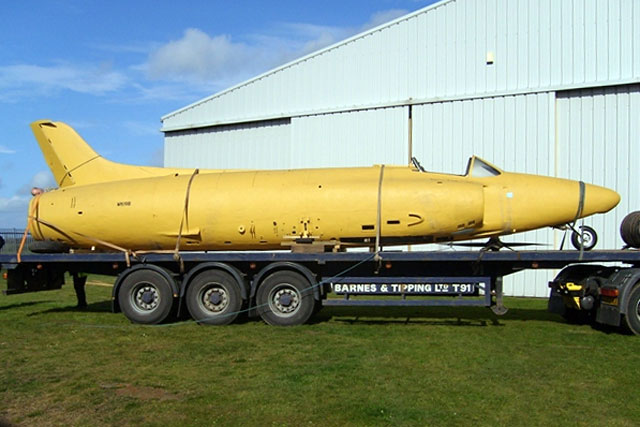
It is actually Wing Commander Mike Lythgow's record,breaking Supermarine Swift which on 26 September 1953 broke the world absolute speed record, reaching a speed of 737.7 mph (1,187 km/h); thus, the Swift held the distinction of being the world's fastest aircraft. Sad end to this piece of history.
It is actually Wing Commander Mike Lythgow's record,breaking Supermarine Swift which on 26 September 1953 broke the world absolute speed record, reaching a speed of 737.7 mph (1,187 km/h); thus, the Swift held the distinction of being the world's fastest aircraft. Sad end to this piece of history.
GAjon said:
This is a comment from FB on the last picture, I don’t know how accurate this is.
It is actually Wing Commander Mike Lythgow's record,breaking Supermarine Swift which on 26 September 1953 broke the world absolute speed record, reaching a speed of 737.7 mph (1,187 km/h); thus, the Swift held the distinction of being the world's fastest aircraft. Sad end to this piece of history.
How an earth did that end up in a scrapyard? No doubt the government had something to do with it. Absolutely no interest keeping history at all!! It is actually Wing Commander Mike Lythgow's record,breaking Supermarine Swift which on 26 September 1953 broke the world absolute speed record, reaching a speed of 737.7 mph (1,187 km/h); thus, the Swift held the distinction of being the world's fastest aircraft. Sad end to this piece of history.
Up until the mid to late 1960s, there was very little value seen in old airframes. That Swift would have remained in the hands of Supermarine and then their successors (BAC) until no longer needed. By the end of the 1950s it would have been surplus to requirements and would have been perceived to be taking up space that could be better used.
Up until 1972, the RAF held in store a number of important airframes which eventually ended up in the RAF Museums at Hendon and Cosford when they officially opened. A test version of the Swift (which on the whole was not a well liked aircraft) that was not typical of an in-service example would not have ranked highly in worthwhile airframe to preserve.
The good news is that Lithgow's aircraft (WK198) has survived - although not complete. It has had a bit of an itinerant career as a museum exhibit. I saw it at Brooklands a few years ago but it has moved on since, I think.
Up until 1972, the RAF held in store a number of important airframes which eventually ended up in the RAF Museums at Hendon and Cosford when they officially opened. A test version of the Swift (which on the whole was not a well liked aircraft) that was not typical of an in-service example would not have ranked highly in worthwhile airframe to preserve.
The good news is that Lithgow's aircraft (WK198) has survived - although not complete. It has had a bit of an itinerant career as a museum exhibit. I saw it at Brooklands a few years ago but it has moved on since, I think.
Eric Mc said:
Up until the mid to late 1960s, there was very little value seen in old airframes. That Swift would have remained in the hands of Supermarine and then their successors (BAC) until no longer needed. By the end of the 1950s it would have been surplus to requirements and would have been perceived to be taking up space that could be better used.
Up until 1972, the RAF held in store a number of important airframes which eventually ended up in the RAF Museums at Hendon and Cosford when they officially opened. A test version of the Swift (which on the whole was not a well liked aircraft) that was not typical of an in-service example would not have ranked highly in worthwhile airframe to preserve.
The good news is that Lithgow's aircraft (WK198) has survived - although not complete. It has had a bit of an itinerant career as a museum exhibit. I saw it at Brooklands a few years ago but it has moved on since, I think.
That's good to know. Up until 1972, the RAF held in store a number of important airframes which eventually ended up in the RAF Museums at Hendon and Cosford when they officially opened. A test version of the Swift (which on the whole was not a well liked aircraft) that was not typical of an in-service example would not have ranked highly in worthwhile airframe to preserve.
The good news is that Lithgow's aircraft (WK198) has survived - although not complete. It has had a bit of an itinerant career as a museum exhibit. I saw it at Brooklands a few years ago but it has moved on since, I think.
What are your thoughts on the other aircraft above? I'm pretty sure its a Percival Provost.
Yes, it's a Percival Provost T1 - which was standard basic trainer used by the RAF until the early 1960s. I used to watch Irish Air Corps Provosts flying around the Dublin area when I was a teenager. The Irish used them up until 1976.

The Irish variant was the T.53, which was an export version.
The Irish variant was the T.53, which was an export version.
100SRV said:
I thought it looked familiar - one of the more knowledgeable folk will put us right soon I hope!
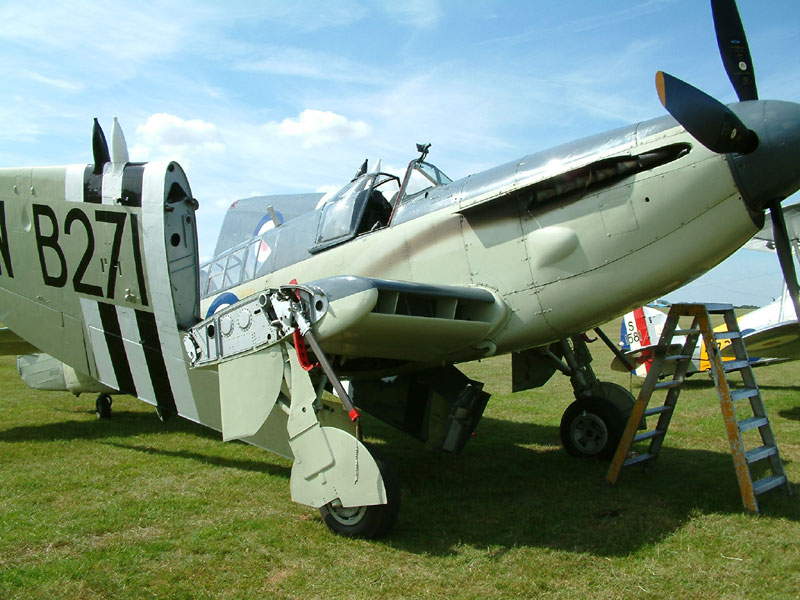
Is it a Fairey Barracuda in the middle photograph, pointing to the right?
If you mean this one:Is it a Fairey Barracuda in the middle photograph, pointing to the right?
[url]
 |https://thumbsnap.com/xaqH3gki[/url]
Then I'm fairly sure it's a Fairey Firefly. Sad – I like Fireflies. Big old RR Griffon rotting away there.

aeropilot said:
Back in the 50's and early 60's there used to be a scrapyard like that, called Coley's, in Hounslow, near Heathrow, full of old aircraft.
All cleaned up and gone by the late 70's.
Coley’s were well known in the scrap game, my local yard did the Brabazon bits of Concorde and TSR 2..
All cleaned up and gone by the late 70's.
Coley’s were well known in the scrap game, my local yard did the Brabazon bits of Concorde and TSR 2..
On a slight detour, I saw an article recently (cant remember where) and it was a chap that worked at one of the aircraft manufacturers in the 50/60's with the wind tunnel.
He'd managed to pull out of the bin, a number of the wooden models they'd used for the tunnel work. All beautifully carved and once surplus to requirements unceremoniously flung in the skip.
Seems crazy now, but I guess at the time, just no value in this sort of thing..
He'd managed to pull out of the bin, a number of the wooden models they'd used for the tunnel work. All beautifully carved and once surplus to requirements unceremoniously flung in the skip.
Seems crazy now, but I guess at the time, just no value in this sort of thing..
Seeing threads like this reminds me how lucky I was as a forces brat .
During the mid 60s my father was stationed at RAF Catterick in Yorkshire. The airfield wasn't used much and the station was used for fire training , the edges of the field and the nearby woods were littered with all sorts of aircraft . I remember a V bomber , probably a Valiant , a Hastings , a Hunter, a Vampire and many others .
Being boys these were our playground and we spent many hours being hero pilots and death defying aircrew .
The aircraft were usually flown in , the larger ones caused the A1 , which passed the end of the runway , to be closed to traffic while they landed . They would then be stripped of engines and most instruments or useful parts and then placed in various scenarios about the area. At some time the aircraft would be set on fire and we would lose one of our toys .
It is also where I went up in gliders for the first time.
A world of adventures for this 10,11,12 year old and certainly wouldn't be permitted in these H&S obsessed times .
During the mid 60s my father was stationed at RAF Catterick in Yorkshire. The airfield wasn't used much and the station was used for fire training , the edges of the field and the nearby woods were littered with all sorts of aircraft . I remember a V bomber , probably a Valiant , a Hastings , a Hunter, a Vampire and many others .
Being boys these were our playground and we spent many hours being hero pilots and death defying aircrew .
The aircraft were usually flown in , the larger ones caused the A1 , which passed the end of the runway , to be closed to traffic while they landed . They would then be stripped of engines and most instruments or useful parts and then placed in various scenarios about the area. At some time the aircraft would be set on fire and we would lose one of our toys .
It is also where I went up in gliders for the first time.
A world of adventures for this 10,11,12 year old and certainly wouldn't be permitted in these H&S obsessed times .
conkerman said:
Engineers aren't particularly known for being sentimental. It's just work stuff I imagine (I'm not an engineer).
Most of us ex-military guys that are still involved with the maintenance of military aircraft are quite happy to see aircraft being saved for museums etc. It can feel a little funny at times, especially if the type is still in service and you’re working on it! I was quite involved with the Apache that’s gone to the Army Air Corp museum this year. ZJ171, I think. Gassing Station | Boats, Planes & Trains | Top of Page | What's New | My Stuff