
Discussion


I just stumbled across this little beaut earlier.
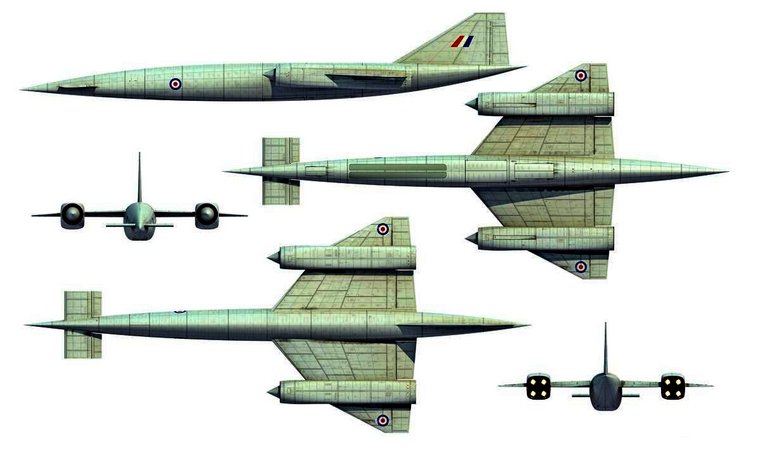
Staggering to think that this was just 10 years after the Lancaster!
http://www.pilotspost.com/arn0001655
Staggering to think that this was just 10 years after the Lancaster!
http://www.pilotspost.com/arn0001655

I think sadly the Brits have always had tinfoil hats, but extra large ones to cover their massive brains to design all this stuff.
The Americans have Titanium hats as they are more expensive and pointlessly over engineered, and the Russians maybe steel ones, more money, from dubious sources and to the detriment of the population but valve powered and painted scarily to care the crap out of the Yanks!!
We were never able to compete even after the war, great ideas and some fantastic things came to the fore, but so many f our ideas were poo poed, right up to the 80's
The Americans have Titanium hats as they are more expensive and pointlessly over engineered, and the Russians maybe steel ones, more money, from dubious sources and to the detriment of the population but valve powered and painted scarily to care the crap out of the Yanks!!
We were never able to compete even after the war, great ideas and some fantastic things came to the fore, but so many f our ideas were poo poed, right up to the 80's
ceesvdelst said:
I think sadly the Brits have always had tinfoil hats, but extra large ones to cover their massive brains to design all this stuff.
The Americans have Titanium hats as they are more expensive and pointlessly over engineered, and the Russians maybe steel ones, more money, from dubious sources and to the detriment of the population but valve powered and painted scarily to care the crap out of the Yanks!!
We were never able to compete even after the war, great ideas and some fantastic things came to the fore, but so many f our ideas were poo poed, right up to the 80's
We had great ideas, but often failed in bringing them to market/selling them. And that's what Americans are good at.The Americans have Titanium hats as they are more expensive and pointlessly over engineered, and the Russians maybe steel ones, more money, from dubious sources and to the detriment of the population but valve powered and painted scarily to care the crap out of the Yanks!!
We were never able to compete even after the war, great ideas and some fantastic things came to the fore, but so many f our ideas were poo poed, right up to the 80's
I was blown away seeing the Bristol 188 recently at the RAF Cosford museum, sad it didn't work out. Engineers were coming out with some radical designs in the 50's. RAF Cosford has a display of cancelled concept models including the Barnes Wallis designed Vickers Type 010. Really space age stuff...
https://www.rafmuseum.org.uk/cosford/whats-going-o...
https://www.rafmuseum.org.uk/cosford/whats-going-o...
Simpo Two said:
We had great ideas, but often failed in bringing them to market/selling them. And that's what Americans are good at.
Also the US, esp Boeing for eg, had invested in some serious R&D kit too – high speed wind tunnels etc. So as well as having good ideas they could 'prove' their ideas, or solve emerging problems, before cutting any metal. Then they had the benefit of nabbing the German aerodynamicists... and of the course as Eric says we were broke. "No bucks, no Buck Rogers."Eric Mc said:
The British economy and state was in a very parsimonious condition in the 1950s and the manufacturers just didn't have the financial muscle to push these sometimes very clever designs beyond prototype (or even just paper) form.
You just have to compare pictures of De Havilland building the Comet at Hatfield and Boeing building the 707 in Seattle.The Comets were built in a huge pre-war shed (which, by all accounts, leaked like a sieve) and the Comets are being built almost haphazardly while surrounded by Vampires, Doves, Herons, Chipmunks, Tiger Moths undergoing overhaul and whatever else DH was working on at the time. Contrast with the clean, spacious, organised, methodical B707 line at Renton.
The Americans also benefited from both a huge domestic market which was big enough to sustain two (occasionally three) jetliner manufacturers in healthy competition, while Britain relied far more on both potential export markets to meet the bottom line (while for the Americans this was a lucrative extra), and of course most of those domestic orders were filtered through the nationalised airlines which led to a lot of well-intentioned but ultimately destructive meddling. It could be argued that Boeing and Douglas had just the right sort of (and amount of) government interference, with Boeing able to do a huge amount of engineering and aerodynamic work on the government's dime for the B-47 Stratojet which then carried directly over to the B707, which in turn was largely bankrolled by the orders for the military KC-135 variant.
British builders were all-too-often hobbled by being forced to build aircraft to overly-specific specifications for government-owned airlines (like the VC10 and the Trident) which ruined their more general market appeal, being forced to choose between guaranteed small orders from BOAC and BEA or potential but uncertain large orders by trying to go toe-to-toe with the Americans.
There also seems to have been the usual post-war British industrial disease of a distaste for cautious and conventional designs - everything had to be a 'white heat of technology' Dan Dare-esque super-plane. Presumably this was because it was felt we couldn't out-build or out-finance the Americans so we had to find either niches that they wouldn't bother with or try and leapfrog them with technology. Hence all the effort put into VTOL regional airliners and Concorde, while potentially-good but boring projects like the Avro 761-771 (basically DC-9-10 and Fokker F28 clones respectively), the HS144 and the Bristol 200 were sidelined.
That actually speaks to another endemic problem - too many companies each pouring limited R&D resources into chasing too little business. The USA could only really support Boeing and Douglas while Convair, Martin and Fairchild all withered away or pulled out of the airliner business. Even the consoldiation into BAC and H-S arguably wasn't enough and it was too late.
No disrespect to accountants, but I sometimes get the feeling that if engineers rather than boring old bean counters had been making the final decisions Britain's lead in the aerospace industry wouldn't have stalled by the end of the 1950s. We might also have avoided ignominy of British Leyland products 
The car industry and the aviation industries are very different animals and it is misleading to drag Austin Allegoes and their ilk into why companies like Bristol couldn't get their 188 to work properly.
Virtually all these aircraft projects were funded almost entirely by government money - and in the 1950s the British government just didn't have much of it.
Virtually all these aircraft projects were funded almost entirely by government money - and in the 1950s the British government just didn't have much of it.
2xChevrons said:
There also seems to have been the usual post-war British industrial disease of a distaste for cautious and conventional designs - everything had to be a 'white heat of technology' Dan Dare-esque super-plane. Presumably this was because it was felt we couldn't out-build or out-finance the Americans so we had to find either niches that they wouldn't bother with or try and leapfrog them with technology. Hence all the effort put into VTOL regional airliners and Concorde, while potentially-good but boring projects like the Avro 761-771 (basically DC-9-10 and Fokker F28 clones respectively), the HS144 and the Bristol 200 were sidelined.
It wasn't that all the effort was put into Dan Dare projects, just that government backing was required and in the UK this was withdrawn from everything else.The Americans were trying to develop an SST much more advanced than Concorde, and while BAC were collaborating with Sud Aviation on Concorde, Hawker Siddeley were collaborating with Breguet on a wide body called the HBN 100 which eventually became the Airbus A300. Albeit after the UK govt had pulled out.
In the 60s BAC worked on a double decker VC10 to rival the 747 but BOAC didn't want it.
The poor old accountants get too much stick regarding British aviation failures. I am pretty sure that all the accountants that worked for the aircraft manufacturers in that era were just as keen to see their employers' products built and flown as the engineers, designers and shop floor workers.
Virtually all these projects depended massively on Government subsidies to go ahead and it was lack of funds from Government that usually ensured a project stalled before it ever got off the ground - literally in most cases.
Virtually all these projects depended massively on Government subsidies to go ahead and it was lack of funds from Government that usually ensured a project stalled before it ever got off the ground - literally in most cases.
A few good posts above,
if you watch the TSR2 docu, the number of horrendous management decisions both from the government and the companies involved were awful.
Navy wanted this, RAF wanted that, pride, fear of failure, immense ego's, political manoeuvring.
Maybe it was not the right plane, but this was much later than this example from OP and it marked the real death knell for the industry. Even after Concorde. which did not really lead to anything other than perhaps Airbus.
I recall many years ago now I used to live near Hatfield, I went for an interview at a place on the airfield, the main hangar was still there the one with the control tower on it.
I left and decided to come back via the link road through the airfield, all now full of poxy bloody units and awful bland industries, at the time the BAE sign was literally being pulled down from the side of the building. I felt angry, sad and annoyed.
And as I drove out to go back home I drove past 5 bloody buildings with TMobile written on them and all I could think, was "we used to build bloody planes here, the Comet etc, and now all has ended up being is a bunch of offices for a thing no-one really needs!!!
if you watch the TSR2 docu, the number of horrendous management decisions both from the government and the companies involved were awful.
Navy wanted this, RAF wanted that, pride, fear of failure, immense ego's, political manoeuvring.
Maybe it was not the right plane, but this was much later than this example from OP and it marked the real death knell for the industry. Even after Concorde. which did not really lead to anything other than perhaps Airbus.
I recall many years ago now I used to live near Hatfield, I went for an interview at a place on the airfield, the main hangar was still there the one with the control tower on it.
I left and decided to come back via the link road through the airfield, all now full of poxy bloody units and awful bland industries, at the time the BAE sign was literally being pulled down from the side of the building. I felt angry, sad and annoyed.
And as I drove out to go back home I drove past 5 bloody buildings with TMobile written on them and all I could think, was "we used to build bloody planes here, the Comet etc, and now all has ended up being is a bunch of offices for a thing no-one really needs!!!
I'm not sure Trident was so handicapped by government; I read something years ago that it was Boeing that limited Trident: DH, or maybe it was BAC by then, entertaining Boeing engineers and proudly showing their latest development aircraft. To the Boeing engineers horror there's a plane just like their to be 727, but a few yrs ahead in development.
Believe the Boeing chaps told a few porkies about exploring such a configuration, and that Trident was too large to work how it was. Cue rethink + dev delays and out rolls Trident a lesser aircraft and after the 727.
Lets not also forget that Boeing benefitted massively from the Comet failures: the original 707 had an even weaker design around its 'square' windows (they were to be bigger and a selling point). After DH worked out why the Comet's failed Boeing were able to re-design / engineer the 707 and launch more quickly than DH could; plus of course who'd want to fly on a plane that fell out of the sky (even though redesigned not to do so).
Believe the Boeing chaps told a few porkies about exploring such a configuration, and that Trident was too large to work how it was. Cue rethink + dev delays and out rolls Trident a lesser aircraft and after the 727.
Lets not also forget that Boeing benefitted massively from the Comet failures: the original 707 had an even weaker design around its 'square' windows (they were to be bigger and a selling point). After DH worked out why the Comet's failed Boeing were able to re-design / engineer the 707 and launch more quickly than DH could; plus of course who'd want to fly on a plane that fell out of the sky (even though redesigned not to do so).
ceesvdelst said:
A few good posts above,
if you watch the TSR2 docu, the number of horrendous management decisions both from the government and the companies involved were awful.
Navy wanted this, RAF wanted that, pride, fear of failure, immense ego's, political manoeuvring.
Maybe it was not the right plane, but this was much later than this example from OP and it marked the real death knell for the industry. Even after Concorde. which did not really lead to anything other than perhaps Airbus.
I recall many years ago now I used to live near Hatfield, I went for an interview at a place on the airfield, the main hangar was still there the one with the control tower on it.
I left and decided to come back via the link road through the airfield, all now full of poxy bloody units and awful bland industries, at the time the BAE sign was literally being pulled down from the side of the building. I felt angry, sad and annoyed.
And as I drove out to go back home I drove past 5 bloody buildings with TMobile written on them and all I could think, was "we used to build bloody planes here, the Comet etc, and now all has ended up being is a bunch of offices for a thing no-one really needs!!!
I work on there at the moment; have to explain why roads are 'Mosquito Way' (why'd they name it after one of the most annoying insects in the world), 'Gypsy Moth Ave', etc... to colleagues & visitors. if you watch the TSR2 docu, the number of horrendous management decisions both from the government and the companies involved were awful.
Navy wanted this, RAF wanted that, pride, fear of failure, immense ego's, political manoeuvring.
Maybe it was not the right plane, but this was much later than this example from OP and it marked the real death knell for the industry. Even after Concorde. which did not really lead to anything other than perhaps Airbus.
I recall many years ago now I used to live near Hatfield, I went for an interview at a place on the airfield, the main hangar was still there the one with the control tower on it.
I left and decided to come back via the link road through the airfield, all now full of poxy bloody units and awful bland industries, at the time the BAE sign was literally being pulled down from the side of the building. I felt angry, sad and annoyed.
And as I drove out to go back home I drove past 5 bloody buildings with TMobile written on them and all I could think, was "we used to build bloody planes here, the Comet etc, and now all has ended up being is a bunch of offices for a thing no-one really needs!!!
Makes me a bit sad every day I drive into Hatfield and the tag line for the town on all the Welcome to Hatfield signs is 'birthplace of the jet airliner', yet you'd never where it was designed & built.
Don't worry T Mobile have gone, it's now Tesco, the main hanger is a David Lloyd gym.
On the plus side you've got Porsche, Aston, McLaren, Lamborghini & Bentley (plus Jag & Land Rover) dealerships all next to each other; there's some sweet sounds during the day when they test drive them
Eric Mc said:
The poor old accountants get too much stick regarding British aviation failures. I am pretty sure that all the accountants that worked for the aircraft manufacturers in that era were just as keen to see their employers' products built and flown as the engineers, designers and shop floor workers.
Virtually all these projects depended massively on Government subsidies to go ahead and it was lack of funds from Government that usually ensured a project stalled before it ever got off the ground - literally in most cases.
I tend to agree - I suspect the British engineers & scientists, buoyed on the undoubted successes of the war & the early post war years, chased too many rainbows, rather than clearly establishing what the market needed & wanted, but it was a very different time. In saying that, some quite brilliant machines & ideas came out, of which our little island can be proud, but we really didn't have the market to develop most of them. All the bright ideas in the world come to nothing, if you can't sell them to pay the bills...Virtually all these projects depended massively on Government subsidies to go ahead and it was lack of funds from Government that usually ensured a project stalled before it ever got off the ground - literally in most cases.
Gassing Station | Boats, Planes & Trains | Top of Page | What's New | My Stuff