
European Rules of the Road in 1923
Discussion


I recently found a Michelin Guide to 1923 and looking at the "useful hints' for driving on the continent" I was quite surprised to see the following countries drove on the left at that time.
Austria. (with the exception of the Tyrol)
Czechoslovakia.
Portugal.
Sweden. (I do remember them changing)
Hungary.
Luxembourg.
Italy. In most of the large towns .but on country roads and smaller towns they drove on the right. How the hell did that work ?
Dover to Calais ferry charges for a small car were £7 . 7 shillings at the owners risk or an extra £1 2 shillings for company liability.
Austria. (with the exception of the Tyrol)
Czechoslovakia.
Portugal.
Sweden. (I do remember them changing)
Hungary.
Luxembourg.
Italy. In most of the large towns .but on country roads and smaller towns they drove on the right. How the hell did that work ?
Dover to Calais ferry charges for a small car were £7 . 7 shillings at the owners risk or an extra £1 2 shillings for company liability.
Interesting reading. Thanks.
I knew Italy (and Sweden) drive on the left before WW2.
Apparently, excavations of Roman era quarries showed deeper ruts on the left hand side of the (two lane) roadway indicating that 'they', ( the Romans, who obviously 'ruled' Europe) drove on the left.
I believe Europe used the Roman mile ('mille passum' - 'a thousand paces') until comparatively modern times - the English mile 5280 feet only came into being in 1592 (being eight furlongs of 660 feet)
Might be of interest
https://www.countrylife.co.uk/luxury/motoring/curi...
I knew Italy (and Sweden) drive on the left before WW2.
Apparently, excavations of Roman era quarries showed deeper ruts on the left hand side of the (two lane) roadway indicating that 'they', ( the Romans, who obviously 'ruled' Europe) drove on the left.
I believe Europe used the Roman mile ('mille passum' - 'a thousand paces') until comparatively modern times - the English mile 5280 feet only came into being in 1592 (being eight furlongs of 660 feet)
Might be of interest
https://www.countrylife.co.uk/luxury/motoring/curi...
Yes, Sweden changed overnight on September 3rd, 1967 (imagine the carnage now!) - probably the best thing they did as their market was much easier to align with the majority of European manufacturers. The UK should have done the same, but by then our population density was so much greater it would have been impossible.
Turbobanana said:
Yes, Sweden changed overnight on September 3rd, 1967 (imagine the carnage now!) - probably the best thing they did as their market was much easier to align with the majority of European manufacturers. The UK should have done the same, but by then our population density was so much greater it would have been impossible.
And, of course we had motorways in 1967- the 'attack angle' when leaving or joining motorways is different ( leaving or joining) - all slip-roads would have to be re-configured.And buses etc would have passengers alighting in the road.
In hindsight the only realistic time would have been the end of WW2, when there was 'going' to be lots of investment in new buses etc.
On the other hand if, in 10 years or so, all cars are going to be BEV perhaps there will be a suggestion that the resulting impetus of replacement of existing stock.....
scs1 said:
I recently found a Michelin Guide to 1923 and looking at the "useful hints' for driving on the continent" I was quite surprised to see the following countries drove on the left at that time.
Austria. (with the exception of the Tyrol)
Czechoslovakia.
Portugal.
Sweden. (I do remember them changing)
Hungary.
Luxembourg.
Italy. In most of the large towns .but on country roads and smaller towns they drove on the right. How the hell did that work ?
Dover to Calais ferry charges for a small car were £7 . 7 shillings at the owners risk or an extra £1 2 shillings for company liability.
I've been told that in Italy driving on the right on mountain roads became popular precisely because the cars were right hand drive so the driver had a better view of the edge of the precipice.Austria. (with the exception of the Tyrol)
Czechoslovakia.
Portugal.
Sweden. (I do remember them changing)
Hungary.
Luxembourg.
Italy. In most of the large towns .but on country roads and smaller towns they drove on the right. How the hell did that work ?
Dover to Calais ferry charges for a small car were £7 . 7 shillings at the owners risk or an extra £1 2 shillings for company liability.
I've also been told that although Germany drove on the right since Napoleonic times, it was only in about 1920 that Audi hit on the revolutionary idea of putting the driver on the left.
alfaspecial said:
In hindsight the only realistic time would have been the end of WW2, when there was 'going' to be lots of investment in new buses etc.
I wondered about that. There was so little traffic (in terms of private cars) that it might just have been possible then.Interesting point about the future, too...
https://www.worldstandards.eu/cars/driving-on-the-...
article said:
In Italy the practice of driving on the right first began in the late 1890s. The first Italian Highway Code, issued on 30 June 1912, stated that all vehicles had to drive on the right. Cities with a tram network, however, could retain left-hand driving if they placed warning signs at their city borders. The 1923 decree is a bit stricter, but Rome and the northern cities of Milan, Turin and Genoa could still keep left until further orders from the Ministry of Public Works. By the mid-1920s, right-hand driving became finally standard throughout the country. Rome made the change on the 1 of March 1925 and Milan on 3 August 1926.
Turbobanana said:
Yes, Sweden changed overnight on September 3rd, 1967 (imagine the carnage now!) - probably the best thing they did as their market was much easier to align with the majority of European manufacturers. The UK should have done the same, but by then our population density was so much greater it would have been impossible.
Sweden's decision then, was its a now or never as it was at that stage that they started their expansion of metalled roads beyond the confines of the major cities, so with no motorway network, and all their rural roads still being dirt/forest tracks, it made life a lot easier to convert to the dark side.That wasn't the case in the UK, even in the late 60's. Even a immediately post WW2 change over would have been a major undertaking in the UK, although there wouldn't have been the M-Way issue prior to the M1 being built.
But UK plc had much more pressing things to consider in the immediate post war years than chucking this into the mix.
irocfan said:
anonymous said:
[redacted]
Japan does too as does, I believe, Mauritius.Interestingly in Sweden there was a referendum on switching sides that went 83/17 in favour of continuing to drive on the left, but Swedish voters had less clout than Pakistan camels.
john2443 said:
How do you know India drives on the left 
When I was there they seemed to be driving on both sides and the middle all at the same time!
I remember in about 2004 being driven from Chennai on a newly constructed dual carriageway. It was complete carnage as the locals were not familiar with the concept. Cyclists, shepherds, kids on scooters, cars, etc were all resident in the outside lane travelling in the wrong direction on both sides of the carriageway. A complete free for all.When I was there they seemed to be driving on both sides and the middle all at the same time!
The frustration of the taxi driver with his rural cousins was quite alarming too.
Mike
Japan drivers on the left because the first cars there were Austin 7 in CKD form. I guess other Asiatics followed suit but that is just a guess. In Italy, pre-war, the wealthy bought RHD for one reason - so the chauffeur could alight on the pavement and open the door for his master. That can't work for a 6C or 8C though!
lowdrag said:
Japan drivers on the left because the first cars there were Austin 7 in CKD form. I guess other Asiatics followed suit but that is just a guess. In Italy, pre-war, the wealthy bought RHD for one reason - so the chauffeur could alight on the pavement and open the door for his master. That can't work for a 6C or 8C though!
German post office Beetles in the 1960s were also RHD, so that the postman could step out on to the pavement when making deliveries.alfaspecial said:
Turbobanana said:
Yes, Sweden changed overnight on September 3rd, 1967 (imagine the carnage now!) - probably the best thing they did as their market was much easier to align with the majority of European manufacturers. The UK should have done the same, but by then our population density was so much greater it would have been impossible.
And, of course we had motorways in 1967- the 'attack angle' when leaving or joining motorways is different ( leaving or joining) - all slip-roads would have to be re-configured.Dr Jekyll said:
I've been told that in Italy driving on the right on mountain roads became popular precisely because the cars were right hand drive so the driver had a better view of the edge of the precipice.
This was why Italian lorries were nearly all RHD even though the country was RH Traffic until well into the 1970s (notice that the Fiat car transporters used as part of the raid in The Italian Job are RHD...) and some operators continued to order RHD vehicles into the 1980s. It was thought better to have the driver near the edge of the road, so they could judge the distance on a mountain road or when driving as far over to the verge as possible when passing another lorry on a typical Italian rural road or narrow city street. Even after the official switch to RHT it was considered prestigious to have a RHD car in Italy and the likes of Ferrari, Maserati and Alfa Romeo offered RHD cars in their home market as a sign of their venerable pedigree. There were also sporting connotations to RHD as it was favoured by many racers since most circuits run clockwise and so have more right corners (where RHD lets you see the apex/curb more easily) than left ones, plus RHD leaves your throttle foot unencumbered by the transmission tunnel.
Lancia only built RHD cars until well into the 1950s, because Vincenzo Lancia considered it the only proper format for all the reasons already mentioned plus it meant that your dominant hand (assuming you were right-handed...) would remain on the wheel during gear changing.
Riley Blue said:
lowdrag said:
Japan drivers on the left because the first cars there were Austin 7 in CKD form. I guess other Asiatics followed suit but that is just a guess. In Italy, pre-war, the wealthy bought RHD for one reason - so the chauffeur could alight on the pavement and open the door for his master. That can't work for a 6C or 8C though!
German post office Beetles in the 1960s were also RHD, so that the postman could step out on to the pavement when making deliveries.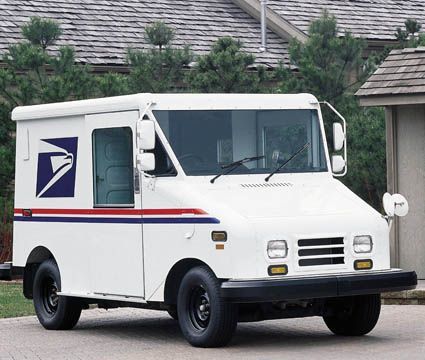
Gassing Station | Classic Cars and Yesterday's Heroes | Top of Page | What's New | My Stuff