
Race Chip liberates nearly 500hp from A45 S
There is a limit to how much power can wrung from a 2.0-litre engine. We're apparently not there yet...
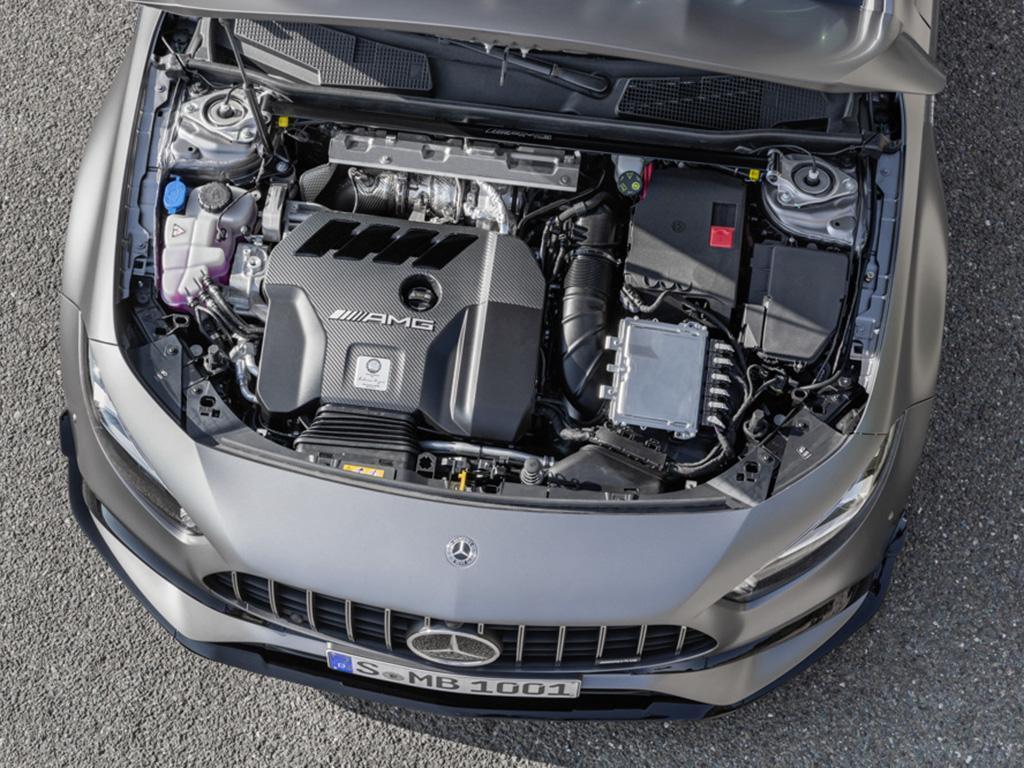
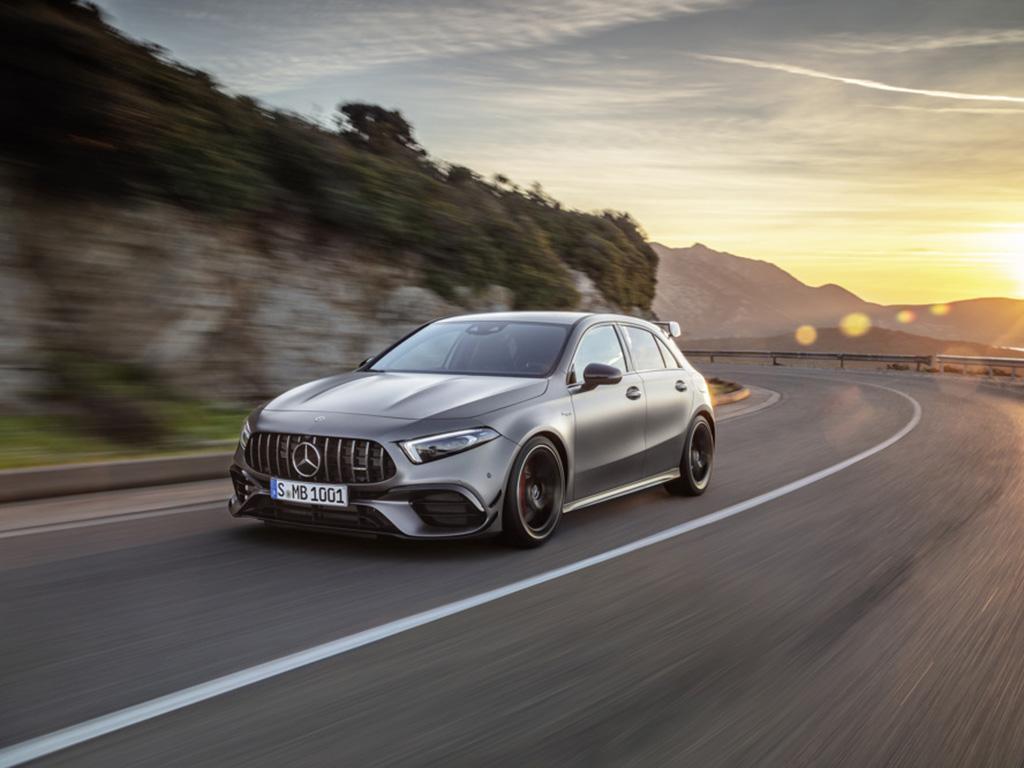
Mercedes AMG's latest A45 made headlines last year for a variety of reasons, not least among them was its prodigious powerplant. Its new 2.0-litre, four-cylinder engineproduces 387hp in standard form and a massive 421hp in S guise, while producing 370lb ft between 5,000-5,250 rpm. In this way, the M139 is able to haul an A45 S from 0-62 in 3.9 seconds and on to a top speed of 168mph.
To wring that kind of performance out of such a small unit, AMG left no component untouched. The new twin-scroll turbocharger contains roller bearings to minimise mechanical friction, as well as an electronically-controlled wastegate, allowing for more precise and flexible control of the charge pressure, which can reach a maximum of 2.1 bar. It also benefits from a divided turbine housing and exhaust manifold, which allows the exhaust flow to be fed to the turbine separately, preventing the individual cylinders from negatively influencing each other.
The alloy cylinder block is said to be as resilient as that of a diesel motor, meanwhile, withstanding combustion pressures of up to 160 bar. It's paired with an all-aluminium crankcase, lightweight forged steel crankshaft and forged aluminium pistons, as well as a new 16-valve cylinder head with larger, variably controlled valves and two-stage fuel injection. The cylinders themselves are lined with Mercedes-AMG's F1-derived Nanoslide coating, giving them a mirror-like surface twice as hard as a conventional cast-iron liner.
Once assembled, this slew of techno babble and marketing bumf combines to create a truly remarkable power plant. One so good, in fact, that we included it in our list of the six best four-cylinder engines just last week. "A monstrous power unit," Matt called it, praising its incredible response, mighty mid-range and top end enthusiasm and concluding that it was, "undoubtedly a four-cylinder engine we'll be talking about in another 30 years' time."
Given all that, it may be hard to see why anyone would need more from their M139, but that hasn't stopped the engineers at Race Chip, who've gone and found a path to nearly 500hp. The below video details their methods (with an explanation of the tuning process itself beginning around the 6:45 mark) as they work their way to 491hp and 406lb ft of torque. Then, of course, there's the obligatory Autobahn run to sample the results. We won't steal the guys' thunder when it comes to the difference in 100-200km/h sprint times, but let's just say the results seem to speak for themselves.
Check out the video and let us know what you think about the A45's new power bump in the comments below.


For the avoidance of doubt ( and because I know these type of chips are a contentious issue on here..), I’m not bashing racechip. I have one installed in my daily driver, and it appears to work quite well. My car is a diesel however, which ( correctly or not) just seems less likely to cause an issue with engine knock etc etc.
Maybe I’m wrong, but I wouldn’t be installing one on a complicated high output turbo petrol. It makes me nervous.
It's arguably more impressive that the modern stuff can make these numbers while retaining driveability and stringent emissions compliance, but the numbers themselves wouldn't have been mind blowing 30 years ago.
- Servicing... your Evo, when it was standard, had a 4,500 mile / 6 month service interval. The A45 has a 12,500 mile / 12 month service interval.
- Longevity... arguable due to a small number of each, but look at the typical mileage of an Evo on Autotrader vs the typical mileage of an A45, you don't see many high mileage Evos, considering the age. Again, it's arguable because perhaps a lot of yobbos bought Evos and then didn't service them properly, but on here isn't the stereotypical A45 owner meant to be a leased-to-the-hilt gym bunny who also skimps on servicing

- Cost! Evos were far from cheap, but A45s are comparatively expensive, which hopefully reflects a greater level of engineering to achieve the above two points.
Both excellent cars that are fast enough to rearrange most people's internal organs during a full-bore launch.
It was pretty easy to install the thing despite the instructions supplied being completely wrong for the car/engine, someone without a bit of knowledge on the engine would not have managed it.
As soon as I started the car it threw a check engine light, I tried numerous things to reset the light and fault codes but they came back almost immediately. Racechip themselves weren't particularly helpful in solving the issues and ultimately I had to pay to send it back to Germany for a refund.
My advice is avoid Racechip and find a reliable tuning company in the U.K who can remap the ECU directly.
https://uk.trustpilot.com/review/www.racechip.de
It's arguably more impressive that the modern stuff can make these numbers while retaining driveability and stringent emissions compliance, but the numbers themselves wouldn't have been mind blowing 30 years ago.
The thing that makes the Cosworth YB so special and so powerful is that although the block is basically a Pinto block, the cylinder head, fuel system, turbo etc were developed for race before being vastly detuned for road application. Nissan followed suit with the Skyline. A normal 6 cyl bottom end with a race spec multi valve head, turbo's and that type of thing.
The Lancia Integrale 16v engine for example was a road car lump before it became a competition lump. It can be tuned about the same as the YB but there are less specialists out there and it'll cost more. I've seen one if these make 980bhp at the wheels!!
I disagree. Power is a function of swept capacity, engine speed and manifold pressure combined. Simply limiting one of these three factors does not place a cap on the total power output, hence why major motorsport formulae are never simply capacity-limited. There's always scope for incremental increases in engine speed and boost pressure, especially as engineering science advances further. F1 engines of 1.5 and 1.6 litres illustrate this point.
In reality the "limit" on the power output of a 2.0-litre engine is merely the point at which an engineer says 'wouldn't it be easier to hit our targets with a bigger engine?'.
That engine has been developed on the track over the past few years by Lewis, Nico, Valtteri and friends, and the biggest improvements seen in that time have been economy and reliability, even as the power has gone up with development.
LH failed to finish only one race in the past three seasons.
My point is that 500bhp isn't actually a lot for a 2-litre engine as long as it is built properly and mapped correctly.
That said, I bet the Merc has a better low-down grunt than my Fiat - I don't have much below 3k rpm and then it all arrives fairly quickly, but hangs on until 7.5k rpm
I'd be willing to bet that the Fiat sounds better though - most boosted four-put lumps struggle for character and leave me a bit cold
Gassing Station | General Gassing | Top of Page | What's New | My Stuff